Public Cleansing, memorials and humanity

Paolo Polidori’s Facebook post

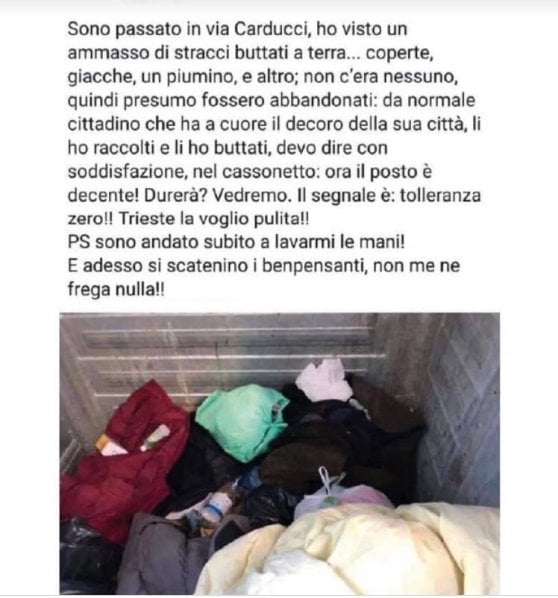
Last Friday (the 4th of January) the vice-mayor of the Italian city of Trieste put up a post on Facebook in which he explained that while walking through one of the streets of the city he had come across a pile of covers, jackets and other similar stuff.

“Since there was nobody around”, he posted, “I presumed that they were abandoned and as a normal citizen who has at heart the decorum of the city, I collected them and threw them away, may I add with satisfaction: now the place is decent! Will it last? We will see. The message is: zero tolerance. I want a clean Trieste!! PS I immediately washed my hands. And now may the do-gooders unleash their criticism, I don’t give a damn.”

Paolo Polidori hails from the party of Matteo Salvini, the same party that wants a zero tolerance policy on migration. He knew full well that the covers, jackets and other paraphernalia that help to shelter from the cold were not abandoned but belonged to a clochard – a homeless person. His act though was met with widespread indignation.

A group of citizens met at a caffe’ in Trieste and opted to act. They collected new covers and jackets and placed them in the same place on Via Carducci where the Vice-Mayor had performed his act of public cleansing. They added a cardboard sign with a written apology to the homeless person – an apology in the name of all the people of Trieste.

The clochard has yet to turn up on the site and claim his new materials for warmth and comfort. What happened though is that the space where the apology note was left has become a symbol: it has taken on a political meaning. It has become a focal point of public expressions of solidarity. On Sunday numerous citizens of Trieste visited the site and left something: a scarf, a sweater, a pullover a beret…. a cushion.

It is ironic that the story of the clochard’s sleeping space in Trieste is the story of memorials in reverse. In other parts of the world, Ministers and government apparatchiks hang on to the execrable excuse of cleanliness and public order in order to attempt to obliterate a public expression of justice and solidarity. Trieste’s space transformed into a strong symbol after the first cleansing by a misguided politician.

Other spaces around the world are still ‘cleansed’ daily by representatives and supporters of a political class that twists the understanding of basic tenets of the legal order and transforms the rule of law into rule by law. Public memory and expression is of fundamental importance in a democracy – just look at what is happening in Hungary and Czech Republic were the governments in the two countries are doing their utmost to forget to commemorate Imre Nagy and Jan Palach.

Facebook Comments Box

The Sale of Public Land

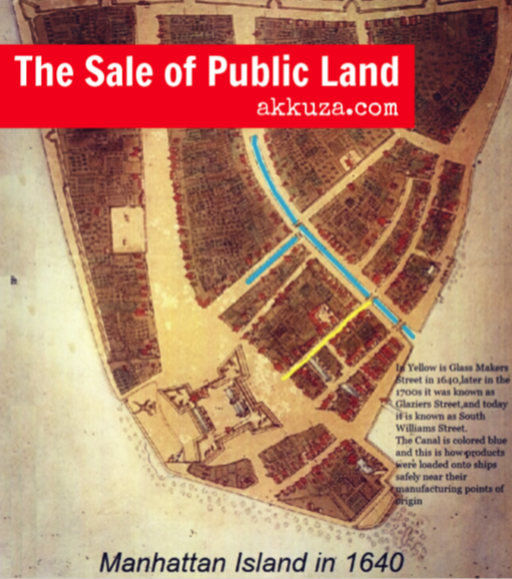
It’s 1626. A Dutch merchant has his eye on a peninsula of land in the region of the New World that the local natives (the Munsee/Lenape) called Manna-hatta (which literally means “the place for gathering wood to make the bows”). Place names tend to have this descriptive element in the local language – Żebbuġ. Għasri, Għajnsielem, Marsalforn. It’s the same the world over. Land is land and what it gives to the people who live on it.

According to a letter by Pieter Janszoon Schagen, Peter Minuit and Dutch colonists acquired the Manhattan peninsula on May 24, 1626, from unnamed Native American people, who are believed to have been Canarsee Indians of the Lenape in exchange for traded goods worth 60 guilders,

“The original inhabitants of the area were unfamiliar with the European notions and definitions of ownership rights. For the Indians, water, air and land could not be traded. Such exchanges would also be difficult in practical terms because many groups migrated between their summer and winter quarters. It can be concluded that both parties probably went home with totally different interpretations of the sales agreement.”

It gets interesting because it turns out that Minuit negotiated with the chief of the Canarsees, when it was the Weckquaesgeeks who actually mostly lived on Manhattan. It was an easy deal to obtain. The vendors would get the rights to a piece of land while the sellers… well the sellers had no concept of right to property and in any case they were nomadic people who actually had no real ties with that piece of land… at least not as much as another tribe who was not involved in the transaction.

Public land – land that belongs to the people. It forms part of the core concept of public goods (res publica). In roman law it was the concept of a good publicly held in common by the people. Res publica also refers to public affairs, affairs relating to the management of the common good. When public land is sold or managed, such sale or management is supposed to be transacted in the interest of the people and their common good.

Modern day republics entrust their governments with the management of public good. That is why transactions involving public land should be conducted with the utmost transparency and no amount of excuses of “commerical sensitivity” can hold water. Transparency is but one safeguard. Accountability to parliament, to watchdogs and to EU institutions is another. The sale of public land – when it is really necessary and justified must take place following the best standards that guarantee the public good is the foremost concern.

When the citizens of the nation fail to understand the importance of the monitoring of such processes then they are open to being conned time and time again by the next Peter Minuit. The tribal leaders of today’s demos who take advantage of this ignorance have little care of the consequences of their transactions. The trinkets and guilders of yesteryear have been transformed in the corrupt practices of today.

Oh foolish nation that allows itself to be led by jackals. The situation is desperate, there are crooks everywhere.

“quotus quisque reliquus qui rem publicam vidisset?
Igitur verso civitatis statu nihil usquam prisci et integri moris: omnes exuta aequalitate iussa principis aspectare…”

(How few were left who had seen the republic!
Thus the State had been revolutionised, and there was not a vestige left of the old sound morality. Stript of equality, all looked up to the commands of a sovereign…) – Tacitus, Annals (I, 3-4)

Facebook Comments Box

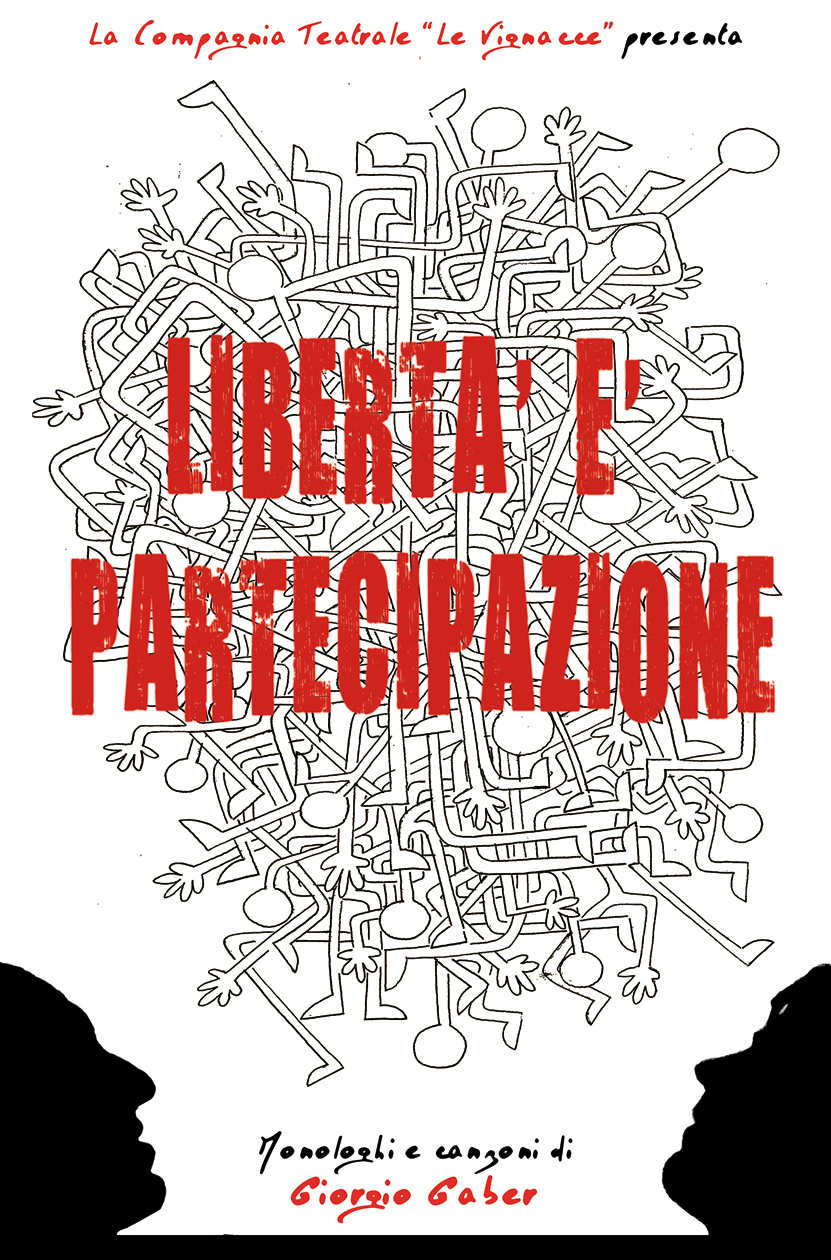
La Liberta’

Vorrei essere libero, libero come un uomo.
Vorrei essere libero come un uomo.

Come un uomo appena nato
Che ha di fronte solamente la natura
E cammina dentro un bosco
Con la gioia di inseguire un’avventura.
Sempre libero e vitale
Fa l’amore come fosse un animale
Incosciente come un uomo
Compiaciuto della propria libertà.

La libertà non è star sopra un albero
Non è neanche il volo di un moscone
La libertà non è uno spazio libero
Libertà è partecipazione.

Vorrei essere libero, libero come un uomo.
Come un uomo che ha bisogno
Di spaziare con la propria fantasia
E che trova questo spazio
Solamente nella sua democrazia.
Che ha il diritto di votare
E che passa la sua vita a delegare
E nel farsi comandare
Ha trovato la sua nuova libertà.

La libertà non è star sopra un albero
Non è neanche avere un’opinione
La libertà non è uno spazio libero
Libertà è partecipazione.

La libertà non è star sopra un albero
Non è neanche il volo di un moscone
La libertà non è uno spazio libero
Libertà è partecipazione.

Vorrei essere libero, libero come un uomo.
Come l’uomo più evoluto
Che si innalza con la propria intelligenza
E che sfida la natura
Con la forza incontrastata della scienza
Con addosso l’entusiasmo
Di spaziare senza limiti nel cosmo
E convinto che la forza del pensiero
Sia la sola libertà.

La libertà non è star sopra un albero
Non è neanche un gesto o un’invenzione
La libertà non è uno spazio libero
Libertà è partecipazione.

La libertà non è star sopra un albero
Non è neanche il volo di un moscone
La libertà non è uno spazio libero
Libertà è partecipazione.

Facebook Comments Box

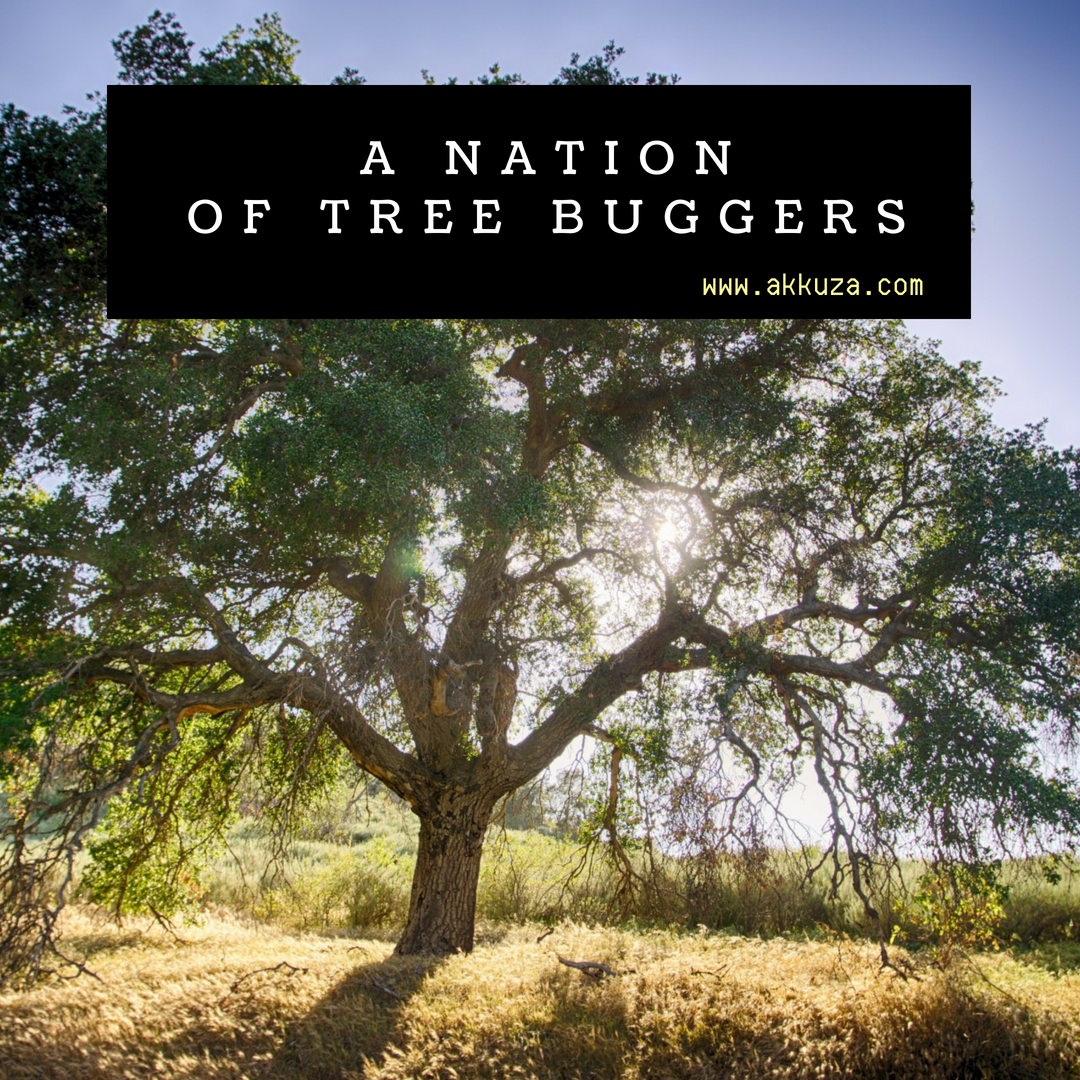
A nation of tree buggers

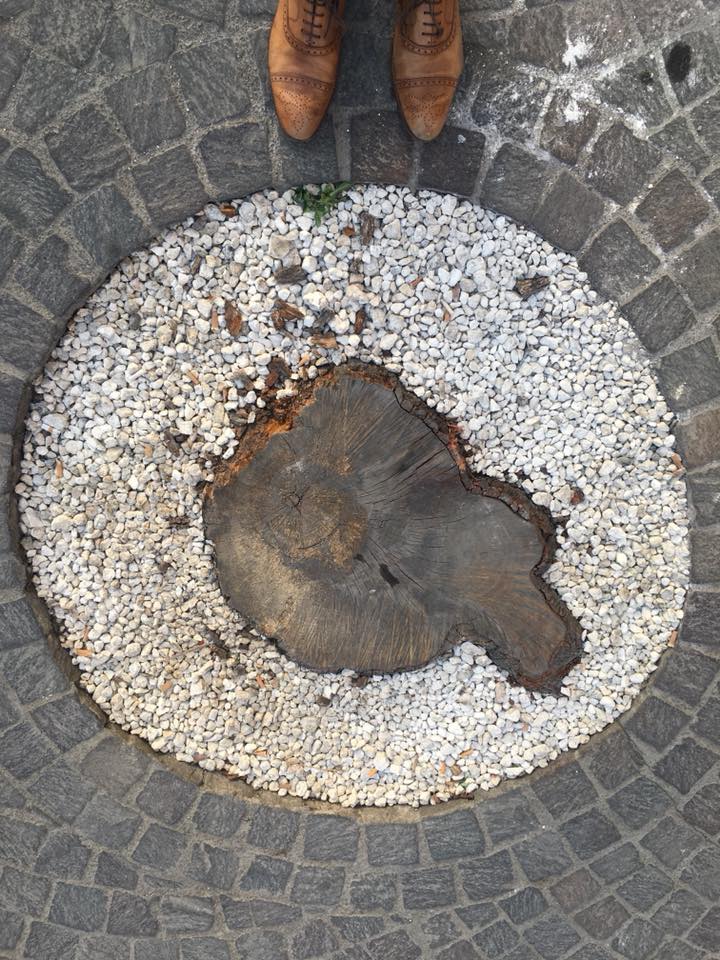
Strong winds in Luxembourg last night uprooted several trees around the country. Bad weather can be a bummer. That’s bad weather though, in Malta some idiot sitting at a desk decided to kill a tree that had lived through a world war because “it was becoming dangerous for passers by”. The most dangerous naturally occurring thing in Malta is ignorance and it’s spreading out of control.

Il-ballata tal-balluta. – Antonio Tufigno

Jien twelidt qabel il-gwerra, ma kien fini kważi xejn
Kont ftit iqsar minn sitt piedi, u lin-nies ħarist fl-għajnejn

Meta l-ħbit tal-għadu twettaq, fost adrenalina enormi
Min ifittex biex jistaħba, min inemmel bl-uniformi

Imbagħad kollox waqaf f’daqqa, ma baqgħex theżżiż jinħass
Qisha bdiet dinj’oħra kalma, u l-inkwiet maqtugħ b’imqass

Minn quddiemi jgħaddi kollox, ħafna postcards kuluriti
Moviment grazzjuz u varju, rġiel għax-xogħol liebsin puliti

L-għajjat li jdawwallek qalbek, ta’ tfal żgħar qed jieħdu gost
Għax kważi waslu l-Barrakka, ġiri u logħob sfrenat fil-post

Rużar Briffa ħosbien jgħaddi biex fuq bank jikteb bil-qegħda
U l-għarajjes intreċċjati lesti biex jagħmlu kull wegħda

Umbagħad wara xi elezzjoni tkun maħnuqa poplu l-pjazza
Ġemgħa orgażmika għax rebħet, logħba sfida u ġlieda mqaddsa

Sadattant ġibt ruħi sewwa, fini kważi żewġ sulari
U kuntenta b’ħajjti u posti, allavolja minhix rari

Drajt iż-żwiemel u l-karozzi, pjaċir wisq li tkun fil-qalba
Ta’ Belt hekk movimentata, u għal tibdil żgur m’għandix talba

Pero’ llejla ġew ħaddiema, ma jidhrux li ħbieb tal-ġonna
Kienu mgħaġġla, kienu koroh, kienu ‘ed jidgħu bil-Madonna

Issa ma nistax nitkellem jew inħoss sħana jew bard
Issa jien m’għadnix neżisti, għaliex jien dal-lejl sirt l-art.


(Ritratt u poezija migjuba bil-permess tal-awtur.)

Facebook Comments Box

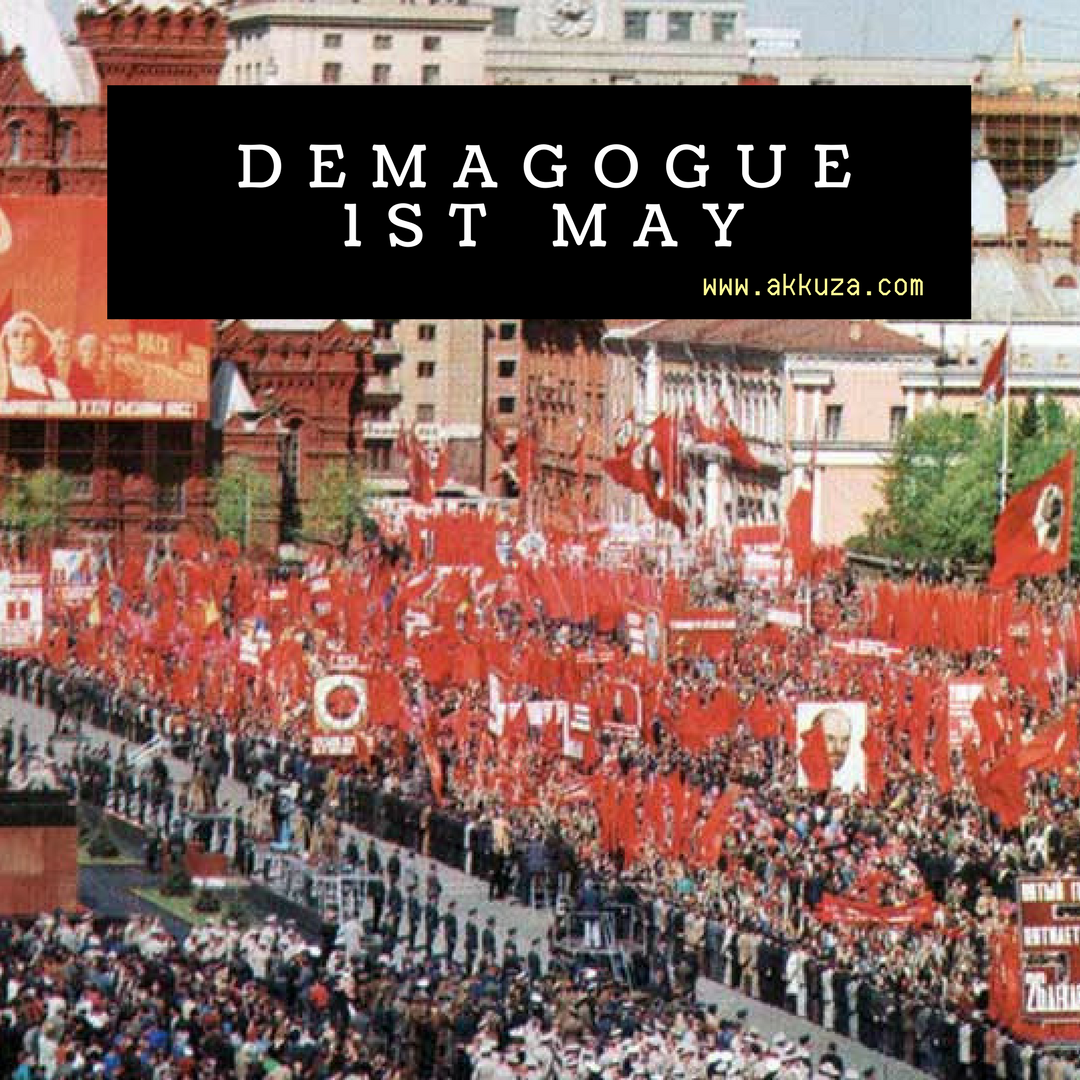
Demagogija fl-Ewwel ta’ Mejju

Smajt id-diskors kollu ta’ Muscat illum ghal dnubieti. L-isforz li ma jissemmiex l-iljunfant li hemm fil-kamra kien enormi… ggantesk… l-uniku haga kbira li kien hemm fil-pjazza fil-fatt. Id-demagogija tista’ tigi iddistillata f’zewg fazi: hawn hafna flus dehlin f’Malta (u le, ma humiex sforz ta’ gharaq xbin il-poplu imma sforz makakkeriji legali u/jew kwazi); ser inbexxu ftit minn dawk il-flus fil-housing (progett enormi socjali).

Bravu Joseph. Ghax bhall-flus tal-karita’ ghamel. Rabat il-flus li dahlu mill-hmieg u tahwid ma opra karitevoli sabiex hadd ma jmisshom. Le Joseph. Mhix ghira ghal min jaghmel tajjeb mal-fqar imma rabja ghal min jitnejjek bihom f’wicchom.

Il-konkluzjoni ukoll kienet helwa. Fakkar fix-xilja tal-Egrant. M’humiex dawk biss il-fatti le Joseph? Hemm zewg priecem imdawrin mieghek illi minkejja li ilek b’bizzejjed informazzjoni biex twarrabhom ghogbok tinheba wara l-mewga hamra li tadura id-demagogiji.

U l-investiment fi sptarijiet semmejtilna? Vera? Fejn zarmajt servizz socjali f’idejn skarpan li spicca kellu jbieghhom ghax ma kienx kapaci? Jew investiment fl-iskejjel? Liema? L-American University tal-Babaw? Infrastruttura biex il-haddiem imur ghax-xoghol komdu qalilna. Dazgur petrol station kull erba metri.

Temmejtu bl-innu malti, talba lil Alla. Nahseb ahjar tirringrazzjah li l-oppozizzjoni zoppa u imnejka (ghajr ftit individwi li ilhom ihabirku minn hafna qabel) tippermettik tigri girja bil-poplu.

Il-bejgh tac-cittadinanza hija ILLEGALI. It-tixhim minn fuq dan il-bejgh huwa carissimu. Bhal ma hu car it-tixhim minn fuq il-“progetti” enormi li shabek jidher car li gawdew minn fuqhom. X’ma jinfethux kontijiet?

“rodd il-hniena lis-sid, is-sahha lil haddiem,
imma fuq kollox O Mulej thallix lil min jibqa jbella’ ross bil-labra”

#amen #ruleoflaw

Facebook Comments Box