Manuel Mallia’s Rule-By-Law


Speaking in parliament last night, ex-Minister Manuel Mallia took a swipe at whoever had anything to do with the leaking FIAU documents. In a scene befitting pre-1989 East Germany, Mallia told parliament that the leaker of the report as well as anybody having access to it (including the PN) should be prosecuted because they are guilty of a crime having violated the confidentiality of said documents. “The documents of the FIAU needed to be kept secret because the unit’s investigations were sensitive and disclosure of information would undermine those very investigations”, Dr Mallia said.

What we have here is a clear example of “rule-by-law” where the strict letter of the law is used to silent dissent and to annihilate any possible means of rendering the powers that be accountable. Manuel Mallia’s threats, for threats they are, do not come in a vacuum. They must be put in the context of the dismissal of former FIAU official Jonathan Ferris and of the FIAU Head of Compliance. They must be put in the context of the admission by most of the national press that they have been forced to revise archived reports under threat of expensive litigation. This must also be put in context of the lack of collaboration reported by the European Parliament PANA committee

In any other context but this, this matter would be considered as Whistleblower territory. In any other context the content of the leaked document would be of much graver concern, the consequences of the failure to act upon the content of such documents would be the focus of a responsible government. This is not another context. This is Malta of L-Aqwa Zmien – rule by law is misconstrued as rule of law, anything in the power of government to hide, to shut down criticism, to avoid proper scrutiny, to annihilate any dissonant narrative is fair game.

We are living in a time of Rule-By-Law. This is also why the calls for a return to a system of rule of law are being made.  In contrast to rule-by-law (rule by means of norms enacted through a correct legal procedure or issued by a public authority), Rule of Law implies also the safeguarding of fundamental rights and freedoms – norms which render the law binding not simply because it is procedurally correct but enshrines justice. It is the Rule of Law, thus understood, that provides legitimacy to public authority in liberal democracies.

Meanwhile Manuel Mallia’s witch-hunt had better expand internationally: Green MEP Sven Giegold’s website contains a link to leaked FIAU documents.


The Literal Faculty – the rule of law and its critics


Dr Kevin Aquilina (signing off as Dean of the Faculty of Law) penned an article in today’s Independent. In this article entitled “Demicoli v. Malta – Part two“, Aquilina decides that by calling for the resignation of both the advocate general and the police commissioner, civil society organisations “have taken it upon themselves to charge, prosecute, give evidence against, convict and punish, through dismissal from office, both the Commissioner of Police and the Attorney General”. Having equated the call for double resignation to the action of a subversive kangaroo court, Kevin Aquilina concludes that civil society is in breach of the rule of law that it claims to want to sustain.

Dr Aquilina misses the wood for the trees. The call by civil society is for the removal of the AG and PC, that much is true. What Dr Aquilina either misunderstands or willingly misinterprets is that due process must and should be followed in both cases. Civil society is asking for nothing more and nothing less than the application of the law to cases where prima facie evidence points glaringly that it should be applied – but isn’t. Dr Aquilina tries to put the ball wrongly in civil society’s court. It is not.

The failure to act on the FIAU report has been cited as the glaring failure on the part of the AG and the PC. It is one of many practical examples that can be presented to the Public Service Commission (in the case of the police commissioner) and to parliament and subsequently to the Commission for the Administration of Justice (in the case of the attorney general).

Far from mob rule, the civil society demands translate into a call for the application of the rule of law. Civil society are pointing out that the failure to fulfil their institutional duties by both the PC and AG requires a remedy – remedies that are available at law and have hitherto not been applied.

Of course both the police commissioner and attorney general deserve a due process as guaranteed by law. Of course they would obtain due process should the law be applied. The problem, Dr Aquilina, is that the law is not being applied. The problem is that certain prerogatives are not being used. The problem is that in doing so the whole system that depends upon the proper application of the rule of law becomes a shambles and a farce.

Seen in that context, accusing civil society of advocating mob rule and not the rule of law makes the accuser part of the problem and not part of a possible solution.

Malta needs less Shylocks and more Ciceros.

The revolution will not be televised


On the rule of law and constitutional reform

Our parliaments have begun to discuss the state of the rule of law in Malta. I use the plural form because it is not only our national parliament that has begun to debate this but also our other parliament, the one that sits in Strasbourg. The President of the European Parliament is as much the president of a Maltese institution as is Anglu Farrugia.

All too often, whenever somebody like Antonio Tajani speaks you can sense people thinking that they are being spoken to by a foreign authority – the mentality of indħil barrani (foreign interference) creeps in. This misunderstanding is an almost harmless example among many that underpin the poor assessment and consequent weak expectations that “we the people” make and have of our institutions and their constitutional duties.

The main consequence of all this is that as a collective we become lousy arbiters of the use of the sovereign power with which we have empowered our institutions. As a fledgling nation we have seen our institutional set-up gradually adapted to suit a gross misconception – that the ultimate sovereign power that needs representing is not the people as a whole but bipartisan interests. In simple terms, the more the basic laws got rewritten, the more this was done to encapsulate a system of alternation and to redefine principles such as “fairness” and “justice”.

The result would be, for example, that a “fair and just” appointment under our laws is one that is acceptable to the two parties that became the only players in a system once modelled on a more representative idea: the Westminster model. As if that were not enough, the constant tinkering with our basic laws resulted in an executive on steroids – a government that would lead by virtual dictatorship for five years – that would also practically neutralise the representative organ of the state.

An overpowered, unaccountable executive, a neutered house of representatives and finally a judicial, watchdog and policing network that risks being brought to the heel of the executive that appoints it without any sense of meritocracy or transparency. That is the state of the rule of law that should be discussed in our parliaments. That is the spring board for constitutional reform that should have long been on the national agenda, but instead it kept being hijacked in the supreme interests of the survival of the two behemoths of Maltese politics: the nationalist party and the labour party.

Watching last Monday’s debate in parliament I could not help but think that we are about to relive yet another moment of cosmetic changes.

Delia, elected on the strength of a “the-party-is-above-everything-else” message hitched onto the “civil society” demands in an apparent display of goodwill to discuss any necessary changes. The thrust of his message though still let off a whiff of the appropriation (and watering down) of national causes that we have seen all too often from nationalist circles.

Labour, on the other hand, while leaving the door open for some kind of constitutional reform, bent over backwards in trying to explain that the rule of law is already alive and kicking in Malta. The collective denial of the patently obvious is in line with the daily Potemkin Village approach that their government’s propaganda machine seems intent on portraying. Under a Labour administration of L-Aqwa Zmien, the revolution will definitely not be televised.

Civil society has made its first calls that are not so much a call for blanket reform as for clear signs of change. The replacement of the AG and the police commissioner is still couched within the old principle of “justice and fairness” – approval by the two princes in parliament. A real constitutional reform must target more profound changes – a more representative parliament with a stronger monitoring role, an accountable executive and an independent network of judicial, monitoring and policing structures.

Calling upon the political parties to do what they do worst is counterproductive. A real constitutional convention would be made up of a cross-section of experts from civil society with the parties as equals among others and not as the leaders of such a project. The DNA of a new constitution should not be framed in terms of the needs of two parties but with the idea of a Malta 2.0 in mind, where the rule of law does finally reign supreme.

We need a Malta where we are all servants of the law so that we may be free.

* This article appeared in the Malta Independent on Sunday on the 5th of November 2017. 


The Daphne Files


Joe Bloggs returns to J’accuse. The series in which he examines the Government’s spin is on hold. This time he kicks off a parallel series where he takes a look at the main controversial themes tackled by Daphne Caruana Galizia on the Running Commentary in recent years.

It’s been 7 hours and 15 days since they took your pen away… since you’ve been gone they can do whatever they want, they can see whomever they choose,  they can eat their dinner in a fancy restaurant…

While part 1 of the Serial examining the Government’s Spin (and by now obvious efforts to shove it all under the rug) in the aftermath of Daphne Caruana Galizia’s assassination last Monday simmers away in your minds (plus I’m gathering information), I thought it worthwhile to write this parallel series of posts: The Daphne Files: An essential guide to the now frozen in time Running Commentary and the wealth of stories that it contains.

“There are crooks everywhere you look now. The situation is desperate.” 

These final exasperated words in a post uploaded just mere minutes before she drove off into the sky provide a glimpse into the world that Daphne saw. A world that she illustrated to us and tried, at times with increasingly evident frustration, to shake us into understanding time and time again.

This final post was in relation to the utterly bizarre situation of the Chief of Staff (Keith Schembri), the left hand man of the Prime Minister of Malta (Joseph Muscat) and effectively the power behind the “throne”, not only refusing to resign or be removed but brazenly suing the ex-leader of the opposition Simon Busuttil for libel for daring to call him corrupt. This is a man who is named in the Panama Papers as having set up a Panamanian company sheltered by a New Zealand trust days after having been appointed as Chief of Staff, who engaged in a series of dealings with the ex-CEO of a newspaper (Adrian Hillman) that led to it teetering on the edge of bankruptcy and that directly or indirectly is the subject of 5 concurrent magisterial inquiries including about graft.

We have not heard anything about the results or progress of these inquiries (and likely will not) but hey at least the libel law suit is proceeding! Enough to make a less doped population’s blood boil, but the Labour government’s propaganda machine would have us believe that it is (pick one or more): (a) negative, (b) a fabrication, no “proof”, (c) all a Nationalist plot, (d) unpatriotic to think or speak badly about Malta (i.e. we will “deal with it” quietly) or (e) (my all time favourite, by an adjudicator no less) “kickbacks are not illegal”.

So, how did we get to this pathetic point? Welcome to the world of the Running Commentary. It really is a pity that the darn thing cannot be viewed in reverse order and is so primitive in navigation since it truly documents the dramatic changes that Malta has undergone since 2008 when it was set up.

From a catholic and perhaps innocent Malta (with rumours or undertones of shady operators operating on the fringes) that had just about adopted the Euro, to a Malta in 2017 where everything goes. A Malta that over the years has become numb and normalised the abnormal. A Malta where a series of civil society protests out of frustration over the broad daylight execution of a journalist and the ineffectual police commissioner and attorney general get twisted into “it’s a PN thing” and “the police are offended”. A Malta that (prompted by politicians in the shadows) organises an impromptu mass meeting in Rabat to show support to the Prime Minister, AG and police commissioner (if it’s an apolitical issue why organise a pathetic public show of support?) and another (it seems) in the offing on 10 November. A Malta that has lost control of its government and that, in times of utter distress, fear and frustration, looks to the current Opposition for solace and support and now sees that it is led by someone that at best carries a check-in baggage as opposed to a commercial cargo.

Worse, the government, who (likely sniggering) during the leadership election held off from attacking him (Adrian Delia), has now unleashed a barrage even attempting to point public suspicion towards the current leader of the Opposition by frantically drawing links to Libyan oil smugglers (who started the wild goose chase rumour that it was Semtex?) and, as a result, his circle of supporters and friends.

But I digress. Let’s leave this frustrating story and how we got here for another day.

What were the main stories and themes that the Running Commentary returned to time and time again? The Times and Lovin Malta each carried a quick article about these stories but it’s worth subdividing these thematically:

  1. The Loose Money – Henley & Partners and the acronyms (IIP – Golden Passport Programme & MRVP – VISA programme on steroids)
  1. Muscat’s meddling with the big boys including the Energy Masterplan – The Silk Road Economic Belt and Azerbaijan’s power play
  1. Sheiks and Hidden Hands – Vitals, AuM (Zonqor) and now Shoreline
  1. John Dalli (Snus and Lady Bird’s pensioners’ money)
  1. Everyone’s finger in the pie, the bribery of a nation
  1. The rise of Adrian DeLiar

Let’s look at each in turn:

The Loose Money – Henley & Partners and the acronyms (IIP – Golden Passport Programme & MRVP – VISA programme on steroids)

A scheme fiercely guarded under unforeseen levels of centralised control and secrecy (the core concession contract to Henley and Partners is so redacted that it looks like a cartoon prisoner’s outfit, to this day the names of new citizens are kept hidden and at this point is immune from freedom of information requests on grounds of national security lest it create a diplomatic incident),  Daphne instinctively knew a good story when she saw one.

So what do we know about the IIP scheme (and its child, the MRVP which got a steroid boost after the 2017 election) so far?

There should be little doubt in anyone’s mind that this scheme, which was sprung up on an unsuspecting nation back in 2013 (it wasn’t in the 2013 electoral manifesto), was something that had been planned for a while.

Designed by Henley & Partners (who then went on to win what seems to be a pre-ordained tender), the IIP scheme hit a sweet spot with on the one hand the Maltese fixer mentality (initial objections appear to have been based on Henley getting the bulk of the booty rather than sustainability and reputation) and on the other the government’s thirst for a quick buck to be able to hand out sweets to the electorate.

A far cry from Minister Edward Scicluna’s bumbling statement in the EP’s budgetary committee meeting in December 2013 that this scheme “had nothing to do with the deficit or with financing”, “we put in a token of Eur 15m and the Commission is saying this should be down to Eur 8m” and is “just a token we can do without it…”, we are only just discovering the extent of our country’s increasing dependence on the sale of passports.

In the space of 4 ever so long years, the IIP scheme has (net of undisclosed Henley fees as well as kickbacks) so far purportedly brought Eur 309m into the mysterious “National Development and Social Fund” (which is included in the general government budget, and which figure does not include income / liquidity from mandatory bond purchases and add-on fees), is the sole reason for the #surplusgeneration hashtags you’re seeing on twitter and the budget ads still boasting about surpluses and is touted as the source of funding for Muscat’s 7 year road (re-laying) map.

Even Moody’s picked up on this and in its revised Credit Opinion of 9 May, 2017 (which was widely shared during the election as a feather in Labour’s cap without mentioning this part) noted that: “The result was mainly driven by stronger than expected revenues from both companies and households, notably due to more buoyant economic conditions and stronger than expected proceeds from Malta’s golden passport scheme, the Individual Investor Programme”.

No wonder Muscat accepted Henley’s advice to extend the cap agreed with the EU Commission indefinitely!

Besides the murky financial arrangements, the Running Commentary also drew a number of stark parallels between Malta and another Henley-owned country, St. Kitts & Nevis both as regards rents and as regards electoral campaigns.

In the next part we’ll take a look at Daphne’s (justified in my view) suspicion that, erm, perhaps all was not right with the ever increasing frequency of Malta-related news items on this Azeri website: http://en.apa.az/search?keyword=Malta&t=xeber .

The New Normal


In another guest post, Eleonora Sartori reflects on the messages from yesterday’s demonstration.

The new normal

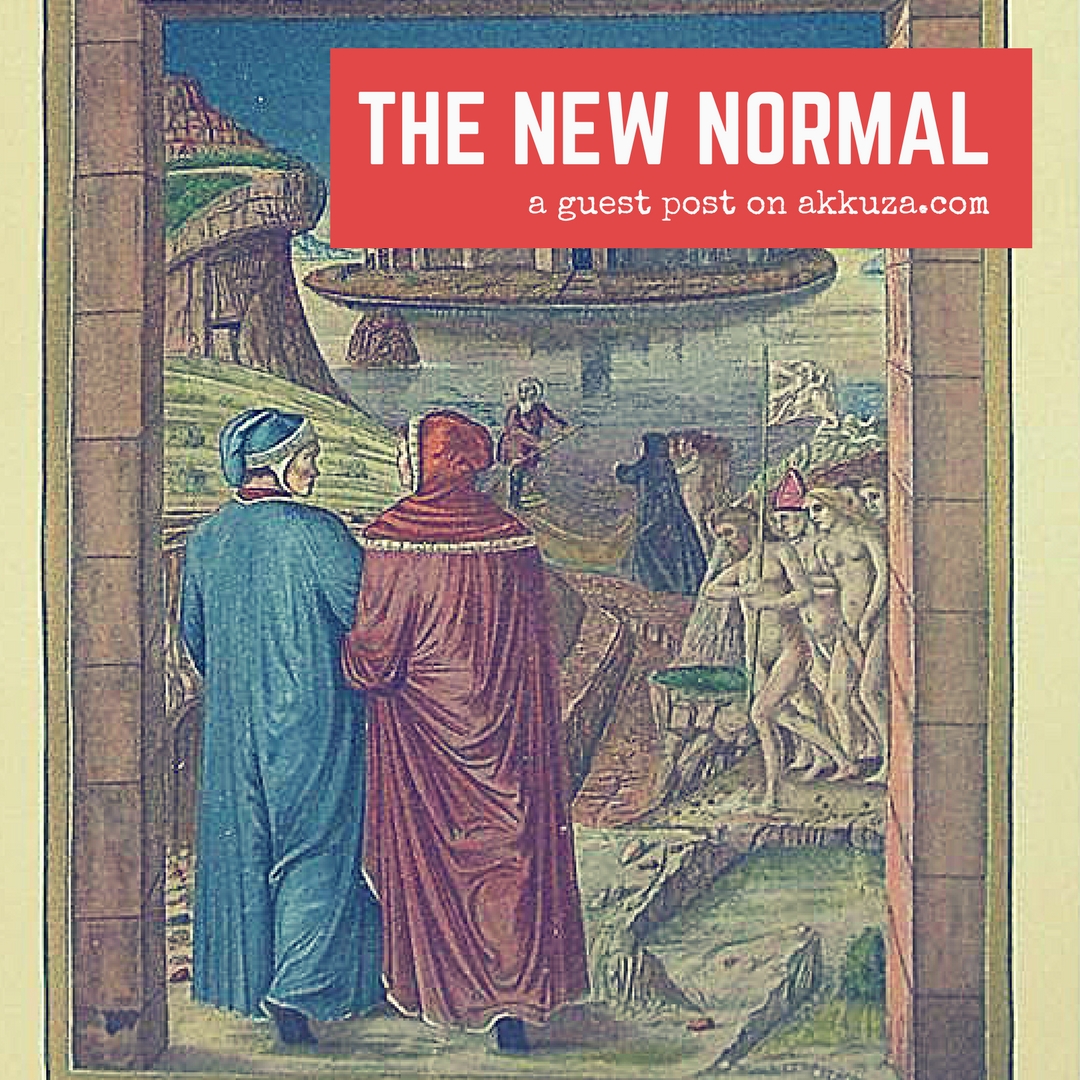
In Canto III of the Inferno, Dante Alighieri describes the sighs and piercing cries of woe of “the miserable spirits of those who lived neither infamy nor praise”. These are the so-called “ignavi”, from Latin “ignavus”, i.e. someone who is not active nor diligent. They are placed together with “that worthless choir of Angels who did not rebel, nor yet were untrue to God, but sided with themselves.

Given that the ignavi never dared take a stand for what they truly believed was right, but merely passively supported the strongest, they are subject to the poetic punishment of “no hope of death”. In fact they are condemned to an “unseeing life” where both Mercy and Justice hold them in contempt.

Their desolate condition is so tremendous that even Virgil, Dante’s teacher, suggests that Dante abandons them to their hopeless faith by saying the famous words: “Let us not talk of them; but look, and pass” (non ragioniam di lor, ma guarda e passa).

I recalled this scene after watching yesterday’s demonstration of the Civil Society Network. Many Maltese citizens (and I’d like to stress that they were citizens) were protesting in the streets, marching with banners or with tape on their mouths as a symbol of attempts to silence free speech. Even though a very big manifestation had already taken place two Sundays ago, at the very heart of Malta’s capital, they decided to march again on the streets, this time in the surroundings of where Mrs Caruana Galizia was brought up.

During the speech written by Jacques and so well delivered by Antonio, Jacques stressed that “Qiegħdin hawn biex inwasslu messaġġ fejn ngħidu li ilkoll kemm aħna nirrifjutaw li dan huwa THE NEW NORMAL. Li nirrifjutaw li dan huwa BUSINESS AS USUAL. » (yes, I am learning Maltese and yes, it is a beautiful language, though I only end up practicing it through politics nowadays ).

Why am I mentioning this particular bit of Jacques’ speech right now?

Because one of the first Maltese expressions that I’ve learnt when I started my second semester of Maltese was “Rajt ma rajtx, smajt ma smajtx”. An expression whose meaning I think only a Mediterranean mind fully grasps: the idea of pretending not to have seen nor heard for the sake of staying out of trouble. The idea of ignavia. The idea of omertà.

Those citizens protesting yesterday where calling for justice, but most important of all, were asking their countrymen and women to play a more active role in what’s happening in the country right now. Pia Zammit called for people to be engaged in what needs to be done right now to restore the Rule of law in Malta and honor Daphne’s memory by calling for more justice and transparence at all levels of the Maltese society.

And how can you start this tremendous job?

I think surely by not letting anyone around you forget or undermine what’s happening in your country. Daphne’s murder – because we’re not talking about someone’s death, we’re talking about someone’s murder – marked a turning point that cannot and has not to be forgotten.

However, there are those who are trying to make you go back to the passive status of the “ignavi” by calling this situation “merely exceptional”. They want to you to feel that after all business can and actually HAS to go back to usual, because there are other priorities on the agenda and it’s better that people forget this ridiculous quest for the Rule of Law.

And how do they achieve that?

First, they attack you. They call you whores, traitors and assassins if you decide to give up precious days of your life and devote them to protesting outside the PM’s office in Castille. They degrade you by stressing that you are nothing but mere random people whose place is not in the streets, calling for more justice, but back to where they belong – he wrote “Strada Stretta” (he even misspelled it) but even my poor command of Malti allows me to understand that he implied the former prostitutes’ district.

According to this logic, you people are tamed creatures who are useful because you possess the right to vote. Once the ballot is cast, forget about accountability and the sovereignty of the people. It’s them who take the lead. And by undermining your actions and the potential of these actions they make sure that you fully understand where you belong.

Secondly, instead of directly attacking you, they try to defend themselves and make you go back to your place by using a more subtle language. A language – in this instance it was used by your PM during last week- that can both threaten those who want to stand up and exercise their freedom of speech (“All those trying to make political mileage out of the murder of Daphne Caruana Galizia would see it blow up in their face”) and bluntly state what the country’s priorities are: business as usual, i.e.“The murder of blogger Daphne Caruana Galizia triggered off a difficult moment for Malta, but it should not be allowed to derail the country’s long-term plans.”

Let’s read it again: “IT SHOULD NOT BE ALLOWED TO DERAIL THE COUNTRY’S LONG-TERM PLANS.”

When I read this last sentence I was petrified. Seriously, is he saying out loud that it is the murder’s fault if you, the sovereign people, are now marching in the streets and that, by doing so, you are derailing the country from its never-ending Aqwa Zmien?

It’s because of these attitudes and the use of such a language that you all need to keep up the good work that has already been done over the past two weeks and go back to monitoring what is done by those who have the obligation to represent you.

Jiena smajt u rajt, u intom?

Corradin No

A reader joins the increasing number of J’accuse contributors. “As You Are” kicks off his contributions with a poem called Corradin No.


Corradin No

Maltese politicians will never know
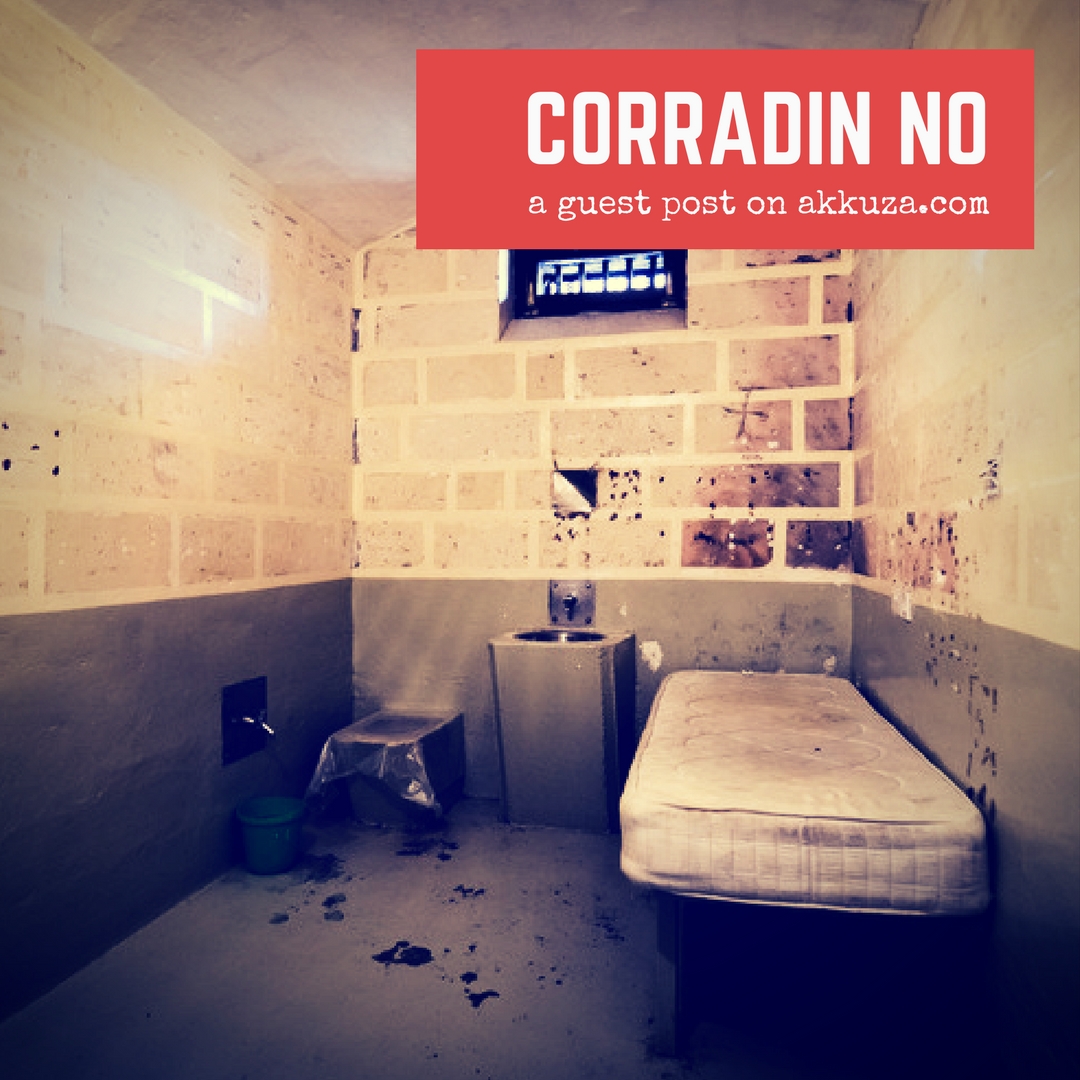
what it’s like to do time at Corradino
and then, when it’s over, to go back home
to your mum, or your girlfriend, or your wife,
or whoever,
who will lovingly try to heal
all the wounds you suffered,
except the wounds deep inside your anus
and the wounds deep inside your heart
because, of course,
you’ll never tell anyone
about those.

Maltese politicians will never know
any of that at all.
They will never know Corradino,
no matter what they do.

But you can know.
And you will
if you push your luck too far.
Just grow some weed
and wait your turn.
It will come eventually
unless you’re a Maltese politician.

As You Are