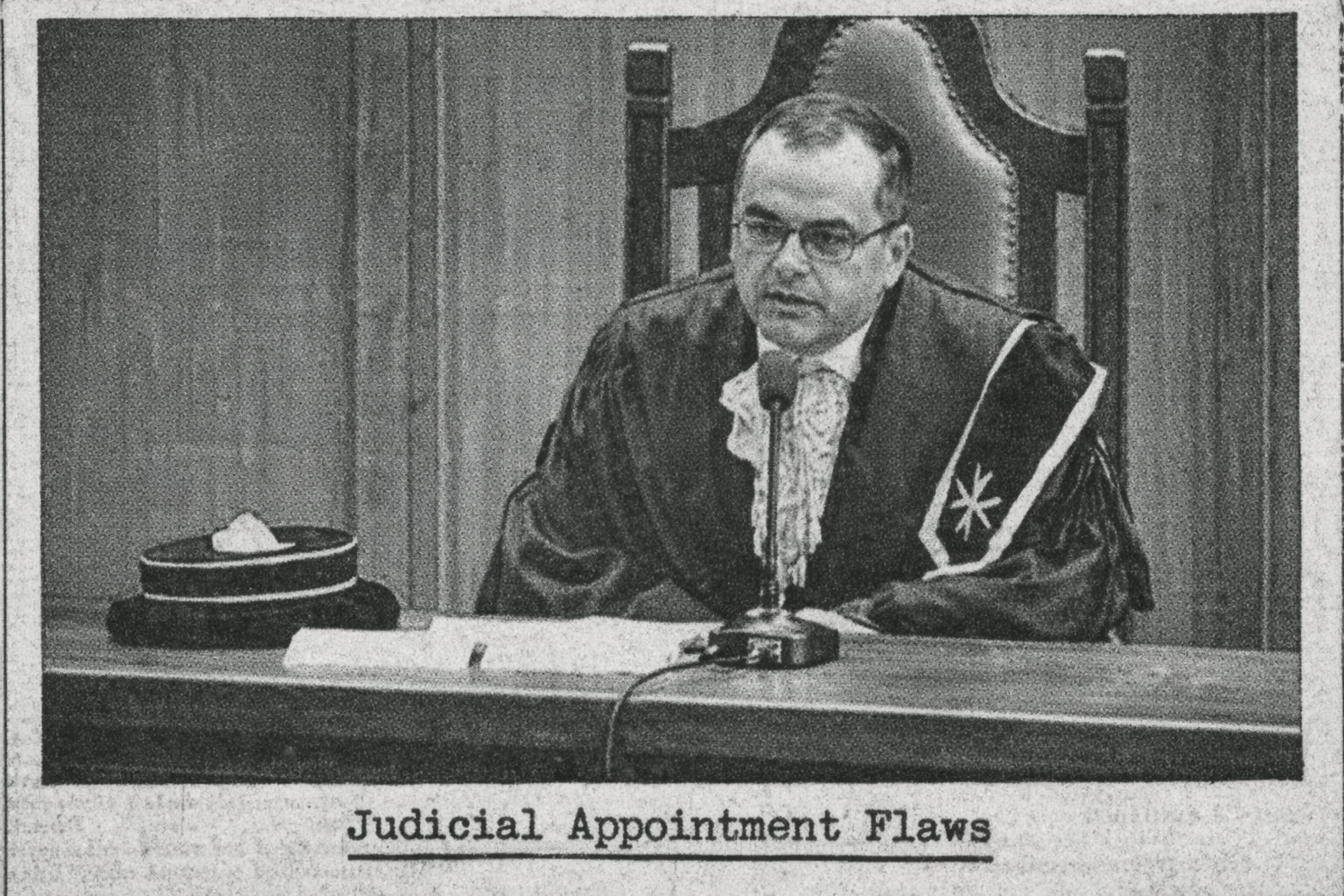
This is not only a clash between a judge and a Prime Minister. It is a warning that Malta’s system for appointing its Chief Justice is structurally broken.
We like to believe the two-thirds parliamentary rule protects the courts from political capture. In theory it forces consensus. In reality it often just forces negotiation. Instead of one party imposing its choice, both sides bargain for a candidate they can “live with”. The language of constitutional independence quietly turns into the language of political acceptability.
But a Chief Justice should not be someone the parties tolerate. A Chief Justice should be someone the Republic trusts. When the public starts hearing that candidates are being weighed according to party reaction, electoral optics, or internal loyalty, the problem is not simply who said what. The problem is that the system itself invites political filtering before merit ever reaches the surface.
And that means this crisis is bigger than any individual.
The two-thirds rule was meant to be a brake on executive power. But a brake is not a steering wheel. If government and opposition both treat judicial appointments as political decisions requiring mutual comfort, the outcome is still political. The process simply shifts from domination to deal-making. Independence cannot mean “approved by both parties”. Independence must mean selected outside their partisan interest altogether.
What Malta still lacks is the crucial missing piece: a truly insulated, professionally driven, super partes appointment system that identifies the best candidate in the public interest before politics ever enters the conversation. Without that safeguard, every appointment risks becoming a test of political balance instead of judicial excellence. Every delay risks becoming a tactical calculation. Every controversy risks eroding trust not just in a person, but in the courts themselves. The Constitution may require numbers in Parliament. But legitimacy is built long before the vote.
This is why the present controversy matters so much.
When the Prime Minister becomes personally entangled in allegations of political bias in a judicial appointment, the credibility of the process collapses immediately. But even if tomorrow another politician ran the same process flawlessly, the deeper structural flaw would remain.
A judiciary chosen through partisan comfort will always struggle to look fully independent to the citizen standing before it.
Courts do not derive authority from government. They do not derive authority from opposition. They derive authority from public confidence that they stand above both.
Until Malta builds an appointment system that visibly serves the people rather than the parties, these crises will repeat themselves — with different names, the same arguments, and the same damage to trust.
Because the real reform Malta needs is not a different candidate. It is a different system.
What destroys institutions is not one bad appointment. It is the slow public realisation that the system was never designed to keep politics out in the first place. Once citizens begin to suspect that judges rise not only by merit but by political tolerability, every judgment starts carrying an invisible question mark. And a court that must constantly prove it is independent has already lost part of its authority. Malta does not need a better political compromise. It needs a system where political compromise is irrelevant.
If justice must first be acceptable to politicians before it can be acceptable to the people, it is no longer justice – it is permission.
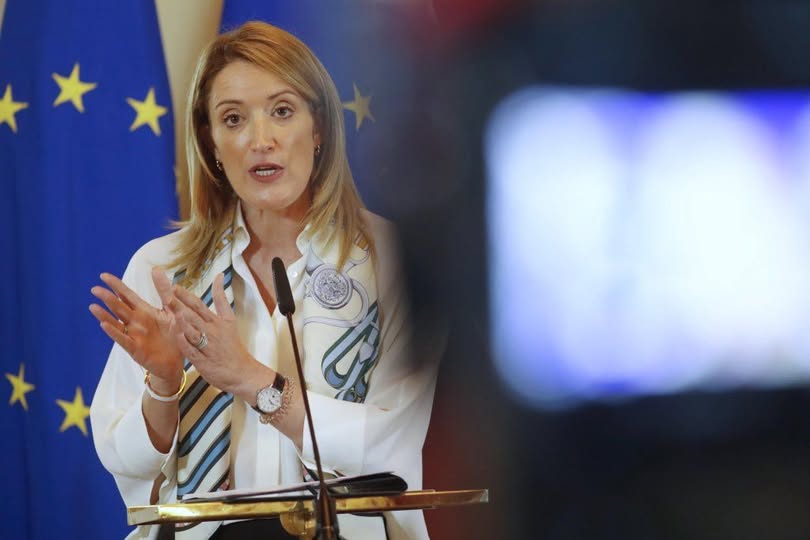
Roberta Metsola’s decision not to contest the leadership of the Nationalist Party will disappoint many — and understandably so. Her popularity, international standing, and gravitas would have made her a formidable candidate at a time when the PN is desperate for a resurgence. But sometimes, strength lies not in stepping forward, but in stepping aside.
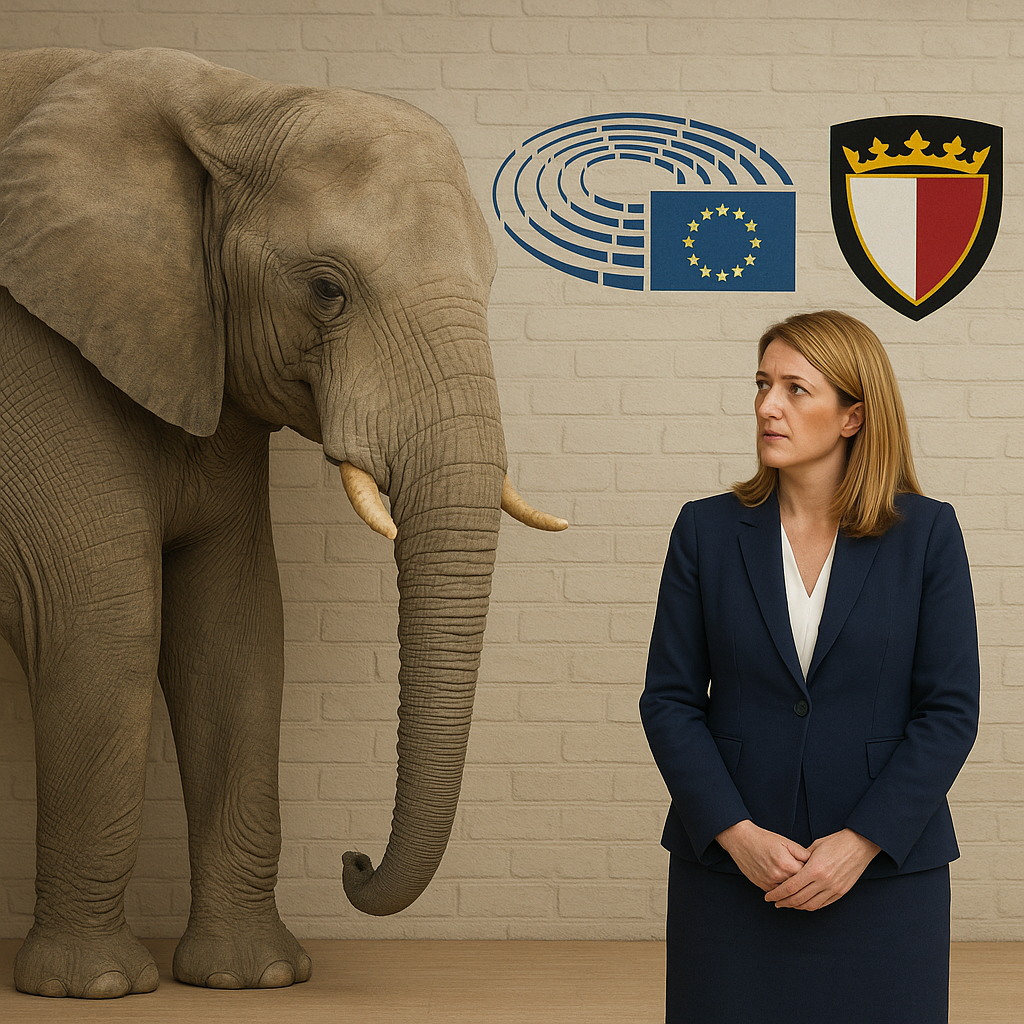
This refusal is no retreat. It is a recalibration. Metsola’s decision clears the air and clarifies the path ahead. The elephant that loomed large in every speculative conversation is no longer in the room. And with that, the PN stands at a true crossroads — finally unshackled from distractions, free to look inward and chart a path forward.
The party’s woes are deep-rooted, but so too is its potential. What it needs now is not a saviour but a leader. Someone who is willing to do the difficult work of reimagining what the PN stands for — and for whom. Metsola’s step back offers this incoming leader something invaluable: a clean slate. There are no albatrosses hanging from their neck, no power struggles in the wings. Just an open field and a nation that is quietly yearning for a real alternative.
Just like Bernard Grech’s resignation, Metsola’s decision strengthens, rather than weakens, the next PN leader. She remains a loyal ally — a Maltese figure at the helm of one of Europe’s most important institutions, whose voice still carries weight both at home and abroad. The next leader of the PN can move forward knowing they have her support, but not her shadow.
Reinvention will not come easy. It will require political courage, humility, and a genuine connection with the people. But more than anything, it will require freedom — freedom from the ghosts of the past, from the paralysis of nostalgia, and from the illusion that electoral success lies in more of the same.
If properly dealt with, Roberta Metsola’s refusal to run is not the closing of a chapter. It is the turning of a page.
When Bernard Grech finally bowed to electoral gravity and quit as leader of the Nationalist Party (PN) this week, the predictable hunt for a saviour began. Within hours social media timelines were aflutter with pleas for European Parliament President Roberta Metsola to return home and “rescue” the party, MPs were trading endorsements, and columnists dusted off familiar laments about the PN’s existential crisis. But Malta’s oldest political movement does not, in fact, need saving. It needs reinvention.
A leadership carousel that goes nowhere
Since 2013 the PN has cycled through three leaders, each initially hailed as the figure who would close the polling gap with Labour. None succeeded. The latest Times of Malta survey in March 2025 still places the party six percentage points behind Robert Abela’s PL—roughly a 18,700 vote deficit. Worse, polls over the past three years consistently show that while Labour bleeds support, the PN fails to capture disillusioned voters . A fresh face at the helm—Metsola or anyone else—will not reverse that trend if the underlying product remains unchanged.
The fallacy of the messiah leader
Treating the leadership vacancy as a superhero casting call mistakes symptoms for causes. Charismatic leadership matters, but it cannot substitute a coherent ethos. As long as the PN defines itself primarily as “not Labour”, it will grapple for identity and bleed relevance. The politics of emergency—switching captains every electoral cycle—erodes public confidence and demoralises activists who crave purpose, not panic.
As long as it continues to think of politics, of itself, of its mission, in terms of the system that created the destructive duopoly we have today. As long as it continues to define its structural template against the background of the sick politics that have brought a nation to its knees. As long as it does this, the PN will remain the empty carcass that it has become. No matter how many ‘saviours’ are heralded into the party on the wings of partisan enthusiasm.
Rediscovering — and reimagining — values
The PN’s greatest victories were won when it offered a compelling national project: EU membership, economic liberalisation, democratic consolidation. Two decades later those milestones are baked into Malta’s status quo. The party now needs a new raison d’être anchored in 21st century challenges: a green and digital economy, affordable housing, integrity in public contracts, and an education system that prepares workers for AI driven industries.
That requires more than a policy facelift. It demands a mindset shift from siege to service, from factional arithmetic to civic partnership. The PN must speak the language of young renters priced off the property ladder, caregivers navigating inflation, and entrepreneurs stifled by red tape. It must be bolder on good governance reform than Labour, more imaginative on climate action than ADPD, and more socially compassionate than its conservative caricature suggests.
A huge caveat also against those who associate the current battle against the regression in the field of rule of law as some kind of albatross holding the PN down. Those who fall for the ‘negativity’ and ‘holier than thou’ spin as though the battle for liberal democracy is for others to make. Failure to understand the basic duty of a party to underline and subscribe to the essential core values of a democracy is another non-starter.
A blueprint for reinvention
1. Open primaries and transparent financing to detoxify internal patronage networks and give every member a stake in decision making.
2. Policy co creation labs that pair MPs with civil society experts, ensuring proposals are evidence driven and citizen tested before they hit the chamber.
3. Digital first outreach that treats TikTok and Twitch as seriously as TVMs nightly news, meeting voters where they actually spend time.
4. Talent pipelines that prioritise competence over surname, bringing technologists, climate scientists and social policy innovators onto the candidate slate.
5. A servant leader culture in which the new chief acts as convener, not proprietor, of the party’s future.
From self preservation to national service
Malta does not need another leadership beauty pageant. It needs a credible opposition capable of converting protest into progress. That mission will not be fulfilled by pleading for somebody—anybody—to “save” the PN. It will be delivered when the party itself stops asking Who will rescue us? and starts asking How can we serve?
Grech’s departure is an opportunity, not an emergency. If the PN uses this interregnum to revolutionise its purpose and methods, the polling numbers will follow. If it opts instead for another superficial reboot, the country will merely witness the latest episode in a long running tragedy—and switch the channel.
After the uprising of the 17th June The Secretary of the Writers Union Had leaflets distributed in the Stalinallee Stating that the people Had forfeited the confidence of the government And could win it back only By redoubled efforts. Would it not be easier In that case for the government To dissolve the people And elect another?
The Solution: Bertolt Brecht
The election announced, the speculation begins. All forms of calculation are based on the ultimate constant: the rules of the game have not changed and ultimately the duocracy provides the only viable alternatives to electors. Anything else is offside.
Against all odds. The polls are unforgiving. Labour shall and will win. The question faced by those whose eyes have been opened is whether any credible opposition can be raised at this late stage. We will see different theories on the best ways to make opposition count. From the urgency of voting them out (vote PN) through the tired and illogical holding of the nose we will be presented with different reasons why voting PN is the only way to mitigate the onslaught of LabourAgain.
Even with the last minute purge of its undesirable parts the PN has failed miserably by turning up at the election as a loose collection of parts that is still committed to salvaging the system. Having been so close on numerous occasions to taking the leap into the unknown and transforming itself into a revolutionary party, the PN limits its odds to the quintessential “vote me for I am not Labour”.
We are still to see a commitment to the dismantling of the PLPN system that is necessary to rebuild the nation from scratch. It is only then that a vote for the Nationalist Party will mean anything more than simply voting in an alternative abuser of the system.
At this stage, with this kind of odds involved, the blank ballot becomes a powerful and attractive alternative. I strongly doubt we could ever reach the 83% level of blank ballot “terrorism” described in Saramago’s Seeing but the blank ballot is fast becoming the clearest form of protest vote of real opposition.
Unless a party provides a clear and unqualified commitment to a systemic overhaul the solution for those who are no longer blind can only be the blank ballot. Turn up to the polling booth and register your dissatisfaction with what is on offer by posting a blank ballot in the box.
Miegħek. Flimkien. Vot vojt.
“Casting a ballot is your irrevocable right, and no one will ever deny you that right, but just as you tell children not to play with matches, so we warn whole peoples of the dangers of playing with dynamite.”
The weeks of long knives at the PN HQ have just been put in temporary suspension as an apparent reprieve has been found. ‘Party stalwart’ Louis Galea described as the man who transformed the PN into a ‘slick political machine’ between 1977 and 1987 has been appointed as AZAD Head and given the mission to reform the PN. Here is how the Times of Malta reports the former member of the European Court of Auditors when explaining his mission :
La Cavalleria Rusticana
Dr Galea said he had several meetings with Dr Delia before Thursday’s meeting of the executive and had discussed various ideas. He would now lead a reform process which would include all those within the party and the country who wished to help so that the PN could stand on its own feet. This, he said, was in the interests not just of supporters, but the country as a whole.
Times of Malta, Louis Galea appointed head of PN Think-Tank, 5th July 2019
The reform is apparently motivated by the needs of the party to “stand on its own feet“. What comes next will blow your mind (as the click-bait peddlers are wont to proclaim nowadays): The PN needs to stand on its own feet in the interests of its supporters and of the country. Which is the kind of reasoning that normally precedes the launching of a floating device up a narrow sheltered waterway filled with excretion while inconveniently forgetting to equip said device with any means of propulsion.
Once again half of the PLPN hegemony will go through a process of renewal, regeneration and redesign much in the vein of what Inħobbkom Joseph had done with the Malta Labour Party in order to turn it into a ‘slick political machine’ (see what I did there?) that churns out the kind of electoral victories that are sure to cure any kind of “uġiegh” that any die-hard “partitarju” may have felt. And therein (among a myriad other considerations) lies the crunch… (Qui sta il busillis)
(Not) A man for all seasons
Louis Galea means well. I am sure he does. This is definitely not an attack on Louis Galea. Nor is it intended to be an attack on the current leadership (for want of a better word) of the Nationalist party. This post, like many posts before it on this blog, is an attempt to point out the real needs of the country, its residents and its political parties (strictly in that order). In order to do that we must focus on the current dramatis personae but we must also step outside the political machine that takes many givens for granted and patiently point out the emperor’s nudity for the umpteenth time.
Louis Galea was anointed by Adrian Delia in these times of trouble and overt rebellion in order to quell the forces of evil and convert them to striving for the party’s cause because unity in the party, with the party, for the party is presupposed to be the overriding panacea. We could waste time looking into the factions, the dissent, the anger, the hurt and the damaged pride of what appears to be a party on its last throes. We could. But it is beside the point.
Let us just state the obvious that this transfer of responsibility from Delia to Galea is clear evidence of the failure of the Delia mandate. Leaders are appointed to give vision. A change of leader inevitably implies a change of style and direction with the imprint he or she will give to the party as a whole. It is not just Delia that is being held to such standards… here is what we had to say on Simon Busuttil’s performance as deputy leader (and Muscat). In handing over to Galea on of the most basic of tasks he should be fulfilling as leader Delia has openly admitted his lack of grip over the party.
Galea will do what he has always done. There is no way that the veteran politician who has served the party will change his ways and adapt them to 2019 and the future. His successes in party management occurred in an era when the cold war was in full swing, the end of history had not yet begun and coincided with the period of constitutional tinkering at a national level that set the way for the PLPN Constitution – an adaptation of liberal democracy centred around the pathetic alternation in power of THE parties.
Nostalgics will look back tearfully at the age of Xogħol, Ġustizzja, Liberta’ and wish against wish that Galea will manage to bring back that golden period. What Galea brings to the table though is the iron-clad determination to restore a party to its former slick perfection. What he does not bring is the content, the values, that were advocated by that slick machine in that period of time. Sure enough the good old Fehmiet Bażiċi will be bandied around at some point but they will do so in the same manner as has been done in recent years – one that weighs the importance of policy choices on the shameful scale of positivity and popularity.
Galea’s eighties PN differed from today’s PN in one important aspect. An era kicked off in the late seventies and reached all the way to 2004 and petered out as PM Gonzi soldiered through the economic crisis. That era was one where the PN was driven by consecutive “causes” that allowed an alienation from the mantra that is “in the party, with the party, for the party”. The PN was a party with a national interest acting for the national interest. Which is what a party should always be.
A nation that was born out of constitutional struggles with its colonial masters had seen first independence and then a republican constitution in its first steps on the world stage. The Mintoffian interlude and experimentation with ad hoc socialism had led the country to a developmental stagnation. Fenech Adami’s PN took up the challenge with vigour and the steps that followed involved a transformation into a liberal democracy, an infrastructural boost coupled with the path to membership of the European Union.
Nationalist party electoral victories (and losses) in this period cannot be seen separately from the underlying causes that were being fought. No matter how slick the party machine was, the real reason for the (at times disappointingly marginal) victories was that a sufficient majority of the nation could identify with cause after cause behind which the nationalist party had thrown its weight. At the time, the early signs of backsliding of the rule of law that resulted from party abuse of the law could be sidestepped for the greater cause.
There is no denying that by the time the people voted in the EU referendum, many pro-EU votes were also a vote for change – one that would allow for the raising of standards beyond the grasp of the petty partisan politics. The EU Acquis should have done the rest. Still. The PN had served its purpose for two decades. The last few years of the Gonzi government were concentrated on steadying the ship through the economic crisis but the PN had already begun to lose its hold on the pulse of the people.
A party for all reasons
Any reform of the PN must therefore also be seen in this light. As has always been the case a party must have a reason to exist. Aside from the minutiae of everyday policy development one must also be able to identify a party with an overarching cause – of the type that marked the PN’s double-decade of success at leading the country. Call it ideology if you will, though that gets complicated in this day and age what with the modus operandi of the current political arena.
The party’s mission with such a cause would be to convince first of all the people that they must espouse it and this for their own sake. That, in itself, is not the easiest of tasks. Just consider for a moment that the ground-breaking election of 1987 that launched the era of change was won by… wait for it… a margin of 4,785 votes. The cause must transcend the party. There is no other way of going about this for real effectiveness.
As things stand the reasoning that underlies ideas of reform is pinned strongly in the heart of the current system. Here is how I described it in 2016 in a blog post entitled Il Triangolo No:
The structure of our constitutional system has been built using a language that reasons in bi-partisan terms. A bi-party rationale is written directly into the building blocks of our political system – both legally and politically. Since 1964 the constitutional and electoral elements of our political system have been consolidated in such a manner as to only make sense when two parties are contemplated – one as government and one as the opposition.
We are wired to think of this as being a situation of normality. The two political parties are constructed around such a system – we have repeated this over the last ten years in this blog – and this results in the infamous “race to mediocrity” because standards are progressively lowered when all you have to do is simply be more attractive than the alternative. The effect of this system is an erosion of what political parties is all about.
The political parties operating within this system are destined to become intellectually lazy and a vacuum of value. The intricate structure of networks and dependencies required to sustain the system negates any possibility of objective creation of value-driven politics with the latter being replaced by interest-driven mechanisms gravitating around the alternating power structure. Within the parties armies of clone “politicians” are generated repeating the same nonsense that originates at the party source. Meaningless drivel replaces debate and this is endorsed by party faithfuls with a superficial nod towards “issues”.
The whole structure is geared for parties to operate that way. Once in parliament the constitutional division of labour comes into play – posts are filled according to party requirements and even the most independent of authorities is tainted by this power struggle of sorts. Muscat’s team promised Meritocracy and we all saw what that resulted in once the votes were counted. In a way it was inevitable that this would happen because many promises needed to be fulfilled – promises that are a direct result of how the system works.
The “intellectually lazy and value vacuum” parties are what needs to be reformed. This requires a rebooting of the system. What needs to be targeted are the laws and structures that have developed into an intricate network of power-mongering and twisted all sense of representative politics. Reform of this kind goes a much longer way than merely rebooting the party and putting it back in the same fray.
Forza Nazzjonali was a last-minute attempt to mobilise the forces of opposition to corruption in this country. It is telling that the part of the PN that viewed the coalition as anathema would justify their aversion to the idea with the fact that this damaged the “party”. It is the same part of the PN that is unable to see the greater picture regarding the backsliding of the rule of law in the country. In their eyes the difference between them and Muscat is that Muscat has hit on a winning formula and has raised his party to new heights of glory. You can bet your last euro cent that had Muscat been PN they would be applauding him till the cows come home.
As things stand though, the reform of the PN does not seem to be pointed in the direction of greater causes. The reform will in all probability get mired in the usual bull concerning street leaders, committees, local councils, regional structures, partition of party fiefdoms, “listening” mechanisms and such. Nahsbu fin-nies taghna. Nisimghu il-wegghat. Partit miftuh u lest ghal bidla. Yada yada yada.
That kind of reform deserves only a slow death. It would just be a tinkering of the ladders of power that are built within our parties with the hope of getting a chance of replicating them on a national scale once in “the power” (For more on how this works see yesterday’s fresh report from the Commissioner on Standards – or if you’re lazy just watch the Yes Minister episode called Jobs for the Boys). It is the kind of reform that assumes all is ok with the laws of the land and how they are applied. Again. That reform deserves a slow and painful death.
Death becomes them
I have absolutely no doubt in my mind that calling for the death of the party will attract all sorts of opprobrium from the party core. That should not matter. What matters is that the message gets across. The PN must die is really a call to rebuild from scratch. Thinking within the confines of an age-old mentality of parties wired to mirror and milk the state machine can only cause further damage. Instead the PN must rebuild as a party that owns the biggest cause at the moment : the need for a radical constitutional change that inoculates the nation against state capture.
After his failed mission at the last EU #topjobs summit Joseph Muscat flew to the Czech Republic and met PM Babis. The squares of the Czech republic have been filled with protesting citizens unhappy with Babis who is under investigation for fraud. Muscat could give a lesson or two to Babis on how to convert the baying crowds into comfortable electoral margin wins. That’s the Muscat who was not considered for an EU Top job because of his governmental track record.
The new PN should be out there leading the battle against corruption on all fronts. It should be reminding the people that this battle is for their best because the backsliding of the rule of law will ultimately have one big victim: the very people who currently blindly follow Muscat’s every turn. That new PN can only exist if the current format and mindset are ditched. This is the chance to take the lead in a wide coalition of opposition for real change. In 2020 the seeds for a new forward looking movement could be sown. The odds are stacked against that though – the system is a survivor, the system feeds on the core nostalgics and will show a strong will of self-preservation.
Never forget, and beware, that old Mediterranean adage: “if we want everything to stay the same, then everything must change”.
It’s Sunday morning and the nationalist party is gearing up for what it dubs a national protest against corruption. The Sunday papers are full to the brim with opinion articles, spin and (if you look really hard) factual reports about the issue that has a name: Panamagate. Over the week the men in Castille shifted through deny, downplay, riposte and finally deflect and distract motions. Nothing seems to work, and rightly so, because the issue is national, important and immediate. Mark Anthony Falzon’s column in the Sunday Times best explains why in the small picture Konrad Mizzi’s position is untenable. Falzon’s column can be added on to an earlier post in this blog explaining why even before delving deeply into Mizzi’s doings we could conclude that he was unfit for purpose. Mizzi, not Falzon.
I did say small picture though and I was careful when I said that. Don’t get me wrong, Panamagate is a scandal of gargantuan proportions. We are still coming to terms with the ramifications of what it all really means in terms of this government’s general program. Indian frauds and Azeri business deals have only just been brought into the fray while the feeble counter-ripostes from the government side have included reminders of how ex-Nationalist ministers (Ninu Zammit in particular) held millions in accounts abroad before being granted an amnesty by Joseph Muscat’s government. So yes, of itself and within its confines Panamagate is huge and insofar as the story of this bumbling government is concerned it should be a huge blow to its overall credentials for governance.
There is a bigger picture that we should objectively be looking at. It’s a wider look at the nature and workings of our body politic as a whole – beyond Panamagate, beyond the other PL government scandals, beyond the cases of corruption of ex-PN ministers that have come to surface and might yet surface. The bigger picture should be what the whole business of running our democracy is all about and understanding how it could be improved – not for the sakes and interests of the duopoly and a bit (I’ll get to that “bit” later) but for the sakes of a young Republic that needs renewal and revival.
Sunday’s protest is supposed to be a national one against corruption in politics. J’accuse is taking this cue in this time when trust in politics and politicians to take a wider angle look at what is happening, at how we got to Panamagate and the options of where we can go from here.
Getting to Panamagate
sowing the seeds of bad governance
Corruption. It did not start with Konrad Mizzi. It will not stop with Konrad Mizzi. At the heart of corruption is the misuse of the powers that have been entrusted in the hands of those chosen to administer the state on behalf of the people. This is, in essence, why and how corruption exists. Do not only see it in monetary terms – the pilfering of funds isn’t half the full story. Corruption is the abuse of trust pure and simple. It is the use of powers that have been lent to you in order to give, grant or allow things to people who do not deserve or would not have deserved such things had they gone through the right channel. Corruption is nepotism. Corruption is legislating as a favour for an interest group. Corruption is closing one eye. Corruption is abusing of the rules in order to get your way. Corruption is the conscious fettering of one’s discretion. Corruption is the creaton of networks that favour closed groups without transparency or merit.
The structures of a democratic state are intended to counter, as far as possible, the possibilities of corruption. Furthermore, when such preventive methods fail, the same structures should be able to counter with a remedy – investigation, prosecution and more. The Maltese Constitution, sovereign in 1964 and republican in 1974, was built around the concept of a sovereign parliament as inherited from our colonial rulers. It is clear from a reading of the constitution that with all the mechanisms of checks and balances in place, with all the power afforded to the head of state, the main engine of the system is the parliament. It may be fettered by a few absolute majority clauses but there is no doubt that parliament reigns supreme. The power of the people lies in parliament. It’s not exactly “if parliament wills pigs can fly” but it’s pretty damn close.
Over the sixty odd years of sovereign existence our parliament evolved into a two-party structure with more and more importance given to the main parties concerned. Laws were written, amended and “abused” in favour of this dual perversion – comfortable with the notion that if the world’s oldest liberal democracy can live with dualism then so can we. While China and Soviet Russia could work with the one party system (factoid: China actually has thousands of parties but only one counts) we developed a perverse system in which the constitution and all laws enacted would be subservient to the needs of the duopoly’s concept of power. Even notions of Equity and Justice had to be based on the notion of par condicio. The PLPN behemoth was born. Electoral laws would be drafted to ensure that as far as is humanly possible only two types of interests would be represented in parliament and the rest of the laws requiring political distribution would follow suit – government and opposition making up the numbers.
Many moons ago this blog was not alone among a movement of people warning that not all is right under the PN government. Our main argument at the time was that the PN government had lost its sense of purpose – from the 1987 calls of Work, Justice, Liberty to the 90s reconstruction and growth , to the push to join the European Union in 2004, the nationalist’s had a clear direction in their mind. They were driven with that purpose and their role in governing the country was underpinned by that purpose. Once Malta had joined the EU that sense of purpose and rive was lost. The PN was doomed to falter from then on. It’s unwillingness to engage on social issues would not be the first petard with which it would be hoist. The PN would fail to admit that the system that fed the two-party alternation was eroding the nation’s backbone from within. The next decade from 2004 would be spent with the Gonzi government suffering the rot that would ensue. Left to their own devices politicians without a cause beyond their district duties and obligations end up doing what they know best – peddling in influence and toying with power.
It is not surprising that the John Dalli’s and the Pullicino Orlando’s of this world were born under a nationalist administration. In a panicked attempt to hold on to the reigns of power the PN turned a twisted form of populist – hoisting upon the electors a pick and mix of politicians that were anything but while failing to see where the real remedy lay: tackling the source of our ills – the magnet of corruption that was our political structure of networks, friends of friends and die-hard flag wavers.
Which is when Joseph Muscat stepped in. On paper it was all promise of transparency, meritocracy and a battle on corruption. The sovereign power of the people was supposed to revert to the Maltese- Taghna Lkoll. On paper. Yet Muscat operated within the same parameters as had the previous government. Worse still the new Labour team has shown that it has no capacity for self-restraint. The trough was thrown out in the middle of the brand new Castlile square and the nation could only stand back gobsmacked watching the pigs feast on it day after day. Meritocracy? Spare me. Transparency? Say what? Corruption? Ouch. Muscat’s finely honed electoral campaign was meant to work under the current parameters of electoral mediocrity. Those same parameters encourage the development of corrupt networks of dependency and trading in power. In a twisted chicken and egg conundrum it became evident that in order to take a big slice of the power cake, the networks of dependencies and IOUs had to be in place BEFORE even getting elected. The government promising transparency, meritocracy and an end to corruption had set the mold for a corrupt system before it was elected.
Meanwhile, calls by (admittedly small) sectors of society to elect the third party into parliament and break the power mold fell on deaf ears. Most times it was derided as madness and as a failure to understand that the rules only allow one winner and one runner-up. Critics missed the point. They still miss the point today when they speak of the “need of redemption” for what was done by third-way enthusiasts at the time. It is only ignorance of the system and a blind affiliation to the idea of alternation that can foment such ideas.
In 2016 this blog will be among the first to say that the third way is not the way to break the system and change it. It cannot be any longer. Change must perforce come from elsewhere. more about this in the next posts. Keep reading. And you might still be in time to get to Valletta for the protest.