Majority Rule or Rule of Law? Neutrality, Constitutional Supremacy and the Perils of Majoritarian Logic

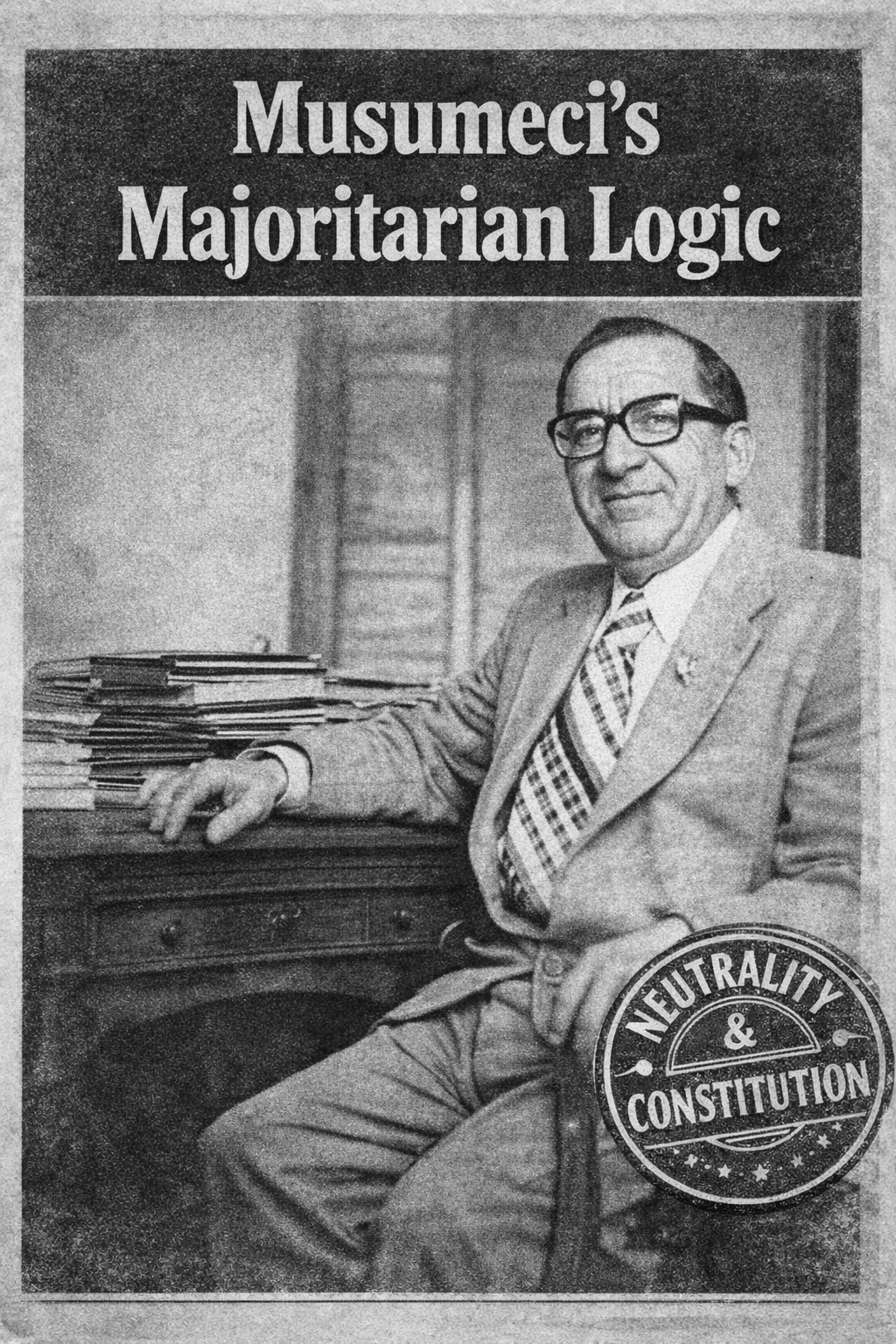
Robert Musumeci returns with another “constitutional article” (Malta’s Constitutional Neutrality, TOM 02.03.2026). In this analysis I challenge his treatment of constitutional neutrality and governance, exposing a recurring majoritarian logic in his writing. By conflating democratic outcomes with legal validity, his analysis risks subordinating constitutional supremacy to political arithmetic, reducing entrenched legal commitments to contingent expressions of parliamentary will.

The piece “Malta’s constitutional neutrality” asserts that Malta’s constitutional commitment to neutrality, enshrined in the 1987 amendment to the Constitution, now finds itself strained by the European Union’s evolving foreign and security policy architecture, particularly in the context of the Common Foreign and Security Policy (CFSP). Musumeci’s core claim is that while the veto in CFSP remains a bulwark preserving Malta’s constitutional neutrality, this legal safeguard is increasingly vulnerable to shifting political dynamics, particularly if habitual veto players (such as Orban’s Hungary) cease to exercise their blocking rights.

Implicit in his argument is the view that neutrality is protected less by enduring legal normativity and more by the strategic utility of unanimity in EU decision-making. This framing reflects a broader pattern in the author’s writings wherein democratic outcomes are conflated with legality, an approach most evident in his other Times of Malta article arguing that Malta’s constitutional fate is essentially entrusted to democratic procedure rather than entrenched legal restraint.

At the outset, the description of neutrality as a “domestic constitutional choice” significant in EU foreign policy politics obscures an important legal distinction. The neutrality clause is not merely a political accommodation embedded in constitutional text; it is a normative legal commitment that binds state organs and informs the interpretation of constitutional and international obligations. Article 1(3) of the Constitution explicitly states that “Malta is a neutral state actively pursuing peace…by adhering to a policy of non-alignment and refusing to participate in any military alliance,” a formulation that carries concrete legal implications, such as the prohibition of foreign military bases and the contextual limits on use of Maltese military facilities. Treating this provision as primarily a political artifact weakens its normative legal stature and reduces constitutional law to political expediency.

The focus on the CFSP veto as the principal legal safeguard of neutrality also compresses the constitutional issue into EU political mechanics. Unanimity in CFSP, as Musumeci acknowledges, means that a member state is not bound by an EU foreign policy decision unless it consents to it. However, the existence of a veto or passerelle procedures in EU law is not the same as a guarantee of compatibility with domestic constitutional commitments.

Again, Musumeci’s emphasis on the quantity of Hungarian vetoes and the potential diminution of their political cover conflates political patterns with legal safeguards. A veto is not a constitutional right conferred by domestic law, but an EU treaty mechanism whose application is inherently political rather than juridically determinate. The legal protection for neutrality rests primarily in the text of the Constitution itself and how courts interpret it, not in whether other EU states deploy their vetoes in politically convenient ways.

More fundamentally, the argument assumes that Malta’s capacity to block deeper integration in CFSP automatically protects its constitutional neutrality. This is an over-simplification. EU primary law evolves and CFSP mechanisms may increasingly interface with defence cooperation, even while excluding formal military decisions. Moreover, neutrality in constitutional doctrine is not a static concept; it is subject to legal interpretation that must account for shifting historical context.

Recent scholarly work shows that neutrality, especially in an EU member state, is often interpreted flexibly, acknowledging that neutrality does not preclude all forms of participation in collective security frameworks so long as core commitments like non-alignment in military alliances are preserved. By treating neutrality as a static artefact of Cold War language and as preserved only insofar as other states rein in EU integration, the article fails to engage with the interpretive dimension of constitutional law that recognizes the need to adapt concepts to evolving legal frameworks.

Musumeci’s previous article on constitutional governance (Honesty in constitutional governance,  (TOM, 19.01.26)) deepens this weakness by explicitly asserting that the Maltese Constitution entrusts its own fate to democratic procedure and not to “judicial virtue.” It argues that because Maltese constitutional provisions can be amended – even Article 6, the supremacy clause – the constitution does not shelter fundamental values from political winds.

This raises the spectre of majoritarian logic as a substitute for constitutional constraint, a position that undermines the very foundation of constitutional supremacy and the rule of law. It is true that the Maltese Constitution lacks unamendable “eternity clauses,” and that amendments require parliamentary supermajorities. Yet to suggest that constitutional law is subordinate to democratic choice misconstrues the nature of constitutional supremacy and legal constraint.

Constitutions worldwide entrust amendment procedures to democratic processes precisely because the constitution itself is the legal framework that governs how those democratic choices are made and limited. Democratic procedure and legal obligation are not antithetical; they operate in tandem. The notion that constitutional law can be dismissed as merely political choice obscures the fact that constitutional amendment procedures are themselves legal norms that structure democratic action.

This conflation of democratic outcomes with legal validity recurs in the latest article’s suggestion that the political cost of exercising Malta’s veto or recalibrating neutrality may prove decisive. By foregrounding the political cost of legal choice, the argument implicit in both pieces is that political feasibility is the arbiter of constitutional legality. Yet constitutional legality must be discerned through textual interpretation, doctrinal consistency, and legal reasoning independent of transient political calculus.

At a time when the international legal order itself is under strain, and when global politics increasingly rewards power over principle, it is precisely constitutional systems that must resist the reduction of law to arithmetic. If small states internalise the idea that legality bends to political convenience, they mirror a wider erosion in which might supplants right and rules become secondary to strategic leverage. If constitutional commitments are subject primarily to the vicissitudes of political costs, the concept of enforceable legal obligation is hollowed out.If constitutional commitments are subject primarily to the vicissitudes of political costs, the concept of enforceable legal obligation is hollowed out.

Yet again, Musumeci peddles majoritarian logic as a constitutional construct. His legal reasoning suffers from several interrelated weaknesses. It privileges EU political mechanics over constitutional text, collapses legal safeguards into political contingencies, and once again “sells” a constitutional theory that elevates democratic outcomes over normative constraints.

A more robust analysis would ground the discussion of neutrality in constitutional doctrine and interpretive principles, delineating the legal contours of Malta’s neutrality clause and its interaction with EU law, rather than reducing constitutional protection to the presence or absence of political shields like veto patterns. This would align the argument with core principles of constitutionalism and the rule of law, rather than subordinating constitutional rights to political calculation.

related post: Democracy is not a legal alibi

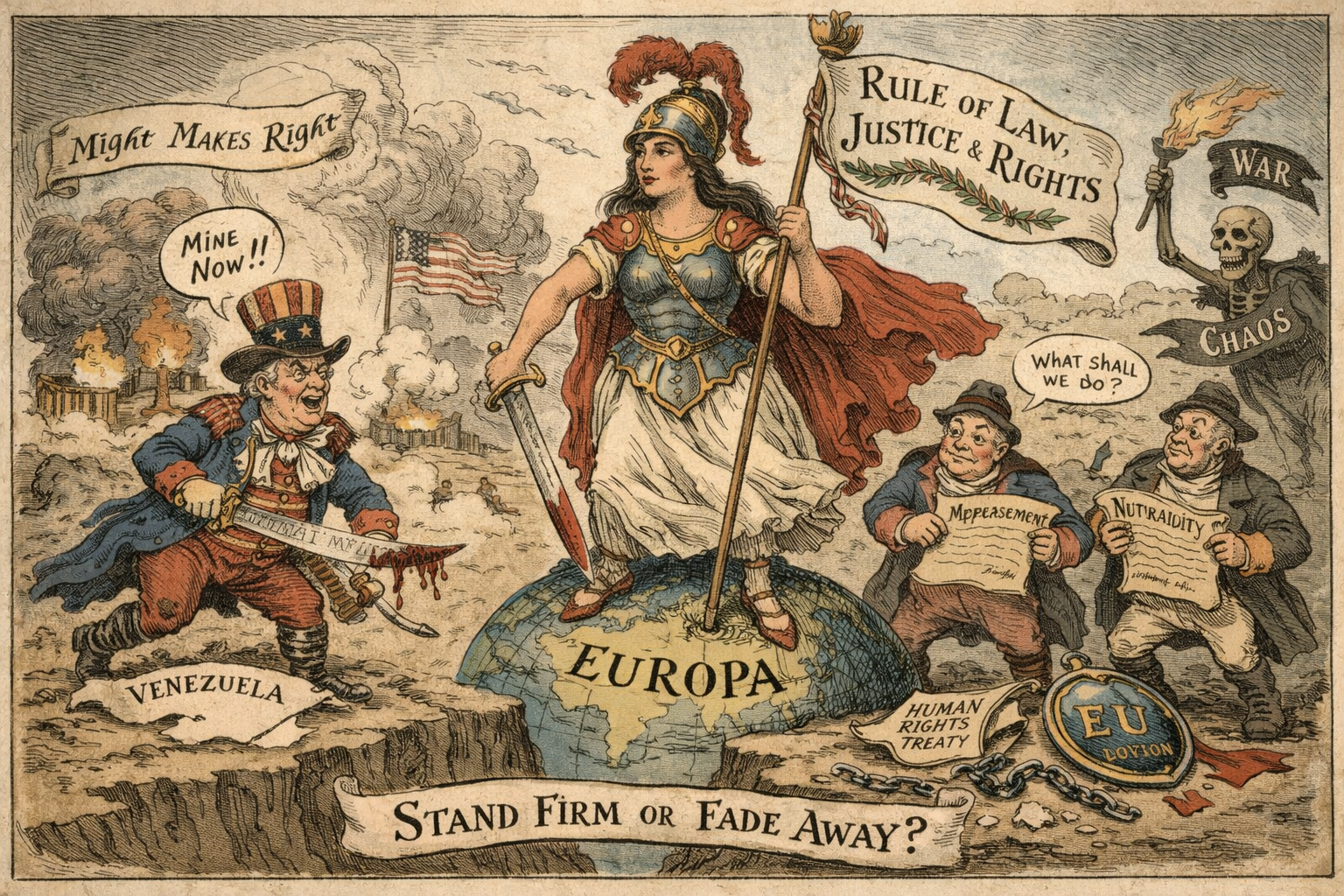
Alarm Bells in Caracas – a wake up call for the EU

Trump’s reckless invasion of Venezuela shatters illusions about a self-sustaining rules-based order. The EU now faces a decisive choice: drift into irrelevance or unite, wielding both muscle and diplomacy, to defend postwar values of human rights, justice and law. History demands leadership; hesitation means surrender by instalments for Europe itself.

There are moments when history does not knock but barges in uninvited, kicks over the furniture and dares you to respond. The reckless invasion of Venezuela by President Trump has done exactly that. The shockwaves are not only felt in Caracas or Washington. They reverberate through Brussels, Luxembourg, Berlin and every capital that has grown accustomed to the comfortable illusion that the post-war order, once built, maintains itself. It does not. It survives only if someone is willing to defend it.

What we are witnessing is not a passing aberration. It is the naked assertion that force trumps law, that personal bravado outranks multilateral process, that sovereignty and human dignity are props in a televised spectacle. The United Nations looks on, its mechanisms sidelined. International courts issue words while tanks supply facts on the ground. The question therefore returns, unavoidable and urgent: who, if anyone, will step up for the rule of law?

Europe was born out of the smoking ruins of precisely this kind of arbitrariness. It is no coincidence that the vocabulary of the Union is studded with words like dignity, rights, justice, peace. These are not rhetorical ornaments; they are its genetic code. Yet over the past years the EU has preferred the language of caution, incrementalism, lowest common denominators. Strategic ambiguity has become strategic paralysis. All the while, the world has ceased to wait for Europe to make up its mind.

Trump’s Venezuela adventure makes the choice starker than ever. Either the European project dissolves into a genteel talking shop, destined for gradual dismantlement into insignificance, or it accepts adulthood. Adulthood means power. It means speaking with one voice, building the capacity to deter aggression, backing diplomacy with credibility and muscle, and refusing the comforting refuge of “not our problem.” It means understanding that defending human rights, international law and multilateralism today is not an academic exercise but a question of geopolitical survival.

There is no shortage of hypocrisy to overcome at home. An EU that wants to lead must first confront internal backsliding on the rule of law, the temptation to placate strongmen for short-term gains, and the ever-present fear of domestic populists who rail against imaginary Brussels overlords while depending on the stability Europe provides. Leadership will not be improvised; it must be claimed, and it will be contested.

But the alternative is worse. A world of transactional invasions and punitive raids dressed up as destiny will not leave Europe untouched. It will reach our borders, our currencies, our energy, our democracies. Retreat is not neutrality; it is surrender by instalments.

So the time for pussy-footing is over. Europe must decide whether it is merely a market with an anthem or a political community prepared to defend a civilisation of law. That means coordinated foreign policy, credible defence integration, principled diplomacy, and the moral clarity to say that invasions without legal mandate are unacceptable regardless of who orders them. The post-war values that once seemed self-evident require guardians again.

History has pushed the European Union to the front of the stage. Either it bows and exits quietly, or it stands its ground and leads. The choice will define not only the future of the Union but the fate of the rules-based order itself.

The Passport Judgment Aftermath (III)

Facts and Explainers – The Mexit Fantasy

Another reaction popular on social media is the one that advocates showing the middle finger to the meddling EU and actually leaving it. How dare the Europeans dictate citizenship terms to our sovereign nation?

Where to start? A list maybe…

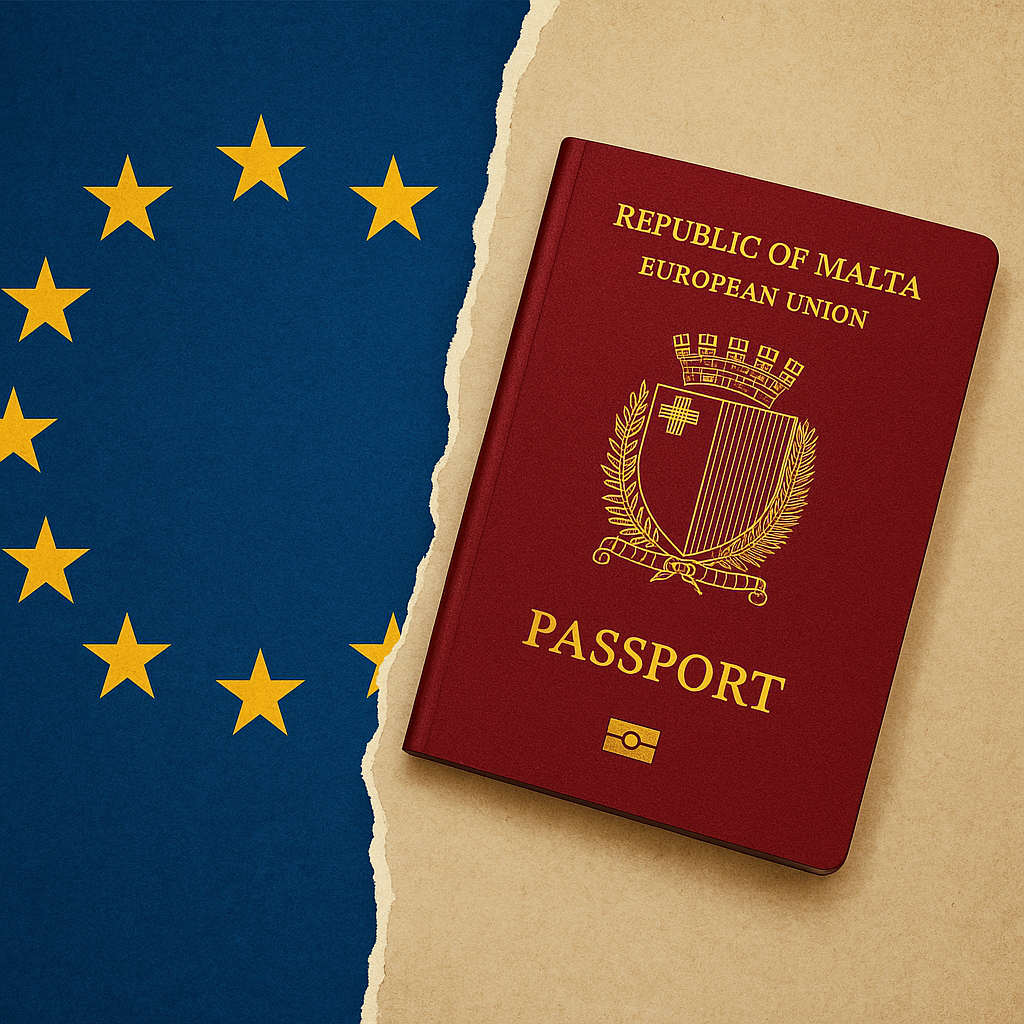
1. The success of the citizenship by investment scheme that generated 1.4 billion euros for Malta depended heavily on the fact that a) Malta was part of the European Union and b) the scheme practically sold (a more coveted) EU citizenship over and above (the Trojan horse) Maltese citizenship. As the Court itself noted in the judgment, agents were actively promoting the scheme as an opportunity to buy your way into the EU and not Malta. Add that to the scarce checks on the creation of any lien to Malta itself other than coughing up the cash and you may begin to understand how an EU-less Malta would not have such a successful scheme. In other words… it worked because of the EU element not in spite of it. Leave the EU and see how many citizens will comply.

2. Ironically, Malta was involved in another landmark case that has much wider implications than just in Malta. In Repubblika, the Court looked into the exercise of another sovereign competence of member states i.e. judicial reform. Repubblika was not the first case in which the Court did so. Article 19 TUE, and more specifically the obligation on Member States to maintain an efficient judicial system guaranteeing access to the EU acquis had allowed the Court to set an EU standard for judicial reforms. Again in layman´s terms: you fiddle around with your judiciary as much as you like BUT the EU will lways make sure that your new set up is not worse than the certified set-up of that was in place when you joined (non-regression principle). Same thing happened this time round with the citizenship scheme. The EU still allows Member States to determine who can become their citizen BUT given the implications on EU Citizenship the conditions for granting such citizenship may be scrutinised.

3. And this is the hardest one to get for the sceptics. It is basically summarised as you cannot have the cake and eat it (or the more expressive maltese “tridha hobbla u tredda”). Membership of the EU brings benefits. Huge benefits for both citizens and the country as a whole. These benefits come with obligations of loyalty to the system. Member States cannot expect to undermine the system while continuing to enjoy the benefits. It is really that simple. It is useless crying wolf every time you are found to have fallen foul of the common rules.

Leave the EU? Mexit? Possibly… consider it but only after you have really weighed the overall losses that will inevitably be incurred. I am quite sure you will think twice before thinking of leaving the EU again.

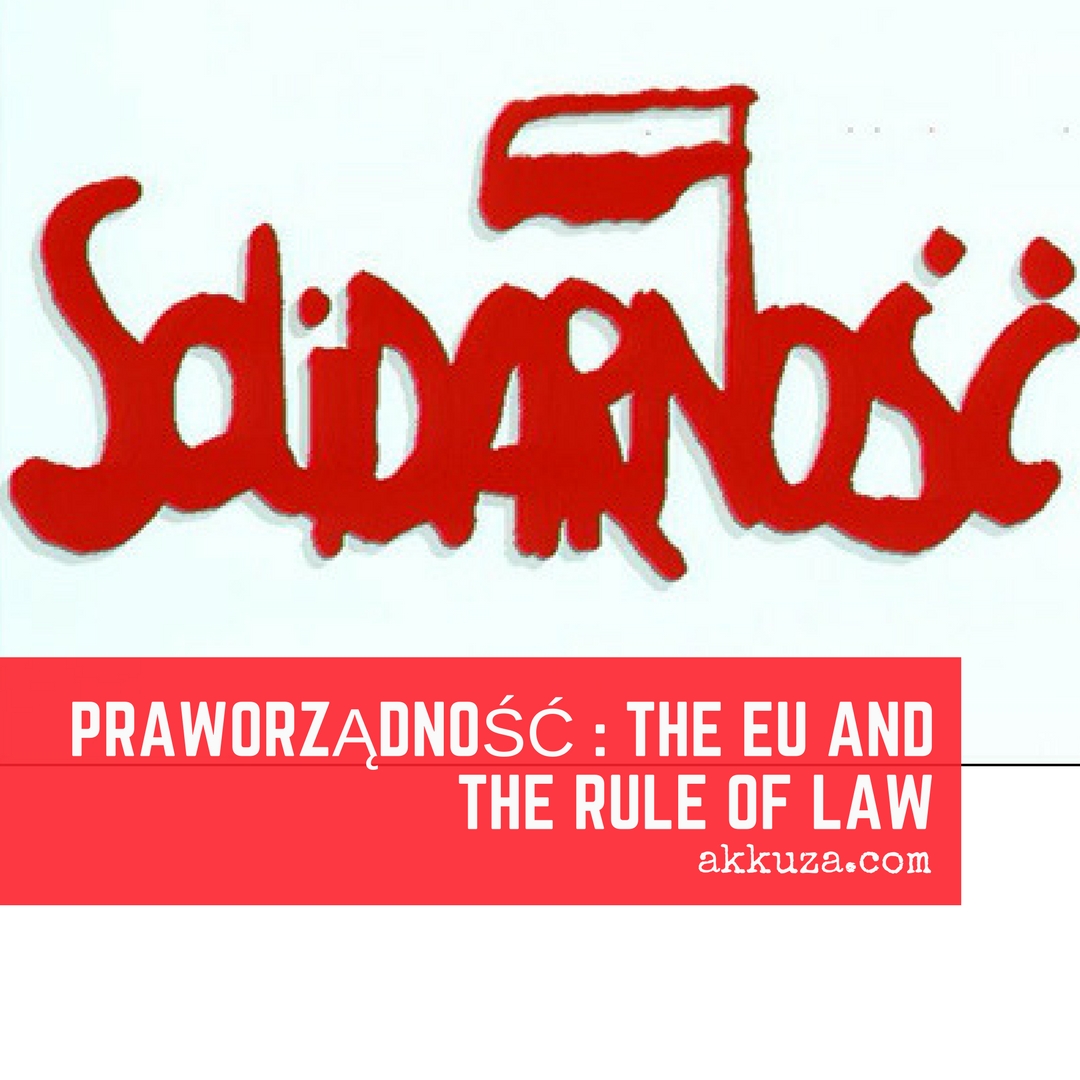
Praworządność : the EU and the Rule of Law

In a historic move today, the European Commission has initiated a procedure against Poland based on the clear risk of a serious breach of the rule of law. From the official press release:

Despite repeated efforts, for almost two years, to engage the Polish authorities in a constructive dialogue in the context of the Rule of Law Framework, the Commission has today concluded that there is a clear risk of a serious breach of the rule of law in Poland.

The Commission is therefore proposing to the Council to adopt a decision under Article 7(1) of the Treaty on European Union (see Annex II).

The European Commission is taking action to protect the rule of law in Europe. Judicial reforms in Poland mean that the country’s judiciary is now under the political control of the ruling majority. In the absence of judicial independence, serious questions are raised about the effective application of EU law, from the protection of investments to the mutual recognition of decisions in areas as diverse as child custody disputes or the execution of European Arrest Warrants.

This is not something that can or should be taken lightly. In a local (Maltese) context, this should put paid to the myth that the eyes of the EU institutions are only focused on Malta (vide Pana Committee and recent Rule of Law task force) and that they are focused on Malta because of the work of some “traitors”. It should also put paid to the yarn being spun in some quarters that the rule of law is some “cliche'” that only serves the ulterior hidden purposes of power-hungry groups eager to overturn the current status.

Interestingly the Commission focuses on the judicial reforms in Poland that have severely prejudiced the independence  of the judiciary – the main default in the state of the rule of law in Poland is seen to be the judicial branch. The deficiencies are in the powers of appointment and removal that have been arrogated to the executive in recent legislative changes.

Why should Malta care?

Malta’s current system of appointment, removal and scrutiny of the judiciary is already flawed as it is. All the talk about reform, even in the judicial sector, remains just that – talk. Over the years the loopholes in the system that stem from the excessive discretion of an all-powerful judiciary have only been worsened. Our Prime Minister may “take note” in some cases (in answer to the Chief Justice for example) or “be perplexed” in others (as when he feigns ignorance of the consequences of the Ombudsman’s warnings regarding the internal kangaroo courts being set up within the public service). There is only so long that these lies can hold though.

Alarm bells will continue to be rung – if not by a spineless opposition that seems to be ever more hell bent on joining the populist battle, at least by a wider civil society made up of varied exponents and NGOs that feel it is their duty to act as Malta’s last conscience. Poland had long been playing with fire and is now in direct line for losing certain rights under the EU system. Malta could very well be next.

In the eighties Malta looked closely and learnt lessons from the happenings in Warsaw and Gdansk. The solidarność (solidarity) movement was adopted as a precursor for the calls of Work, Justice and Liberty that brought about change from a tired system. This time round we might do well to take heed and see how Poland solves its problems with praworządność  (rule of law).

Now. Before it is too late.

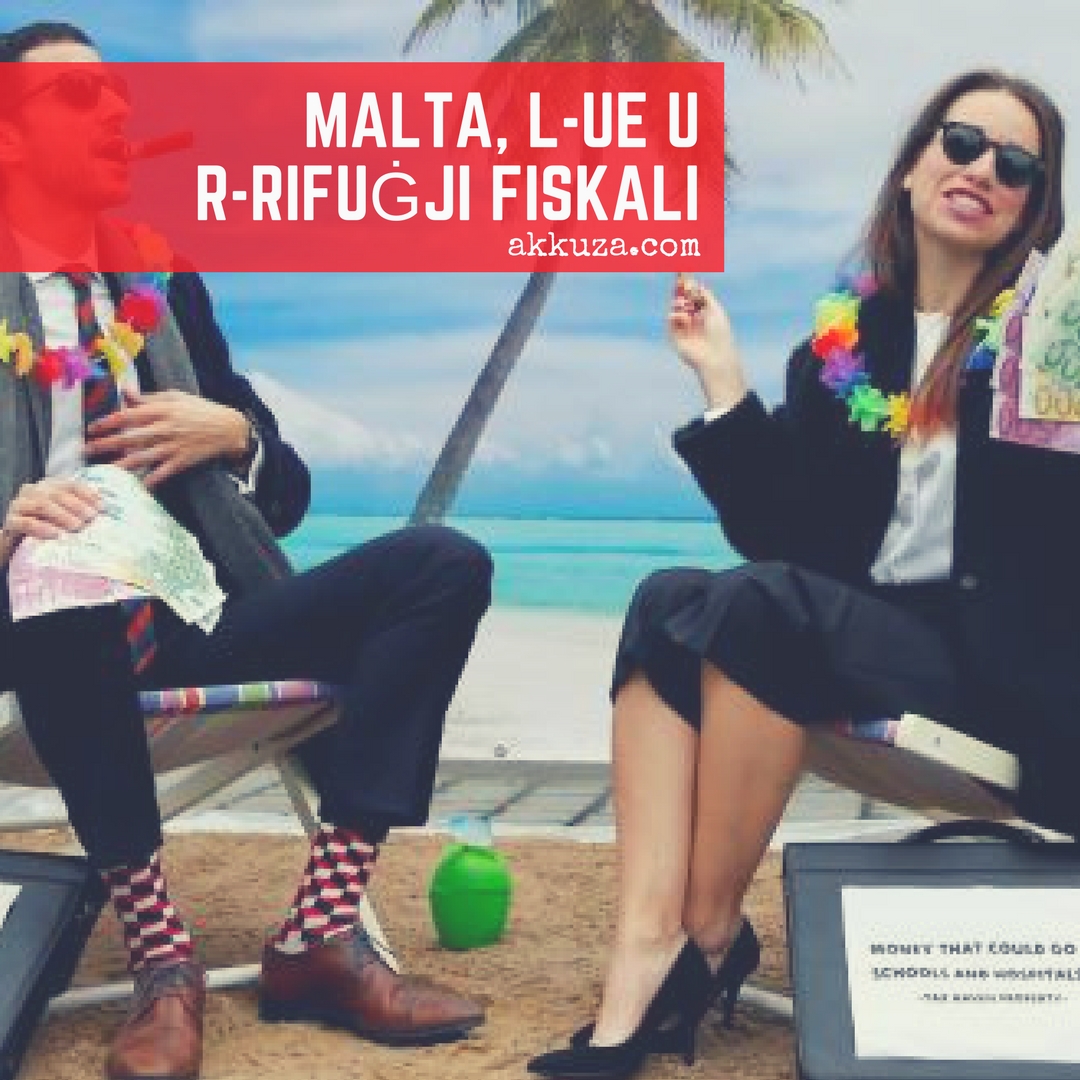
Malta, l-UE u r-rifuġji fiskali

L-ewwel parti: Rifuġji Fiskali u Politika Ewropea

Ilbieraħ l-Unjoni Ewropea ippublikat “blacklist” ta’ rifuġji fiskali (tax havens) u din tinkludi 17-il pajjiż barra l-Unjoni illi jitqiesu bħala pajjiżi li ma jikkoperawx f’materji fiskali. Milli stajt nara, ir-reazzjoni għal din l-aħbar kienet waħda li tirrefletti konfużjoni kbira kemm dwar is-suġġett innifsu kif ukoll dwar il-protagonisti principali.

Ħa nibdew mill-kwistjoni ta’ rifuġji fiskali (tax havens). Il-villaġġ globali li inħoloq wara tmiem it-tieni gwerra dinjija jiddependi ħafna fuq l-iskambju ekonomiku, is-swieqi ħielsa jew swieqi ta’ skambju kummercjali u l-mobilita’. Is-swieq ħielsa kienu pedament importanti sabiex, fost l-oħrajn, ikun hemm incentiv biżżejjed biex pajjiżi fil-kontinent il-qadim jingħaqdu u għall-ewwel darba wara mijiet ta’ snin iwaqqfu il-gwerer ta’ bejniethom.

L-Unjoni Ewropea inbniet fuq il-pedamenti ta’ erba’ libertajiet ekonomici – il-moviment liberu tal-prodotti, tas-servizzi, tal-kapitali u tal-persuni. L-ewwel drittijiet ta’ moviment ħieles kienu marbutin strettament mal-ekonomija u l-possibilita’ li tikber. Il-ħsieb kien, u għadu, li l-ġenerazzjoni ta’ ġid jikber u jitqassam. Sadattant parallel mal-iżviluppi ekonomici fil-kuntest ta’ swieq u economies of scale, il-pajjiżi membri kienu ukoll baqgħu jipperfezzjonaw sistemi ta’ welfare – saħħa, edukazzjoni ecc illi mhux biss huma kumplimentari għall ekonomija iżda jitqiesu bħala essenzjali għall-qgħada tajba tac-cittadini ta’ pajjiz.

Tajjeb li wieħed ifakkar li minkejja li l-Unjoni Ewropea hija għaqda ta’ stati, dawn jibqgħu sovrani u jżommu għalihom id-dritt sovran li jirregolaw certi oqsma. Kull tant żmien jiġu innegozjati pakketti ta’ armonizzazzjoni li jfissru li l-politika f’certu oqsma ikollha standard minimu komuni jew sahansitra regola komuni li tapplika indaqs ma kullhadd. Meta jkunu qed jagixxu b’dan il-mod l-istati ikunu qed jaħdmu fl-interess tagħhom stess (individwalment) qabel ma jikkunsidraw il-bżonnijiet komuni. Hija sistema ta’ kompromessi u negozjar fejn wieħed icedi naħa u jirbaħ oħra.

Ir-reġim fiskali huwa qasam li qajla qed jiġi armonizzat. L-interessi ta’ pajjiżi differenti anki fi ħdan l-UE huma differenti. Pajjiżi li specjalizzaw f’sistemi fiskali attrajenti – bħal Malta, Lussemburgu, l-Irlanda u l-Pajjiżi Baxxi – għandhom interess li ma jippermettux stati oħra jirregolaw dan il-qasam iżżejjed għaliex jitilfu ħafna mid-dħul li għandhom. Ma ninsewx ukoll li minkejja l-indinjazzkoni li juru certi pajjiżi hekk imsejħa kbar, dawn ukoll jabbużaw minn mekkaniżmi fiskali li inħolqu f’territorji iżghar li qiegħdin fil-kontroll tagħħhom Hekk Spanja, Franza, l-Italja u r-Renju Unit igawdu mis-sistemi fiskali ad hoc maħluqa f’postijiet bħal Andorra, Monaco, San Marino, ic-Channel Islands u Liechtenstein.

Huwa car li dan il-qasam huwa wieħed fejn l-interessi nazzjonali fi ħdan l-UE jirbaħ kull sforz ta’ armonizzazzoni konkreta. Il-pajjiżi ma jitiflux cans li jisparaw fuq pajjiz membru ieħor ma’ l-ewwel sinjal ta’ djufija… dan jispjega ukoll kif id-dibattitu dwar il-qiegħda tal-istat ta’ dritt f’Malta ġie żvijat kemm il-darba fuq il-kwistjoni ta’ rifuġju fiskali – kwistjoni li tellfet ħafna mill-kwalita’ tad-diskussjoni. Minkejja li ma hemmx dubju li pajjiż fiskalment attraenti jista’ jiġbed l-interess ta’ flus hekk imsejħa “maħmuġa” u b’hekk isir pajjiż komdu għall-ħasil ta’ tali flus, il-fatt jibqa li l-kwistjoni ta’ stat ta’ dritt hija importanti għax b’istituzzjonijiet li jiggarantixxu li dan ma jsirx (permezz ta monitoring tajjeb u indipendenza) l-attrativita’ fiskali ma ssirx awtomatikament bejta tal-ħasil ta’ flus.

Issa, biex nerġgħu għad-dikjarazzjoni tal-UE dwar il-lista’ s-sewda. Jekk hemm xi ħaġa li tgħaqqad il-pajjiżi Ewropej fuq kwistjonijiet fiskali hija proprju dik dwar kompetitivita’ fuq skala internazzjonali. X’ifisser dan? Ifisser li filwaqt li difficli li wieħed jimmaġina lill-pajjiżi tal-UE jaqblu dwar limiti ta’ tassazzjoni bejniethom, l-istess ma jistax jingħad fir-rigward tal-konkorrenza internazzjonali minn pajjiżi bħal Panama. Hu għalhekk illi mill-aspett Ewropew ma hix ħaġa sorpredenti li sar il-qbil li sar illi iffoka fuq pajjiżi barra l-UE.

It-tieni parti: Rifuġji fiskali vs kompetitivita’ fiskali

Wieħed irid ukoll joqgħod attent meta jitkellem dwar sistemi fiskali differenti li jeżistu kemm fl-Ewropa kif ukoll fil-bqija tad-dinja. Reġim fiskali li jiffacilita l-ħasil ta’ flus ma huwiex fuq l-istess livell ta’ reġim fiskali illi joffri vantaġġi lil min jiflaħ iħallas għal dak it-tip ta’ ippjanar.

Ir-rifuġju fiskali illi minħabba monitoraġġ laxk jew nuqqas totali ta’ kontrolli jsir għodda ta’ ħasil ta’ flus ma huwa qatt se jiġi promoss – la fis-sistema Ewropea u lanqas f’dik dinjija. Ir-raġuni hija waħda ovvja – is-sors illegali tal-flus li jaslu f’dan it-tip ta’ reġim huwa problema għall-pajjiżi kollha għaliex jsaħħaħ sistemi illegali li jtellfu mis-sistema ekonomika dinjija kif ukoll huma moralment reprensibbli. Pajjiż bħal Panama li dan l-aħħar ħareġ fic-car mill-Panama papers li kien jonqos ħafna mill-iskrutinju (tant li persuni li suppost huma meqjusa bħala politikament esposti (PEP’s – politically exposed persons) xorta sabu mod kif jiftħu kontijiet hemm – awtomatikament jaqa’ taħt din il-kategorija ta’ rifuġji fiskali.

Mill-banda l-oħra pajjiżi bħal Malta stess għandhom interess li jkollhom politika ta’ kompetitivita’ fiskali. Huma specjalment pajjizi żgħar illi ma jifilħux jikkompetu f’oqsma ta’ produzzjoni u manifattura illi ħafna drabi jittantaw it-triq ta’ kompetitivita’ fiskali. Il-kritika li jaqilgħu dawn il-pajjiżi – li kull ma jagħmlu hu li joffru kundizzjonijiet favorevoli sabiex kumpaniji jagħżlu li jkunu intaxxati f’pajjiżhom – hi li qed jaqilgħu il-flus minn fuq dar ħaddieħor. Bosta drabi s-sistema ekonomika ta’ pajjiż hija waħda kumplimentari – dħul minn taxxi u ħruġ fuq welfare. Issa jekk pajjiż partikolari qed jara li t-taxxi li seta jiġbor minn kumpaniji qed “jaħarbu” lejn pajjiżi oħra b’sistema kompetitiva ta’ taxxi wieħed jifhem għalfejn ma hux kuntent.

It-tielet parti: Il-politika fiskali u l-moralita’

Ħafna kritika tas-sistemi fiskali ġeneralment titfa’ il kull tip ta’ sistema f’keffa waħda. Dawk li jpinġu sistemi li potenzjalment jiffrankaw t-taxxa lil min jiflaħ ħafna bħala sistemi li huma moralment reprensibbli ma għandhomx tort sa l-aħħar. Fl-istess waqt pero ma nistgħux ninjoraw illi d-differenzi bejn sistemi u oħrajn – illi jikkonsistu fis-solidita’ ta’ skrutinju u trasparenza – huma importanti ukoll. Nieħdu lil Malta illi għaliha huwa importanti ħafna s-settur ta’ kompetitivita’ fiskali. Id-deciżjoni jekk il-pajjiż għandux ikompli f’din it-triq hija waħda importanti u hija politika fil-veru sens tal-kelma.

Trid tkun għami iżraq jekk taħseb li s-sigurta’ socjali li tgawdi minnha bħalissa ma hix frott ukoll ta’ profitti li s-sistema fiskali preżenti qed toħloq. Dan ma jfissirx li ma gġandhomx jitqiegħdu f’diskussjoni kemm il-politika fiskali, kif ukoll il-politika dwar gaming per eżempju – li hija sistema oħra leġiżlattiva fejn nisfruttaw vantaġġ kompetittiv fiskali biex niġbdu f’pajjiżna flejjes bħal dawn.

Li rrid ngħid hu li ma hemm xejn ħażin li jkollna dubji dwar is-sistemi politici tagħna. Anzi, huwa importanti illi minn żmien għall-ieħor il-pajjiż ikollu diskussjonijiet dwar l-identita’ tiegħu. Pero ma nistgħux nitfgħu kollox f’keffa waħda u  ma nassumux il-fatt li sistemi fiskali huma parti mis-success ricenti tal-pajjiz.

Ma huwiex sorprendenti li Malta ingħaqdet mal-pajjiżi tal-UE u sawwret lista sewda ta’ pajjiżi bħal dik li għandna issa. Li hu sorprendenti hu li bħala membru tal-kunsill UE, Malta qablet u ivvutat li wieħed minn dawn il-pajjiżi ikun il-Panama. Ir-rappreżentant tal-gvern li ivvota kien qed jivvota u jaqbel mal-fatt illi il-pajjiż fejn Ministru tal-Kabinet u Chief of Staff tal-Prim Ministru fetħu kumpaniji huwa pajjiż illi jisħoqqlu label ta’ blacklist għaliex hemm suspetti kbar ta’ nuqqas ta’ trasparenza. Jekk xejn dik hija l-iktar aħbar sorprendenti li ħarġet.


Pirates of the Mediterranean.


The #Maltafiles scandal has just broken. The journalistic network EIC (European Investigative Collaborations) combed through 150,000 documents leaked from Malta and concluded that Malta is a ‘pirate base’ for tax avoidance. Coming right after Panama Leaks had projected Malta into the wrong side of the limelight thanks to its having the only EU Minister with companies in Panama (and not doing anything about it), this new scandal threatens to deal a heavy blow to a crucial sector of the Maltese economy. As things stand we are definitely not in the best position to set up any form of defence.

Reputation is the key concept here. Blow after blow is being dealt to Malta’s reputation as an honest dealer on the international and European level. One lesson that many nations learnt from Panama Leaks was that in order to be able to survive in the cut-troath world of tax competitiveness it is crucial to know how to be on the right side of the fine line between tax avoidance and the abetting of illegality.

The International Dimension

Take New Zealand for example, the discovery of the use of their system of trusts by Maltese government figures led to the changing of laws in the country relating to trusts. Notwithstanding the immediate and timely reaction to shore up the damage, the ripples of the scandal are still having an effect on the NZ trust system to this day: the inquiry into the dealings by the Azerbaijan President’s daughter involve movement of moneys through New Zealand trusts.

In Panama, the founders of Mossack Fonseca – the law firm in the eye of the storm – were arrested and accused of having formed a criminal organisation that assisted persons in hiding funds of doubtful origin (read money laundering). They have only just been released on bail. Laws get changed, law firm partners get tried criminally and action is taken. All to protect a country’s reputation. That is because in the world of tax and investment competition reputation is crucial.

What happened in Malta? For over a year now the Prime Minister has stood by two of his closest operators: Keith Schembri and Konrad Mizzi notwithstanding the fact that they were two PEPs caught up in the Panama Papers scandal. The feeble excuse? Some sort of declaration on a hastily written paper makes it all seem – to the Prime Minister – A.O.K. Worse still, insofar as Mizzi is concerned we have the fake defrocking from his position as Energy Minister as some form of retribution for his ‘genuine error’. The hypocrisy behind this move was never more blatant than during Malta’s turn at the presidency of the EU with Mizzi turning up and chairing meetings of the EU Council of Energy Ministers.

No effort at all was made to preserve Malta’s reputation in this respect on the international scene. Joseph Muscat was quite prepared to defy everyone and everything and proceed with his headfast ways keeping both Schembri and Mizzi close to his chest while ignoring international calls that cried foul. At no instant did his particular magic formula for Malta’s economy – Muscatonomics – contemplate the huge damage being wrought by his actions and those of his entourage. The recent developments with regards to the operations of Pilatus Bank are only an aggravation of this situation. It can only get worse.

The European Dimension

The Best in Europe is what Joseph Muscat had promised. Has he delivered? There are different ways of looking at this. First there is the government spin that our economy has never been better. We have low unemployment and budget surplus flowing through our ears and noses. The ‘trickle down’ benefits for the citizen remain the famous ‘consumption bill cuts’ that earned Muscat his first ride in power. A different song is that sung by others who – as best put metaphorically by a colleague of mine – describe the situation as follows: The previous nationalist government had replaced an old car with a spanking new one and the labour government found it all set to go. What labour is doing is revving up the engine and wearing it down as fast as possible like there is no tomorrow.

Beyond the inevitable spin though there is a reputation to be upheld in the European Union too. Being the best in Europe also entails being the best in Europe by European standards and those standards are to be found in the rules of the club. It’s not about a blind adherence to the rules either, it is about understanding that the European Union is a sum of its parts and that every part of the Union can only benefit when they work together and for the same interest.

This idea is best enshrined in article 4(3) of the Treaty of the European Union:

“Pursuant to the principle of sincere cooperation, the Union and the Member States shall, in full mutual respect, assist each other in carrying out tasks which flow from the Treaties.

The Member States shall take any appropriate measure, general or particular, to ensure fulfilment of the obligations arising out of the Treaties or resulting from the acts of the institutions of the Union.

The Member States shall facilitate the achievement of the Union’s tasks and refrain from any measure which could jeopardise the attainment of the Union’s objectives”.

The principle of sincere cooperation underlies the operation of the EU as a group of states with common goals and common regulations. When boiled down to the essence it translates into “member states (and institutions) should not engage in activity that undermines the goals and effectiveness of the Union and its objectives”.

Which brings me to passports and the sale thereof. It may be ok for the government of Malta to lend lip service to the European Union as a project and as a concept. The damascene conversion of Malta’s PM from hater of all things EU to sudden prophet on the future of Europe might have become a taboo topic and yet it remains to be tested given how every action on the European stage by this government is tied to inherent contradictions and the sale of passports is the prime example.

When Malta’s Labour government decided to turn the sale of Maltese citizenship into a lucrative business it also did so with the full knowledge that the main attraction of such citizenship was that it included EU citizenship in a sort of 2 for 1 deal. The bulk of local criticism of the scheme was related to the type of purchasers who would be attracted but few chose to stress the European dimension of the problem. The low and inconsistent standards applied to the scheme and the readiness to accept anybody willing to pay were not only harming Malta but they were harming the European Union.

Did our PM care? Irrespectively of whether he was aware of the alleged massive operation of greasing of wheels when it came to the implementing of the scheme, Muscat showed an incredible nonchalance in dismissing this huge “up yours” to the European Union as one big bout of jealousy. What does that make Malta seem like in the eyes of its partners in Europe? What does it do to the reputation of the nation? Yes you guessed. We are the pirates of the Mediterranean, ready to sell our soul for a quick kill – and that kind of reputation sticks.

So when the focus suddenly shifts to a Financial Services industry and to how Malta has used a (cheap) competitive edge to attract investments here the onus of proof that Malta acts with malicious intent of the “I’m alright and f you jack” kind is much lower. Couple that with the fact that our regulatory system in this sphere has not exactly been improving over the years but rather has degenerated and you suddenly discover that one of the crucial sectors in our economy is under open fire from all sides.

This is not Luxembourg right after Luxleaks. This is not Ireland after getting rapped on the hand by the Commission for the way it deals with huge multinationals. This is passport selling Malta with a Panama Leaks associated heart of government that is now exposed with a set of files showing that its financial services system is being abused by persons of not too high a standard.

That is the difference really. On any other day, under any other government, an attack on the competitive edge of a particular sector can be weathered given the right diplomacy and the right legal action in the right quarters. Take our gaming industry – constantly subjected to a barrage of attacks by fellow EU members who want a piece of the cake. So long as we can show that our regulatory standards are high and that we operate within the limits of sincere cooperation then it as all part of a days work as members of the EU. There are forums were this battle can be taken.

This is not any other day or any other government. This is a scandal ridden government that has now got a long list of grievances which all boil down to the breakdown of governance. The strongest defence for maintaining a competitive regime is that it is done and maintained within a strong regulatory framework that allows for no nonsense. When France, Germany, Italy and more come knocking at your door asking questions as to how your financial services industry is full of huge holes allowing for money laundering operations the best platform for defence is not the deck of a pirate ship that is sinking fast.