Democracy Is Not a Legal Alibi: Why Constitutional Supremacy Cannot Be Voted Away

Critical analysis of “Honesty in constitutional governance” by Robert Musumeci

In his Times article (TOM, 19.01.26) Robert Musumeci advances a central claim: that Malta’s Constitution “entrusts its own fate to democratic procedure, not to judicial virtue”, because every constitutional provision is amendable if the correct parliamentary procedure is followed.

In this brief I intend to accept the descriptive premise that Malta lacks an express eternity clause while challenging the normative and legal conclusions drawn from it. I submit that Musumeci’s assertion risks collapsing the distinction between democratic legitimacy and legal validity, and it understates how constitutional supremacy, the rule of law, and judicial independence operate as substantive constraints within a constitutional democracy even where formal amendment is possible.

Constitutional supremacy is not a slogan, but a legal architecture

Constitutional supremacy means that the Constitution is the highest norm within the domestic legal order. It is not merely a statement that courts may strike down ordinary laws. It is the structural principle that public power exists only within constitutional authorisation, and that all institutions, including Parliament, are constituted and limited by the Constitution.

Musumeci is correct to say that Article 6 renders inconsistent ordinary law void, and that courts are required to disapply unconstitutional legislation. But he then treats the existence of an amendment procedure as a “qualification” that almost empties supremacy of its protective force.

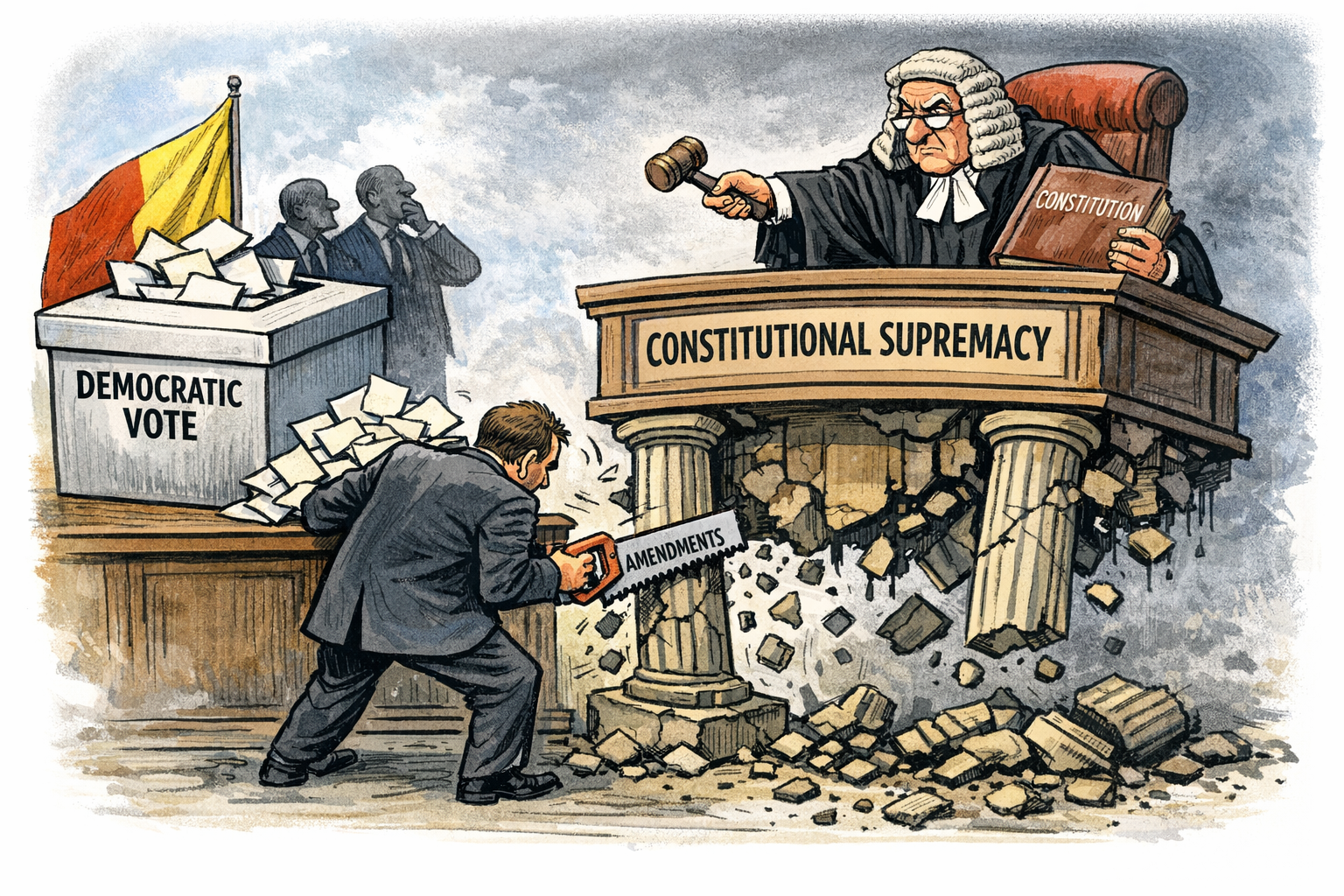
This assertion is conceptually flawed. Supremacy and the possibility of amendment are not opposites. They are complementary parts of constitutional design. Supremacy answers the question “what prevails today”. The possibility of amendment answers the question “how may tomorrow’s higher law be made”. The second does not cancel the first; it presupposes it. Indeed, the amendment procedure itself is an expression of supremacy, because it prevents constitutional change through ordinary politics and requires a legally prescribed route.

In constitutional terms, supremacy is not “eternal” in the sense of metaphysical permanence. But it remains juridically supreme at any given time. A constitution that can be amended is still supreme; it is simply not immutable.

Musumeci’s central error: democratic outcomes are not automatically “legal” in the constitutional sense

A democratic outcome is a political fact. Legality is a juridical status. The two can overlap, but they are not the same. Musumeci repeatedly implies that once an amendment procedure is followed, courts face “a constitutional fact, not an interpretative opportunity”, and that judges cannot “invent additional limits” based on “unwritten moral principles”.

This framing is misleading in two ways.

First, it assumes that constitutional adjudication becomes mechanical the moment the word “amendment” appears. That is not how constitutional law works. Courts must still determine whether the purported amendment is in truth a valid constitutional amendment, whether the correct procedure was followed, whether the amendment is coherent with the constitutional order, and whether it is a disguised attempt to do indirectly what the constitution does not permit directly. These are not “moral” questions; they are classic rule of law questions about competence, form, and constitutional identity.

Second, it insinuates that judicial review of constitutional change is necessarily illegitimate “judicial moralism”. That is an overstatement. In many constitutional systems, courts have recognised limits on amendment not because judges prefer a moral outcome, but because an amendment that destroys the constitution’s essential character is no longer an amendment. It is a constitutional replacement or rupture, requiring a different democratic mandate.

Even in the absence of an explicit eternity clause, a constitution can contain implied structural principles, such as separation of powers, judicial independence, legality, and effective protection of fundamental rights. These principles are not optional ornaments. They are constitutive of what makes a legal order a constitutional democracy rather than a majoritarian state.

Entrenchment is not merely “political cost”: it is a legal safeguard for constitutional stability

Musumeci describes entrenchment as a mechanism that raises political cost but does not create legal impossibility. That is true as far as it goes, but incomplete.

Entrenchment serves at least three legal functions that Musumeci underplays.

Firstly, it protects minorities against transient majorities by requiring cross-party agreement for foundational changes. Secondly, it protects institutional independence by making it harder for a government to rewrite the rules of accountability during a crisis or scandal. Finally, it protects constitutional continuity by reducing the risk of “constitutional capture”, meaning the use of legal forms to consolidate power and immunise the executive from scrutiny.

If entrenchment is reduced to “political accountability”, the constitution becomes little more than an instruction manual for how a parliamentary majority may legally entrench itself. That is precisely the danger constitutional supremacy is meant to prevent.

“Responsibility lies with Parliament and the electorate”: politically true, legally insufficient

Robert Musumeci argues that responsibility for “morally consequential constitutional change” cannot be displaced onto courts and lies with Parliament and the electorate. As a matter of political ethics, this is unobjectionable. But as a constitutional proposition, it is dangerously incomplete.

Courts are not only moral commentators. They are guardians of legality. Their constitutional function is not to “redeem” the political community, but to ensure that power is exercised within legal bounds, including bounds that protect the democratic process itself.

A citizen can vote out a government only if elections remain meaningfully free and fair. An electorate can judge wrongdoing only if there is access to information, investigative capacity, and independent adjudication. Parliament can be held accountable only if constitutional rights such as expression, association, and due process remain enforceable.

Therefore, the idea that “constitutional law cannot save it from itself” is rhetorically powerful but legally misleading. Constitutional law does not guarantee political virtue, but it does secure the conditions under which political responsibility can be exercised. When those conditions are undermined, “leave it to the electorate” becomes circular, because the electorate’s capacity to correct abuse is what is being damaged.

Executive interference with judicial determination: the modern route to constitutional degradation

Finally, I must address what seems to be Musumeci’s implicit comfort with the proposition that courts should not resist “politically chosen” constitutional outcomes. The core problem in contemporary constitutional breakdown is rarely an open coup. It is legalistic executive interference that preserves democratic rituals while hollowing out judicial control.

One of the most common mechanisms is court capture through appointments.

In constitutional democracies, judicial appointment is not inherently illegitimate. It becomes unconstitutional in substance when appointment power is used to predetermine outcomes, neutralise accountability, or intimidate judges into deference. The citizen may still see courts operating, judgments being issued, and constitutional language being cited, yet the adjudicative function becomes subordinated to political loyalty.

This is not hypothetical. The pattern is recognisable across jurisdictions. A government expands the size of the constitutional court or changes quorum rules so that newly appointed judges dominate panels. A government lowers retirement ages or changes tenure rules to remove existing judges and create vacancies. A government redesigns the judicial appointments process to concentrate control in the executive, replacing professional evaluation with political selection.

A government disciplines judges through administrative sanctions, budgetary pressure, or politically controlled “judicial councils”. Each step can be dressed as lawful reform. Each step can be passed by a majority. Yet the effect is executive interference with judicial determination, because the judiciary becomes unable to act as an effective constraint.

If courts then refuse to accept such changes as constitutionally destructive, Musumeci would label this “judicial moralism”. But the better legal description is that courts are defending the separation of powers and the minimum content of judicial independence without which constitutional supremacy becomes performative.

Constitutional supremacy includes supremacy over the executive, not only over ordinary legislation

Musumeci correctly emphasises that courts enforce the constitution against ordinary laws and executive action. But he understates that supremacy is most tested precisely when the executive seeks to evade adjudication.

Executive interference can take softer forms than court capture. Refusing to implement judgments or delaying implementation until the political moment passes. Issuing administrative measures designed to frustrate litigation, such as denying standing, withholding documents, or manipulating procedural timelines. Using state resources to litigate citizens into exhaustion, turning access to justice into a privilege rather than a right.

Publicly attacking judges and portraying adverse judgments as “anti-democratic”, thereby delegitimising judicial review as such. These are not questions of morality. They are questions of legality and constitutional structure. The constitution’s supremacy is hollow if the executive can systematically prevent courts from delivering effective remedies.

The EU dimension: correctly noted, but understated in legal consequence

Musumeci acknowledges that domestically valid amendments may still attract “external consequences” including political pressure and financial conditionality at EU level. This is accurate, but the framing again risks minimising legality.

For an EU Member State, rule of law commitments are not only reputational. They are embedded in binding obligations. When constitutional amendments undermine judicial independence, the issue is not merely “cost”. It is potential incompatibility with the Member State’s duties within the European legal order.

From the citizen’s perspective, this matters because EU membership creates an additional layer of constitutional constraint: national constitutional change cannot be treated as purely internal when it affects effective judicial protection, the independence of courts, and the enforcement of EU rights. Even where a domestic amendment is procedurally correct, it can generate legal consequences in EU law that materially affect the state’s position and citizens’ rights.

Conclusion: Musumeci’s theory is rhetorically honest, but constitutionally incomplete

Musumeci’s call for “honesty in constitutional governance” usefully reminds citizens that constitutional decline can be politically chosen. That is an important civic warning.

However, he commits a fundamental constitutional error by implying that democratic procedure is a sufficient condition for constitutional legality. It is not. A constitutional democracy is not defined only by who wins elections, but by the legal constraints that make elections meaningful, government accountable, and rights enforceable.

Constitutional supremacy is not a myth that evaporates because amendment exists. It is the legal hierarchy that binds all power, including power exercised through majorities. Entrenchment is not merely a political speed bump; it is a safeguard against capture. Judicial review of constitutional change is not necessarily “moralism”; it can be a rule of law necessity when the amendment is used as a vehicle to dismantle the constitution’s core structure, especially through executive interference with judicial determination via court appointments and institutional redesign.

Musumeci’s text should be read with one crucial correction in mind. Democracy matters. But legality is not whatever a majority can be made to vote for.

Legality is what the constitution, interpreted in good faith and protected by independent courts, permits the state to do without destroying the conditions of constitutional government itself.

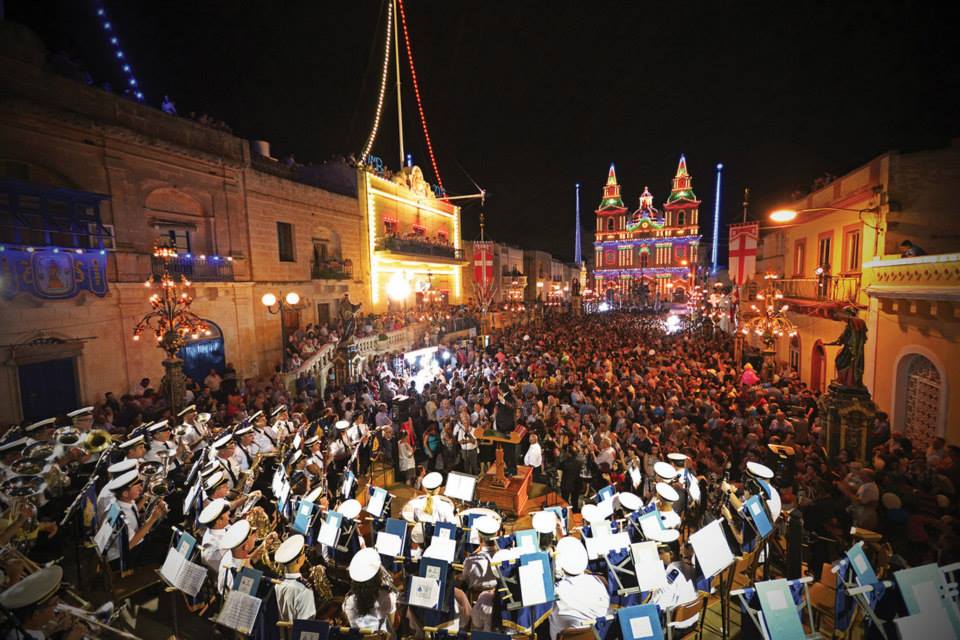
Cultural Heritage and Tradition in the Constitutional Orders of Italy and Malta

Across Europe, the protection of cultural traditions and pastimes sits at the crossroads between constitutional identity and legislative policy. While all Member States acknowledge culture as a public good, few have given it explicit constitutional status. Italy stands out as a state where culture is embedded in the constitutional text as a foundational value. Malta, by contrast, protects its traditions through statute and policy rather than constitutional law. A comparison between these small Mediterranean states reveals how constitutional design shapes the strength and enforceability of cultural protection — and how both models interact with broader principles of European law.

In Italy, Article 9 of the Constitution occupies a central symbolic and practical role. It declares that “the Republic promotes the development of culture and scientific and technical research” and “safeguards natural landscape and the historical and artistic heritage of the Nation.” This brief clause has evolved into one of the pillars of Italian constitutional identity, second only to the protection of human dignity and democracy. The Constitutional Court has interpreted Article 9 expansively, seeing it not merely as a programmatic statement but as a binding constitutional duty on public authorities. The protection of culture, landscape, and heritage has thus become an enforceable constitutional good, capable of limiting legislative and administrative action.

The 2022 constitutional reform further strengthened this framework, explicitly adding the protection of the environment, biodiversity, and ecosystems “also in the interest of future generations” to Article 9. The reform linked environmental and cultural heritage under a single constitutional ethos — the idea that Italy’s identity rests on the continuity of its landscape, arts, and traditions.

This constitutional culture is reflected in a dense network of legislation, most notably the Codice dei beni culturali e del paesaggio (Legislative Decree 42/2004). The Code translates Article 9 into practice by defining, classifying, and regulating cultural assets, landscapes, and intangible heritage. Interestingly, the Italian model is not purely centralised. The Constitution assigns significant powers to the Regions and local authorities under Title V (Articles 117–118), which divide legislative competences between the State and the Regions. Culture and tourism fall within the category of “concurrent competences”, meaning that while the State lays down the fundamental principles, the Regions enjoy the power to legislate in detail and to promote regional traditions and local cultural practices.

This regional autonomy is vital for Italy’s cultural richness. Local authorities support and regulate traditional events such as the sagre popolari — village fairs celebrating local produce, crafts, or patron saints — as well as historical pageants, dialect preservation initiatives, and folk music festivals. Each Region has its own cultural statutes: for instance, Tuscany and Emilia-Romagna provide funding and legal recognition for traditional community events, while Sicily and Sardinia operate under special statutes granting even broader cultural powers. The sagra popolare thus becomes not only a communal celebration but also an expression of constitutional pluralism — the coexistence of local traditions within a shared national framework. Through Article 9 and regional competences, Italy has constitutionally integrated its living traditions into the structure of the Republic itself.

Malta’s situation is markedly different. The Constitution of Malta (1964) contains no article equivalent to Italy’s Article 9. Cultural protection is mentioned only indirectly in the Preamble, which commits the nation to safeguard “the heritage of the past.” There is no recognised fundamental right to culture, no constitutional duty upon the State to promote or preserve heritage, and no judicial doctrine elevating culture to constitutional rank. Instead, the Maltese system relies on ordinary legislation and policy measures.

The Cultural Heritage Act (Cap. 445 of the Laws of Malta), enacted in 2002, provides the legal foundation for the protection and management of both tangible and intangible heritage. It establishes Heritage Malta and the Superintendence of Cultural Heritage, the principal institutions responsible for preservation and registration. Under this Act, traditional practices — such as village festas, għana (folk singing), carnival, the regatta, or traditional crafts — can be recognised as part of the national heritage inventory. Complementary legislation, including the Environment Protection Act (Cap. 549), covers aspects of landscape and environmental heritage. Malta’s National Cultural Policy (2015, revised 2021) serves as a guiding framework, but it remains a policy document without constitutional force.

This statutory model has important consequences. Cultural protection in Malta depends largely on executive discretion and funding priorities, rather than on judicially enforceable duties. Courts rarely invoke cultural considerations as constitutional values when adjudicating conflicts between development and heritage. The constitutional silence on culture also limits the use of cultural arguments in administrative or constitutional litigation. Where Italy’s Article 9 allows judges to weigh culture and heritage against economic or infrastructural interests, Maltese law offers no equivalent balancing principle at constitutional level.

At the European Union level, the two models interact differently with supranational norms. The EU’s legal framework recognises culture as an area of supporting competence. Article 167 of the Treaty on the Functioning of the European Union (TFEU) requires the Union to contribute to “the flowering of the cultures of the Member States,” while Article 22 of the EU Charter of Fundamental Rights obliges respect for cultural, religious, and linguistic diversity. These provisions, though not directly enforceable, shape EU policy and interpretive practice. They give Member States space to justify national cultural measures — for instance, subsidies, preservation laws, or regional protections — as expressions of their national identity, which the EU must respect under Article 4(2) of the Treaty on European Union (TEU).

Italy’s constitutional framework aligns naturally with this European approach: its Article 9 and regional competences provide concrete expression to the Union’s abstract respect for diversity. The Italian model shows how national constitutions can transform cultural policy into a constitutional commitment compatible with EU law. Malta, on the other hand, exemplifies a system where EU-level cultural principles reinforce policy rather than constitutional obligation. The EU supports Maltese initiatives through programmes such as Creative Europe and through recognition of heritage sites and intangible practices, but these remain dependent on political choice rather than constitutional mandate.

Ultimately, the contrast between Italy and Malta illustrates two distinct ways of embedding culture within law. Italy’s constitutionalisation of heritage and regional traditions transforms culture into a legal value of the Republic, linking identity, landscape, and citizenship. Malta’s statutory model reflects a policy-based conception, where culture thrives through institutional commitment and community participation rather than constitutional adjudication. Both approaches, however, belong to a broader European story — one in which traditions, pastimes, and collective memories form part of a shared commitment to identity, continuity, and the democratic value of cultural diversity.

This Is the Record: Malta’s Institutions Are Being Hollowed Out 

Let us begin with a truth that bears repeating: democracy does not die in one fell swoop, but by a series of quiet manipulations, each too technical to stir mass indignation, each cloaked in the language of efficiency, reform, or sovereignty. Malta is not facing an immediate coup. But what it is experiencing is something more insidious: a slow, deliberate capture of the very institutions designed to safeguard the public from arbitrary power. 

This is not a matter of partisan allegiance. It is a matter of record. And the record is clear. 

Over the last decade, Malta’s government has steadily expanded its reach over institutions that were once conceived to act as checks on executive power. The judiciary has found its independence compromised—not with tanks in the streets, but with legislation in Parliament and political appointments cloaked in the veneer of reform. 

One need not speculate. The Venice Commission, the Council of Europe, and multiple rulings from the European Court of Justice have signalled alarm. Judicial appointments were, for years, controlled by the Prime Minister’s office. Though recent changes were made following external pressure, the culture of loyalty and reward remains. Judges rise not merely by merit, but by proximity to power. And when they speak out—if they speak out—they do so at their own peril. 

This is not the natural order of things. It is a design. 

Oversight mechanisms have not been dismantled; they have been neutralised. The Planning Authority now issues permits in defiance of local plans and common sense. Its appeals tribunal, once a citizen’s last recourse, is to be stripped of real power under new legislation that proposes that courts may no longer revoke unlawful permits. Instead, they must refer the matter back to the same authority whose decision was deemed defective. This is not justice; it is theatre. 

What becomes of a nation where wrongdoers can outlast the process meant to stop them? Where court action becomes a maze designed to exhaust, confuse, and bankrupt rather than to protect? In such a nation, impunity is not an accident—it is a feature of the system. 

One may ask: where are the anti-corruption laws? Where are the safeguards? They exist, on paper. But paper burns. Legislation intended to curb corruption has been hollowed out by amendments, delayed by “consultation,” or applied selectively. The Freedom of Information Act remains more honoured in the breach than the observance. Whistleblower protections are limited in scope and rarely invoked. Asset declarations are filed but not verified. And the institutions charged with enforcement—the Commissioner for Standards, the Ombudsman, the Auditor General—are afforded just enough power to seem respectable, and just enough constraint to remain ineffective. 

This is the scaffolding of democratic decay. The façade remains intact: there are courts, there are laws, there are committees. But the substance has shifted. What was once meant to serve the public now serves power. Those who protest are smeared, sued, or ignored. Civil society is tolerated but never embraced. 

This is not a new story. Other democracies have walked this road—Hungary, Turkey, Poland. Their governments too spoke the language of reform. Their leaders too invoked the will of the people as they dismantled the machinery of accountability. 

And let us be clear: this is not about one scandal or one administration. This is about a systemic drift, a deliberate weakening of the structures that make accountability possible. It is about a state that no longer tolerates friction—be it from courts, journalists, NGOs, or ordinary citizens—and seeks instead a smooth path to its ends, unchecked and unchallenged. 

The result is a nation where corruption does not need to be concealed; it thrives in plain sight, protected not by secrecy but by inertia. It is a nation where reform is promised as a shield, and delay becomes a tactic. A nation where outrage has become routine, and resignation replaces resistance. 

But resignation is not destiny. 

Malta is still a member of the European Union. It is still bound by the Charter of Fundamental Rights. The courts in Luxembourg still have jurisdiction. Civil society still speaks, though with growing fatigue. Journalists still report, though some have paid the highest price. The fire has not gone out—but it flickers. 

We must remind ourselves, as Edward R. Murrow once did in darker times, that “a nation of sheep will beget a government of wolves.” The purpose of institutions is not to please the powerful, but to restrain them. The rule of law does not ask whether the law was passed by a majority, but whether it serves justice. 

This is not the end, unless we accept it as such. The law can be restored. Institutions can be rebuilt. But only if we speak plainly, act firmly, and refuse to be lulled into silence by the language of procedural normalcy. 

The time for euphemism is over. 

This is the record. And it is our responsibility to change it. 

Long & Short 1 – Delia Leader of the Opposition no more

The Delia is no longer Leader of the Opposition de facto post.

1. FACT: Delia no longer enjoys the confidence of the majority of opposition MPs in parliament.
2. FACT: Delia himself made this information public right after the vote in his press conference.
3. FACT: President George Vella knows of the two facts above, so much so he has declared himself to be on “standby”.
4. FACT: Under the Constitution with these facts in hand the President is OBLIGED to revoke the appointment of Adrian Delia to the Office of Leader of the Opposition.
5. FACT: The revocation can occur without any person replacing Delia immediately. The Office of the Leader of the Opposition could be vacant until when a new one is appointed.
6. FACT: A law abiding and constitution respecting Delia would have gone HIMSELF to the President to inform him of the fact that he no longer enjoys the confidence of the majority.
7. FACT: The Office of the Leader of the Opposition in the House and the position of Party Leader are mutually exclusive.
8. FACT: The ‘rebel’ MPs can agree on one among them who can replace Delia as Leader of the Opposition in the House. Then and only then should they present themselves to the Office of the President with such a new nomination.
9. OPINION: the shambles we are in continues to confirm the blatant disregard that our traditionally strong political parties have for the constitution. They have hitherto only used it as a means to their end. It will be hard to shift from this mentality.

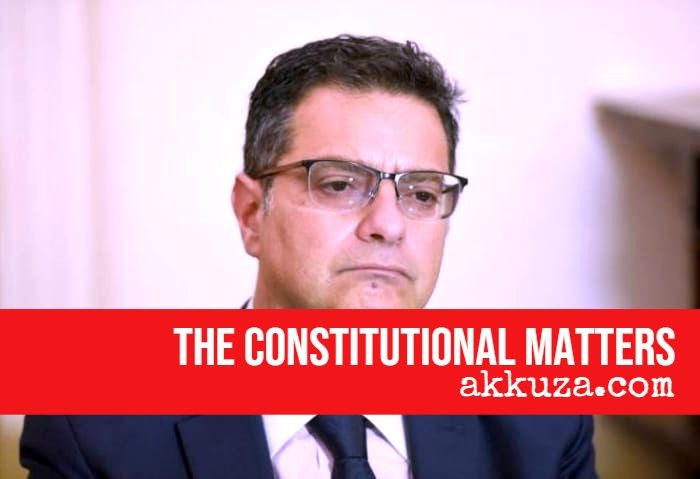
The Constitutional Matters (I)

As Malta braces itself for an invasion of constitutional experts I thought it would be opportune to throw my hat in the ring with a short series of Constitutional posts related directly or indirectly to what is happening at the moment.

The matter of who is the de iure and de facto Leader of the Opposition is the current hot potato just as the hapless Delia has lost a vote of confidence among the nationalist MPs. That vote confirmed that Delia no longer ‘commands the support of the largest single group of members of the House in opposition to the Government who are prepared to support one leader’. The words in quote are taken from article 90(2)(b) of the Constitution and as we shall see they are part of a conundrum relating to the appointment, tenure and removal of the Leader of the Opposition under our Constitution.

I say conundrum with intent. The whole of article 90 presents us with a series of alternative situations that should they occur would lead to the appointment or removal of a Leader of the Opposition.

Appointment

Unlike in the case of the appointment of the Prime Minister, political parties are mentioned when it comes to the choice of Leader of Opposition. Article 80 concerning the appointment of the Prime Minister in fact refers to the member ‘best able to command the support of a majority of the members of that House’. Article 90 on the other hand is the only article in the constitution to refer to the leader of a political party.

So, insofar as the appointment of the leader of the opposition is concerned, the first option for the President (article 90(2)(a)) is triggered if there is one opposition party whose numerical strength is greater than any other opposition party (in our case PN is larger than PD). In such a case the President will appoint the leader of that party as Leader of the Opposition.

In the hypothetical situation that no one opposition party is larger than the other (equal number of MPs) or there is no opposition party (all MPs are independent in opposition) then the President has to look for the person who commands the support of the largest group of members in the opposition. In this case no reference is made to party leadership. (article 90 (2)(b)).

Vacancy

Article 90(3) gives us all the options when the office of the Leader of the Opposition becomes vacant. The obvious reasons are when there has just been an election (dissolution of parliament) or if the leader of the opposition has ceased to be a member of the House. There is a final option which is covered by Article 90(4) which covers revocation of his appointment,

Revocation

If , in the judgment of the President, a member of the House of Representatives other than the Leader of the Opposition, has become the Leader in the House of the opposition party having the greatest numerical strength in the House or, as the case may be, the Leader of the Opposition has ceased to command the support of the largest single group of members in opposition to the Government, the President shall revoke the appointment of the Leader of the Opposition.

Article 90(4), Constitution of Malta

This sub-article really provides two alternatives. First of all we have the situation where the Leader of the Opposition is replaced as leader of his own party. Presumably this would mean that there has been a move within the party and the Leader was voted out with a new one voted in. That automatically triggers a change in the office of the Leader of the Opposition.

The second, more delicate, alternative occurs where the Leader of the Opposition ceases to command the support of the largest single group of members in opposition. No more talk of political parties here. The measure is clear – if the Leader of the Opposition no longer enjoys the confidence of a majority among the opposition members then the President must revoke his appointment.

Now the vote of confidence taken at PN HQ is clear. Of the 30 PN MPs 19 voted against Delia (17 of these are MPs, 2 (Metsola and Casa) are MEPs). 10 voted in his favour (and Delia himself). We do not even need to factor in the two other Opposition MPs from the third party (PD) because that still leaves Delia in a minority. There should be no way out constitutionally for Delia.

The Presidents’ prerogative is qualified with the words “in his judgment” though I doubt if George Vella can come up with a plausible reason to deny all evidence pointing to the obvious. Delia no longer commands the confidence of a majority of opposition MPs. His appointment to Leader of Opposition should be revoked.

Political Party Leadership

Delia is pandering to the harridans and populists with his calls to respect the vote of the tesserati. He is using that excuse to cling to his position as Leader of the Opposition. As we have seen though the two posts are not linked directly. Rather, that vote of confidence has effectively ended Delia’s tenure as Leader of the Opposition both de iure and de facto. What remains to be done is for George Vella to snap out of “standby” mode and revoke his appointment.

For the time being Delia can cling to the leadership of the party with desperate claws. It would not be the first time that he prioritises his own aims over the needs of a nation and of his own party. Meanwhile the ‘rebel MPs’ need to get going. There is a constitutional role that needs filling. Finding one among them to fulfill the duties of leader of Opposition should not take too long. Also, if the President drags his feet any longer on the revocation they might need to up their ante by walking up to his door and presenting their chosen candidate.

And the UK

Interestingly enough our former colonial overlords who bequeathed upon us a particular form of parliamentary democracy have a peculiar way of identifying the Leader of the Opposition. It is not the Queen (in lieu of our President) who determines the leader but the Speaker of the House – and this only in case of dispute. The accepted choice is normally, as in Malta, the Leader of the largest party in Opposition. However under the Ministerial and Other Salaries Act (1975), we find the following provision:


(1) In this Act “Leader of the Opposition” means, in relation to either House of Parliament, that Member of that House who is for the time being the Leader in that House of the party in opposition to Her Majesty’s Government having the greatest numerical strength in the House of Commons; and “Chief Opposition Whip” means, in relation to either House of Parliament, the person for the time being nominated as such by the Leader of the Opposition in that House; and “Assistant Opposition Whip”, in relation to the House of Commons, means a person for the time being nominated as such, and to be paid as such, by the Leader of the Opposition in the House of Commons.

(2) If any doubt arises as to which is or was at any material time the party in opposition to Her Majesty’s Government having the greatest numerical strength in the House of Commons, or as to who is or was at any material time the leader in that House of such a party, the question shall be decided for the purposes of this Act by the Speaker of the House of Commons, and his decision, certified in writing under his hand, shall be final and conclusive.

Ministerial and Other Salaries Act (1975), Article 2

Seize the moment

This article first appeared on The Shift News on 10.12.2019.

Sunday afternoon turned out to be quite surreal. As the sun began to set on The Eternal City, I stood at the top of the Spanish steps looking down on a huge crowd of people gathered to follow the Pope’s Immacolata procession.

At that precise moment, some 650km away (as the ravenflies) another crowd was beginning to assemble. Unlike the papal crowd, the crowd at Castille Square was calling for justice and accountability. They wanted the man who obstinately clings to the seat of power to let go immediately.

Only the previous day, that man had brazenly been to visit the Pope. Undoubtedly, this was part of his ‘business as usual’ charade: the same charade that would continue on Sunday with his ‘farewell tour’ surrounded by those after his sullied throne.

Since the precipitation of events (to put it mildly) drew Castille’s occupants into circle upon circle of Dantesque damnation, the government’s effort to ‘minimise the fuss’ has multiplied. There has yet to be responsibility assumed for the mess.

Sure, we have seen resignations. They are not the kind of submission to authority that you would expect, though. Rather, those resigning are fêted as heroes. Chiefs of Staff “move on“, Ministers reaffirm their dedication to the cause and the project — and we must be the only country where a Prime Minister mired in corruption and abuse of power is on the road to beatification.

The way the government and backbenchers have rallied behind Muscat can only be described as the thickness of thieves. Each day of denial rendered every one of them complicit in the institutional abuse and cover-up.

Yet, the growing wave of discontent is now clear for all to see. Beyond the Potemkin village meetings that Muscat and friends can orchestrate among the flag-waving diehards lies a brave new world that is gathering momentum and courage. It is a disparate agglomeration of individuals still in search of a leading voice.

Theirs has been an uphill struggle. First came the ‘early adopters’ who, from the start, realised that something was rotten in the state of Denmark.

Then came the angry crowd who had understood that this was not a government for the people by the people, and they had a reason to complain that it was not right.

Last came the doubting Thomas’ who could only be swayed with the ever so deceptive ‘proof’. For the first time in the history of this young nation, a political movement of strange bedfellows was born out of the realisation that the Old Republic was no longer a servant of the people.

Yes, as part of the learning curve in civil action, at every step we had to stress that this was not a political movement (political with a small p as in ‘partisan’). Yes, we had to overcome the mutual diffidence and suspicions of underlying agendas. The remarkable nature of the moment lies in the fact that the overwhelming consensus within the movement of change is that change must come without the political (with a small p) parties. It must happen despite them.

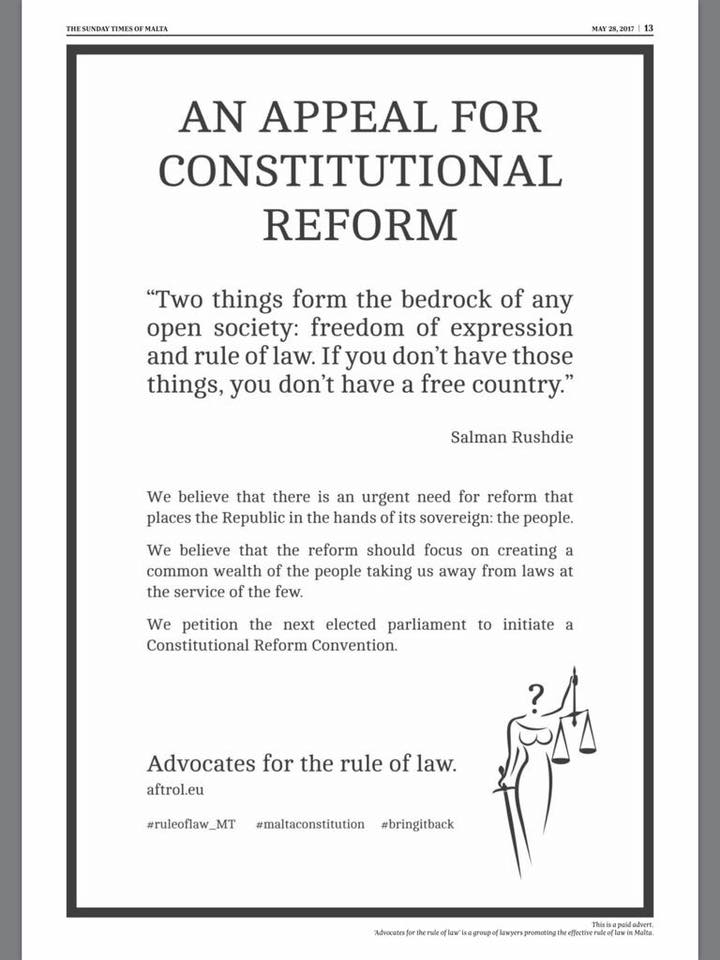
We are a few steps away from understanding that this could be a defining moment constitutionally for our republic. At this stage, the eyes of people from different ideological backgrounds are open. They understand (for different reasons) that our Constitution, and hence our State, is paralysed by conflicting interests.

For some, it is ‘the businessmen’. For others, it is the parties that abuse their power. For others still, it is the lack of certainty. The next step is for all the forces contributing to this wave of anger at the establishment that has let us down to accept that it is the whole system that needs a reboot – beyond the different ideologies.

Prepare the ground for a constitutional reform within which the different ideologies and projects for the country’s future may find fertile ground to debate and grow. A project that returns politics to the normal, boring politics — but one with a capital ‘P’.

Those who expect this change to come from within one of our stagnant parties have still not read the writing on the wall. They will try to operate within the same constitutional constraints that the parties have abused since the birth of the republic.

The latest surveys show that the Labour Party still leads the PN at the polls, but it has not gained in popularity. Rather, it seems to be losing support. The PN has practically not budged in a situation where it should have been benefiting from the anger as the Party in opposition. I do not read these signs negatively. The loss of the two-Party support is our nation’s gain.

The country needs real leaders. Individuals who can guide this movement through this bumpy phase. It must not, and will not, stop at justice for the corrupt. It must also proceed to lay the foundations for the new republic.

Seize the moment.