Murder they wrote

The jury seems to still be inexplicably out as to whether Joseph Muscat’s bluff about the pushback strategy was commendable or otherwise. I say inexplicably because it does not seem to me to be a matter of opinion but of fact. Yet, there are plenty who would advocate that Joseph did the right thing and that his waterfall of badly mixed clichés – from “stamping of feet” to “waking up an smelling the coffee” are the necessary ingredients to get Europe going. The sad part is that it is not only your usual set of suspects who have swallowed the Taghna Lkoll happy pills but even persons who you would expect to have a critical mind. Let’s look at some facts:

1. The ECFHR is not the EU

They keep repeating this mantra that the European Human Rights Court decision is part of some conspiracy and that we should stick two fingers up at them and send the migrants to Brussels. Idiot’s guide to the EU number 1: The Court in question is part of the Council of Europe – an organisation based in Strasbourg with 45 member states including Russia and Turkey. Not the EU then.

2. The Illegality of the act

When Muscat chose to prep the planes and get the engines of forced repatriation running he was doing so knowing that he is in full violation of European law on Human Rights. Not EU Law. Not just that. His bit of sabre-rattling actually meant he was jumping onto the world stage by threatening to do something illegal. Let me put it into perspective for the slower among you. Think Saddam Hussein using human shields to prevent US bombing of targets. Think threatening to unleash Sarin Gas on protesters. Think threatening to drive with tanks over protesters. Think shooting border crossers on sight. Yes. That kind of illegal.

Does it matter that Muscat claims to have been bluffing? Hell no it doesn’t. Imagine I walked up to you and threatened to kill you if you did not hand over your cash. Then once you hand over the cash I tell you – “Hey, I’m only bluffing, but that got you to wake up and smell the coffee”. Right? And don’t give me the “ends justifies the means” bullshit. This government has proven to be so inept at understanding the boundaries of the rule of law that it is enough to give any ordinary citizen the creeps.

3. That Muscat’s Mental

It’s not my words. It’s the gist of the international press. His “bluff” had one effect and one effect only. He is being seen as an insane nutball who is willing to resort to illegal threats to try to get what he needs. Think Ahmadinejad meets Hussein meets Bush. While you were busy harping about some trumped up “national interest” your prime minister was busy flushing our national reputation down the drains. I can’t wait to see what the Economist’s side columns will make of this.

And another thing….. it’s not about saving face with the neighbours. Our reputation abroad is important because we work in a community of nations and should bear that in mind before we torpedo it with some ridiculous tantrum.

Don’t feed the animals

It’s a sign you see most time in the zoo. Our government needs some sobering up after this fiasco caused by its not being half as clever as it imagines itself to be. Right now the last thing the government needs is applause from the inane movement that cannot be made to understand why respecting human lives and dignity is at the basis of 21st century civilisation. You cannot pick and mix which lives to respect. You cannot selectively apply dignity. Just as you should never ever think about separating the healthy for the weak in some nightmarish remake of a nazi concentration camp simply because you wanted to “stamp your feet”.

So the next time that you think of praising our “gutsy” Prime Minister think of the human shields in Iraq at the time of Hussein and ask yourself: Would I have applauded Saddam for his gutsy standing up and being counted to the American forces?

I guess you know who should be smelling the coffee now.


Civil and uncivil society

The Muslim Brotherhood will be turning out in large numbers in Cairo on Sunday to protest the abrupt removal of what was after all a democratically elected government. The Maltese hapless clone of the British National Party will also be demonstrating in Valletta – voicing their support for what they interpret as the Prime Minister’s strong stand against Europe and in favour of the ill-fated push-back policy. These too are manifestations of civil society. The right to express one’s opinion is sacrosanct, there’s no two ways about that, and even the most abominable of ideas can be voiced – to a certain extent (let’s not forget it is not legal to incite people to commit violence or to be violent).

The freedom of expression is a victim of gross misinterpretation in Malta though – as has often been documented in this blog. All too often the right to have an opinion is confused with “being right”. Having an opinion, no matter how maladroitly it has been constructed, seems to be the one and only “right” that counts. Critics of opinions are themselves labelled as “intolerant” and it all goes rather awry when the subject is tolerance itself – as in the case of immigration. Muscat’s Labour has built a lot of mileage on the concept of “the right to have an opinion no matter how wrong” and continues to fan this twisted logic while in government.

I am not sure how pleased Muscat can be with the Sunday demonstration in his honour. He must have failed to calculate the long-term effects of his clumsy bluff. Demonstrators will be hitting the streets in Malta on Sunday practically clamouring for the PM to insist on flaunting international rules and fundamental human rights. Our modern progressive Prime Minister must not have seen that coming. Diplomatic and strategic short-sightedness is a clear trait of the Taghna Lkoll arsenal – and many seem to be finding that out now.

Which brings me to the rest of civil society. We have seen in the past few days a sort of sectorial backlash to Muscat’s proposed push-back policy (or bluff). First the lawyers, then the academics and now the authors were reported as taking a unified stand against the whole idea. To begin with there is nothing more reassuring than seeing sectors of civil society putting their money where their mouth is. I do sense though that the obsession with partisan division still sticks like a limpet with the majority of such initiatives.

It’s not a question of being a wet-blanket but if I set aside the authors’ declaration I look at the “academics” and “lawyers” joint positions and all I see is a smokescreen for a party stunt. The most blatant of the two was the 65 lawyer judicial protest.  Aside from the fact that in certain quarters suddenly lawyers became a force to be reckoned with the names on the list were not exactly an across the board petition gathered at one of the drink-holes where lawyers tend to agglomerate. “65 lawyers active directly or indirectly with the nationalist party” would have been a better label.

As for the academics and as Maltatoday put it “labour intellectuals” there was again a selective exercise going on. That common position was not circulated at the University Canteen for anyone who agrees to voluntarily append his signature. It was an exercise in “look our party allows dissidence” – which really rang foul when you put it in the perspective of the “elaborate bluff”. Why? Because if you were Joseph Muscat and you really had hoped that your bluff were called you would also need a way to distance your party and its credentials from what you knew deep down to be a nefarious position. What better way than have your token liberals and academics yell their disapproval?

The strongest messages came from an all too different milieu. Those NGOs who quit the LGBT forum clearly explaining to the hapless government that you cannot pick and mix in the world of fundamental rights. A government that has no qualms to send human beings to their doom (and separating families in the process) cannot be serious about other fundamental rights. Aditus and Drachma did the only possible thing and quit the forum. You cannot engage with a bluffer and with a government that uses rights pragmatically for vote-gathering purposes.

To conclude, the minefield of immigration policy cannot be “un-politicised”. It is as political as it can get. The discerning citizen must be able to distinguish between the genuine movements and the smokescreens set up by the parties to cover what has hitherto been a hopeless record in the field of immigration. In the post 9/11 world we have to come to terms with this realignment of civil society and bear these truths in mind while taking an active role.

Unfortunately, the genuine movements (for or against certain policies) operate in the same field as the political parties who have a strong grasp on the ultimate decision taking seats of power. The end result of such a concoction is as unpredictable as we can allow it to be.

If there is anyone who should stand up and be counted then it is that part of civil society that harbours values for values’ sake and stops thinking in the “us and them” dichotomy. It will be hard. Judging by the history of Maltese politics…. it will be nigh impossible.

The push-back effect

As the dust settles on the 24 hours push-back saga we can begin to draw a few conclusions as to how the different participants fared. Away from the noise and static of the instinctive reactions there might be an opportunity to examine whether or not the issue of “immigration” has seen any development. First of all there is no way we could ever conceive of a policy on immigration that is apolitical. That is a load of rubbish. A policy on immigration is by its very nature political. Parties are not there to simply echo popular demands but they should be clearly stating their position on the matter and offering their ideas.

In fact what we really do not need is the “partisan” approach where policy is either pulled out of the pocket in a knee-jerk reaction or simply phrased in such a manner as to serve short-term government or opposition goals without any eye for a holistic policy that clearly enunciates Malta’s position vis-a-vis the complex problem of migration. Let us see how the participants fared then:

The Sabre-Rattling Prime Minister (or The Blind Man’s Bluff)

Joseph Muscat has a problem. He is now being judged by what he does and not simply by what he promised to do. There’s a huge difference between Jane Marshall saying she believes in Joseph because he does what he promised (and he still had done nothing yet) and what every citizen is able to see for his own eyes now. Muscat is finding it hard to understand that while promises only have consequences in the mind of whoever wants to believe them, real actions have consequences in the real world and these consequences cannot be as controlled or doped as a propaganda message.

Does Joseph genuinely believe that he could pull off such a stunt as he did yesterday? Is it possible that his was an elaborate bluff full knowing that in the end the planes would leave for nowhere? Even if we did consider it to be such an elaborate bluff it falls apart immediately as was said so well elsewhere. The reason is because his bluff involves stoking the flames of intolerance and racism. Joseph created the expectancy of a full-fledged push-back programme turning the insipid Times commentator’s dream into reality – a ro/ro service of planes sending the despicable pest back where they came from. Taghna Lkoll had a new corollary. It was go back to your country.

And who was the bluff supposed to impress? Ah yes. Joseph’s second protracted gaffe. He insists on dealing with Europe as though it is somebody else. He insists on reinforcing the idea of Europe and Brussels as the enemy. Many a bleating donkey will repeat this notion before sundown. There might be an opening here for insisting on more burden sharing but Joseph simply ploughs his way into any hope of EU solidarity and reintroduces the Mintoffian roughness and lack of diplomacy. Sure he got plaudits (“Leader bil-bajd”) but is it from the right crowd?

The third gaffe from the supposed sabre-rattler is the appalling idea of showing publicly that our government is prepared to flaunt international law and join the ranks of international tantrum throwers like some latter-day Ahmadinejad. Only a while back somebody was calling Joseph Muscat a mature PM – we already struggled to come to terms with that before this charade. Now that it is over we see nothing more than a man incapable of understanding his role and the importance of international law.

Finally Labour’s treating of immigrants as pawns in this sabre-rattling saga was the cherry on the cake insofar as proof of Labour’s absolute loss when it comes to the real treatment of real human rights. The fallacy of all things progressive from gay rights to emancipation of different religions and more was never more evident than with Labour’s “selection” of which migrants to send back. In the same week when our Foreign Office had issued a travel warning for Maltese in Benghazi (Libya) we had a nazi-style selection progress to send the strongest among the lot (we care about women and children) to face the troubles. Weep if you remember how to.

Simon and the Moral Issue

The nationalist party had a hard time getting everyone to forget the ugly baggage it has stored in Dar Centrali when it comes to immigration policy. Over the years in government we cannot really say that the PN had provided some sort of moral standards when it came to dealing with immigrants. It’s all too well for ex-PM Gonzi and co. to stand up in parliament and insist that morality should come before the law (which we agree 100%) when not too long ago a nationalist government had no qualms in using a boat-load of immigrants as a negotiating pawn with that sans-pareil of democracy from the Italian government – Mr Frattini.

It would always have been hard for the nationalists to appear genuinely concerned on the matter what with all their footshuffling on all things immigrant when they were in the driving seat. Conditions at the immigrant quarters, backing of Italian push-back policies and that ill-fated planeload of Eritreans would still return to haunt the sons of the Ugandan exiles. Only three years ago MEP Simon Busuttil was comfortable writing the following words in an article entitled “Why the hypocrisy must stop” (Times 28.07.2010):

“It is all too easy to condemn and to play the moral card. Bet there is a hint of hypocrisy in those who do so at the international level. For they have no reply when we ask them who is going to shoulder the responsibility”.

Which is where the PN still needs to grow up. As I said I am all for a revamped Nationalist position on immigration. Ideally this would involve a long term approach putting their policy in black and white. I am sure there would  be place for defining moral priorities and help the PN avoid a pick’n’mix approach depending on the latest crisis. As things stand though it is hard to be convinced by a leader who only in 2011 (March 25th) was still prepared to argue in legal terms over and above issues of morality (See “Libyan crisis caused migration policy rethink – Times of Malta). Which is not to say there is not place for hope.

What the PN needs to avoid is gimmicks such as the “65 lawyer” lawsuit. Call a spade a spade. Say that 65 lawyers from within the PN set-up signed a document that would allow the party to bask in the limelight. If it had to be a real lawyer’s lawsuit then why not open it to the whole of our professional brotherhood? Better still why not make sure that you actually have locus standi to see the thing through – as did the very commendable Michael Camilleri in his lawsuit for and on behalf of a number of NGO’s? There was something that smacked of the incredibly opportunistic in this lawsuit business (the PN’s not Michael’s of course). It was the PN trying to do a PL (remember the class action stunts?). A clumsy attempt at flashy PR. Failed.

The Bigot among us

Yes the issue has also shown that there are many, many among us who would have no qualms putting a couple of hundred innocent souls on a plane and send them to their doom. Just pop into facebook or the comment boards and you will see how this is not a case of the factitious loony few. It was not just Normal Lowell popping up his racist head to applaud Joseph Muscat. It was a slew of comments all over the place. It was a train of misguided thoughts and ill-informed criticism. At least Muscat could rest assured that there is more than a modicum of support for his theatrics.

The irony is that those who claim to be acting in the interest of the nation seem to be oblivious of the fact that a push-back policy risks making Malta a pariah in the international community. Their idea of making the country proud (and yes, of standing up to be counted) is one that flaunts international rules, defies moral duty and packages human beings in a lead box with wings before sending them out to the slaughter. Din l-art helwa my arse.

Utopia

Back in the days of the Crimean War Malta was a floating hospital receiving the wounded and injured from the battleground. The country can once again develop its capabilities as a safe harbour, promoter of Universal Rights and liberties, protector of the weak and beacon of light in an indifferent Europe. It is not just barracks for the migrants that could be built but centres for dissemination of information and education, events that focus on the plight of brother human beings across the world. All this and more would allow Malta to become a leader among nations in a Union that is shuffling its feet.

Being at the forefront of this human tragedy is not a danger to flee from but an opportunity to be grasped. A sense of duty is required. A moral fibre and a will to toil with sweat. These are real sacrifices that would not only make a country proud but would make us all better humans. Such a programme would require parties that think above partisan vote-winning interest. It would require genuine commitment and real men (and women) not rhetoric sabre-rattler or opportunistic bandwagon riders.

The Mediterranean sea is our history and our future. We cannot choose to only accept the Saints that are spat onto our island in some shipwreck two millenia ago. Destiny has put our islands at the crossroads of great events. We are either going to choose the path to be men and accept this challenge or tread the paths of many cowards before us who easily bully the weak and cower before the strong.

What will it be? It’s time to stop flogging the sea.

THEN Xerxes made vast provision for his invasion-for the building of a bridge over the Hellespont, and the cutting of a canal through the peninsula of Athos, where the fleet of Mardonius had been shattered. And from all parts of his huge empire he mustered his hosts first in Cappadocia, and marched thence by way of Sardis to the Hellespont. And because, when the bridge was a-building, a great storm wrecked it, he bade flog the naughty waves of the sea. Then, the bridge being finished, he passed over with his host, which took seven days to accomplish.


If that plane takes off

If the information from “informed sources” is confirmed then two planes will take off from Luqa airport (at midnight and four a.m.) in order to return a number of the migrants who had reached our shores in desperation. It is really immaterial whether the obscene policy dubbed “push-back” is legal or illegal by whatever rule you choose to follow. True, there is a judgement of the European Court of Human Rights. True, by EU law the action is not only repugnant but illegal. All that should not count though, for first and foremost the deed that will be committed in the stealth of the night is really a measure of man – a measure of men on this island.

The moment the AirMalta flight’s wheels will lift off from the hallowed ground of this land of milk and honey will be the moment this country has reached if not its darkest hour then one of its darkest. Under the stealth of dark night the world’s ugliest hours have tolled  – from biblical massacres (the Passover, Herod’s cull of the innocents) to Shakespearean tragedy (Come, thick night, And pall thee in dunnest smoke of hell) to the sickly moments of Nazi Kristallnacht  – the history of humanity is replete with manifestations of the dark side of man. The cloaked darkness will not and should not suffice to hide the perpetrators of this latest inhuman act from shame. Yes, shame. Because the moment the first of those planes takes off is the moment we can definitely confirm that we have been divested of a large part of our humanity and dignity.

There is no darkness but ignorance, the poet tells us. It is the fruit of ignorance that is being borne on this very dark and heavy night in those planes of lead carrying the disillusioned dreams back to the darkness whence they came. It is the ignorant bleating of the masses that is being pleased, the ignorant braying of hundreds of mules that are being appeased by the leaders of none. It takes no courage to take a group of helpless men, women and children and place them on a vehicle of transport to be sent back to whatever sad or ill fate awaits them. It does not make you a non-pushover. It makes you a coward, a coward of the worst kind for whom no circle of damnation would suffice.

Is this push-back policy the fruit of misplaced oratory? Is it some misguided ploy to distract from the myriad errors being committed by a government that has proven to be a false hope? Worse still if it is. For I’d hate to bear the responsibility of playing with people’s lives simply as a diversionary tactic and distraction. Can our supposed leaders even for one moment believe that this kind of chest-pounding with the poor and the depraved win them any accolades other than among the very sheep and donkeys who have pushed them to this madness? Even if the herds amounted to 90% of the population this is the moment in which real leaders stand up to be counted. They stand up armed with values, with belief and with a strong vision of humanity that transcends the immediate and the material. They do not “explore all options” but bear the brunt of the difficulty and stand out as beacons that shame the neighbouring countries who refuse to budge in solidarity.

We’ll have none of that though. A pen pusher somewhere in Castille has set the wheels in motion. Our very own one-way trains of doom will take flight tonight. Their destination may not be Birkenau, Treblinka or Auschwitz but what’s in a name? On our heads will rest the responsibility of every life that could be lost.

If that plane takes off at midnight tonight we can definitely say that we will be taking one more step backward to mediocrity, spinelessness and relativism.

Tonight, before you tuck your children to sleep think of the souls that have been sent away into the darkness. There are some people who would have you believe that it is being done for your safety and for our nation’s glory.

Not in my name.


NOTICE FROM THE MALTA HUMANIST ASSOCIATION:

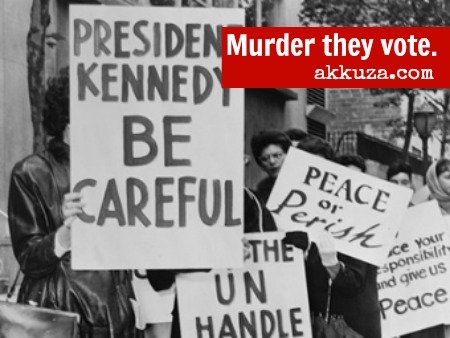
YOUR ATTENTION PLEASE. Government is reportedly about to send 102 Somali asylum seekers back to Libya, in what would effectively be a repeat of a policy enacted by Italy in 2010, and declared illegal by the European Court of Human rights in 2012.
The initiative would also be a direct violation of Protocol 4, Article 4 of the convention of human rights – to which Malta is signatory, and which very unambiguously prohibits mass deportation of foreigners.
Hailing from Somalia, all 102 of these asylum seekers are within their legal rights to seek asylum, and Malta is legally bound by various treaties to process their application. Yet government seems to be implying that it intends to disregard its own legal obligations in this sense, and the implications are that governmet considers itself above the law.
A protest has been planned for this evening (8pm) and will be attended by NGOs involved in asylum. The MHA is supporting this initiative, as it is very concerned by the latest developments on at least three counts:
1), the proposed action constitutes a clear violation of human rights, and as such runs counter to the single most relevant article of international law concernign human rights (which, as humanists, we feel duty-bound to uphold)
2) regardless of legality, the proposed plan is a direct affront to the basic dignity to which all humans are entitled, and exposes these people to very serious risk of violent reprisals (possibly including torture and execution) on their reptriation;
3) It is the MHA’s view that government’s approach to this phenomenon should not be piecemeal, and shoud instead concentrate on adopting a national immigration plan that goes beyond dealing with crises as they arise… in other words, the opposite of what it is doing in this case.

Talking about a revolution

Mohammed Morsi will just not let go that easily. The government installed after Egypt’s turn of the Arab Spring seems to have its days counted and the army has issued an ultimatum for it to step down. As representatives of the Muslim Brotherhood prepare for the last stand, it seems to be inevitable that there will be a new government that moves away from the initial islamist reaction that was originally installed following Mubarak’s removal.

Listening to the BBC radio this morning I heard of the travel advisories issued by the British government and was bemused to notice that while the political centres of Egypt are currently a no-go area for tourists, the Red Sea zones are still open to business as usual. Which goes to show that 21st century revolutions cannot afford any blips in the economy – so do not cancel that holiday in Sharm el Sheik and the next government will be grateful.

We did see something similar happening in Brazil in the pat few weeks with the social divide being clearly highlighted. On the one hand the Confederations Cup went ahead with a festival of sports in a country that is supposed to be football mad while on the other you had millions of people hitting the street reminding the government to get its priorities right. There’s nothing more symbolic of the surreal clash between the panem et circenses and the protesting crowds than the TV commentator wondering out loud whether the smoke that he can see is coming from the supporters or from the police canisters of tear gas being thrown outside.

Elsewhere Mr Snowden is busy concocting his own peaceful revolution. While Evo Morales seems to think that Snowden’s act is definitely in the interests of peace – a revolutionary act of courage, Vladimir Putin described dealing with Snowden as being “like shearing a pig – too much squealing, too little wool”. Maybe the truth is half way there. Snowden has issued his latest declaration from the transit zone in Moscow.

Snowden denounces the United States for having revoked his passport and left him stateless. He reminds the world that “the Obama administration is not afraid of whistleblowers like me, Bradley Manning or Thomas Drake. We are stateless, imprisoned, or powerless. No, the Obama administration is afraid of you. It is afraid of an informed, angry public demanding the constitutional government it was promised – and it should be.” Information and knowledge remain the key terms in this period of revolutionary change that is eating at the traditional dynamics of liberal democracy.

As Snowden remains stuck in no-man’s land in a Moscow Airport waiting for news of the first country that will offer him his much needed asylum, we hear of the Maltese politician who crossed half the world in order to spend four hours in the Bahamas for some philanthropic mission. In this case the press statements and emails sent to clarify his behaviour amount to nothing more than a garbled text of foot shuffling and enigmas. The lack of clarity in the statements should of itself suffice as proof to the inquisitive mind that the smokescreen being created (and accompanying conspiracy theories) is just that.

The truth, most times, is simple. It’s the lies and half truths that turn out to be most complicated.

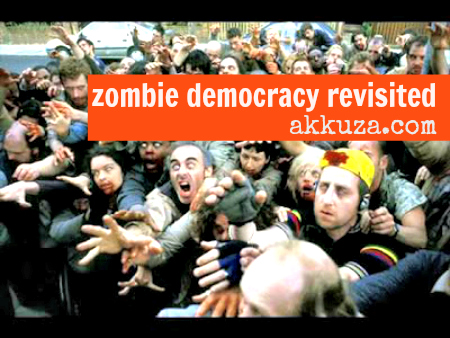
Zombie democracy revisited

One of the Economist’s leaders this week is entitled “Zombie democracy” and essentially discusses the concept of majoritarianism. Modern democratic governments are elected by popular suffrage and are formed on the basis of majority rule (cue the discussion on representation, majority government and coalitions). Once an election is over it is assumed that the party obtaining the majority of support will govern. Of course the essence of liberal democracy does not stop there. There are in place numerous institutional and systemic checks and balances to ensure that the government does not get too drunk with power. At least in theory this should work.

In Malta we have recently segued from a government that enjoyed a relative majority to one that enjoys a gulf of majority – at least poll wise. the first hundred days of Muscat’s government have betrayed an arrogant confidence that is cushioned by the implied thought that the massive majority cannot be wrong. Can it?

When last Thursday I voiced my agreement with what Caruana Galizia had to say on Simon Busuttil’s statement that “36,000 people cannot be wrong” I provoked quite a discussion on facebook. For the record here is the clip from Caruana Galizia’s article on the Indy:

Simon Busuttil said a few days ago at a party event that “36,000 people can’t be wrong”. Of course they can. A hundred thousand people can be wrong; a hundred million can be wrong. Rightness and wrongness do not derive from popularity of belief or opinion. To correlate whether people are right or wrong to how many people did or think the same way is a logical fallacy. Some of them already know they were wrong. They are able to see it, some even to admit it.

Do elections really give you an idea of what is wrong or right? Of who is wrong or right? Votes are won (or “bought“) for many different reasons and more often than not being right has little or nothing to do with it. A campaign such as the Taghna Lkoll campaign can act as an opiate for a large number of people and once it is combined with the accumulation of disgruntlement at the incumbent it is a sure formula for success at the polls. Alas it has little to do with that formula being a formula for success at good democratic government.

The success at the polls projected TaghnaLkoll to the dizzy heights of power and within the first hundred days we have a clear picture that the hopes of the voters were not to be matched. The latest dismal move is the dismantlement of a diplomatic set-up in order to make way for lackeys, travel consultants and comperes to be the face of Malta abroad. Also the earliest cabinet reshuffle in history was the result of Labour not having stuck to its original position (separate ministries for justice and home affairs). The musical chairs in cabinet is all about keeping friends close and enemies closer. It’s obvious. Power broking for the sake of power broking is what is going on with no place left for the national interest. Add to that the not too transparent dealings with the Chinese government and what you get is a Joseph Muscat government bulldozering over any semblance of liberal democrat checks and balances.

Here’s the Economist on how this happens:

“BUT I’ve won three elections!” Recep Tayyip Erdogan, Turkey’s embattled prime minister, growls at his critics. On the face of it, his case is compelling: surely, many people in Turkey and beyond would agree, popularly elected leaders can govern as they please? That’s what democracy means. Well, no. Majoritarianism—the credo of an expanding group of elected but autocratic rulers around the world, which holds that electoral might always makes you right—is not true democracy, even if, on the face of it, the two things look alike. It is worth explaining why.

The solution is in the mind of the politicians themselves. Gonzi’s government did cause much damage to the already flawed concept of democracy that existed in the popular mindset. The clinging to the seat of power was not an educational step forward and sowed the seeds for the abuse of democracy by Muscat and the TaghnaLkoll crowd. As his government became weaker and weaker Gonzi clung to the relative majority in parliament and played the actors sufficiently to last the whole legislature. At times it takes a conscious step in the mind of leaders themselves to recognise the limits that are accorded to majoritarian power – again the Economist:

Beyond documents and institutions, the difference between crass majoritarianism and democracy resides in the heads of the mighty. Democrats have a bedrock understanding that the minority (or often majority) who did not vote for them are as much citizens of their country as those who did, and are entitled to a respectful hearing; and that a leader’s job is to deliberate and act in the national interests, not just those of his supporters.

This leader could have been written for Muscat. Instead the Economist is probably still not alerted to the goings on in the European Union’s smallest member so it uses Erdogan, Lukashenko and Hungary’s Orban as examples. The adaptation of these leaders to democracy has been simply to ensure that come election time they get that crucial bulk of votes that puts them into the driving seat for the next legislature. Practices to obtain such votes may be illegal (vote-buying, vote-rigging) or borderline legal (jobs, amnesties promised). In time we have seen how even parties in the more classical of democracies have morphed into election winning machines that have no clue how to make use of power democratically once elected. They groom the zombies to vote them into power… then stick to it with no regard for the wider community. The Economist concludes:

The basic idea of a democracy is that the voters should pick a government, which rules as it chooses until they see fit to chuck it out. But although voting is an important democratic right, it is not the only one. And winning an election does not entitle a leader to disregard all checks on his power. The majoritarian world view espoused by Mr Erdogan and leaders of his ilk is a kind of zombie democracy. It has the outward shape of the real thing, but it lacks the heart.