Europe’s representation crisis?

representation_akkuzaThe upcoming French municipal elections have unearthed a huge problem. In many municipalities there is a dearth of candidates, particularly for the post of Mayor. In the Gironde area 45% of the smaller communes are still without a candidate – and it does not stop there. The main reason given for the dearth of candidates is the stricter set of rules being enforced among smaller communes when it comes to conditions for submitting candidatures and lists. There is another parallel reality though and that is related to the fact that potential candidates are shying away from what is perceived as a great responsibility.

In Italy, new PM Matteo Renzi has chosen to merge a swathe of administrative districts in Sicily in order to make them more competitive and promote development. The new “South-East District” encompasses Catania, Siracusa and Ragusa and is intended as an injection to the often static development in the south of Italy. Italy’s Senate and Parliament have had a little bomb explode within thanks to the earthquake that has shaken Grillo’s M5S.

Grillo’s 5 Star Movement has always found it hard to come to terms with an effective working representative system. In its effort to maximise transparent and representative decision making, the Movement ends up having draconian rules and emanates a sense of inflexibility. It could be a case of a far-fetched utopian reality attempting to adapt to the circumstances of old-style politics. Or it could simply be an implosion in the making.

Probably it is a bit of the two. What seems to surface from this kind of turmoil is the fact that a “new politics” without revolution rarely, if ever, happens. The M5S tried to glide into and replace the old system of political workings. This old system is a system that had settled comfortably into a market of power-mongering, influence trading and alternating hegemonies that had little or nothing to do with democratic representation.

Matteo Renzi has been accused of being the new face of the old style politics. He is the epitome of non-representative political methodology – not having been elected to parliament, senate or power. His is but one manifestation of the disenfranchisement of representative power. Another method would be the gradual removal of accountability, transparency and basic rule of law. The latter is a method preferred by the nouveau “representative majorities”, rushed into power by popular mandate which is all too soon discarded and replaced by the service of the power-mongering, influence trading and hegemonic elite.

Finally, the European Union itself, with the elections for its most representative branch just round the corner, would do well to take a long hard look at its long term objectives and if necessary question whether or not there exists a demos to be served and, more importantly, what that demos is calling for.



Freedom

The only sure bulwark of continuing liberty is a government strong enough to protect the interests of the people, and a people strong enough and well enough informed to maintain its sovereign control over the government. – Franklin D. Roosevelt

solidarity_akkuza

The Justice Dispensers

justice_akkuza

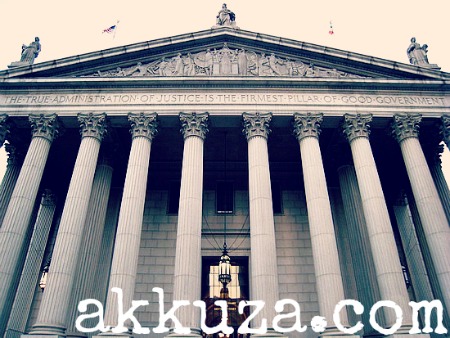
The Supreme Court building in New York sports a quote spread along its facade. Attributed to George Washington it states “The true administration of justice is the firmest pillar of good government”. There are many other quips in similar vein that can be formed into a digest of civic education necessary to form a Havel-inspired backbone of society. “We are servants of the law so we may be free”, “everybody is equal in the eyes of the law” and “justice must not only be done but also seen to be done” are but a tiny sampler of a hypothetical dispenser of sayings related to the role of justice in forming a strong backbone of society.

The onset of relativism in Malta, poisoned as it was with strong doses of populism and twisting of truths in order to benefit whatever half of the population was being courted, has had a devastating effect on our concept of administration of justice and its dispensation. The institutional (constitutional) set up intended to be a fine machinery with which laws would be discussed, promulgated and implemented has been the main victim of the spread of the malaise of relativism and once the mother of all populist and relativist movements plonked itself in the seat of “power” the inevitable happened.

It began slowly. The “fairness” of justice was (rightly) made a subject of debate. Nothing wrong there, especially since society has a way of revising its concept of justice and mores on a regular basis. The problem begins when the proper channels for the revision of laws and finally the dispensation of justice are bypassed in the name of some relativist concept of fairness that operates plainly outside the codebook. There is no legal certainty, no legitimate expectation – simply an unpredictable machine churning out populist edicts as becomes the popular call of the moment. The erosion happens quick and fast by eradicating any concept of merit, of just deserts and introducing a volatile idea of “fairness” (at least perceived).

This is a society that will now reward failures (repeaters at University will still receive their stipend). This is a government that, without any legal foundation, decides to create a blanket amnesty to 1,500 persons who are blatantly accomplices in the crime of theft of public property. The example this sets is an abomination to any aspirations of a just society. The transparent reasoning behind it all – notwithstanding all the faffle from the respective Ministers and PM – is that most of these people would form part of the disgruntled who complained about the price of electricity. Those disgruntled had thrown their weight behind the current government – no wonder they suddenly find a reprieve whisked out of thin air.

Under this government though we have been told that if you consider a tax or a cost to be unfair then you are perfectly within your rights to try and avoid paying it. Committing a crime to do so is perfectly kosher – this is thegovernment that supposedly rewards Robin Hoods. There is no sense in all this other than the distortion of justice for political mileage.

“We cannot expect people to have respect for law and order until we teach respect to those we have entrusted to enforce those laws.” – Hunter S. Thompson.

I will, in short, dream for a while

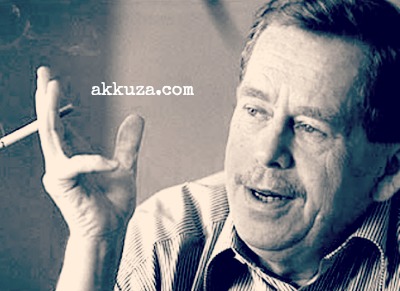
vaclav_akkuzaBack in 1992, Vaclav Havel was the President of a reborn Czechoslovakia. The fall of the Wall and the crumbling of the Iron Curtain was still fresh in recent memory and Havel’s new republic was making its way towards the ideal of “Western Democracy”. Fukuyama might be standing round the corner proclaiming the end of history but for the Czechoslovak playwright and poet President the future was full of hope. In the summer of 1992, Havel wrote a series of essays published in a book called “Summer Meditations”. In “Beyond the Shock of Freedom” he tries to imagine what Czechoslovakia would be like in the future (ten, fifteen, or twenty years). Though he admits that “life is unfathomable” he does try to dream for a while.

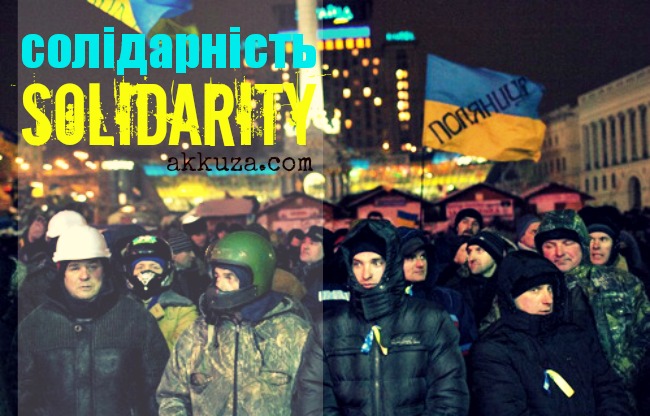
It’s not Martin Luther King’s dream. In many ways it is much more down to earth. What we read is a President who hopes to shepherd his newborn Western nation to working the basic tenets of what was understood to be the workings of a western liberal democracy. This was, remember, around the same time as the second mandate of Fenech Adami’s reworking of the Maltese republic – from Work, Justice and Liberty we had segued onto “Solidarity… always… everywhere”. Solidarity was a page lifted straight from the rebirth of another former Iron curtain nation – Walesa’s Poland. It was the call for change that was answered and that began to break away at the shackles of totalitarian hypocrisy.

But back to Havel’s dream. It remains relevant today – and not just for Czechoslovakia (the split into the Czech and Slovak republics occurred a little while after Havel published his thoughts). I find Havel’s hopes for the citizenry particularly telling. What he describes as ‘the shock of freedom’ has impacted the way citizens think and he hopes for an evolution in their attitude. The civic responsibility that he evokes involves confidence and pride – leading citizens to feel comfortable with their own country. Here is an extract from the opening lines of his essay with my emphasis added.

In the first place, I hope the atmosphere of our lives will change. The shock of freedom, expressed through frustration, paralysis and spite, will have gradually dissipated from society. Citizens will be more confident and proud, and will share a feeling of co-responsibility for public affairs.They will believe that it makes sense to live in this country.

Political life will have become more harmonious. We will have two large parties with their own traditions, their own intellectual potential, clear programs, and their own grass-roots support. They will be led by a new generation of young, well-educated politicians whose outlook has not been distorted by the era of totalitarianism. And of course there will be several smaller parties as well.

Our constitutional and political system will have been created and tested. It will have a set of established gentlemanly, unbendable rules. The legislative bodies will work calmly, with deliberation and objectivity. The executive branch of government and the civil service will be inconspicuous and efficient. The judiciary will be independent and will enjoy popular trust, and there will be an ample supply of new judges. […] A well-functioning, courteous police force wioll enjoy the respect of the population, and thanks to it – not only to it – there will no longer be anything like the high crime rate there is now.

At the head of the state will be a grey-haired professor with the charm of a Richard von Weizsacker.

We will, in short, be a stable Central Europen democracy that has found its identity and learned to live with itself.

A history of violence and animals

violence_akkuzaThe works of a psychopath in Mosta (whether direct or through a hired hand) have tickled the curiosity of the Maltese public. It does not take much for anything to get onto the media these days (as I discovered to my chagrin thanks to a what I thought would be an innocuous Eurovisionjoke involving Gary Barlow) but the “Mosta Cat Killer” has qualified for permanent stardom. Let’s face it, the case of dead cats and dogs hanging from crucifixes is destined to be spoken of for many years to come – there will probably be a Xarabank programme about it on the 16th anniversary complete with a live performance from the musical “Cats”.

In a tiny island that still gets its occasional murder or two as well as multiple cases of theft one cannot but wonder whether the sensationalism behind what in many other nations would be a village freak crime is over-hyped – and consequently whether too many resources are being dedicated to the matter. I googled “cat killer” and “serial cat killer” – because that is the thing you do these days – and was surprised to discover several cases reported in the UK and US. Admittedly there is not the Dan Brown addition of gory crucifixes linked to statues of saints but there was a sense of relief to be had in the idea that cat murderers are not confined to the isle of milk and honey.

Having said that the fascination with the whole idea of having Malta’s own serial killer (albeit of the feline and canine victim kind) persists and as the 16th of the month approaches (although I am told by Cat Killer aficionados it won’t be the 16th because it’s February – go figure) the hype is destined to build up again. Is this another case of the obscene voyeurism that the 21st century has thrown in our collective faces? Elsewhere Raphael Vassallo has concluded that the Danish Zoo’s putting down of perfectly healthy giraffe Marius was made public in order to take advantage of the gory fancies the general public might have. This was no “mercy killing”, it was “panem et circenses” all over again.

The moral vagaries of such issues are hard to catch up with. On the one hand there is a huge gap between this society and the one I grew up in – aiding my grandma to skin a rabbit that she had just killed not so mercifully with a deft chop to the neck. The empathy for the dead cats and dogs in the Mosta Killer case must surely be put into perspective. As far as I know nobody has walked up to the police in tears claiming that their pet cat or dog has been killed. These are “wild” cats and dogs. Which does not make killing them any nicer but does point out to some kind of conscientious choice by the perpetrator. Let’s face it, he could be kidnapping and killing your moggies and pooches but he is not. He is just intent on making whatever twisted point he has to make to society in general.

In the UK they often license the culling of squirrels – the overpopulation is harmful to the greater balance in nature. In Malta we now have quotas for hunting – whether they are respected is another story – but wild cats and dogs run freely and dangerously in villages and the countryside. Is this Mosta Killer Malta’s weird and unorthodox way of coping with this overabundance of stray cats and dogs? Of course not. Forgive me for thinking so though, especially since when last I checked the public reaction to the problems with dog shelters and cat shelters was not half as enthusiastic as the ogling and curiosity that surrounds the Mosta Cat Killer.

“Some werewolves are hairy on the inside” – Stephen King.


Crossing the threshold of faith

believe_akkuzaCriticising the workings of a government or an opposition is what this blog has done with consistent regularity. No matter who was in “power” the line taken from these pages has always been consistent. Also, very consistently, this blog has always managed to ruffle some feathers in some quarters. More often than not it would be the partisans of a faction that is being criticised who would vociferously disapproved of the contents of J’accuse’s latest missive. More often than not it would be the messenger and not the message that would be shot at.

In these halcyon Tagħna Lkoll days I often find myself in a quandary as to how often I could put finger to keyboard and criticise yet another mind-boggling move by the people who purport to manage this country. The fear (or self-censorship) is really unjustified. The worry is that repetitive ‘assaults’ on the same tribe gets you quickly labelled as a member of the “other”. Having said that what really gets at me is the way Joe Public is prepared to gloss over the inconsistencies of the PL brigade much quicker than when the Gonzi team was in government.

No matter how shallow, how inconsistent and how potentially corrupt the Labour programme is seeming to turn out, Joe Public is still thinking in terms of the perceived evil that was. I particularly liked a comment on facebook by the man who goes by the moniker “Ze Heckler” – not for reasons that he would appreciate. Here’s his status update:

Min bi Snowden, min bil-Pussy Riot, min b’Grillo, min b’Wikileaks u ahna b’Daphne. You get the rebel you deserve, too.

Admittedly the class of “rebels” is not exactly your average Che Guevara, nor is it your Martin Luther King or Mahatma Gandhi. Heckler’s list is a list of non-conformists (Grillo might be verging on the breakdown though) but I am not here to create a scale of “rebelliousness”. I just found it weird that Daphne would fall in the rebel category. Is it the anti-government streak? The brazen nature of her posts that openly target the above-mentioned inconsistencies? Does that a “rebel” make?

The way I see it, to be a “rebel” in Malta you cannot operate within the system’s parameters. Daphne, like anybody else operating in the system is guilty of accepting the general wider parameters and rules by which our system is run. Throughout the Gonzi years the “rebelliousness” was nowhere to be found. On the contrary, much like the prominent “journalists” of the time (now either retired, MEP candidates or playing to the Labour fiddle) Caruana Galizia would selectively pick out the “interesting news” in order to help preserve the status quo. That kind of blogs must have been grateful for the fact that Malta was kept in election mode for long periods thanks to the antics of that other fake rebel – Franco Debono.

The (quite predictable and understandable) position of Caruana Galizia’s blog is not among rebels but among anti-Labour blogs whose aim is to simply get Labour back out of the driving seat. Nothing wrong there. What is missing is the realisation that the framework within which the alternation takes place is only destined to produce the same. Or worse. “Rebels” are those who are pushing for a paradigm shift that moves the whole framework into a new dimension. A real second republic if you like (not the marketing one that Muscat smartly nabbed).

A failure to acknowledge that the system (the framework if you like) is faulty and will produce more and more of the same means that you are a willing participant in the system. That’s not rebelling. That is opposition. Thankfully, there are signs of early realisation, even in the quarters such as Caruana Galizia’s blog, that much more must be done than simply playing along. Whether such elements would be willing participants in a discussion about (let alone action) the possibilities of a paradigm shift is another question. Old habits die hard – and more messengers will be shot.

As things stand we are moving further and further into a system built of two parallel worlds in which the value scales are very very different. Which is why all Labour’s moves will continue to be accepted by a large chunk of the Maltese population. Their value scale is different from that of those who might have shared a value scale with the PN in the near past. The same applies vice-versa. The dynamics of democratic representation should have allowances for such possibilities. In our case though, the inertia caused by the PLPN system is gradually moving the very tenets of representative democracy towards a breaking point. This too is what is meant by the race to the bottom.

Our parties have created two faith systems within which it will become less obvious why and how people will cross the threshold to the other side. A re-calibration of the value scales of one party might serve to trigger the beginning of a change.

* One final note. This blog post is not meant as some kind of competition in comparing the size of “light sabers”. Consider it an observation – as we always have done – of the current situation on the ground. The interesting thing of inhabiting a system with multiple value scales is that suddenly there is not one “right or wrong” but a multiplicity. Take the following simple example: “Selling citizenship without residency requirements rakes in millions”. Value scale one cannot agree more – Malta gains. Value scale two is appalled – Malta is sold cheap. Value scale three examines a European dimension. On each of their scales they are “right”. Not the “it’s my opinion so it is true” kind of right (which is irritating) but right in the sense that in each case the policy position is feasible – the consequences are different.