This State of Independence

independence_akkuzaThe festivities have begun in full earnest and Malta is soon to be proclaimed a 50 year old independent state. With the 50th anniversary we also get the reopening of the silly season. There’s a “let’s all love each other” approach by the two main parties – each proclaiming some kind of goodwill about what had hitherto been considered “the other’s” feast day. Yes, we have heard it all – over and over – Independence vs Republic vs Freedom day. Sometimes they throw in the 7th June 1919 for good measure but the heated debate had focused mainly on what are now being dubbed as the “three steps” that were necessary for Malta to become what it is.
To me someone like Muscat finally growing up and clamoring that “Independence day is a feast for all Maltese” is nothing that warms the cockles of the heart. Just because the red tribe of the Maltese jungle suddenly sees the light and begins to faintly understand the meaning behind an achievement as important as independence in the birth of a nation does not mean that we have to stand up and applaud. At most we could sigh in relief as one does when a toddler finally grasps the idea that one plus one does equal two and gives up on the horrible insistence that one plus one can equal carrot. We would sigh in relief were we not also convinced that this sudden show of magnanimous understanding and one-ness is not another show of the Taghna Lkoll style: tanto fumo niente arrosto.

How they applauded Muscat at the unveiling of the Guido De Marco memorial. “Did you hear him? He actually praised Guido. Oh Such a great Prime Minister have we.” Really? What was the alternative? Are we to clap because Muscat had the temerity to call a spade a spade? What kind of rubbish is that?

Now we have the clips being propagated by the National Festivities Commission. Independence is described and couched within terms of a series of steps that unite us. Insultingly it is put on the same pedestal as that humungous farce that is Freedom Day or Jum il-Helsien. This insistence on celebrating that non-event is incredibly naive and ridiculous. It is as though a future government were to begin to celebrate the end of the Beach Concession that the Powers of Brangelina have over Mgarr ix-Xini. Freedom from Brangelina Day could have its own kitsch monument on the beach complete with mini-Hollywood memorial.

In the legal and political growth of a nation there is no greater achievement than the assertion of self-government and sovereignty. That is what the 21st of September 1964 is all about. If you still harbour any doubts about how important a step this is then ask a Scot who will be voting tomorrow on the very issue of independence. Nobody is asking the Scots who they want as formal head of state (it will probably be Bess as Queen of Scots), nobody is getting het up about whether it will be a Scottish Republic. It will be an independent Scotland that can negotiate (or maintain) its status as a member state of the EU – the independence step is more than enough for that.

In all probability an independent Scotland will have to negotiate the rental of one of its estuaries to the English army for the latter to keep its nuclear submarines in. Eventually, at a later date that rental agreement might end but I am sure no Scot will go clowning about yelling “Freedom” like some latter day cross between William Wallace and Dom Mintoff.

No. What around 50% of the Scots are aspiring for is Independence. There is a reason for that. Independence defines the birth of a nation. It puts it on the map as a nation among nations. Inter pares – among equals.

Sure, you can feel proud that at a later stage in the growth of the nation you felt it necessary to remove the house of the Windsors from the position of head of state of the nation and opted for a president that would represent the people instead. Constitutionally though, the big change had long happened. Ridding ourselves of Bess Queen of Malta and opting for Marie Louise President of the People is a cosmetic change that alters little on the world stage. It’s not about party pique but about education and historical relevance. let’s face it, the switch from Constitutional Monarchy to Republic in 1974 was not exactly your storming of the Bastille business in 1789… to deny that would be to ignore historic truths: and that only serves ha’penny historians and the sweet sweet luvvy duvvy propaganda of this current lot.

Education, not fables and fantasies is what would make this nation stronger. Otherwise its all a load of balderdash.


Le Roi est mort! Vive le Roi!

Once Upon a Time in the Republic

once_akkuzaWe are fast approaching the 50th anniversary of our nation’s independence. It’s been fifty years since the sacred instruments were handed over to Prime Minister Borg Olivier in Floriana. And where are we now? Are we a model democracy that can be used as a shining example and beacon among the corrupt and failed states of the post-Fukuyama collapse?

Not if you believe the hype we aren’t. The editorials in the major English dailies are resorting to the use of such terms as “lawlessness” and “laissez-fairism” (they don’t use the last one exactly, they imply it, but they would if they knew it). Fifty years of independence and barely one into Taghna Lkoll’s declared aim of creating a second republic, we seem to be waking up to the gradual break-down of the system of rule of law that invisibly holds a nation together.

Is it really scaremongering? Like hell it is. It was always there for everyone to see. When you have a party that intends to hold on to the thrilling rush of power by way of appeasing as many people as possible as much as possible then you inevitably open the way for the compendium of trickeries that involves turning a blind eye, irrational decision making and more of the sort.

The first blinder that hit the electorate in the face was the sinking of the meritocracy boat. With the nonchalance of a tin pot dictatorship idiots and fools were promoted to high places. If that were not enough they actually invented more high places to accommodate all those who had been promised a piece of the pie. So Taghna Lkoll programmes were to be run by monkeys.

The second blinder was the ransacking of any system of punishment. All the hoo-haa about being strong with the corrupt, all the words about changing a system in order to empower whistleblowers and construct a good government. All well and good for the mass meetings with the faithful and the hypnotised. When push comes to shove though we have seen the proof in the amnesties, in the judges allowed to wriggle free of impeachment and in the “who cares if my latest appointee was also running an illegal hotel” approach. Like meritocracy, the tough talk about being strong with the unjust came crumbling down as quickly as possible.

Now we are hit with the absolutely preposterous notion of playing with elections at whim. This government of the people has arrogated unto itself the power of suspending Local Council Elections while using one “the dog ate my homework” kind of excuse after another to justify the manifestly gross slur upon its democratic credentials. Youngsters promised a first vote in the 2015 elections were brushed quickly under the Labour Carpet of inconvenience and sacrificed as victims to the greater good that is the hunting lobby. Gaddafi and Idi Amin would have been proud.

Then there is the brazen approach to public property that ill-befits any socialist label. The Australia Hall sale to make good for 20-year old debts for furniture is a monumental farce especially when coming from a government party that verbally espouses principles on party financing and good governance. Having already twisted the law in its favour by advising itself as government to return the hall to itself as labour party, the party then went on to sell off this public patrimony to private individuals. Shame? What’s shame? It’s a buzzword that was useful for the Prime Minister’s bromance buddy for a little while before he started giving out Arse Et Gratia payments to the happy people.

Because that is what the people want. Muscat has sussed it out. In this Second Republic, 50 years independent, it is the egoistic cowboys that win the day. That is what they all mean by lawlessness. The law is a mere guideline but if the government sees a few points for itself to be made then the law becomes naught but arse wiping material. It helps us not that the long arm of the law are occupied doing a silly prosecuting bird lovers for displaying illegally shot birds (heaven help us) or proceeding with their obsession with nudity arresting skinny dipping Frenchies.

Our Emperor has long paraded bare before a bewitched populace. Sadly a muddled opposition that keeps shooting itself in the foot (cfr Clyde Puli’s poverty gaffe) will not help much. The opposition actually needs to press hard the obscenity that is this postponing of elections business. Harder than youtube videos. This obscenity have the whole rank and file of the opposition shouting “foul” (and not just shame).

It’s a short step away from a land of cowboys this. Once upon a time in the Republic we had a working constitution and the rule of law. Today we have Labour in government. A round of drinks for all at your local saloon.

Tenderly by Xarabank

tenderly_akkuzaKelli ngħaddi siegħa ċ-Ċirkewwa waqt l-aħħar mawra tiegħi f’Malta. Kien waqt dawk is-siegħat kiefra ta’ wara nofsinhar fejn id-dell isir iktar prezzjuz miż-żejt u fejn kull taħrika ta’ ġismek tkun kawża ta’ gelgul ta’ għaraq ibelġen ma’ tul is-sinsla ta’ darek. Ipparkjajt fejn it-Terminal, kont qed nistenna’ ‘l xi ħadd biex niġbru minn fuq il-vapur. Kelli stennija. Tfajt lenti quddiem is-sigarett u qabad waħdu. Ħa naraw ftit.

Mill-parkeġġ stajt nara u nosserva ir-ritmu alternanti taċ-Ċirkewwa nhar ta’ Ġimgħa. Jinġemgħu n-nies għat-traġitt li jmiss u tiżdied magħhom it-tensjoni u l-kaos. Karozzi fuq xulxin, nies mexjin f’nofs it-triq mingħajr ħsieb għat-traffiku, u xemx. Ħafna sħana u nervi. Dak li suppost qed jidderieġi il-karozzi fir-ringieli ta’ stennija għal fuq il-vapur ilha li qabżitlu. Għalxejn il-biċċa ma għonqu biex tilqa’ il-galluni ta’ likwidu inixxu minn moħħu. Qabżitlu, u bir-raġun.

Ilħaqt rajt ukoll in-nies jinġemgħu fuq l-istand tax-xarabank biex jistennew dik li jmiss. Daż-żmien m’għadux żmien il-45. Valletta-Ċirkewwa via kull raħal li setgħu ideffsu. Le issa hemm diretti mill-Belt, mill-Ajruport, minn Tas-Sliema u iktar. Frott l-Arriva u l-ippjanar ġdid tar-rotot. Imma l-Arriva m’għadhomx hemm. Keċċewhom. Għamlulhom ħajjithom infern u ma setgħux ħlief iparpru.

In-nies jinġemgħu fuq l-istand. Parti mit-Terminal ġdid fjamant dan. X-xemx tispara diretta fuqhom. L-ebda dell ma jwennes. L-istand għandu taparsi saqaf tal-ħġieġ li ovvjament ikun inħareġ tender u rebħu xi perċimes li ipprovda naqra ta’ saqaf trasparenti babaw – trasparenti x’ċuċ hu t-tender. Insomma żgur ma hux xempju ta’ arkitettura prattika u dan jixhduħ il-mijiet ta’ passiġġieri li jispiċċaw jinqlew jistennew il-misħuta Xarabank filwaqt li jgħidu rota rużarju bit-tama li l-erkondixin jaħdem.

N-nies jistennew fuq l-istejġ "fid-dell".

In-nies jistennew fuq l-istejġ “fid-dell”.


Iżda laqtuni l-iktar ix-xarabankijiet. Ma kienx hemm waħda bħal l-oħra. Addio l-uniformi ta’ l-Arriva. Ismijiet taż garaxxijiet differenti u numri imwaħħlin ta’ kafkaf bil-kartun. Naħseb għoddejt seba’ kumpaniji differenti tal-kowċis li ipprovdew xarabank għas-servizz pubbliku. Kien hemm minnhom li kont tisma’ s-sħana tidgħi weħidha minn ġewwa qalb is-sedili miksija drapp oħxon u pattern tal-leopard. Basta bil-purtieri imdendla biex taparsi jilqgħu ix-xemx.

Dak il-ħin kien ovvja x’ġara iktar minn qatt qabel. Ta’ Tagħna Lkoll kienu telgħu bl-għajta tar-riforma. L-ewwel qażżu ‘l Alla u oħtu jeqirdu dwar is-servizz li suppost kien tan-nejk u kif telgħu qabdu qabda mat-tedeski sakemm parpru ‘l hemm. Imbagħad biex taparsi “salvaw” is-sistema qabbdu xeba’ karozzi privati u garaxxijiet biex jaħdmu fuq ir-rotot. Sabiħa din. Is-sussidju tal-gvern li qabel kien imur għand kumpanija li għamlet l-għalmu tagħha biex tlaħħaq mal-idjosinkraziji ta’ pajjiż miġnun issa tqassam bħaċ-ċejċa lil numru ta’ kumpaniji privati biex taparsi isoddu it-toqba.

Customer care u ngħid. Kullħadd mgħaffeġġ, vidjos ta’ xufiera li jiġi f’idejhom l-isteering, korteżija li splodiet barra t-twieqi u t-temperatura dejjem tiela. Imma l-ġaħan ferħan għax ir-rivoluzzjoni soċjalista saret għal ġieħ il-poplu. Servizz tagħna lkoll li bih paxxa erba’ prieċem tal-garaxxijiet li ħelsu mix-xarabankijiet li kellhom fuq żaqqhom u qed idawru sold bis-sussidji tal-poplu. Mela żikk. L-aqwa li meta jmurlek id-dawl jidhirlek il-Ministru jitfantas fuq xi ex gratia payment li lanqas tiswa rota ta’ karrellu tal-lidl. U meta jmurlek id-dawl għal erba’ u għoxrin siegħa ftakar li tort ta’ Gooonzi u boiler number 7.

Ara biss taħseb li qed jitnejku bik f’wiċċek u jħalluk tinqela’ fix-xemx ġewwa ċ-Ċirkewwa tistenna x-xarabank sura li donnha ma hi se tasal qatt.

Arrested Development

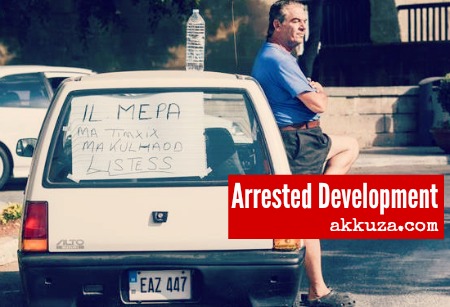
arrested_akkuzaYou cannot really laugh when you read stories like this. The institutions on the European mainland are constantly besieged by protests of all kinds against their decisions – and it is right that it should be so. Farmers from France have been known to drive up to Brussels and dump truckloads of manure to protest decisions by the EU institutions that they disagree with. For as long as I can remember London visits always included an episode where you come across a protester in the street, complete with tents, placards and whatnot monitored from a distance by a bobby or two – but still allowed to continue with his/their protest without being too bovvered by the long arm of the law.

Not in Malta 2014 though. Ignatius Busuttil was arrested for obstructing traffic (in a day and age when traffic is brought to a standstill by the needs of the latest Festa without so much as a by your leave) and for disobeying the police (who were ordering him to stop a peaceful protest). Worse still the newspaper report taken directly from the official statement we read that the police query goes into the questioning of Busuttil’s motives to protest : as though your very motives to complain about the government’s management of affairs require some sanctioning. Yes, it is facile to use the adjective Kafkesque but calling spades spades is sometimes the most simple of explanations.

“In the official statement given to the police and signed by Mr Busuttil, he was asked why he wanted to speak to Prime Minister Joseph Muscat, what he intended to say to Dr Muscat and what his grievances with MEPA are. The police asked him whether he had ever tried to make a formal appointment with Dr Muscat or any other government officials. The police then asked Mr Busuttil whether he has any mental problems.” (The Malta Independent)

It get worse too. The police are apparently hot on psychology now and they will delve into a lovely conundrum taken straight out of Joseph Heller’s leaf.  They have taken Catch-22 and turned it on its head.

“Sure there is a catch,” Doc Daneeka replied. “Catch-22. Anyone who wants to get out of combat duty isn’t really crazy.”

There was only one catch and that was Catch-22, that specified that a concern for one’s own safety in the face of dangers that were real and immediate was the process of a rational mind. Orr was crazy and could be grounded. All he had to do was ask; and as soon as he did, he would no longer be crazy and would have to fly more missions. Orr would be crazy to fly more missions and sane if he didn’t, but if he was sane, he had to fly them. Yossarian was moved very deeply by the absolute simplicity of the clause of Catch-22 and let out a respectful whistle. 
“That’s some catch, that Catch-22,” he observed. 

“It’s the best there is,” Doc Daneeka replied.

Much to Ignatius Busuttil’s chagrin the police have come up with their own version of Catch 22. It goes something like this:

1. You’ve got to be crazy to be protesting against this government.

2. Crazy people should not be allowed to protest. They should be in a mental institution.

3. Off to Mount Carmel.

Simple isn’t it? Joseph Muscat’s law is looking more and more like Joseph Heller’s. And it’s all the more a loss for our democracy.

Employing the statistics

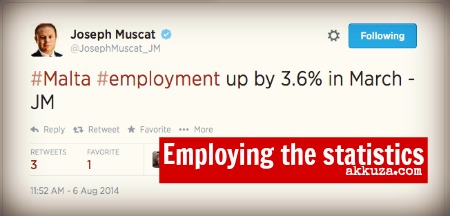
employ_akkuzaAt 11:52 this morning Joseph Muscat tweeted (as we do nowadays) that employment was up by 3.6% in March. I had been waiting for some new NSO figures for some time now ever since a blog reader had flagged a few inconsistencies in the recent unemployment figures.  Something felt not quite right when you saw the sudden bounce in unemployment that was tantamount to 2,000 less unemployed people over the last year or so. Where had all these persons been employed?

You’d think we’re doing great and that this government has a fantastic plan that stimulates the economy to such an extent as to encourage growth and employment. You’d hope so. The impression that Muscat wants to give is just that in fact – we have created new jobs.

Well, it turns out that the suspicion our readers had when they read this paragraph in a MaltaToday report on the increase in deficit (up by 24 million euros in the first half of 2014) was rather grounded:

In addition, personal emoluments and contributions to government entities increased by €24.6 million and €21.2 million respectively. Operational and Maintenance Expenditure went up by €5.8 million.

Since then we had been trying to find out whether there was any relation between the increase in employment (or decrease in unemployment – whatever tickles your fancy) and the 24.6 million increase in government emoluments. We needed to find out whether there was an increase in public service employment in the last year. To put you into the perspective, the much maligned GonziPN government had succeeded in shrinking the size (and correspondent expenses) of the public service. Less public service employees, less wages. Stands to reason.

Here’s how that trend was described in a the National Employment Policy published by this government in 2014:

In Malta, the public sector remains one of the biggest employers. According to Eurostat statistics, Malta’s public sector administration is the third largest in size in Europe as a ratio of total population. Still, from figure 2.3 it transpires that during the past decade the public sector shrank in size by almost 6,000 employees, from 46,700 in 2004 to 40,900 in 2012 (NSO, 2012; 2013). 

So we know for certain that under the dastardly GonziPN the public sector shrank in size by 6,000 employees. More savings, less expenditure for the government. So was this trend confirmed under MuscatPL? Well not really. IN today’s NSO news release we read how the public sector contributed mostly to the increase in employment. And here are the magical numbers that we get from Table 2 of the same news release:

Public Sec 2012 avg 40,893

Public Sec 2013 avg 41,918

Public Sec Mar 2014 43,386

Oops. So all this strutting about claiming an increase in employment is just borne on a wave of bullshit. What has happened is that Muscat PL – Taghna Lkoll has bucked a positive trend of a shrinking public sector that had been going on for a decade. Essentially all these ‘positive’ bites regarding decreasing unemployment, rising employment etc are all the result of Labour reopening wide the gates of government employment. Little wonder then that a large part of the increase in deficit is attributable to government emoluments.


The Maltese Race

malteser race _akkuzaIt’s almost eleven o’clock on Sunday morning. In my church going days this was the time for the infamous Sunday mass ritual complete with sermon, parade and chit chat on the church parvis just before heading off to Sunday lunch. For a long time through my childhood and adolescence we counted the mores and values of the Catholic Church as our own. Those days are long gone and it is no longer a question of pointing your finger at the Bishops and their flock whenever you feel that the moral compass has gone haywire. To be honest it has become harder and harder to identify the source of our common values in a nation that has discovered a plurality of divisions that go beyond the traditional good and evil fault lines that have always aided us to paint a chiaroscuro picture.

I remember Marsalforn’s priest (known to the flock as il-Kappillan) promoting numerous missionary efforts during the months of summer when his church would be full to the brim with the sudden influx of ‘Maltin’ who had come over to Gozo to spend their summer vacation. To the kids the idea of a mission was a remote place where the poor underprivileged, unlucky and pagan souls would be nourished with food for the spirit and for the flesh thanks to the intervention of intrepid missionaries. They might have been a reality but it was a reality that was far away. The sense of remoteness would only be breached when the first shipload of Albanians would reach our shores in the early nineties.

We grew up with a cushioned mentality of what brotherly love and concern is about. At school I heard first of the La Sallian Freres around the world spreading the word through education. Then I learnt about the not too lightweight methods of Jesuits like Francis Xavier and their trips to preach to foreigners all the way to the Orient. I came across the Freres again recently when watching a documentary about the history of what was once the Belgian Congo. Their schools have survived the upheavals since independence and they now include history teachers teaching young Congo residents the path that the Congo had to take towards eventual freedom and self-determination. Congo’s first short-lived president Patrice Lumumba had for long preached a Congo where “the blacks would be white and the whites would be black”.

But I digress. Our concept of “foreigner” were forged in colonial times and then continued to be moulded in post-independence Malta that probably had not shed its colonial mentality. For long the foreigner was a tourist with all the idiosyncrasies he could bring. He was a tourist to be charged according to the hidden prices on the menu (still is) and someone who could leave a penny or two on this young republic’s soil. Politically with the arrival of Mintoffian principles combining fabricated nationalism and aggressive participation on international fronts, the foreigner became a “barrani” – an outsider – a concept that is encapsulated in very similar terms to “not local”. We had to choose with whom to deal with and who would be our friend in times of need.

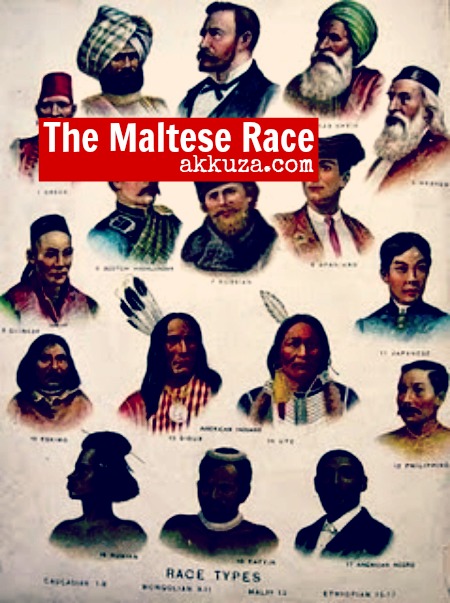
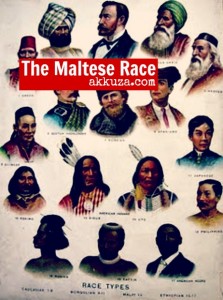
There is no doubt that the politically expedient mechanism was absorbed into our way of thinking. The irony is not lost when you see that this kind of political tool culminated in a legislation on “foreign (outsider) interference”. Setting aside the political undertones, it says much about the lilliputian element in the mentality. “We are Maltese and no outsider will tell us what to do”. Inevitably such a narrative required a fleshing out of the myth of the ‘Maltese Race’ – for which we came up with a word that is only used in one other circumstance  ie. the United Nations or Gnus Maghquda. By 1979 we had Gensna (technically “Our Nation” but giving off serious whiffs of “Our Race”). The language of “us and them” had been packaged roughly and served its purpose well. It probably was here to stay.

Fast forward to the nineties where we began an uncomfortable rapprochement to the continent to our north. We may have made giant strides towards the “Europeanisation” of our nation structurally but come the referendum on EU membership the “us and them” mentality showed that it was going nowhere. “Them” in this case was the Europeans. We had the derisory, ridiculous, statements of parts of the opposition to membership regarding AIDS, Sicilian workers et al but they were there and I am not too sure that they were easily dismissed. Without making a value judgement on EU membership itself, I believe that it is safe to say that Malta might have politically and economically joined a wider club of peers but a substantial part of its population was still torn about the need to have anything to do (or depend on) the outsiders.

An uneasy membership had begun and it would not be long before we would have a government pouncing upon the uneasiness of a  large swathe of our population with the concept of “the others”. It could have been any party mind you – so long as it is one that relies on substantial doses of populism there would always be a vein to be tapped – a vein that dislikes the outsider, snobs the foreigner and demonstrates all the makings of an intolerant mentality.

The Albanian ships had just been a forewarning. Soon we would have an ever increasing wave of refugee seekers escaping the turmoils of the Dark Continent. We would also absorb a large amount of people escaping the ugly reality of the Balkan break up. Later on (more like recently) we would add to those the East European (non-EU) diaspora looking for a better life. The Gens Malti suddenly found itself knee deep in barranin. Would it cope? Could it cope?

In this year’s address to the Luxembourg population on Duke’s Day, Prime Minister Xavier Bettel surprised the non-Luxembourgish community in Luxembourg (the country, not the city, has 48% of non-Luxembourgers in its population in 2014) by addressing them specifically. He switched to French from Luxembourgish to do so (already an immense concession) and proceeded to tell the “foreign” community of how they are welcome in Luxembourg. “You may seem to be a problem at the start but I see you as a challenge, a positive challenge and an opportunity”. I paraphrase the sense of his speech but that was Bettel’s attitude in a nutshell. Luxembourg would make the most of the presence of non-natives – not complain about them. (see Luxembourg’s score on the Migration Policy Index here).

It’s not all about Migration though. It’s about a general attitude to anything conceived as non-Maltese i.e. foreign. Trying to understand this obsession with the Maltese Race is not simply restricted to the dangerous gibberish spouted by Imperium Europa followers. It means trying to understand how it is that we form our ideas about who and what is non-Maltese. It is also about trying to understand why we have selective bursts of what cannot but be termed racist/intolerant conceptions when talking about events unfolding in Malta and close to it. The overwhelming majority surely has no wish to think in terms of the brotherhood of man.

That is why it is worrying but not surprising that an idiot on Facebook expresses his wish that MEP Roberta Metsola gets gang raped by a group of immigrants when he sees her efforts being made towards integration and assistance. That is why it is worrying but not surprising that our government’s envoy to the World Tourism Authority deems it fit to use the word “rapist” when talking about ADITUS chairman’s efforts in assisting refugees and immigrants in integration. That is why it is worrying but not surprising that our nurses complain about (specifically) Libyan patients being brought to hospital as though hospitals are only equipped to combat Maltese illnesses and bacteria (and to think that part of our great historical narrative includes a period when Malta was the hospital of the Mediterranean receiving wounded from the First Crimean War for example).

Sliema and Saint Julian’s are under threat. There is hooded gang doing the rounds with some kind of master key and burgling homes. It seems to make a difference that these criminals are Eastern European, probably Serb apparently. We have got used to situations where the defining factor is not a crime but the nationality of the person committing it – as though this in itself is an aggravation or proves some statistical point.

All this points to a continued uneasiness with the concept of non-Maltese in 2014. This is not a pretentious rant but an attempt to identify the source of the mentality and the problem. Nations like Luxembourg have taken up the challenge and are seeing the potential in seconding this new wave into the very struggles of their own nation. Malta on the other hand seems to have gone down the path of refusal and denial. Efforts at integration and commonality are either not evident or non-existent. What is clear is that we are very weak policy-wise when it comes to thinking about how to work on this reality. So long as those entrusted to govern prefer to pick and mix with a populistic enthusiasm we can expect little or no positive input from their part.

Meanwhile the Maltese Race continues…. to the bottom.