The Bird Brainer

birdbrain_akkuza

This Saturday vote No. Simple. Just vote No. You don’t need to be told why in truth, unless you are one of the horde of energumens who believe that “hunting is a right”. Legally we should not be here. The ‘derogation’ we are reluctantly discussing should never actually be triggered. Someone in the IVA campaign finally decided to explain this reality (a factual legal one) – the derogation’s conditions would rarely be triggered (if ever at all) in a decent country. This is no special derogation negotiated over blood, sweat and tears in some pre-accession death-wish with the aim of keeping up an “age old tradition”. All that is bollocks – bollocks that has been regurgitated by the PLPN quarters because… well… because it is a sweet lie that fits their alibi. What alibi? It’s the one where they keep trying to seem appeasing to the hunters.

Not that Muscat is hiding his hand. On the 1st of April he was photoshopped into hunting pose as some form of April Fool’s joke. He’s convinced that he can fool some of the people all of the time though. It’s obvious that he would do anything to get the Yes vote to win – and he’s more than hoping that Busuttil gets associated with a No debacle. Sadly for both the leaders of the parties that keep us firmly attached in the mire of mediocrity this vote concerns them not one bit. They should only be waiting for the result to implement it. We said this when the referendum was announced and we will repeat this now.

Why should the No vote win? Because the people of Malta should stand up and show that they disagree with the decisions of successive groups of representatives who have twisted and turned the interpretation of what should be a strict derogation in order to appease the hunters. Has Malta ever correctly applied the derogation? I strongly doubt it. Will it ever? Seriously? The only way we can ensure that our house of representatives apply the laws of the land (and that includes EU laws) properly is by going over their heads and giving them a strong “No’ when it comes to Spring Hunting.

As I said before, repealing the legal notice by referendum does not remove the derogation nor the possibility for a future parliament to re-enact legislation that allows for its use. Which is why the No vote must be clear, loud and unconditional. It is the sovereign people taking their power back into their hands and ordering those entrusted with its management to obey their will.

It’s a small step. The next day after the referendum we will still be in the thralls of a government-opposition game that treats the population like a mass of mentally deficient robots. We keep getting the government we deserve. A No vote next Saturday might be a step towards getting a better one in the future.

Hope Springs Eternal.

The Infamous Vote

shoot_akkuza

It’s great that people like Joseph Calleja, the Archbishop and other ‘VIPs’ such as Vanni Bonello have lent their support to the “NO” vote. I do find it a little disturbing though that there have been calls from some quarters for more “famous” people to “come out” and proclaim that they too will be voting to ban spring hunting on the 11th April. This referendum offers very little openings in terms of debate and conviction. The battle lines were drawn at an early stage and quite frankly I don’t believe that there are many people who need to be convinced either way. Convinced in favour or against hunting that is.

The crucial part is probably actually getting people to the ballot and voting. Getting them to care. In a sense that is the only value we could give to this obsession with what “VIPs” will do. It might trigger the lazy and uninterested into going out there and casting their say. Both the YES and NO camps have tried their luck with the fear factor. The NO campaign has warned of the dire consequences of a YES victory – with the images of cowboys taking over the land having been convinced that nothing will stop them now. The YES campaign has found a very convincing element in its fear-inducing threat to other “hobbies”. By spreading the lie that next on the line will be such hobbies as firework production they seem to have managed to draw what would have been a wholly uninterested sector of the population to the polls.

It’s no mean point that the expat community is once again being “treated” to the AirMalta subvention. Exercising your right to cast your opinion on Referendum Day costs your average expat 70€ (the flight), a couple of days leave, and if like me you live a 2 hours drive from the nearest airport you also can factor in the costs of diesel/petrol plus an exorbitant airport parking fee. All this because our bastions of democracy and democratic accountability still have not wrapped their heads around the idea of a ballot in embassies as all First World Democracies tend to do nowadays. Still, every penny will be well spent in my case if the NO vote carries the day.

If they do carry the day we must still bear in mind that this is a political message to the parties more than anything else. Parliamentary rules and the EU acquis are here to stay – no matter what the result – and that means that the possibility of using the derogation in the future will still exist. Which is why the NO vote should be stronger than ever. It must be a clear message to pussy-footing politicians such as those who make up the present government and who have already set the wheels in motion for the next spring hunting season (in case the YES wins).

You don’t have to be famous to vote on April 11th but by going out and voting you could be making history for Malta.

Vote wisely. Vote No.

11058674_883851608342458_7600228651927086558_o

Passport Kings and Joseph

passport_akkuza

An article published on Bloomberg on March 11th speaks about Christian Kalin – the Passport King – and how he managed to turn from editor of a guide to doing business in Switzerland to a key figure in the budding passport industry, as well as a main protagonist in the infamous Henley & Partners. The article outlines how Kalin first set up a Passport Selling scheme for the Caribbean island of St. Kitts and then proceeded to sell the formula to five other countries. Including Malta. As has become par for the course under Joseph Muscat’s Labour we find more information here about Malta’s scheme than was ever tabled in parliament by the Optimist Party. The tone of the article and critical analysis of how and why passport schemes will not be lost on most readers.

Particularly jarring is how part of the Henley contract includes an obligation for the Prime Minister of a sovereign state to act as some kind of ambulant salesman and participate in fairs across the globe pitching a sale. Jason Azzopardi is quoted as saying that the scheme “prostitutes citizenship”…. to say nothing about how it insults the whole institution of the office of the Prime Minister  – transformed into a cheap cosmetic salesman: but hey, cosmetic salespersons get somewhere nowadays no? After all  isn’t Phyllis Muscat using her great expertise as an importer of waxing products to “run” the CHOGM show. Malta Ottimista indeed.

From the article: The Passport King (Bloomberg)

In the summer of 2013, Kalin took his product to Malta, an island of 420,000 people near Sicily. The stakes were now much higher. Maltese citizenship confers the right to live and work anywhere in the European Union and to travel visa-free to the U.S. “That’s pretty much the entire story,” says Demetrios Papademetriou, an expert on investor immigration programs and founder of the Migration Policy Institute in Washington.

In January of last year, Malta started selling citizenship for €650,000. (Over the next few months, it added additional investment requirements.) During its first year, the program raised more than €500 million—an amount equal to 16 percent of the government’s 2014 budget. Henley earns a 4 percent commission on all the funds paid to Malta. The firm also gets €70,000 from each of its clients, and additional fees if their spouses or children apply.

Kalin says he designed the program with higher barriers to entry than elsewhere. Applicants are run against law-enforcement databases and checked by a due diligence firm. Even then, a candidate who comes up clean might be rejected simply because something doesn’t feel right, Kalin says, offering the hypothetical example of a Pakistani national with a pharmaceutical business in the Central African Republic.

Despite these apparent safeguards, then–EU justice commissioner Viviane Reding blasted the program in January 2014. “Citizenship must not be up for sale,” she said. The truth is, though, the EU can do little about the program other than make speeches. There’s no legal basis for stopping a member country from exercising its sovereignty. “The reason the EU commission really slammed down on this,” says Papademetriou, “was because it amounted to selling an EU passport and they didn’t trust Malta to do the due diligence.”

Jason Azzopardi, a Maltese lawmaker from the opposition Nationalist Party, calls the program the “prostitution of our citizenship.” He says the prime minister deceived voters by waiting until after being elected in June 2013 to mention the idea of selling passports.

Kalin brushes it all aside. “This is the key point,” he says. “The opposition realizes that this program is going to keep them out of power for a long time. It’s going to bring in a lot of money, and whoever is in office is going to benefit.”

Malta’s Individual Investor Programme was eventually modified to include a residency requirement that is vague even according to the program’s CEO, Jonathan Cardona. “It doesn’t say physical residency,” Cardona says. “We expect an individual to be in Malta for a number of days; we don’t go into the specific number. If you’re asking me, are these people going to move here entirely, I would say, ‘Listen, let’s not fool ourselves.’”

“Forget residency,” says Apex Capital’s Katz. “There’s not even an educational requirement. You don’t have to have graduated high school. The only criteria are you have dough and you’re not a criminal.”

Prime Minister Muscat presents things differently. He describes Malta’s citizenship program as an exclusive membership club open only to the best and brightest of the wealthy. “If you are after the cheapest route to citizenship,” he tells the audience at Henley’s Singapore conference, “Malta is not for you. If you’re after a program that allows in all and sundry, then, sorry again, we’re not for you. But if you want to join the highest-end talent program in the world, we welcome you.”

As the prime minister speaks, a PowerPoint glitch plays an unfortunate trick on him. He’d come onstage after a slide show introducing Henley’s salespeople, the last of whom was blond-haired Christopher Willis, the firm’s rep in St. Kitts. Willis’s giant head shot, next to a map of the Caribbean, is frozen on-screen. It looms over the prime minister’s shoulder the entire time he’s pitching Malta and its better class of citizenship program. However Muscat tries to sell it, nobody watching will be able to forget where it all started.

Politics, for example

debono_akkuza

Yes, Giovanna Debono should resign. Her position in parliament as a representative of the people is untenable so long as her husband is under investigation for abuse of office. The sad truth is that the moment a minister employs his or her spouse or close relatives within their own ministry their position should no longer be tenable. Robert Musumeci, still posing as some kind of visionary for the hypothetical “movement” (that is none other than an opportunistic collection of gravy train riders) believes that we should wait for a “fair hearing”. Musumeci sat for a law degree virtually by correspondence (he will tell you presence at a lecture does not a law student make – which could be true) and regularly suffers from literal reproduction of positivist garbage you would expect from the vast majority of what is regurgitated from university today.

Fair hearing is for the criminally accused. Sure. It has absolutely nothing to do with the recognition of administrative and political responsibility. The basic manual of political representation (let alone constitutional law principles) would tell you that in order to be above reproach a person in political power should not employ close relatives. The assumption being that the mere employment of such relatives is the beginning of the path to abuse of office. It would be hard for someone in Musumeci’s movement to grasp such a concept. Impossible even. The Gozo Minister employs his spouse within his ministry. Our energy minister’s wife was “employed” by this government without so much as a justification and with a contract of employment the terms of which are shrouded in secrecy. Even the Emperor’s (sorry, PM) wife is prone to carving out for herself a role that is nowhere mentioned in the constitution. It would be ok if such a role were not costing money to the electorate. Yet it does.

Back to DebonoGate. There is no doubt in my mind that Debono will join the blacklist of ex-PN ministers tainted with a whiff of corruption – even if Anthony Debono manages to survive the trials and tribulations of a court of justice. Ninu Zammit, Michael Falzon, Giovanna Debono. The “old way” of doing politics that was allegedly swept aside two years to this day is still waiting to be judged. Simon Busuttil’s party will still be answering for this kind of sins for quite some time yet. Incidentally, the PM should take note that he risks becoming an accomplice to covering up any crimes of corruption if he chooses to sit on reports and whistleblower information until when it pays him to cause a fracas and deviate attention from the troubles within his house. Today’s Debono news paid perfectly to help people forget that we should be inaugurating the promised Power Station.

The PLPN way is still very much alive. This blog, born in 2004, has long warned that the system is one that promotes a race to mediocrity and that will constantly produce stories of corruption, nepotism, cronyism and abuse of power. The former PN government’s sins are now being brought to light – and however erred must pay. Muscat’s government has proven only that it is a case of “same, same but different”. In many cases it is even worse because this government that was supposed to herald change is only good at justifying blatant abuses by claiming it is only repeating what was done before – u hallik mill-ottimista. Simon Busuttil is discovering that change is not only about words but also about deeds and that in order to make a difference actions must follow.

It sucks being bang in the middle between two behemoths that struggle to catch up with the twenty-first century. It sucks being so right about what is so wrong with this country. What sucks most is that we seem to never learn.

Today is a three-fold anniversary. Franco Debono turns 41, the labour government turns 2 and Internazionale FC turn 106. It never rains….

In un paese pieno di coglioni ci mancano le palle.

The War on Hunting in Liliput

hunting_akkuzaIt might seem to be hotting up. What is it about this nation that turns any democratic decision making exercise into an internecine battle? As the referendum approaches we get to watch the two sides and their different approach to convincing people to cast the vote in their favour. At some point the “No” camp, the one against hunting, stated that it prefers debate to battle. That was a reaction to the earlier affirmation by the hunting fraternity that this referendum meant “War”. Debate? What debate? This Liliput nation is fast proving to have shed all semblance of analytical consideration and prefers the heads-on instinctive approach. Facts and data or principles and values are discarded – we much prefer “taking sides” either instinctively through some visceral attraction to some form of roots or out of spite.
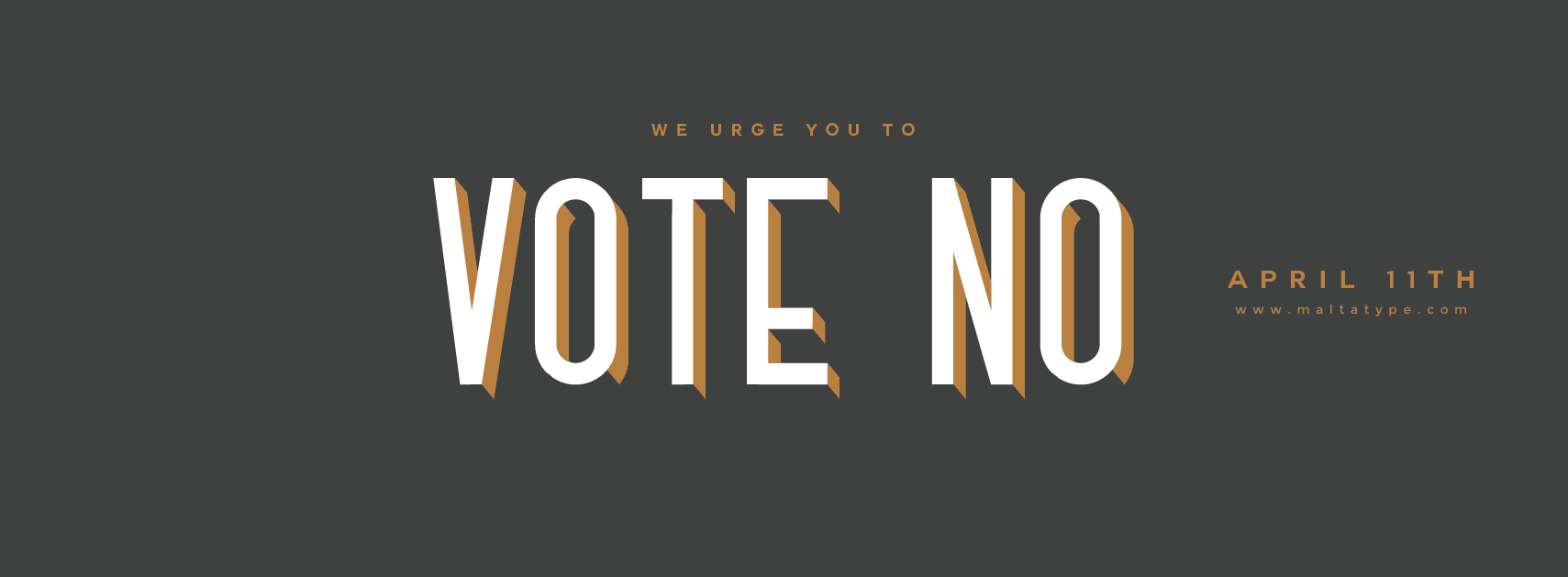
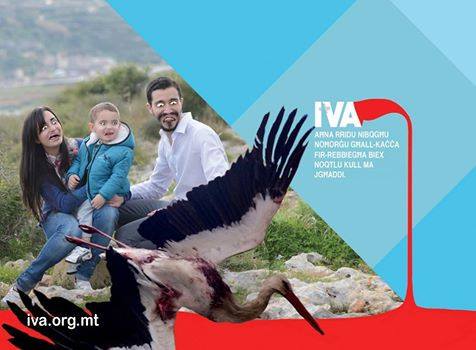
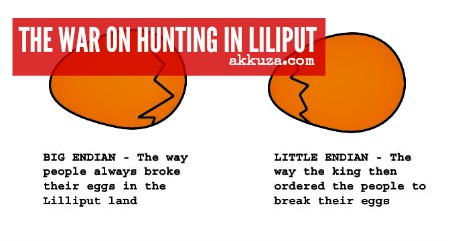
In the end a referendum that (as we have stated elsewhere) constitutes at most a political message to our supposed representatives is becoming yet another Lilliputian outcry as to how eggs are best broken open. The comedic elements have also made their appearance – prime among which is Saviour “Hogan” Balzan – foaming at the mouth and doing his damned best to ruin the appeal of a vote that should be in favour of the reasonable enjoyment of the countryside and above all in favour of the birds.

Ah those wingèd beings have little or no knowledge of what is going on in the island of milk and honey. Would they be able to fathom the deceptive campaign of the Yes Camp, with all its mystical happy families, multi-dogged hunters sans-senter and verbose lawyerisms they would gather in one massive flock above the next meeting of the hunter confraternity and take one massive dump covering all the bullshitters in avian faeces.

Incidentally Liliput insists on subsidising airfares for those of its electors and decision-takers (read voters) who reside abroad. March 2015 and polling booths in Embassy are still a Utopic mirage for those of us who would have hoped to be able to cast out vote comfortably.

The referendum risks becoming a non-event very fast. Sure we will have a result. Either way there will be a sector of Maltese society kicking up a fuss. Politically it is fast becoming obvious that the two main parties that sit in the decision making positions of this country will be able to wash their hands of the main set of consequences – having found someone else to blame for the immediate aftermath. Whether the Birds Directive, derogations and all, will be properly implemented in Malta for the years to follow is another chapter, another story.

10997375_1001375046558072_8265459475622731081_o

11053686_10204488801594993_5338501285898200951_n


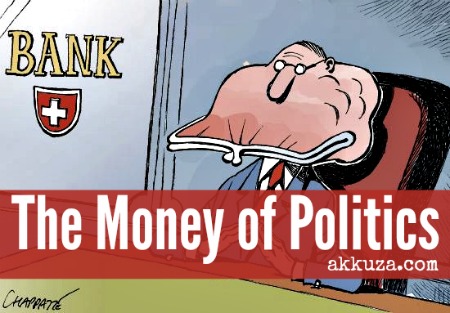
The Money of Politics

money_politics_Akkuza

In the current whirlwind that is the Swissleaks scandal we risk missing the wood for the trees. Public opinion is easily distracted by petty insinuations and suppositions that run on the lines of taste and “intuition”. Assumptions are always preferable to sound facts and are the refuge of the lazy or the manipulating. As news broke of the names of ex-PN ministers Ninu Zammit and Michael Falzon appearing on the list of people who had funds stashed away in Switzerland we were confronted with the inevitable tsunami of disdain. This was tax avoidance of the highest order, aggravated to boot by the failed declaration of funds when performing duties as a minister of government. We were also told that both had benefited from an “amnesty” having repatriated the funds to Malta. What that really means is that they paid much less tax than they originally owed and it does nothing to clear their false declarations earlier.

In many ways an amnesty in this sense is a legal form of money laundering. Monies that had been “disapparated” into a vault at the Gringot’s Bank far from the scrutiny of the taxman are allowed back into circulation once the payment of a percentage fine is made. The real question is: how was that money made? Why was it hidden away for so long? Was tax avoidance really the only reason? That the money was legitimately acquired and not through, for example, trading in influence, is something for which we have to take the word of the honourable gentlemen who had given sworn statements of assets before parliament before and in which statements they failed to mention the existence of such funds. Forgive me if I remain skeptical.

It gets worse. The current Premier (that’s his new nick – all 4.2 million euro of it) could in all probability have been the one to have accorded the amnesty to the gentlemen in question. When questioned on the matter he took refuge in his usual “tu quoque” rubbish – coming up with a reference to Austin Gatt’s forgotten funds at UPS. The problem is that by focusing on the Where? – i.e. Swiss funds, we miss the more important questions of  Why? and What? Why do ministers underdeclare their assets? What dangers lie hidden when they do so? Muscat’s cabinet and MP’s include a minister for Gozo who declared practically a minimum wage in earnings and an ex-Minister who still cannot explain having half a million euros running around the house (to mention but two).

The Cafe Premier saga only goes to worsen the situation (and not just the perception) when it comes to seeing how closely knit are the activities of our representatives to the business community. While we were all aghast at Michael Falzon’s 460k in Switzerland we could read about a 210k commission over a government deal to buy back its own property (rather than simply kicking out a tenant who was not paying). The PM was in on the deal – there are emails to prove it. Not too far away from the Premier, in the law courts, the Enemalta Scandal was still unfolding. Yet again more wheels and cogs being oiled and still no one uses the magic word in Maltese : “Tixħim” (bungs/backhanders).

In the end there is a money trail to be followed. It serves to emphasise why this government cannot keep hiding behind chinese walls when it comes to important deals such as the Transport system and the new power stations and contracts given to consultants. Transparency is only the first step to combat corruption and until now the murkiness within which our politicians function is not helping in any way. We could potentially be very close to a situation that was current in Italy in 1992 – and the danger is that, just as happened in Italy – the big fish survive the cull to the detriment of a few scapegoats.

Which is why we need real non-partisan investigative reporting and a stronger arm of the law. otherwise the wheels will just keep turning and the oil will keep flowing. The only suckers will be the people. For a change.