51 proposals from another planet

The challenge has been launched. The gloves are up and the million dollar question has been put on the table (and is now a guest at the myriad “talk shows” on our TV’s and radios). Joseph “Inħobbkom” Muscat has put an end to his party’s reticent “cards-to-the-chest” policy and finally announced the 51 proposals that are described as “positive and concrete”. It’s all down to a game of numbers – Gonzi asks 10 questions – he gets 51 answers. Beat that Gonz.

Woe betide he who decides to actually read through the 51 “proposals” and tries to make out how this can be the blueprint for an accountable plan for managing Malta’s future. This is a list that lies long and thin.

Lies – because the sum total is proof that it is marketing above substance, a clumsy attempt by “think tank” apparatchiks to sound sophisticated and clue-full.

Long – because in the mistaken belief that the long numbered list will be enough to con even the intelligent observer, it is evident that whoever sat around the table to pow-wow this thing went through great lengths to add as many “proposals” as possible.

Thin – because the depth of thinking required to come up with this kind of pie-in-the sky ideas belongs somewhere down the evolutionary scale between the amoeba and the sponge.

If you find me insulting then you have not read the proposals yet. Why 51? Easy because 50 would be too obvious… they probably think that 51 sounds like a number casually reached. A while back I got think-tank man Aaron Farrugia in a twist because I criticised the tautological vision of Joseph Muscat about university’s role in society (something about how a university should be a centre of learning). I spoofed it with “Sajjieda ghandhom jaqbdu hut frisk u bdiewa ihawwlu frott tajjeb“. Aaron “unfriended” me for my efforts. No big loss. Then came “Proposal 45” – “Importanza mistħoqqa lill-biedja u sajd“.

Declaring your belief in Airmalta (35) is not a proposal. respecting Maltese and Gozitan “investors” (30) is not a proposal. Youth before bureaucracy (26) is a bumper sticker gone wrong but not a proposal. Promising not to give out government contracts that do not respect worker’s rights (16)  is not a proposal – (a) it should be implied in any government, and (b) there are laws and directives that prevent this happening anyway. “Gvern li jkun safe ghal businesses u negozji” (5) is not a proposal, it’s sounds like an advert for companies to store their cash in some government vault. Citizens getting a good and timely service from the courts is not a proposal if you don’t say HOW and WHY you will bring this about (47). Idem Better security in entertainment areas (49).

It doesn’t end does it? These are not proposals for a government in waiting. They’re proposals from another planet. Planet 51.

And if for one minute you thought that the 51 proposals make sense and are a credible plan for electing Labour. Then you deserve a Labour government.

That’s the beauty of democracy – you get the government that YOU deserve.


Planet 51 (Trailer) from Roberto HG on Vimeo.


The Value-Mouth Relationship

Much is being made in the Labour-friendly press and media about the supposed strategic “U-turn” that is in progress in the spanking new halls at PN HQ. I will look into the fallacy of the “u-turn” argument in one of my next posts and will attempt to explain how rather than a “u-turn”, the current within PN thinking might actually be a correct interpretation of christian-democrat politics for the 21st century – always admitting that there is one version of correct in politics (let’s call it “more correct”).

What is more important at this junction is that the nationalist party wants to be seen as being seriously committed to a set of updated values – a commitment underlined by the fact that Lawrence Gonzi spoke in terms of a “pacta sunt servanda” (patti chiari, amicizia lunga) approach. That’s right. If this exercise is not going to turn out to be an exercise in shiny marketing rewrapping of the kind that was slowly proving to be the undoing of the nationalist party’s values then it should not be limited to fine talk but should be transformed into concrete action.

The fourth point in the new PN document presented at the General Council is a direct reference to “taking decisions responsibly”. With the commitment to take decisions responsibly comes the onus to take responsibility for one’s actions. A tautology if ever there was one but a clear one for that. Accountability can no longer remain a buzzword in the propaganda circles when you are committing yourself to strengthening the value-driven approach to politics.

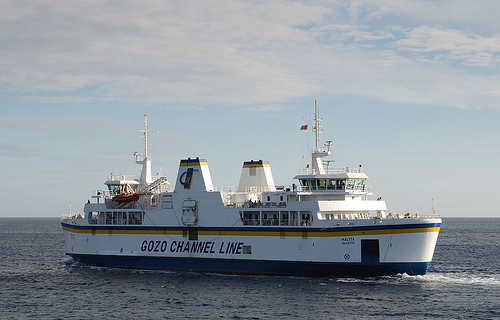
Which is why Joseph Grech of the Gozo Channel Co. should no longer hold the position of Chairman today. A ministerial reprimand does not suffice in the eyes of those who are supposed to be learning the new lessons and approach of “patti chiari, amicizia lunga”. I don’t know if it was the young turk Carol Aquilina who stated that the PN rightly choses people it can trust  to manage important positions in government or state-related companies. Sure Carol, but the corollary to that reasoning is that the PN trusts such persons to carry out the job because it believes that they are the right vehicles to bring into effect the policies that are inspired by the PN’s basic principles. The circle of trust is double – the PN government trusts them with putting policy into action but it does so as the custodian of the trust “lent” (and I emphasise the lending part) to it by the people.

Joseph Grech’s move to call back a Gozo Ferry was not a gaffe. It was an administrative no-no of the highest order – described as an “abuse of office” in most law books. A serious government wanting to impress with the value of responsibility cannot factor the idea of “resignation” out of the equation… otherwise the message is not of responsibility but of “friends of friends” come what may.

The meter of updated values has to begin to apply as of yesterday. Even when selecting its round of candidates for next elections the PN must bear this in mind. You cannot whitewash over past errors simply by wearing a new dress. Pardon the cliche but actions are worth a thousand words… and the PN needs to start acting fast.

therealopposition.com

Here’s another one for the New Republic Dictionary – where’s the real opposition? Andrew Borg Cardona beat me to this reflection yesterday in his Times blog (Snappy Little Annoyances). This is no race though and ABC’s pondering only comforted my thinking in the sense that if other people are reaching the same conclusions then the concept might be worth a moment of elaboration and analysis. In this case the idea (or question provoking the idea) is simple: Who is performing the work of the real opposition in Malta nowadays? Surely, I hear you protest,  it’s Joseph Muscat and his merry band of “għaqlin”. Well no it isn’t.

If we needed any confirmation of the absolute abdication by the Malta Labour Party from its duties as a real opposition then the run up to the budget and subsequent follow up have given us enough to digest. There they were arming their cannons with the fodder of overused cliches about the cost-of-living and the water and electricity bills. The likes of Luciano Busuttil, Cyrus Engerer and Leo Brincat crammed social networks with “warnings” that the government benches’ vocabulary would be rife with references to the international state of economic affairs – like that would be a bad thing. The “opposition” wanted you to believe that a government presenting its budget in November 2011 was obliged to do so without thinking about what was going on in France, Spain, Greece and Italy. Basically according to Labour, our Budget in Times of Crisis had to ignore the Eurozone in its entirety.

Did “we the people” fall for it? Well the “sarcastic” elements of the web might have found something to chew on – coming up with Eurovision-like games about the number of times Tonio F would mention the PIGS (that’s Portugal, Italy, Greece, Spain and not the porcine patterers) but on the whole the reaction to what on the surface seems to be a very family oriented and equity-driven budget (“equity” that’s a word to hang on to nowadays) seems to be relatively positive and unaffected by Labour’s shenanigans. There is hope yet.

We cannot be distracted though by the sanity of the PN budget planning. Two years before a general election it behooves us to drill the fact that Joseph Muscat’s Labour has not only been caught with its pants down but (if you forgive the extensive milking of the metaphor) it is very evidently lacking any signs of puberty – let alone full blown maturity. We couldn’t put it simpler – the Labour opposition is transparently unable to come to terms with the simplest of facts: a budget is not only where to spend your money but also about where it will be coming from.

Muscat is headstrong about the downsizing of water and electricity bills (while expecting Tonio Fenech to both announce a hike AND a cut in the utility bills) but cannot be brought to explain to anyone who cares to listen where the hell the money to cover those cuts will be coming from. Broad statements and planning coming from the opposition involve spending more and cutting less or some half-baked plans about alternative forms of energy. This while Sarkozy’s government (shit, he mentioned France) is hell-bent on AUSTERITY, SuperMario (darn.,there goes Italy) has been installed to supervise a cost-cutting and tax-hiking exercise to tackle the spread, and Greece (no, don’t mention the Greeks) is battling for survival with the latest technical government.

Even in a time of crisis where in other countries (sorry but they exist) opposition members co-operate with governments in order to perform the tightrope act of equitable measures that might just about keep the euro bomb from exploding, Muscat wants to play at the traditional, old fashioned opposition selling unsustainable populist wares to what he hopes is a sufficiently gullible and greedy electorate.

Which brings me back to the question. Who is the real opposition? Well the likes of Franco Debono embody the kind of unlovable opposition (from a government point of view) that we really deserve. Even with a crisis looming backbenchers found time to rap the government hand on such issues as responsibility in transport reform, divorce legislation, and now criminal justice reform. They did not hesitate to throw themselves four-square behind the government when it came to the all-important measures related to economic stability. better still we got an added bonus because the government could plan confidently and include incentives that remind us of the true worth of christian-democrat politics when practised properly.

The New Republic has the potential to banish futile, old-fashioned oppositions from their undeserved seats and benches in parliament. Joseph Muscat’s failure to breathe fresh air into an old and tired Labour might find that the final test will be an unfortunate one for his fate and of those who would love to preserve the old fashioned way of the all-nixing opposition. Far from being progressive, Muscat and his minions have proved to be a clunking metal ball at the foot of real progress in constitutional, institutional and republican matters. The sooner the Republic is rid of this baggage the faster everyone gets to move on.


We the People

Speaking to the papers earlier this week Franco Debono was protesting that his was not the voice of a rebel politician but that of the electorate. The nationalist MP had just lived through another period of being labelled a renegade by his side and a near miss by the members of parliament across the chamber and was once again attempting to explain what his motivations.

Is Franco Debono an anomaly or yet another clear sign of the newly-formed rules of the game in the New Republic? His criticism of Minister Austin Gatt’s transport reform was couched in constitutional terms of “accountability”, “collective and individual ministerial responsibility”, “control on spending” and other such  terms that are the staple food of the democratic system of checks and balances. Beyond Debono lay an opposition baying for much more than constitutional principles and ministerial blood. There lay an opposition still firmly entrenched in old ways hoping that this “crisis” would be the last for “GonziPN”. They refused to understand Debono’s line of thinking… to them there was one way out – the collapse of government and early elections.

[box type=”info”] That (…) Governments are instituted among Men, deriving their just powers from the consent of the governed, — That whenever any Form of Government becomes destructive of these ends, it is the Right of the People to alter or to abolish it, and to institute new Government, laying its foundation on such principles and organizing its powers in such form, as to them shall seem most likely to effect their Safety and Happiness. – US Declaration of Independence[/box]

The math behind electoral laws is such that ensures that the government of the day is one that enjoys the confidence of the majority of the people. It’s basic democratic spiel. Franco Debono’s noise about being the electorate implies that somehow the circle of trust between the electorate and the party in government had somehow lost its focus. His, the MP claims, was not a battle to destroy the legitimate government but to remind it of its duty towards the electorate. In many ways Franco Debono is right. Far from the noise of the spin gurus and the spam, the message that Debono sent shockingly to the PN core is a clear Caveat. His idea of a modern politician is of one who puts his constitutional duty of representation above that of loyalty to his party. Franco Debono turned into the one man guardian of “We the people”.

How far does Franco’s concept of “electorate” depart from our previous ideas of the workings of democracy? Not much. It’s rather the manner in which the electorate is bandied around that is becoming quite novel, and not just in Malta. At the end of the day the MP’s seat and the cabinet chair is theoretically filled by those entrusted by “We the people” to run and manage the affairs of the state in the interests of the common good. Just a tiny strait of sea away we have just witnessed a change in government from a political one (elected by “We the people”) to a technocrat one (SuperMario’s nanny government entrusted with nursing Italy’s economy into EU standard good health).

What happened in Italy is a clear sign of the result of new pressures. Merkel, Sarkozy and international pressure obliged Berlusconi to bow out. Silvio did not even lose a vote of confidence in parliament. If you believe Silvio, he stood aside for the good of the people. What happens in these circumstances – will the good of the people trump the normal rules that have their chosen representatives in their rightful seats? For how long?

Economically hard times might prove to be a godsend for parties selling cheap solutions and promising the earth. The new republics will need a wiser citizen when choosing his representatives. Half-baked solutions and empty promises are a ticking bomb that risk breaking becoming the straw that breaks the camels back. How long will technocratic governments be on standby to wrong the rights of elected officials?

We the people still have an important role to play in our liberal democracies. We the people must learn to chose wisely and for the greater good.

The New Republic can only be based on intelligent voters.

[box type=”info”] PREDICTION 25 – In the future, the value of your vote will become less than zero. That happens when the amount you pay in taxes to have your own vote counted is less than the value that you get from the vote itself. (The Dilbert Future – Scott Adams)[/box]


The New Republic

Today, Monday 14th November 2011, J’accuse : The New Republic is born . We’re officially dropping the “la verité si je mens” (the truth if I lie) slogan and kicking off the new season by declaring the Age of the New Republic open*.

This is the age of crisis after crisis, the era of the 99% vs the 1%. It  is the age of the bouncing of the cheques issued by the marketing-inspired politics of taste and of the de-crystallization of the post-1989 ideologies.

This is the age of the redefinition of populist calls and the age of the clueless enfranchised cohabiting with the hapless disenfranchised.It is the age of the whiplash effects of consumerism, of the final, desperate calls for environmental propriety and of the unmasking of the financial string-pullers and profiteers. It is the age of relativist unhappiness, of consumer anxiety and of moral vacuum after moral vacuum.

Natural disasters, check. Financial turmoil, check. Spread of debt, check. Missing political compass, check. Dearth of leaders, check. It’s all set.

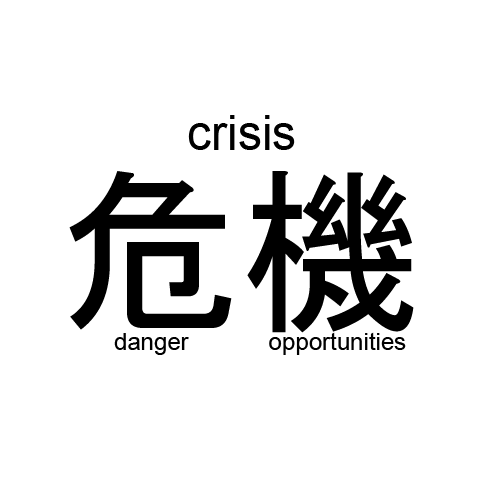
This is the age of crisis. We live in interesting times. However, there is a sense of inevitability in the idea that from this chaos, from this crisis and moment of questioning will arise a new age. We might be questioning the very functionality of our society’s basic functions and organisation. There might be an institutional crisis further aggravated by a political crisis and a lack of faith in those who have claimed to lead until now. There may be more questions and answers at this point in time and a sense of doom and darkness that might lead us to lose all sense of proportion.

Yes, there may be all that and more but there is also the inevitable idea that the chaotic waters following this intellectual, social and economic big bang will be pregnant with new ideas and provide us with a newly born order. The seeds of the New Republic(s) are being sown today.

As a first step, J’accuse will be proposing a series of posts under the new rubrique (NRD – New Republic Dictionary) in which we will be looking at salient concepts and issues that are at the forefront of national and international news at the dawning of this new age. The Dictionary for a New Republic starts here.

P.S. It’s nice to be back – and thank you for all your good wishes.


*You might have noticed the new addition to the J’accuse logo.

Call my Bluff

This nation has its testicles in the hands of Franco Debono because our current government will not give up power readily and because the only alternative to government is Joseph Muscat of the hacking, the “controversial secret plans for the economy” and the directionless policies based on the sole maxim of “PN is bad”. Interesting times indeed.

No. I’m not calling my own bluff and I am still on a blogging break (well, sort of) but I’ve woken up mighty early this Sunday and thanks to the hour switch it becomes earlier still. I’m probably also suffering from article writing withdrawal symptoms so all in all I am entitled to a little post.

So whose bluff should we be calling? Well – the average backbencher’s of course. Right now it is the Honourable Franco Debono who is back in the limelight (incidentally we do hope his relative has a speedy recovery in hospital) for being the latest backbencher/government MP to hold the government at ransom. To put it more blandly, Franco has the government by the balls. (As the Latins would say “cuius testiculos habet, habeat cardeam et cerebellum”). As Labourites cheer and hardlines nationalists grind their teeth, Franco is holding his ground over the possibility of his abstaining in a crucial vote about an opposition motion regarding Minister Austin Gatt and the Arriva fiasco (a very good piece by James Debono here). Well good on Franco Debono I say.

Do you know why Franco Debono (now) and Jeffrey Pullicino Orlando (then) are behaving this way? Because THEY CAN. Oh yes they can. Remember the whole J’accuse rant about the way the electoral rules are phrased in order to be able to foist the “wasted vote” conundrum on the undecided voter? Do you remember how you are constantly reminded that EVERY VOTE COUNTS in order to get that much craved majority (even relative) to get to govern ALONE – without the need of coalitions? And when only two parties elect members to parliament but none of those parties have a clear majority above 50% of votes cast then we get the famous D’Hondt Relative Majority – and the party with RELATIVELY the most votes gets to play government by having its seats adjusted to equal OPPOSITION +1.

That +1 then becomes the noose around the government’s neck whenever a backbencher wants to make some noise. The opposition is obviously going to accomodate anybody wanting to stir the governmental ship and there you have it .. the plus one becomes the “testicle holder”. Q.E.D.

Is there a solution? Of course there is. In the interests of governance the Prime Minister could call an election. It’s been the elephant in the room for quite some time now. Call an election. Call the backbencher’s bluff. Get the people to decide on whether they want individual kingmakers or whether they would prefer a stable government with a wider majority. Why has this solution not been resorted to? Simples. You do not call an election that you cannot win.

This nation has its testicles in the hands of Franco Debono because our current government will not give up power readily and because the only alternative to government is Joseph Muscat of the hacking, the “controversial secret plans for the economy” and the directionless policies based on the sole maxim of “PN is bad”. Interesting times indeed.