Alarum! Inflation!

Households will experience the biggest fall in their living standards since records began as they face soaring inflation, tax increases and rising energy bills. In a bleak assessment of the year ahead, the Bank of England warned people that take-home pay would fall by five times the amount it did during the financial crisis of 2008. It will be the worst hit to real incomes since comparable records began in 1990.

Britons facing biggest drop in living standards – The Times

It’s a ticking time bomb and it is among us as we go about our daily lives. The warning signs are increasing daily and we ignore it at our peril. It is the result of a combination of a number of factors that might be contributing to speed up the countdown to D-Day and these factors include the pandemic, the energy crisis and the return of threats to global stability. The worst contributing factor, if not the main one, is the degeneration of liberal democracies and the proliferation of false republics.

The armageddon that I speak of is inflation. Not to be confused with a simple rise in prices, it is a possible breaking point, a crisis moment that will force a shift in the social paradigm.
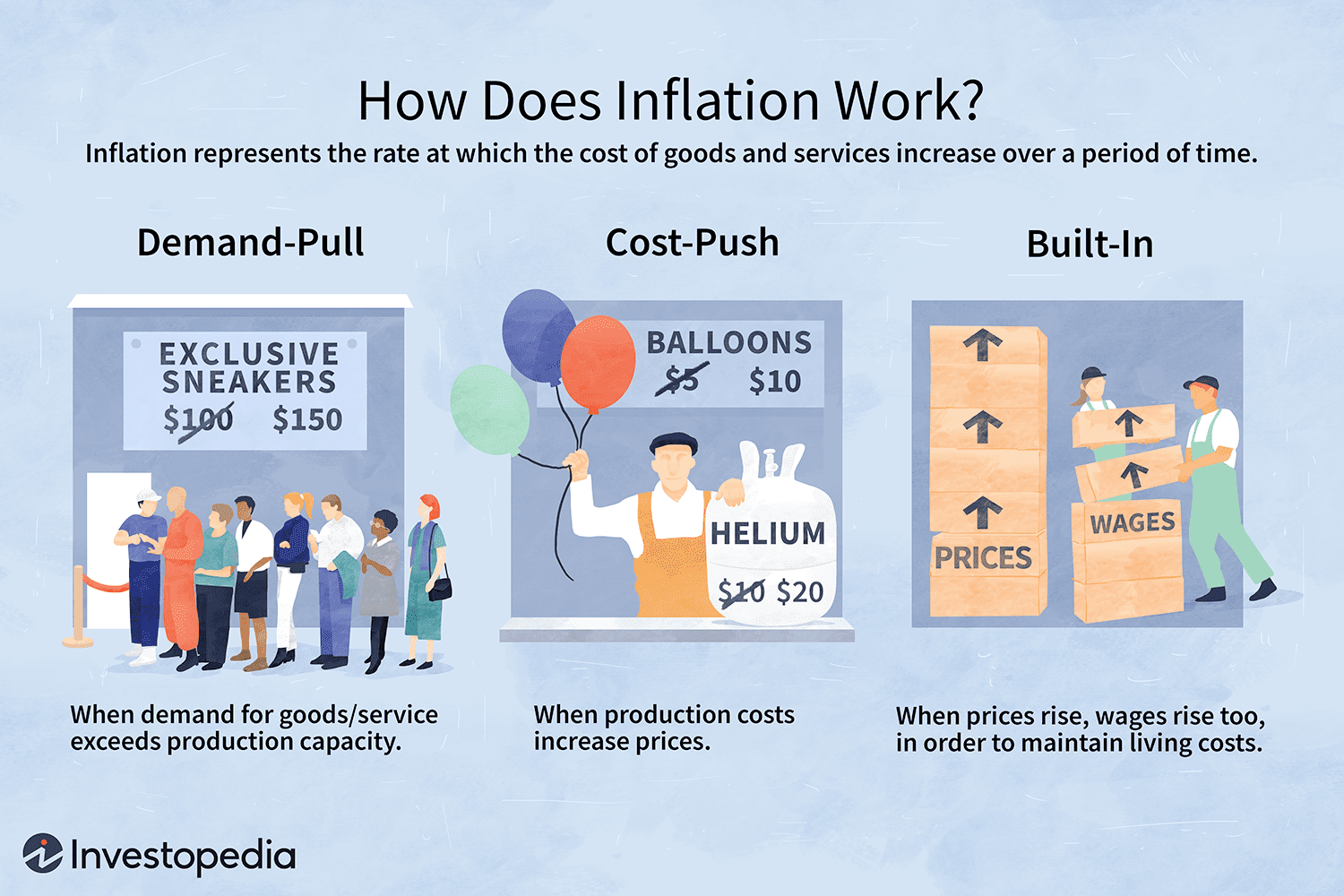
Malta has already begun to feel the rumblings of the storm. Unable to operate in a vacuum the dangers of rising prices, increased energy bills and a general devaluation of the money in people’s pockets would spell disaster even in the case of a diligent government trying to navigate through the latest international crisis.

We have been there before. In 2008 the Gonzi government did manage to cushion the impact of a global financial crisis. Which did not mean that we did not emerge with a disgruntled business class. This time round we would do well to harbour strong doubts with regards to the capability of the Abela government to weather such a storm.

Here lies the problem. The Abela government inherited a system of governance that had already compromised the real republican constitution. An all-powerful executive hijacked the remaining pillars of the constitutional checks and balance denuding the system of any semblance of a republican charter based on the rule of law.

The compromised state is unable to generate any kind of policy beyond the populistic and is only able to plunder public funds for the benefit of the select few. The power of incumbency is used to maintain an illusion of normality notwithstanding the imminent signs of economic and social disaster.
Take the latest measure announced of distributing 200 or 100 euro cheques as one-off compensation for the damage caused by the pandemic. At an estimated 70 million euros this measure falls far short of creating a clear far-sighted policy to weather the impact of the incoming storm. Instead it is a temporary distraction for the population.

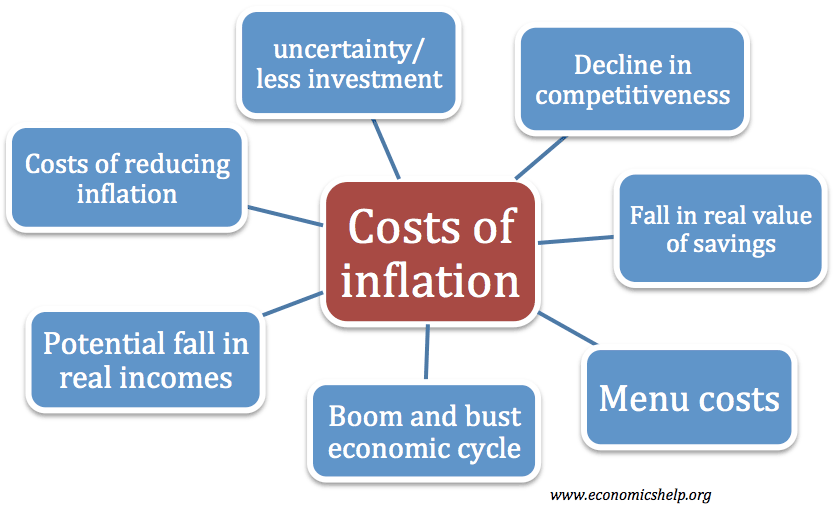
What we are facing is a collapse in living standards. The price hike will be the last thing on our minds compared to the devaluation of take-home pay, rising energy bills and rising cost of living. There will be a limit to the number of times the government chooses to plunder public money.

The real question is: how long before the anger spills to the streets? How long before partisan loyalty no longer suffices to blindfold citizens from the real effects of a faltering economy? How long before they realise that the institutional rape of our state has left our country exposed to the elements?


The Government Spokesperson

““Incongruous, out of line and condemnable”. The government reaction to the insipid insinuation by Labour stalwart, deposed mayor Anthony DeGiovanni was left to a “government spokesperson” who was fielding questions from the press. DeGiovanni had appeared on a radio programme earlier and repeated a Labour troll’s favourite concerning the assassination of journalist Daphne Caruana Galizia.

Matthew, Daphne’s son, was somehow to blame for the “mistake” of parking the family car outside the house leaving it exposed to possible assassins and their bomb planting ways. DeGiovanni comes from the same school of crap-spewing sewage producers as Mario Azzopardi who also this week inveighed against Robert Abela for having begrudgingly declared his support of Roberta Metsola’s EP Presidency candidature.

Coming as they did on the wave of the latest poll results indicating a swell of support for Labour, DeGiovanni’s comments are a good example of the kind of swill that feeds the masses. The same kind of swill that is provoked by Abela’s nationalistic comments with regards to Roberta Metsola. These “tropes for trolls” are woven through repetition and mass reproduction while being given undeserved space on the media.

Tellingly, the condemnation of DeGiovanni’s wild insinuations only come as a reaction to further press inquiry and not as an instinctive calling into line. Furthermore the condemnation is in the form of the anonymous spokesperson with no further repercussion seemingly on the horizon. DeGiovanni remains a 72 year old junior lawyer appointed to the public payroll by his daughter notwithstanding his history of unreliability as a public servant.

One last remark concerns the subject that led to DeGiovanni’s baseless assertions. The discussion concerned the calls for resignation of Anglu Farrugia, Speaker of Malta’s House of Representatives. Matthew Caruana Galizia, among others, had called for the bumbling buffoon to resign following his latest contribution to the neutering of the power of the House. Much like a government spokespersons sterile “condemnation”, Farrugia had informed Rosianne Cutajar of a decision that she be reprimanded without following through with the reprimand itself.

These are our institutions at work. Alas the filthy hand of a poisoned faculty that keeps churning half-baked lawyers can be seen once again in the latest series of events. Speaking of which, the theory by law-chitect Musumeci whereby any decision concerning justice should be left to the people remains strong among the Labourite community. Rule by law of the majority continues to threaten our constitutional set up.

It is a theory and system that goes against everything that democratic representation through a system of checks and balances should be about. It flies in the face of the very roots of what law is about and is a recipe for the total annihilation of our fledgling liberal democracy.

We are servants of the law so that we may be free. For how long?

Human Capital

“Abbiamo alzato la posta, ci siamo giocati tutto, anche il futuro dei nostri figli. E adesso finalmente ci godiamo quello che ci spetta.”

from “Il Capitale Umano”, Paolo Virzi

A migrant worker falls from the height of two storeys while working on a construction site. Someone, probably the migrant worker’s employer, puts him in the car with a promise to take him to hospital. Instead of taking him to hospital he dumps the injured worker on the side of the road and leaves him there unassisted and in pain. It takes some good willing passers by to stop and assist the desperate and injured man and call an ambulance.

There are scarcely any words that can describe this horrible act that took place in Malta today, in September 2021. It exposes the full horror of the exploitation of migrant workers on the island and particularly the cold-blooded calculations of the construction industry when dealing with human lives. The 32 year old Ghanaian feared prison almost more than the physical pain that he was surely enduring. He was aware of his precarious situation in which he found himself – that same precarious situation was at the root of the cold calculation of his employer who opted to dump him on the road side.

The irony in the news.

The construction sector’s rabid hunger for development – crystallised in Joseph Portelli’s prophetic “hundred more years” words during an interview – is completely insensitive to the human damage that it causes.

That damage is quantifiable first of all in the loss of quality of life that the irrational and corrupt spread of construction is causing to the nation as a whole. Malta, Gozo and Comino are gradually being suffocated under a blanket of unbridled, irrational and destructive development. The warnings had been made only a week ago – to the point that the Prime Minister felt it necessary to “reassure” the construction sector after even one of his own had pointed an accusatory finger in their direction.

Quality of life is at dangerous low levels on the island of milk and honey. There is little respite from the continuous onslaught that is aided and abetted by weak or powerless institutions and a by the network of compromised politicians.

The damage is quantifiable even further in the loss of lives by people who become collateral damage of the unregulated and irresponsible frenzy that is around us. The fear of being buried alive is a real possibility that is only a minor blip on the dark register of constructor’s accounts. Death becomes a tiny cost to bear in the race to construct the new Babylon.

Health and safety standards, Employment standards, Building Regulations. They are all dependent on the will to enforce. Such a will is absent and there can be little hope for a nation gearing up for an election where politicians are eager to capitalise on the investments made by their construction lobby masters (“I meet them daily to facilitate my plans”).

Employment conditions for non-EU workers are atrociously balanced in favour of the Employing market. Short-term resident permits and contracts leave employees at the mercy of their employers who are aided by laws drafted in their favour. The government’s role in this situation is not to be understimated.

The same government that is dishing out millions of Euros on the eve of an election that were received on the basis of a residency scheme for the rich shows us how little it values human capital elsewhere. Responsibility lies squarely with our politicians in this respect.

“Avete scommesso sulla rovina di questo paese. E avete vinto.”

from Il Capitale Umano, Paolo Virzi

Monetizing Disasters the Labour Way

Minister Clayton Bartolo is not having a good week at the office. The tourism sector for which he is responsible is the playing ground for a huge dilemma that pits two different priorities of a nation against each other. On the one hand, the sector depends heavily on the free movement of persons into the island – an economic priority of the first order. No tourists means no money to go round. On the other hand, the current resurge of the pandemic menas that measures need to be taken to protect the citizens of Malta from another dangerous wave.

Health vs Economy should be a no-brainer. In his interviews the Minister repeatedly uses keywords such as “caution” and “responsibility”. Each time he is forced to toe the fine line between encouraging the tourist sector’s economy and reassuring the rest of the nation that all steps are taken in a way not to imperil the health of the residents of the island. As we watch the story unfold it is not always so straightforward. The rush to reopen the tourist sector, especialy the language schools, has had some negative results that may be even more painful in the long-term.

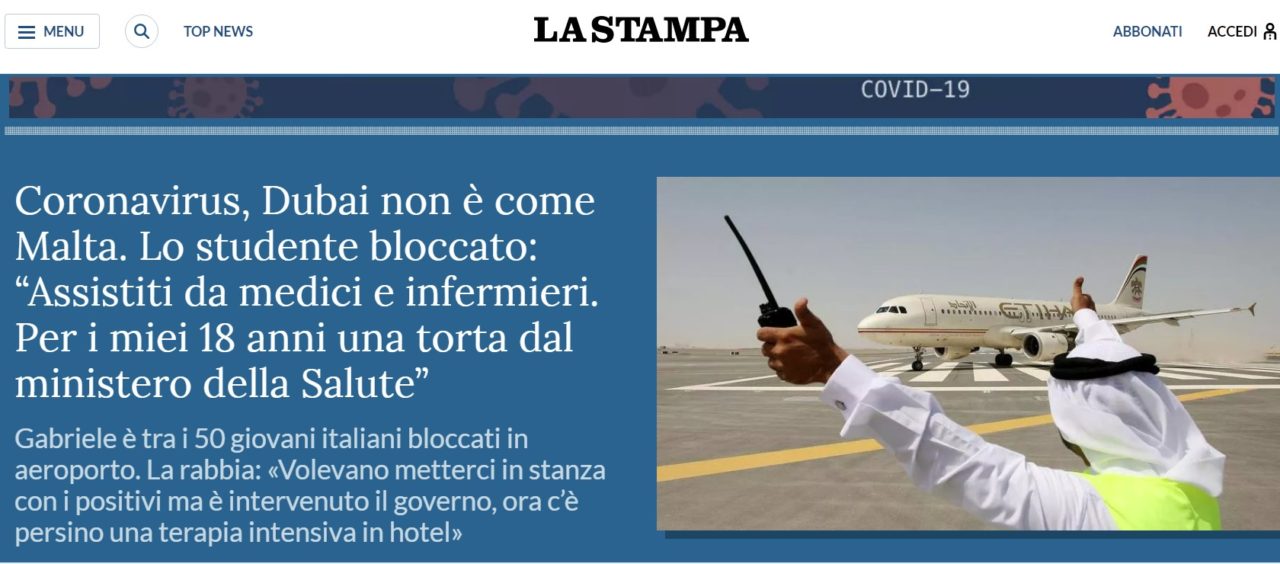
Take for example the case of the stranded and quarantined students. Malta’s language school sector has taken a definitive negative blow in Italy with the coverage of the quarantine conditions that the Italian students have been obliged to live in. Have a look at the title of this article on La Stampa which I am sure disgraced former PM Joseph Muscat would love to read:

Coronavirus, Dubai non è come Malta. Lo studente bloccato: “Assistiti da medici e infermieri. Per i miei 18 anni una torta dal ministero della Salute”

(La Stampa)

Lovely no? Malta is now the reference point on the negative end of the scale. Insofar as dealing with the pandemic is concerned, we have moved from top of the class in Europe to being the bad example that no one wishes to emulate. Incidentally, you would have thought that with all the talk the tourism sector has going about its importance they would have mobilized their resources better in order to avoid this kind of situation.

Labour’s rush to capitalise on the UK’s green-lighting of Malta was symptomatic on the eagerness to monetize as quickly as possible and make up for lost time. Disguised in terms of “assisting recovery” of affected sectors, such decisions are clearly a result of a twisted outlook that is not new in Labour’s vocabulary. This outlook is based on an unprincipled money-based approach to monetize on any disastrous situation.

Back in 2011 a Joseph Muscat in opposition would speak of the advantages that would accrue to Malta thanks to the instability in North Africa following the Arab Spring. At the time I had commented:

” … there is something wrong when a progressive politician suggests taking advantage of the Arab Spring to boost national tourism. It gets worse when the same politician lauds Italy’s heavy-handed nationalism on the matter of immigration.”

Pulse, J’accuse on the Malta Independent on Sunday

The Labour party approach to international disasters or events is as unprincipled as it is ruthless. Again back in 2011 George Vella (now President, then aspirant foreign minister) saw the troubles in Libya as a possible boon for Malta since they could end up solving the immigration problem once, as George Vella put it, Libya became a Dubai in the Mediterranean attracting investment (see Labour Loves Libya on J’accuse in August 2011). Now if you set aside the inconsistencies between Muscat’s hopes of attracting that investment rerouted away from a troubled North Africa and Vella’s hope that the investment (and the immigrants) goes to Libya instead you find the bottom line: Malta gaining economically on the back of other disasters.

The problem with the pandemic is that turning Malta into an economic hyena also risks damaging irreparably our reputation in particular sectors while also aggravating the health situation on the island. As the saying goes: Prosit Minestri.

New Rules on Travelling to Malta – Is a fantasy 14-day rule unjustly ruining travel plans?

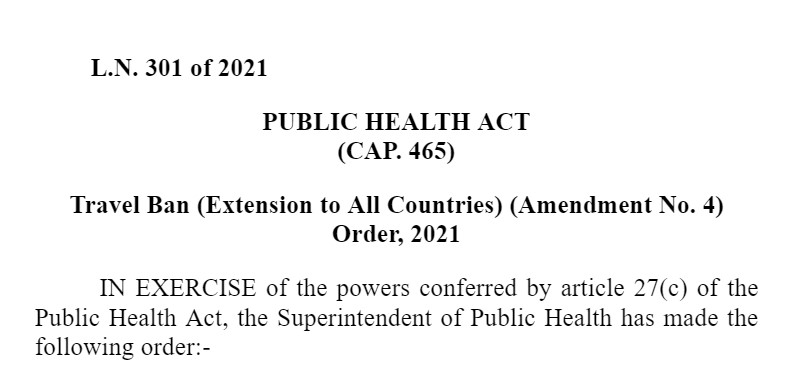
Most of yesterday’s post was based on public declarations of what the new measures for the 14th July would be as well as on the preliminary reactions by the Commission. The Legal Notice “Travel Ban (Extension to all Countries) (Amendment Number 4)” was published yesterday. As expected, the L.N. “fixes” the terms that had been declared in order to avoid the discriminatory practices mentioned by the Commission. Travel to Malta is extended beyond the possession of a vaccination certificate for certain cases (medical reasons, children aged 5 to 11) while Maltese residents who were expected to return to Malta could do so based on a PCR test.

It is comforting that the L.N. took into consideration these aspects though it is clear that not all persons hoping to travel to Malta will be covered by these changes. One example would be the diaspora of Maltese working abroad who had been hoping to join their family for summer but who have not yet made it for the vaccination.

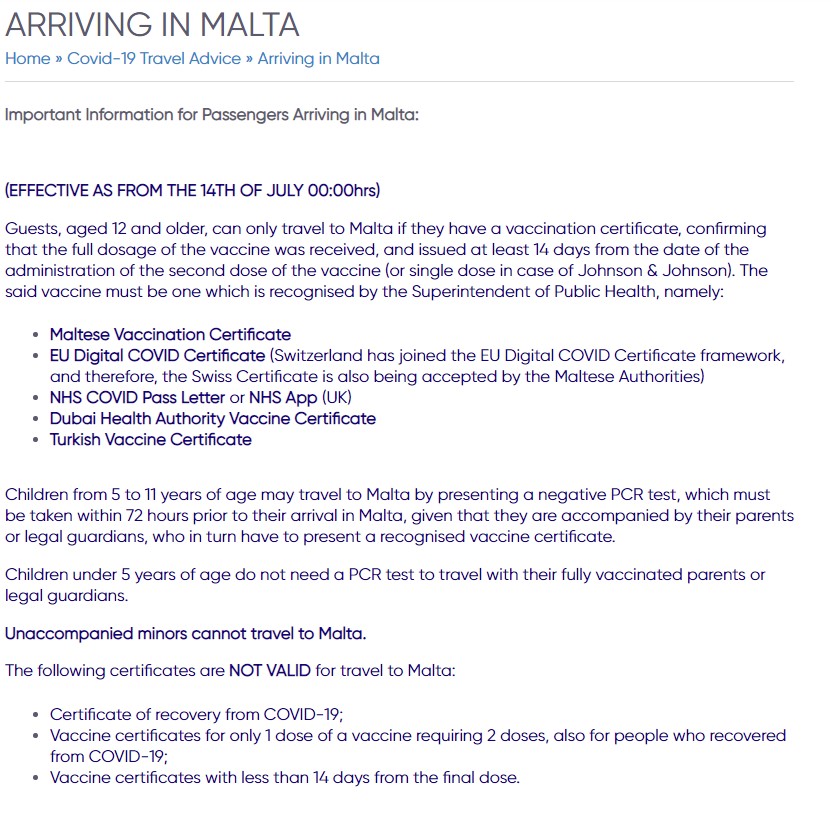
One particular obstacle to travel for such workers was the extra condition being imposed on holders of vaccination certificates. In fact, according to the guidelines for entry, it was not sufficient to be in possession of a vaccination certificate but there was an additional requirement that the certificate would have to have been issued “at least fourteen days from the administration of the vaccine”. This means that if you obtained the vaccination certificate less than 14 days before your travel date then it was useless and you could not travel to Malta.

Now countries like Luxembourg issue a fully operational EU COVID19 Vaccination Certificate on the day you receive the final dose. As an example I could cite my own family where my wife was due a second dose on the 26th and we are meant to travel on the 31st. IN our case we are lucky we could count on the Luxembourg system and managed to move the date of the second dose to an earlier date to be safe for travel by fulfilling the 14-day condition.

The problem I have though is that the 14-day condition does not result from any part of the legislation in question. The Legal Notice limits itself to the phrase: “persons may travel from Malta to the countries listed in this proviso and from the countries listed in this proviso to Malta as long as, upon their arrival in Malta, they are in possession of a vaccination certificate“. No 14 day moratorium.

As you can see in the screenshot from the Malta International Airport website the 14-day condition has been maintained without any legal basis:

MIA Notice
from MIA Website

This lack of clarity is not helpful especially since this type of problems normally are “discovered” at the point of entry when faced with an employee sticking religiously to the rules and there is no time for an “appeal” to the law. I might stand to be corrected and would be happy for any enlightenment on the matter but in my mind the 14-day rule has no legal basis and might be unjustly depriving travellers to Malta of their right to move.

The EU Digital COVID Certificate and Malta’s Latest Measures

Malta’s latest COVID measures have still not been made into law. Although the measures announced over the weekend are meant to come into effect tomorrow, the Legal Notice that should make them law has not been published yet. The latest measures have proven to be controversial due to the stringent conditions imposed in what seems to be a panic reaction following a surge in COVID cases. Without entering into the controversy of what is the reason behind this surge it is interesting to see where Malta’s proposed measures stand in the light of Malta’s EU obligations.

We are all familiar by now with the main thrust of the new measures: that only fully vaccinated persons can travel to Malta. As the weekend unfolded we also heard of possible exceptions being introduced, notably for Maltese caught abroad by the new measures who will be allowed to use a PCR test on their return without being quarantined.

In an interesting development yesterday, the EU Commission voiced its doubts on whether the Maltese measures were compatible with EU legislation – particularly since they risk being discriminatory. In fact the rules have to be viewed in the light of the EU Digital Covid Certificate Regulation of the 14th June 2021 that creates a framework for the issuance, verification and acceptance of interoperable COVID-19 vaccination, test and recvovery certificates in order ot facilitate free movement during the COVID-19 pandemic.

It is clear that the main intention behind this regulation is to continue to guarantee the fundamental right to move and reside freely within the territory of the Member States. The creation of what is described as an “interoperable” certificate is intended to uniformise the certification aspect that can be used whenever Member States are limiting the right to movement on grounds of public health. The emphasis is on having a universally accepted certification that any MS can use as a criteria for limiting free movement under specific conditions.

In fact, the 6th preamble of the Regulation stipulates:

“(…)Any restrictions to the free movement of persons within the Union that are put in place to limit the spread of SARS-CoV-2 should be based on specific and limited public interest grounds, namely the safeguarding of public health as emphasised by Recommendation (EU) 2020/1475. It is necessary for such limitations to be applied in accordance with the general principles of Union law, in particular proportionality and non-discrimination. Any measures taken should therefore be strictly limited in scope and time, in line with the efforts to restore free movement within the Union, and should not extend beyond what is strictly necessary to safeguard public health.”

Additionally, the 36th consideration in the preamble specifies (my emphasis):

It is necessary to prevent direct or indirect discrimination against persons who are not vaccinated, for example because of medical reasons, because they are not part of the target group for which the COVID -19 vaccine is currently administered or allowed, such as children, or because they have not yet had the opportunity or chose not to be vaccinated. Therefore, possession of a vaccination certificate, or the possession of a vaccination certificate indicating a COVID-19 vaccine, should not be a pre-condition for the exercise of the right to free movement or for the use of cross-border passenger transport services such as airlines, trains, coaches or ferries or any other means of transport. In addition, this Regulation cannot be interpreted as establishing a right or obligation to be vaccinated.

So while the Regulation is intended to provide a universally accepted certificate of verification that might be used by Member States as a requirement for entry, it is also clear that this requirement can never be used to deprive citizens of their right of movement.

Article 3 (6) of the Regulation is very clear in this regard:

6.   Possession of the certificates referred to in paragraph 1 shall not be a precondition for exercising the right to free movement.

Article 11 on the other hand considers the possibility of restrictions to free movement in extraordinary circumstances such as a rapid worsening of the epidemiological situation. While this article does not exactly contemplate the possibility of restricting movement only to COVID-19 Vaccination Certificate holders (as the Maltese measures would), it does allow Member States to require certificate holders (which includes Vaccinated, Recovered and PCR test certificate holders and not only Vaccinated Certificate holders) to undergo quarantine, self-isolation or further testing.

In such cases the Member State is bound to inform the Commission the reasons for such restrictions, the scope of such restrictions and the date and duration of such restrictions.

In the light of the above, and considering that we are not yet fully informed of the exact details of what the Maltese measures will entail other than what has been described generally, it would seem that the new measures could be in violation of Malta’s obligations under the Regulation.

Having said that, I stress that this opinion is merely an interpretation of mine. In order to have a clear answer black on white what would need to happen is a challenge of the Legal Notice introducing the measures before the courts and, in case the national courts have a doubt as to the interpretation of the regulation, a reference to the Court of Justice in Luxembourg that would give the ultimate binding interpretation.

The fact that the measures concern public health might be a mitigating factor on the one hand. On the other hand, the Regulation does seem to contemplate the possibility of exceptional measures and outlines the conditions for their application. In that case it might not be enough for Malta to invoke Public Health issues where the exceptions that the national measures are introducing go beyond what is contemplated in the Regulation and are both disproportionate and discriminatory.

I trust that once the Legal Notice is published we will be able to make a clearer analysis of the situation.