
Watching justice come undone

Magistrate Charmaine Galea has just decreed her own recusal from the compilation of evidence in the Caruana Galizia murder trial.

“Magistrate Charmaine Galea followed where magistrate Donatella Frendo Dimech left off last week and said she would not hear the compilation of evidence against the three accused, on the grounds that Ms Caruana Galizia had mentioned her in blog posts concerning Labour Party appointees to the judiciary.” (Times of Malta)

A few off the cuff facts (for which I thank some colleagues who are more familiar with the ins and outs of the courts) are warranted at this stage. Malta’s current line-up on the Magistrate’s bench has a grand total of 22 Magistrates. The standard for recusal that has just been set by the combined abstentions of Magistrates Dontella Frendo Dimech and Charmaine Galea is quite low. Magistrate Frendo Dimech’s abstention stemmed mainly from a weak level of familiarity with the victim’s sister (they shared a schoolbench) while Magistrate Galea referred to direct criticism that she received from the victim upon her appointment:

Magistrate Galea has just read out a statement saying Daphne Caruana Galizia had written about her nomination to the bench and linked it to her closeness of the government of the day.” (still the Times Court report)

Now,  that link – the one related to Daphne’s criticism of Labour’s appointment of magistrates – has delivered a severe blow to the list of 22 magistrates. Decimation does not begin to describe it. In fact, writing on the 20th of November 2016, Daphne Caruana Galizia detailed the specifics of government appointments to the Magistrates’ bench:

“This government has made 14 appointments to the bench in three years, 10 of whom are connected directly to the Labour Party. The other four are Judge Giovanni Grixti (formerly a magistrate), Judge Edwin Grima (formerly a magistrate), Magistrate Donatella Frendo Dimech (formerly at the Attorney-General’s Office), and Magistrate Aaron Bugeja (formerly in private practice).” (Running Commentary, November 20th, 2016).

The rest of the blog post in question develops an argument that implies without any doubt the ‘political’ nature of Labour government appointees through the years. In this context, Magistrate Charmaine Galea’s abstention should not come as a surprise and is actually the more ‘justified’ of the two until now seeing how Magistrate Frendo Dimech was specifically singled out by Daphne (together with another three magistrates) as not having been a political appointee. What does stand out is that by the same reckoning as applied by Magistrate Galea, 9* other appointees to the bench (10 out of the list of 22) qualify for the same reasoning, the same abstention.

We may argue at length whether or not the abstentions are sufficiently justified but that is not the point that I want to make here. The point that comes out clearly from the current debacle is that when Daphne Caruana Galizia, like many others, was pointing out the political nature of appointments to the judiciary back in 2016 (and even before that) she was actually highlighting a deficiency in the system: one that makes it weak and vulnerable. This is the tangible effect of the breaking down of the rule of law. Justice is not being seen to be done, it is being undone bit by bit.

The independence of the judiciary is a fundamental building block of a system based on the rule of law. It is a fundamental building block for any liberal democratic society. When the judiciary is treated as yet another domain wherein ‘jobs for the boys (and girls)’ are to be found, it becomes yet another dagger in the back of the proper administration of justice and consequently of the proper running of the state. The merry-go-round of recusals will necessarily go on if the roster by lot will continue to throw up names who feature on that November 20th post. It is inevitable. It is a vicious circle.

The blame is not to fall on the journalist and opinionists who pointed out the deficiencies and bad-will in the nominations. It is to fall on a government that proceeded to turn nominations to the bench into a farce. It is a government that will sit on a case of impeachment of a judge until he retires out of the grasp of justice. It is a government that will wait for the exact amount of years required by the constitution to pass for the appointment of a young, green, lawyer to the post of magistrate because rule by law trumps rule of law any day.

The not so impeached judge happened to be the father of a labour candidate, the young green lawyer happened to be the daughter of the ex-labour deputy leader and current speaker of the house. One other nominee to the bench – Ingrid Zerafa Young – withdrew her nomination after it transpired that her appointment could have breached the Constitution since she was a member of the Employment Commission. It was Dr Zerafa Young, not the government,  who withdrew her nomination.

As you follow the merry-go-round of recusals do not laugh, do not find it funny and most of all do not blame the magistrates in question. Instead remember that this is a direct consequence of the breakdown of the rule of law in this country.

We all know where the blame for that falls squarely.


*This post has been edited because the previous version wrongly implied that all the appointees mentioned in the Running Commentary’s posts were magistrates. 4 of those were in fact judges and therefore should not be considered in this particular case.

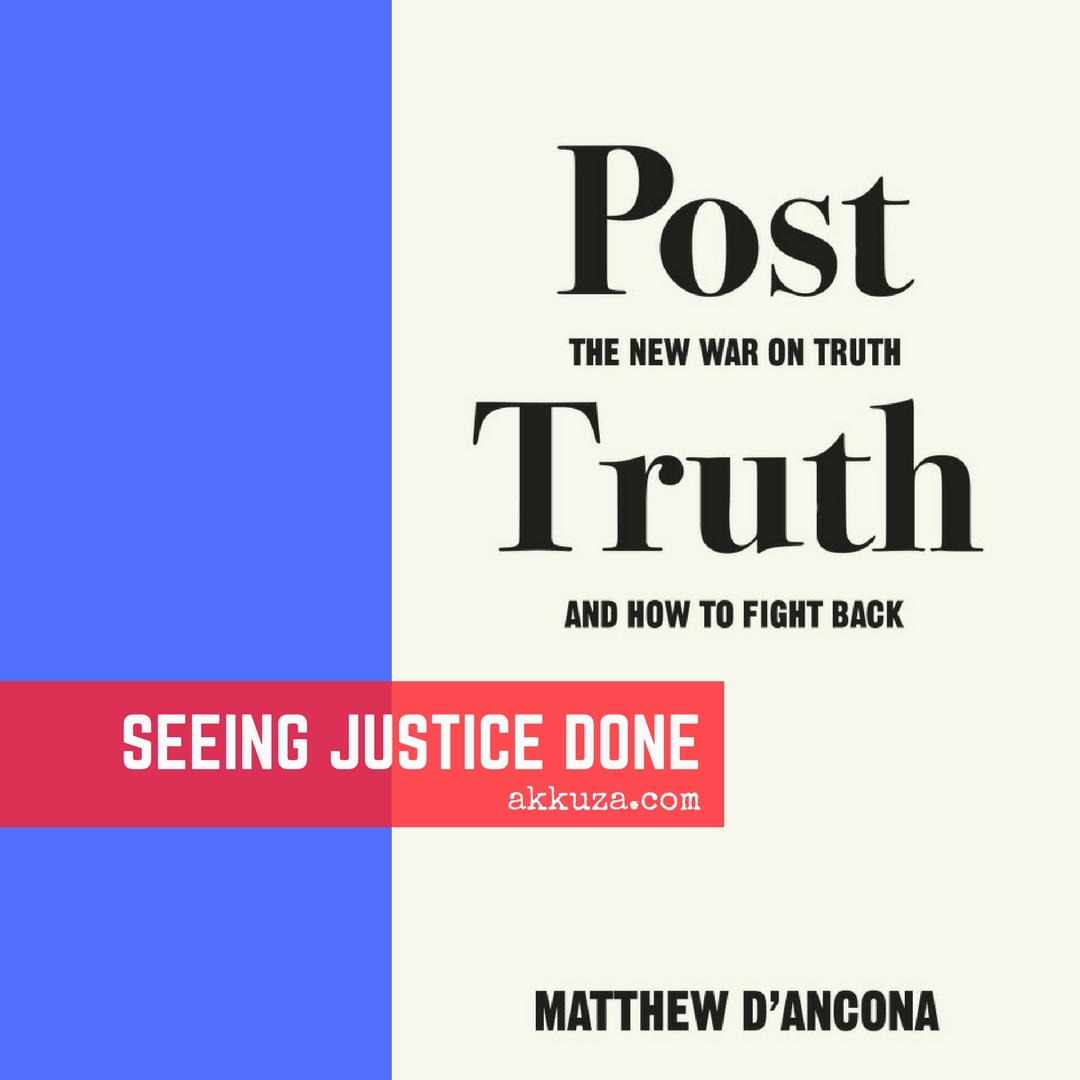
Seeing justice done

This article appeared in today’s Sunday Times of Malta

In her Republic Day address, President Coleiro Preca stated that she believes “that the rule of law is as strong as the people acknowledge it to be, as much as they believe in it, cherish it, and continue to support it.” In her reference to the concept of “belief”, the President might have unintentionally struck an important chord that plays through the ongoing debate where the “rule of law” is concerned.

Seeing, in this period of Post-Truth Politics, is believing – even when what we see is a staged performance that is intended to reassure the emotional side of our thinking brains while at the same time numbing any rational reaction thereto. The phenomenon has been pigeonholed using various metaphors: the emperor’s clothes and Magritte’s pipe (ceci n’est pas une pipe) come to mind right now. Whole generations (particularly the baby-boomers) prize emotional sincerity over “the starchy pursuit of objective truth”.

Truth has been relegated to a relative importance in the list of priorities. It has to compete with the panoply of emotional expressions that have moved up on the popular agenda. The lack of forensic analysis, when people stop questioning the facts, has also meant that society has less time for ‘experts’. There is no trust in them. The Brexit and Trump phenomena followed on the heels of the financial crisis of 2008 when trust ratings in experts plummeted.

The collapse of trust is dangerous. As Matthew d’Ancona (who I rely upon quite liberally in this article) states “… all successful societies rely upon a relatively high degree of honesty to preserve order, uphold the law, hold the powerful to account and generate prosperity”.

Without the real value of truth our gauge of what the people appreciate shifts dramatically. Law, the rule of law, is not about faith. The very concept of a working system under the rule of law is not designed to work depending on the number of believers in the system. There is a word for a system based on belief: Religion. The rule of law is not about faith. Nor is it about hope – hope that justice is done. The danger of misinterpreting the phrase “seeing that justice is done” is based on the simple fact that it is part of a larger whole.

Fearne brought up ‘the rule of law’ often and it was like the devil quoting scriptures

The full phrase in fact is, “Not only must justice be done, it must be seen to be done”. Remove the first part – actually and linguistically – and you get an act of prestidigitation, where you are made to believe that something is there when it is not. Such a magic act requires a theatrical appeal to emotional intelligence of the highest kind: it not only requires that you believe but also that you suspend that belief and actually believe what you are being told that you should see.

“Seeing justice done” should in fact be the final act of a progression of events that include justice actually being meted out. In the past weeks we have seen the concept of the rule of law twisted and turned beyond recognition. The danger is that people begin to believe that what they see in action is the rule of law when actually it is the rule by law. In his Commentary on the Constitution Tonio Borg sets out the distinction clearly: “So the rule of law is a concept which gauges not just the number of laws enacted but their nature and direction. It is also a political concept so that something, which is clearly within the parameters of the law, may still go against the rule of law in spirit.”

Watching Chris Fearne squirm to Tim Sebastian’s questioning on the Conflict Zone (DeutscheWelle) was not pleasant. Fearne brought up “the rule of law” often and it was like the devil quoting scriptures. The Prime Minister appealing in court in order to stop inquiries, redacted contracts because commercial interests trump public interest, quoting laws in order to prevent sharing of information regarding passport buyers… that is just an aperitif.

We have naively called the new religion out as spin. It is not just spin. It is a dangerous belief system that is supplanting what should be a concrete system based on law and inspired by natural justice. Bringing three men before the courts of law for the heinious murder of a journalist can never be seen as the final curtain call that proves that all is well in the state of the Republic.

Believe me, it is not.

Jacques Zammit is a référendaire at the Court of Justice of the European Union and one of the founders of the Advocates for the Rule of Law. Opinions expressed in this article are strictly personal.

Majority Rules Not Ok

Malta’s Minister for Transport, Infrastructure & Capital Projects has gone on record saying something to the effect that “majority rule is higher than the rule of law”. One cannot stop underlining the dangers that lie behind this kind of statement. To begin with, this is a blatant show of ignorance of the laws that bind us. It flies in the face of hundreds of years of philosophical treatises on social contract, on constitutions, and on the basic principles that underlie our law-based societies.

Rousseau (The Social Contract), Locke (Second Treatise on Government), Hume (Of the Original Contract) and Madison (The Federalist Papers No. 10) – that is a tiny roll call of the kind of people who tried to get their heads around the problem of just representation in society. At the second rally organised by CSN after Daphne’s assassination I had spoken of the people as sovereign – the ultimate depositaries of the powers of the land. That was not a concept I pulled out of thin air. Our legal systems are all intended to crystallise the way that ultimate power (of the people) is lent (and we emphasise lent) to different branches of the state in order that they may govern. To govern in the name of the people, for the people, by the people. Again, not another catchphrase.

Later developments to the philosophers’ ideas came in the form of modern liberal constitutions such as those begotten by the American and French revolutions. A representative government, a separation of powers and a basic set of rights that was above the power of the legislature. From the Magna Carta onwards in fact, there was the gradual realisation that a sovereign people would still subject itself voluntarily to regulation by a set of fundamental truths that would be inalienable (could not be taken away) even by those who have been entrusted with creating laws for the day to day functioning of society.

“We hold these truths to be self-evident…” is how the second paragraph of the American Declaration of Independence begins. The colonies were protesting the abuse of the representative power by their King and in that document they justified their right to “dissolve the political bands which have connected them with another”. Among the first of the self-evident truths was The First Amendment which precluded the lawmakers from enacting laws which abridged freedom of speech, the freedom of press and the freedom of religious belief.

The basic rules would be guaranteed by other branches of the state. Alexander Hamilton outlined this in The Federalist Papers No. 78, when he spoke of the Court being the ultimate interpreter of the meaning of the Constitution. In his words, the Court would stand “between the people and the legislature, to keep the latter within the limits assigned to their authority … A constitution is in fact, and must be regarded by judges as fundamental law.. the Constitution ought to be preferred to the [legislature’s] statute, and the intention of the people to the intention of their agents.”.

Modern constitutions are replete with checks and balances of this sort. The point of the checks and balances is that tyranny is avoided. The point is that the abuse of power by a part over the whole is prevented.

The role of a ‘majority’ in our constitution starts and stops with the election of our representatives in parliament that lead to the selection of a government entrusted with executive power for a short mandate. The next day of an election the concept of ‘majority vote’ is technically redundant except when applied within the rules and regulations of parliamentary votes for the enactment of laws.

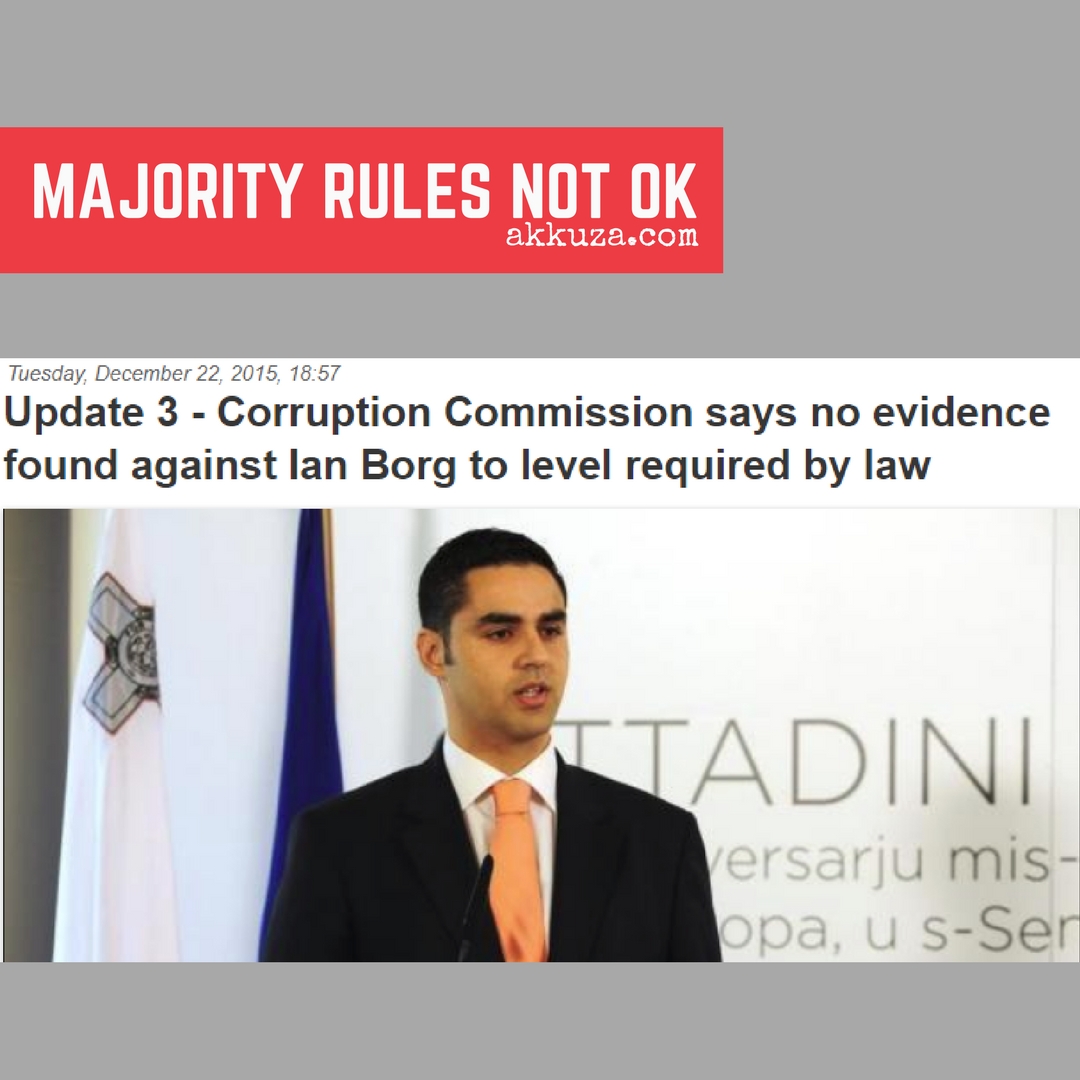
Above all, the government of the day as an executive – and every other branch of the state – have no business with using the concept of “majority rule” to trump all other concepts of legal accountability. To do so would be to usurp the very concept of control of power and representation. Ian Borg’s concept of majority rule trumping the rule of law is an abomination to the concept of democratic representation. The same can be said of Alfred Sant’s declarations in the European Parliament where the idea that “the people have voted” seems to have been bandied about as some sort of general absolution for any irregularities committed by the agents of government that was confirmed at the polls.

Whether willfully or through ignorance of the law, these statements become a declaration of war on liberal democracy. They represent a dangerous step in the current situation where the rule of law is withering before our very own eyes.

They must and shall be countered.

The people united can never be defeated.

The Daphne Files


Joe Bloggs returns to J’accuse. The series in which he examines the Government’s spin is on hold. This time he kicks off a parallel series where he takes a look at the main controversial themes tackled by Daphne Caruana Galizia on the Running Commentary in recent years.

It’s been 7 hours and 15 days since they took your pen away… since you’ve been gone they can do whatever they want, they can see whomever they choose,  they can eat their dinner in a fancy restaurant…

While part 1 of the Serial examining the Government’s Spin (and by now obvious efforts to shove it all under the rug) in the aftermath of Daphne Caruana Galizia’s assassination last Monday simmers away in your minds (plus I’m gathering information), I thought it worthwhile to write this parallel series of posts: The Daphne Files: An essential guide to the now frozen in time Running Commentary and the wealth of stories that it contains.

“There are crooks everywhere you look now. The situation is desperate.” 

These final exasperated words in a post uploaded just mere minutes before she drove off into the sky provide a glimpse into the world that Daphne saw. A world that she illustrated to us and tried, at times with increasingly evident frustration, to shake us into understanding time and time again.

This final post was in relation to the utterly bizarre situation of the Chief of Staff (Keith Schembri), the left hand man of the Prime Minister of Malta (Joseph Muscat) and effectively the power behind the “throne”, not only refusing to resign or be removed but brazenly suing the ex-leader of the opposition Simon Busuttil for libel for daring to call him corrupt. This is a man who is named in the Panama Papers as having set up a Panamanian company sheltered by a New Zealand trust days after having been appointed as Chief of Staff, who engaged in a series of dealings with the ex-CEO of a newspaper (Adrian Hillman) that led to it teetering on the edge of bankruptcy and that directly or indirectly is the subject of 5 concurrent magisterial inquiries including about graft.

We have not heard anything about the results or progress of these inquiries (and likely will not) but hey at least the libel law suit is proceeding! Enough to make a less doped population’s blood boil, but the Labour government’s propaganda machine would have us believe that it is (pick one or more): (a) negative, (b) a fabrication, no “proof”, (c) all a Nationalist plot, (d) unpatriotic to think or speak badly about Malta (i.e. we will “deal with it” quietly) or (e) (my all time favourite, by an adjudicator no less) “kickbacks are not illegal”.

So, how did we get to this pathetic point? Welcome to the world of the Running Commentary. It really is a pity that the darn thing cannot be viewed in reverse order and is so primitive in navigation since it truly documents the dramatic changes that Malta has undergone since 2008 when it was set up.

From a catholic and perhaps innocent Malta (with rumours or undertones of shady operators operating on the fringes) that had just about adopted the Euro, to a Malta in 2017 where everything goes. A Malta that over the years has become numb and normalised the abnormal. A Malta where a series of civil society protests out of frustration over the broad daylight execution of a journalist and the ineffectual police commissioner and attorney general get twisted into “it’s a PN thing” and “the police are offended”. A Malta that (prompted by politicians in the shadows) organises an impromptu mass meeting in Rabat to show support to the Prime Minister, AG and police commissioner (if it’s an apolitical issue why organise a pathetic public show of support?) and another (it seems) in the offing on 10 November. A Malta that has lost control of its government and that, in times of utter distress, fear and frustration, looks to the current Opposition for solace and support and now sees that it is led by someone that at best carries a check-in baggage as opposed to a commercial cargo.

Worse, the government, who (likely sniggering) during the leadership election held off from attacking him (Adrian Delia), has now unleashed a barrage even attempting to point public suspicion towards the current leader of the Opposition by frantically drawing links to Libyan oil smugglers (who started the wild goose chase rumour that it was Semtex?) and, as a result, his circle of supporters and friends.

But I digress. Let’s leave this frustrating story and how we got here for another day.

What were the main stories and themes that the Running Commentary returned to time and time again? The Times and Lovin Malta each carried a quick article about these stories but it’s worth subdividing these thematically:

  1. The Loose Money – Henley & Partners and the acronyms (IIP – Golden Passport Programme & MRVP – VISA programme on steroids)
  1. Muscat’s meddling with the big boys including the Energy Masterplan – The Silk Road Economic Belt and Azerbaijan’s power play
  1. Sheiks and Hidden Hands – Vitals, AuM (Zonqor) and now Shoreline
  1. John Dalli (Snus and Lady Bird’s pensioners’ money)
  1. Everyone’s finger in the pie, the bribery of a nation
  1. The rise of Adrian DeLiar

Let’s look at each in turn:

The Loose Money – Henley & Partners and the acronyms (IIP – Golden Passport Programme & MRVP – VISA programme on steroids)

A scheme fiercely guarded under unforeseen levels of centralised control and secrecy (the core concession contract to Henley and Partners is so redacted that it looks like a cartoon prisoner’s outfit, to this day the names of new citizens are kept hidden and at this point is immune from freedom of information requests on grounds of national security lest it create a diplomatic incident),  Daphne instinctively knew a good story when she saw one.

So what do we know about the IIP scheme (and its child, the MRVP which got a steroid boost after the 2017 election) so far?

There should be little doubt in anyone’s mind that this scheme, which was sprung up on an unsuspecting nation back in 2013 (it wasn’t in the 2013 electoral manifesto), was something that had been planned for a while.

Designed by Henley & Partners (who then went on to win what seems to be a pre-ordained tender), the IIP scheme hit a sweet spot with on the one hand the Maltese fixer mentality (initial objections appear to have been based on Henley getting the bulk of the booty rather than sustainability and reputation) and on the other the government’s thirst for a quick buck to be able to hand out sweets to the electorate.

A far cry from Minister Edward Scicluna’s bumbling statement in the EP’s budgetary committee meeting in December 2013 that this scheme “had nothing to do with the deficit or with financing”, “we put in a token of Eur 15m and the Commission is saying this should be down to Eur 8m” and is “just a token we can do without it…”, we are only just discovering the extent of our country’s increasing dependence on the sale of passports.

In the space of 4 ever so long years, the IIP scheme has (net of undisclosed Henley fees as well as kickbacks) so far purportedly brought Eur 309m into the mysterious “National Development and Social Fund” (which is included in the general government budget, and which figure does not include income / liquidity from mandatory bond purchases and add-on fees), is the sole reason for the #surplusgeneration hashtags you’re seeing on twitter and the budget ads still boasting about surpluses and is touted as the source of funding for Muscat’s 7 year road (re-laying) map.

Even Moody’s picked up on this and in its revised Credit Opinion of 9 May, 2017 (which was widely shared during the election as a feather in Labour’s cap without mentioning this part) noted that: “The result was mainly driven by stronger than expected revenues from both companies and households, notably due to more buoyant economic conditions and stronger than expected proceeds from Malta’s golden passport scheme, the Individual Investor Programme”.

No wonder Muscat accepted Henley’s advice to extend the cap agreed with the EU Commission indefinitely!

Besides the murky financial arrangements, the Running Commentary also drew a number of stark parallels between Malta and another Henley-owned country, St. Kitts & Nevis both as regards rents and as regards electoral campaigns.

In the next part we’ll take a look at Daphne’s (justified in my view) suspicion that, erm, perhaps all was not right with the ever increasing frequency of Malta-related news items on this Azeri website: http://en.apa.az/search?keyword=Malta&t=xeber .

Strait Street Activism

October 2017 has also been the month of the worldwide #metoo campaign – a campaign highlighting the victims of sexual assault. Tonight, as hundreds of women kicked off the #occupyjustice campaign by setting up tents in Castille Square a civil rights stalwart from the 20th century decided to offer his own expert opinion on the matter.

The former leader of the Labour-linked Trade Union decided that the women outside Castille should actually have been in Strait Street and to make sure that his cultural reference was not missed he specified that this was Strait Street of the sixties – those swinging sixties when brothels and sexy nightlife were accessible in Malta too and not just in Soho and Dusseldorf. Not content with the “whores” jibe, Zarb continued to say that these were traitors of Malta and linked them to “a crew of Assassins who would do anything to get into Power”. The reference once again is clear. These women were part of a party that would do anything to get into power – including kill someone (assassini).

Wonderful. These are the sons of Labour. The sons of the government with the spanking track record of civil rights. This is Tony Zarb’s massive #metoo moment. Tony manages to verbally harass hundreds of women in one go. This is the kind of impunity that we speak about when we speak of the collapse of the rule of law. Others have dared where Tony dares today. Those others have rarely had to face serious repercussions for their actions. At most they are admonished only to find themselves promoted to positions of trust and satisfactory reimbursement before long.

There is a wonderful saying in Maltese. Tony might get it immediately since it deals with a subject close at heart. “Il-qaħba milli jkollha ttik“… and hell yeah, Tony’s giving us the best that he’s got.

Daphne’s sons sent bay leaves tonight to the women at Castille square. They represent the strength and courage that are needed in this battle. Harassment comes in many forms – some worse than others.

The women at Castille will surely not be bowed by such low comments.

We will not be bowed.


Having seen what went on, Ele sent me this bedtime story that I thought I would share with you:

One day Tony wakes up to find out that his countrywomen have decided to gather in Castille square. They want to spend some days there to call for justice after the brutal assassination of Daphne – also a countrywoman.
Tony however only sees a group of girls that want to spend the night out claiming nonsensical rights. 
After all, they are just women.
Shouldn’t they be in Strait Street instead? he asks himself. 
Tony reasons like this because he is a man (miskin). He ought to remember that he is also a public political figure.
But unfortunately, this means little nowadays in Malta.
#accountability #ruleoflaw #iamalreadywarm #metoo #iamnotemotional

The Long Haul

“The murder of blogger Daphne Caruana Galizia triggered off a difficult moment for Malta, but it should not be allowed to derail the country’s long-term plans, Prime Minister Joseph Muscat said today.”

Muscat was speaking in a pre-recorded message to the audience of the EY annual conference in Malta. It had to be a video tape because Muscat was busily back to business-as-usual peddling passports in Dubai (he actually stopped for a meeting with an Oil Magnate from the Emirates before that, he’s not one to miss this kind of beat). There would be more Newspeak from Muscat in Dubai where the Henley & Partners contracted speaker would tell an audience of potential buyers that the cash-for-passports scheme was not there simply for Malta to make money. He went further… “Malta’s cash-for-passports scheme was not about making a quick buck and the country’s economy is not dependent on it”. A surplus of newspeak for the day.

Back to his earlier taped speech though. We “should not be allowed” to derail the country’s long term plans. He told the audience. Look into his eyes, look into his eyes – you are hurt but don’t let this stick for too long. Get back on the script. Everything is fine and dandy. The economy is booming. It is not thanks to Malta’s increasing dependence on shady deals. You’ve got it good. Do you want to ruin it all? Rule of law? Of course we have institutions. We have a police commissioner and an attorney general too. Joseph Muscat trusts them and while he hears your complaints he begs to differ. (Sorry, I said begs, I mean haughtily dismisses).

It is all too easy to speak of Nero fiddling while Rome burns. It is crucial though that we get to focus. This is the defining moment of civil society. It cannot rely on either of the traditional parties. It must build its own momentum and take the battle to the front on its own steam. The most important element is constant education, constant information, and constant refreshing of memory. The machines are in motion to convince you that this is business as usual. The hideous strategy of targeting critics as being non-patriots cannot be allowed to work.

Civil society must learn to look in the mirror and recognise itself free from all the shackles of partisan interpretation. The key for identification is simple. Civil society criticises and advocates for change for the good of the country. Anyone working for the good of anything else – particularly for the revival or strengthening of one or other of the PLPN hegemony is not part of this new battle.

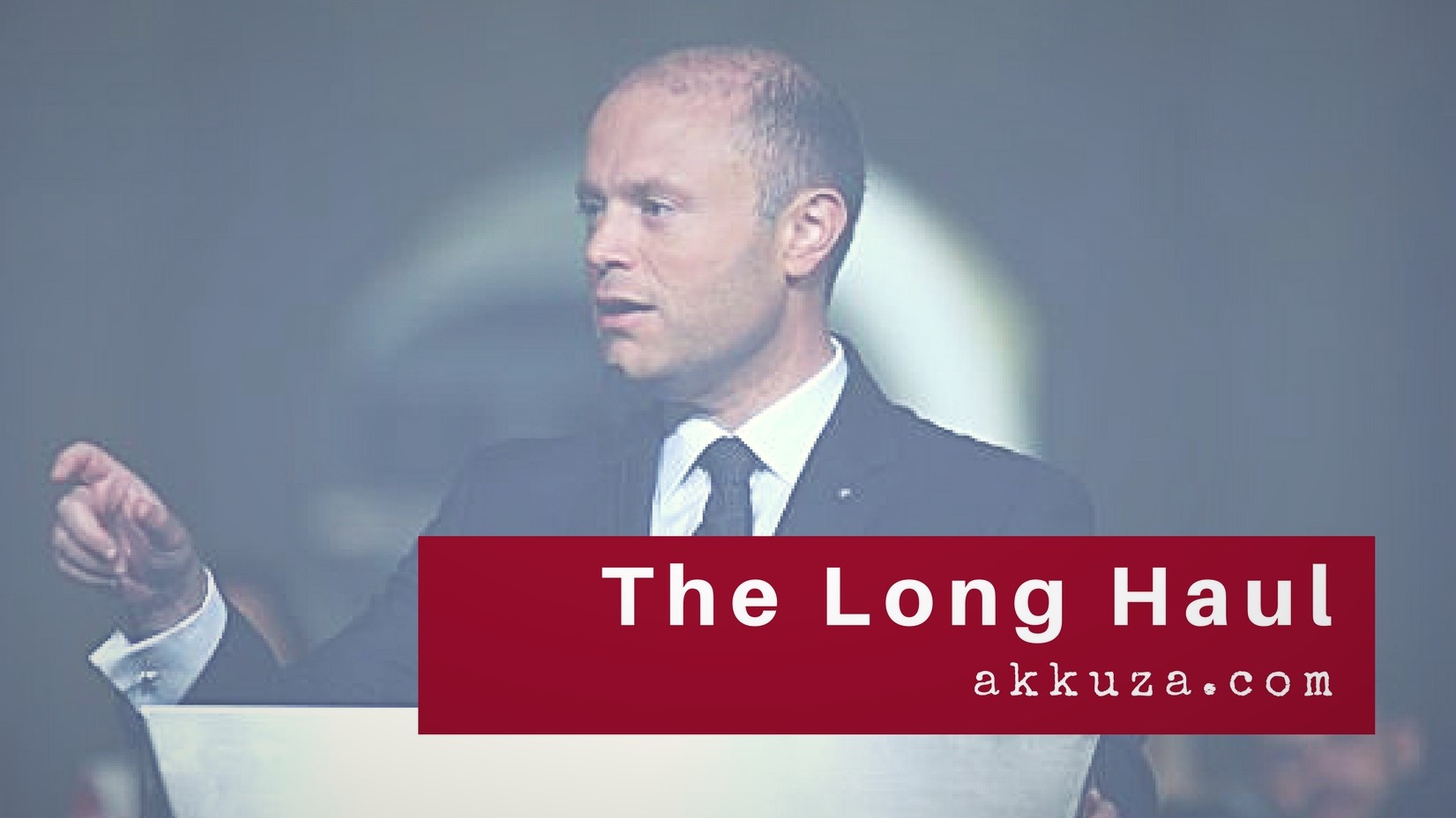
Here is a message to Joseph Muscat. Civil society is not out to derail the country’s long term plans. Civil society is here to set the country back on track in spite of the existence of both parties. The movement will grow. It is inevitable. Constitutional reform must and will come from the ultimate sovereign: the people. We will not let you fake that one too.

We’re here to stay. We’re here for the long haul.