9 years – online in 2014

nine_akkuzaMarch 2005. There was a lot of pope about the internet then. Mugabe’s presence at some ceremony got pride of place in the blog commentary though there was no mispronunciation of the word “caso” to set the social media alight. Did I say social media? In March 2005 youtube.com was barely a month old and Facebook was probably just a hint of an idea in some Harvard college.

Then was the time of insanabile cacoethes scribendi – the incredible urge to write. We blogged because we liked to blog and more than that we blogged because we could. Blogging as a mainstream thing had just begun its second decade of existence and was still in the process of causing some tremors in the online landscape. The MSM (mainstream media) reacted to blogs, almost indignantly pooh-poohing the independent army of keyboard freaks who had opened a huge crack in the world of “controlled media”.

Nine years ago blogs might have been an interesting way to get an immediate, independent take on the information going around the web. The thing is that most of that information was still in the domain of the old sources of information. Newspapers, TV and news groups had by then shifted to the net and there slant was not being complemented by the army of bloggers. Blogging was the thing to do… up until the blogger was awarded the Time Personality of The Year. A prize we will long cherish.

Then came social media – particularly facebook and twitter. Information – the sources of information – was multiplied to the nth degree and the power to comment upon anything was also disseminated exponentially. A biting blog post, a review, an insight – that became too slow. The age of clicktivism and clickteraction meant that blogs would be superseded by the outbursts of “trends” and “status updates”. The role of the blog – the real, old style blog – was changing and it was changing fast.

There was also a crucial moment with the rise and crash of Wikileaks and its founder. We learnt in one fell swoop how frugally the “truth” had been treated over all these years. Bloggers could not be so ambitious as to hope to be the guardians of independent and true scrutiny. When the veil of untruth was uncovered by Wikileaks it was already too late. Online meant a web of lies and truths confusingly intertwined. The consumer was not really in control. The netizen was living in denial.

Bloggers can still thrive. There is still a sense in blogging though it is a little different to that in 2005. As J’accuse turns nine we are aware that this medium required redefining and rebuilding. In the world of artificial intelligence and online tautologies spewed by the multitude on facebook and twitter the blog might serve the purpose of an anchor and reference point. I may be wrong. The time for this blog to wind up might have long come and gone.

This might be a blog that is in denial. There might be no place for this kind of reflection in this world of judge, jury and expert executioner by status update and commentary. Then again this might just be the very reason to kick off a new season with a new ambition and purpose.

This is the truth, if I lie.

Facebook Comments Box

Europe’s representation crisis?

representation_akkuzaThe upcoming French municipal elections have unearthed a huge problem. In many municipalities there is a dearth of candidates, particularly for the post of Mayor. In the Gironde area 45% of the smaller communes are still without a candidate – and it does not stop there. The main reason given for the dearth of candidates is the stricter set of rules being enforced among smaller communes when it comes to conditions for submitting candidatures and lists. There is another parallel reality though and that is related to the fact that potential candidates are shying away from what is perceived as a great responsibility.

In Italy, new PM Matteo Renzi has chosen to merge a swathe of administrative districts in Sicily in order to make them more competitive and promote development. The new “South-East District” encompasses Catania, Siracusa and Ragusa and is intended as an injection to the often static development in the south of Italy. Italy’s Senate and Parliament have had a little bomb explode within thanks to the earthquake that has shaken Grillo’s M5S.

Grillo’s 5 Star Movement has always found it hard to come to terms with an effective working representative system. In its effort to maximise transparent and representative decision making, the Movement ends up having draconian rules and emanates a sense of inflexibility. It could be a case of a far-fetched utopian reality attempting to adapt to the circumstances of old-style politics. Or it could simply be an implosion in the making.

Probably it is a bit of the two. What seems to surface from this kind of turmoil is the fact that a “new politics” without revolution rarely, if ever, happens. The M5S tried to glide into and replace the old system of political workings. This old system is a system that had settled comfortably into a market of power-mongering, influence trading and alternating hegemonies that had little or nothing to do with democratic representation.

Matteo Renzi has been accused of being the new face of the old style politics. He is the epitome of non-representative political methodology – not having been elected to parliament, senate or power. His is but one manifestation of the disenfranchisement of representative power. Another method would be the gradual removal of accountability, transparency and basic rule of law. The latter is a method preferred by the nouveau “representative majorities”, rushed into power by popular mandate which is all too soon discarded and replaced by the service of the power-mongering, influence trading and hegemonic elite.

Finally, the European Union itself, with the elections for its most representative branch just round the corner, would do well to take a long hard look at its long term objectives and if necessary question whether or not there exists a demos to be served and, more importantly, what that demos is calling for.


Facebook Comments Box

Freedom

The only sure bulwark of continuing liberty is a government strong enough to protect the interests of the people, and a people strong enough and well enough informed to maintain its sovereign control over the government. – Franklin D. Roosevelt

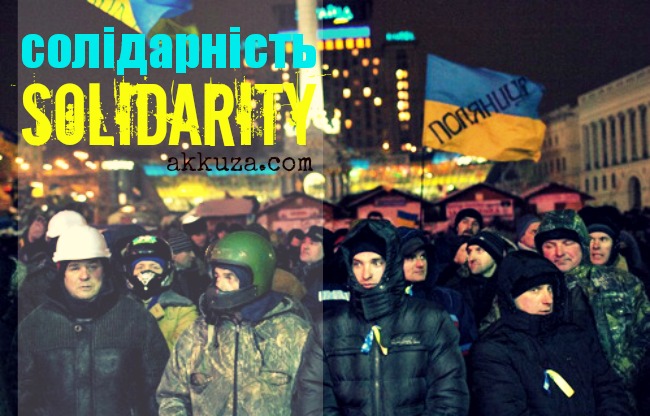
solidarity_akkuza

Facebook Comments Box

200 Kelma


sperm_akkuza

Iddeskrivi lilek innifsek f’mitejn kelma. Mitejn.

Kemm tiflaħ tgħid f’mitejn kelma? X’tip ta’ arbitrarjeta’ hi din? Mitejn kelma miżgħuda tifsir jewilla mitejn mot imlissen b’mod frivolu u qarrieqi li jsawwru maskra – satret il-verita. Tabilħaqq. Għax mill-kelma jsir kollox. Fil-bidu kien hemm il-kelma. U kelma, kelma bi ftit tajn u bżieq sawwar il-bniedem. Ikun minnha skont kelmtu u jgħid biss kelma waħda… u taf int.

Bil-ħeffa titlissen u taħrab eħfef minn fuq ponot ilsienna – ħielsa mill-għarbiel tal-ħosbiena, eħles mill-elf ħsieb ivenvnu ġewwa l-moħħ fit-tellieqa għall-bieb ta’ barra. Il-bokka tal-espressjoni, il-ħalq li toħloq u twelled l-aħħar kelma qabel ma titwieled dik li jmiss. Tkun rebħet setgħana u issa tirrenja bla xkiel. Intagħżlet minn fost il-ħafna bħala il-kelma, anzi, IL-KELMA.

Minn ġewwa l-epididime tal-menti issieltu u terrqu bejniethom il-leġjun ta’ ħsibijiet sabiex fl-aħħar minn fosthom intagħżlet waħda – dik il-kelma li welldet l-idea – li intagħżlet għall-pass li jmiss tal-kreazzjoni assoluta. Imbagħad tibda t-tellieqa li jmiss. Għax bħall Battista qabilhom, kull kelma li titwieled tkun biss qed twitti it-triq għal dik li jmiss.

Kelma, kelma. Jinbena f’suret il-ħallieq il-jien, u lil hinn minnu jinbnew oħrajn f’suret ta’ qabilhom.

Iddeskrivi lilek innifsek f’mitejn kelma. Mitejn.
U ħsiebi bħal għama….

Facebook Comments Box

The Justice Dispensers

justice_akkuza

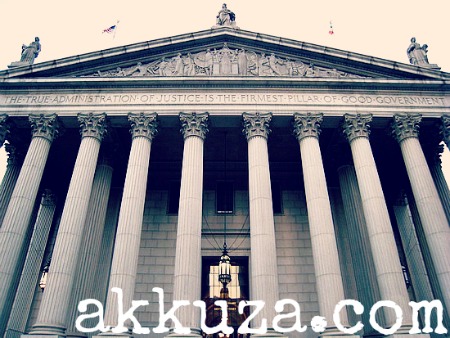
The Supreme Court building in New York sports a quote spread along its facade. Attributed to George Washington it states “The true administration of justice is the firmest pillar of good government”. There are many other quips in similar vein that can be formed into a digest of civic education necessary to form a Havel-inspired backbone of society. “We are servants of the law so we may be free”, “everybody is equal in the eyes of the law” and “justice must not only be done but also seen to be done” are but a tiny sampler of a hypothetical dispenser of sayings related to the role of justice in forming a strong backbone of society.

The onset of relativism in Malta, poisoned as it was with strong doses of populism and twisting of truths in order to benefit whatever half of the population was being courted, has had a devastating effect on our concept of administration of justice and its dispensation. The institutional (constitutional) set up intended to be a fine machinery with which laws would be discussed, promulgated and implemented has been the main victim of the spread of the malaise of relativism and once the mother of all populist and relativist movements plonked itself in the seat of “power” the inevitable happened.

It began slowly. The “fairness” of justice was (rightly) made a subject of debate. Nothing wrong there, especially since society has a way of revising its concept of justice and mores on a regular basis. The problem begins when the proper channels for the revision of laws and finally the dispensation of justice are bypassed in the name of some relativist concept of fairness that operates plainly outside the codebook. There is no legal certainty, no legitimate expectation – simply an unpredictable machine churning out populist edicts as becomes the popular call of the moment. The erosion happens quick and fast by eradicating any concept of merit, of just deserts and introducing a volatile idea of “fairness” (at least perceived).

This is a society that will now reward failures (repeaters at University will still receive their stipend). This is a government that, without any legal foundation, decides to create a blanket amnesty to 1,500 persons who are blatantly accomplices in the crime of theft of public property. The example this sets is an abomination to any aspirations of a just society. The transparent reasoning behind it all – notwithstanding all the faffle from the respective Ministers and PM – is that most of these people would form part of the disgruntled who complained about the price of electricity. Those disgruntled had thrown their weight behind the current government – no wonder they suddenly find a reprieve whisked out of thin air.

Under this government though we have been told that if you consider a tax or a cost to be unfair then you are perfectly within your rights to try and avoid paying it. Committing a crime to do so is perfectly kosher – this is thegovernment that supposedly rewards Robin Hoods. There is no sense in all this other than the distortion of justice for political mileage.

“We cannot expect people to have respect for law and order until we teach respect to those we have entrusted to enforce those laws.” – Hunter S. Thompson.

Facebook Comments Box

Culture and politics (more Havel)

vaclav_akkuza

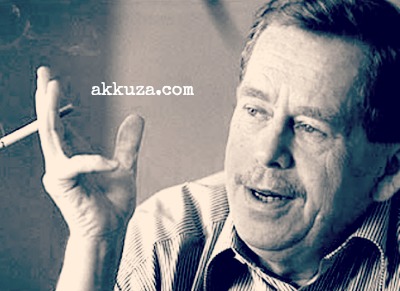
In this part of an essay entitled “Politics, Morality and Civility”, Havel concentrates on an important aspect in the development of citizenship. It is evident that Havel’s ideal state involves a cultured citizenship – what he calls “civility” in the wider sense of the world. The fundamentals of a state lie in the building and molding of individuals – upon civility is his future republic based.

From my political ideals, it should be clear enough that what I would like to accentuate in every possible way in my practice of politics is culture. Culture in the widest possible sense of the world, including everything from what might be called the culture of everyday life – or “civility” – to what we know as high culture, including the arts and sciences.

I don’t mean that the state should heavily subsidize culture as a particular area of human endeavour, nor do I at all share the indignant fear of many artists that the period we are going through now is ruining culture and will eventually destroy it. Most of our artists have, unwittingly, grown accustomed to the unending generosity of the socialist state. It subsidised a number of cultural institutions and offices, heedless of whether a film cost one million or ten million crowns, or whether anyone ever went to see it.

It didn’t matter how many idle actors the theatres had on their payrolls; the main thing was that everyone was on one, and thus on the take. The Communist state knew, better than the Czech-Californian philosopher, where the greatest danger to it lay: in the realm of the intellect and the spirit. It knew who first had to be pacified through irrational largesse. That the state was less and less successful at doing so is another matter which merely confirms how right it was to be afraid; for, despite all the bribes and prizes and titles thrown their way, the artists were among the first to rebel.

This nostalgic complaint by artists who fondly remember their “social security” under socialism therefore leaves me unmoved. Culture must, in part at least, learn how to make its own way.

Facebook Comments Box