Notes from an Europa League Final

europa_akkuza

Part I – A Gozitan Juventus Fan in the Yankees’ Court

The last big sporting event I had attended involved lots of merchandising, an incredible amount of food and drink, a massive stadium full of families, a team with a glorious history and, oh, the sport – something about bats, balls, diamonds and strikes. Thousands of fans were at the Yankee Stadium that day to watch Jeter and Co. go through the motions once again so that they may then crunch the numbers and stats on their way out through the official merchandising shops.

That time match had been rescheduled since the first time round it was “rained out”. That meant that we got the opportunity to queue at a ticketing booth and witness the elaborate but mostly efficient commercial transactions between fans, official team ticket staff and the invisible but very present Stubhub. It was like going to the stock exchange – in the US sites such as Stubhub that serve for the buying and selling of tickets between fans are part and parcel of the goings on. A fan becomes an able commercial transactor – and the wheeling and dealing becomes very much part of being a fan. Nothing seemed wrong there.

Nothing was wrong at all. All tickets were exchanged, rightful owners of tickets who could not attend on the rescheduled day were given different tickets for different days – some negotiated for bunches of tickets including the mysterious “bleachers”, others were content to watch the game that evening. A breeze. Really and truly. We walked out happy with our new tickets and proceeded to watch what I can only subjectively define as a very boring game staged in a magnificent family atmosphere. We stayed as long as we could resist the freezing temperatures having been obliged to buy warm covers to wrap ourselves in.

Part II – “Stasera spacchiamo tutto in citta” (tifoso Benfica)

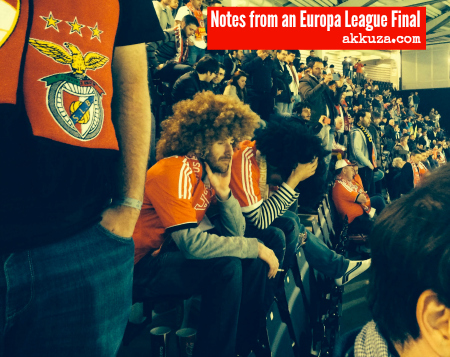
This time round I was waiting at Gate G of the fantastic Juventus Stadium, surrounded by a mass of excited Benfica and Sevilla fans on the way to witness the 2014 Europa League final. I was there because I had purchased the ticket back in April when Juventus were still in the run, on the eve of a return leg against Lyon. Atheists would call this overconfidence – I call it faith… faith in your team that is the ultimate building block for fandom worldwide. Real fans, they believe. Sadly faith does not always combine with fate and notwithstanding having outshone the portuguese upstarts over two legs Juventus quit the scene at the semifinal stage with the odd goal in three having gone Benfica’s way.

I had a slight problem though. It was staring back at me from my ticket. Twice. There, branded into the ticket officially issued by UEFA right under the price of 150 euro were the words CHOY WAI SHING. Written (for security’s sake) twice – once at the top of the ticket and once at the bottom. That, my friends, was supposed to be the name of the holder of the ticket. Now I consider myself lucky enough to be able to pass myself off as a person coming from a variety of nationalities  all of which have one thing in common – the Mediterranean basin. I can claim to come from anywhere within the range that goes from the Pillars of Hercules all the way to the ports of Tyre and Sidon passing through Rome, Tirana, Marseilles, Algiers, Tripoli, Alexandria and Rhodes. But Choy Wai Shing? Not even with my current hairstyle that is half way to that of a Supreme Korean Leader will I manage that.

I am not alone. Like me there are hundreds, nay thousands, of fans from both sides who are in possession of tickets that very evidently do not have their name on them. It is the result of a new UEFA directive, supposedly coming after complaints by Chelsea fans last year who had to pay exorbitant prices to watch the final. I saw Portuguese with names such as “Peter Coombes” or “Paolo Venditti” on their ticket. At this point we had already tried our luck once. We had all gone to the turnstile and shown our ticket to the steward together with our identity documents. Each one of us had been sent back – refused – even though some of us, like myself, could produce evidence of the transaction that had led to the official purchase of the tickets. The rule was simple – your name is not on the ticket, you are not going in.

Which is why approximately one hour before the game was supposed to start I was having an interesting conversation with two Italian-speaking Benfica fans. “E ridiculo (sic) Se non fanno entrare tutto questa gente noi andiamo giu e spacchiamo tutta la citta”. Let it be known that this was said to me as I was squashed in a growing crowd of refused fans all pressing towards a gate that would not open. It was not just fans of Benfica. I also spoke to Sevilla fans who were in the same predicament. It was not surprising really – anybody could have predicted this.

Part III – Viagogo is a scam

The moment you are sandwiched between portuguese and spanish fans bellowing and belching their anger at everyone and everything your brain begins to distract itself by drawing up a quick hit list of persons and companies that are to be blamed for the current tense situation. Back in April, before the tickets were issued by UEFA I was sure that Juventus would make it to the final. They had to. It would be staged in their own stadium. I was told that the best way to get a ticket was by using Viagogo – an intermediary site that claims to “buy and sell” tickets for major events.

I logged onto their site and found a Category One ticket for the final at a not too moderate price of four hundred seventy euros (470). I reckoned two things – first that it was a fair price to pay for guaranteed tickets for a European Final (that same reckoning would allow up to 1,000 for a Champions’ League). Secondly I reckoned that, given the laws of the market, the price would rise as the final got closer (I would be right on that count). I was totally unaware of the possibility of registering oneself for a draw by UEFA for tickets that would cost 150 euro at this point.

What Viagogo does not tell you at the point of purchase – even though they are fully aware of it – is the following. They do not tell you that at that point they are not in possession of any ticket. They do not tell you that they will be “obtaining” the ticket at a later date when someone will be trying to get rid of his ticket because his team has not made it to the final. Most of all they do not tell you that your name will not be on the ticket – just that of the random unfortunate who wants to offload a ticket that has become useless for his purposes.

You will receive a number of emails following the purchase telling you that it is normal for Viagogo to have tickets sent very close to the event. The excuse they mention is that the tickets are issued very late. In my case it was extremely late. Thanks to a very unhelpful ‘customer care’ system I almost ended up with no ticket at all since the ticket only got to Luxembourg when I was already in Turin. On two different occasions I spoke to customer care reps from Viagogo and specifically requested that my name be on the ticket. On both occasions I was told by Viagogo that the name would not be on the ticket but that it would not be a problem because “UEFA cannot refuse everybody who has an official ticket”.

Part IV – UEFA does not help

But they did. Or at least they tried to do so for a very long time. We became pawns in a power match between UEFA and intermediaries such as Viagogo and the ticket touts. UEFA’s idea of control was to issue the tickets some time around the semifinals and make them nominative – that is strictly linked to the purchaser and non-transferable. The supposed inspiration behind all this is quite sound – keep prices low for fans. It’s a crap way of doing so though.

In the first place this system requires tickets to be issued at an early stage – sometime around the semi-final. That means that you will have at least 50% of the purchasers holding a ticket that they no longer need (for the pagans among you that figure covers the supporters of the two losing semifinalists). By UEFA rules they are not allowed to sell their ticket to anybody else. Ridiculo!

Also if for some reason you have purchased a ticket and suddenly something crops up and you can no longer go then you are lumped with a useless purchase (a UEFA issued ticket cost a fixed price of 150 euros). I met someone who had two tickets from another couple who had to pass on the match because the wife had just given birth. That’s 300 euros of wasted cash should UEFA not allow the ticket to be reused. If you think that these figures might be small and insignificant just think that on the day that the stadium was officially sold out (Juventus Stadium Capacity is at 41,000) the official attendance figure was 33,000. That’s 8,000 unused tickets Monsieur Platini… how’s that for sport?

Part V – Bela Guttmann wins

So what happened? Did I see the match? Well. What happened is this. It became obvious that what Juventus Stadium had on its hands was a mass of dedicated supporters prepared to turn into a mob. As more and more fans got refused entry the stewards suddenly communicated that they were speaking to their superiors to see what could be done. Even the stewards understood the ridiculous nature of the situation.

Meanwhile the fans were trying ingenious ways of getting in. Some ingenious portuguese decided to take UEFA’s rule literally. One guy got a felt tip pen and cancelled out the name on the ticket replacing it with his own. Some absent-minded steward let him in. This led to a rush for pens (I joined this one) and we all got back to the turnstile. No chance. We were refused once again after having been reminded that tickets were non-transferable.

That was the point when I feared the worst. In my mind I had a panic run-through of major football disasters involving uncontrollable crowds. There was a possibility of a rush on the gates but thankfully the crowd seemed much more decent for the moment. The tension did work as a huge eye opener as to how an administrative cock up can lead to tragic consequences – think Heysel, think Hillsborough. It only gets worse when while you are waiting you see the corporate ticket holders walking up to the steward and being allowed in after they are asked to write their name on the ticket. I had never heard of Hankook Tires before and I will never purchase them after this. (Yes, Hankook and HTC were two corporate sponsors with a heavy presence).

So while some of the hotter-headed Benfica fans threatened to do an Attila on Torino and while some Sevilla supporters brought out their repertoire of italian insults the clock was ticking and we were getting closer to missing the final and losing out on loads of money. Then it happened. A steward got the nod. “Let them in” was the order. One last mob crush and we were through the gates.

The rest, as Bela Guttmann would have it, is history.

Facebook Comments Box

Getting Simon

gettingsimon_akkuzaIt looked like a shot in the foot. The Times headline was unequivocal – “Busuttil: Politicians should keep away from spring hunting controversy”. I was lost for words. Here was the leader of Malta’s opposition, still struggling in the trust ratings at the polls, coming up with a declaration that stank incredibly of fence-sitting. Could it be possible that after the disastrous management of the Civil Union issue the PN was once again falling far short in the battle of public perception?

I was mistakenly (as it turned out) provoked to putting together another Banana Republic poster that decried the fence-sitting qualities of the declaration. A facebook reader pointed out that there was much more to be read than the headline. Mea culpa, it seems, but only to a point. In fact after reading the Times article in full I began to understand where Busuttil was coming from. It all hinged on the fact that Busuttil was placing importance on the referendum – “the decision rested on the will of the people in a referendum”. What Busuttil seems to be saying (as confirmed further on in the report) is that for this particular decision “political parties have to bow their head to the will of the people”.

Could that be it? Is the PN leader telling anybody who listens that the PN will not stand in the way of a popular decision? This was reinforced by Busuttil’s reference to the party’s position – that of having a limited and controlled season. So we do know that officially the PN is not against spring hunting as such – if anything it has a position that is in favour of limited and controlled hunting in spring. What we are also being told by Busuttil is that notwithstanding this position, his party (and the politicians) should keep away from the controversy and let the referendum run its course. Presumably so the PN will not be campaigning for or against a particular position but has committed to respect the final decision in the referendum.

Is that really fence-sitting? Not really no. It falls much, much shorter than the ‘liberal’ anti-hunting sentiment that has been whipped up over the last year. The PN has definitely decided not to take up the baton of the anti-spring hunting movement and form some sort of coalition for the purposes of the referendum. Insofar as that is concerned it is a form of fence-sitting. On the other hand,  it is also not actively gathering hunters’ votes in Cyrus Engerer fashion or sending out equivocal statements that worryingly threaten the very possibility of the referendum. A positive passiveness if you will.

What has happened though is that the gist of the Times headline spread far quicker than the convoluted institutional message that Simon wanted to send out. It is far easier to jump to the conclusion that the PN is fence-sitting (I for one am guilty of doing so) than to see that there is a clear commitment from one of the two parties in parliament to respect the outcome of the referendum and give full power to a useful tool of political representation.

AD’s criticism of the PN position is not entirely correct in this respect but it is an inevitable result of a grave mishandling of communication from Busuttil’s PR team. The PN is not neutral – it has a position on spring hunting but it is choosing not to lead with it – promising to honour the outcome of the referendum instead. True, if like me you are dead set against spring hunting you would have preferred if at least one of the two political behemoths puts its full force behind getting a referendum result in favour of the abolition of spring hunting.

Whether it is for a calculated purpose or out of a purist interpretation of the institution of public referenda Busuttil has other ideas. The way his speech was reported results in a mini-disaster at PR and spin level. The leftovers at Dar Centrali in Pietà are proving rather inept at understanding the basics of communicating to the extent that even a bungling Labour party in government that rides roughshod over basic constitutional concepts manages to survive ahead at the trust polls.

As the MEP elections approach the PN remains an incoherent machine that is unable to clearly define itself and as a consequence unable to sell a clear defined message to the electorate. They should have learnt by now that voting PN by default is for many not an option – no matter how evident the ugly warts of the party in government have become.

As thing stand, even if you do “get Simon” the safest and clearest message on spring hunting comes from the candidates in green. It has always been and now it is louder and clearer than ever. It is not only about spring hunting but also about taking clear unequivocal positions on issues that are not only (as some mistakenly seem to suggest) restricted to national policy but that are also based on an open European vision.


.

Facebook Comments Box

The squares in our lives

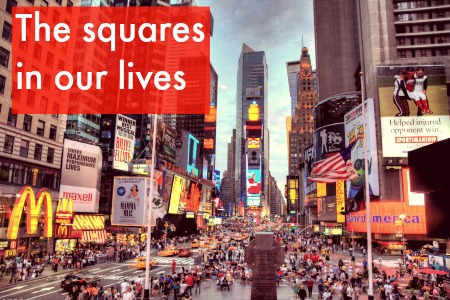
squares_akkuzaI have this thing I do every time I get to New York. As soon as I have plonked my bags into my hotel room I rush out again and head for that one iconic landmark – Times Square. Maybe it is because it allows me to absorb the reality of having got to the Big Apple having crossed the ocean that divides us. I admit it is trash touristy in all sort of ways but there is something about standing in the middle of Times Square in broad daylight with all the signs flashing at you, with all the tourists transiting in front of you and with the inevitable Times Square safety agent walking up to you and asking where you are from. It is only after those five minutes absorbing the atmosphere that your real check-in has taken place.

Ever since the beginning of history, the social aspect of man has manifested itself strongly in our squares. The Greek philosophers had their agora which was the fulcrum of the city’s life. Interestingly the very linguistic origins of the word agora are to be found in two Greek verbs meaning “I speak in public” and “I shop”. That sounds like something out of Steve Job’s portfolio : iShop, iSpeakInPublic. The less romantic Romans would use their squares in order to make public and martial announcements -the famous Twelve Tables of early Roman life were affixed in a public place for all to know the law (and to abide thereby). Similarly Hammurabi’s famous stele bearing his laws would have been placed in a public forum – ignorance of the law was no excuse.

Closer to home our lives in our Mediterranean communities are strongly linked to the pjazza. A sense of patriotism would have me wax lyrical about our village squares and their churches and kazini but I do not have to restrict myself to the confines of our island. Spain and Italy are the prime examples of the plaza/piazza. The centrality of the square to the life of a town is incredible. I remember walking through the bare streets of some basque towns in the middle of August. Not a soul anywhere but all the roads lead to the square – and even a silent, empty square carries the whispers of the hustle and bustle that will inevitably fill it at the milder, cooler times of the day.

We take the physical distribution of our pjazzez for granted. The Don Camillo/Peppone traits are still there to see – no amount of urban restyling can easily wash away the vibrant dynamics between the church, the kazini and the titotla. Some pjazzas may have a pharmacy (rare), a hairdresser (often), a Local Council (rarer) or a grocer (quite common) but the triptych of church – band club – political party tends to form some kind of blueprint. Within that blueprint lie other minor blueprints such as the physical extension on the front of a church – iz-zuntier (the parvis) that acts as a very physical line of demarcation between the divine and the profane. An historic leftover of the past are a few “Non gode di immunità ecclesiastica” signs – a reminder that the demarcation line often spilled into the legal when church and state actually had conflicting jurisdictions on matters temporal.

The sense, the spirit of a piazza is not a sum of its physical parts. The spirit of the piazza can only be understood by observing the way it is filled and emptied. This post is inspired by a question on facebook: What makes a piazza fake? Can an open space with an urban context ever be a fake piazza as opposed to the real thing? One last aside: reading about Manhattan I learnt that since Broadway existed before the grid pattern was designed for the rest of the avenues and streets, what was done was that wherever Broadway crossed an avenue they created a square. Thus Times Square, Herald Square, Shake Shack’s Madison Park and Union Square. Growing up New York was not built around a square or squares – they seem to have been an accidental addition. There is no Kremlin or Trafalgar Square – there is a huge version of Picadilly Circus.

It may be unfair to apply the concept of the piazza, plaza and agora to the great metropolis – then again we have seen very recently how squares from Tiananmen to Plaza Mayor to Maidan (passing through most of the Maghreb and Tahrir) still play an important role in sending powerful messages. The day two popes were made Saints one million people thronged towards a world famous square that is only useful for such occasions before reverting to an empty vast space until the next great event.

So. Fakeness? What are these “plazas” that are constructed into modern mega buildings. Tigne Point and soon Pender Place will both have their little squares full of token bistros, coffee shops serving the panoply of caffeine hits and possibly a baker (in the Chez Paul tradition that hit continental Europe and the US). Sure, people will congregate and make use of the amenities. There is something sad about hanging around these concrete replicas when you are a stone’s throw away from a bar by the seaside. Will the bistros fulfill the same role as your average kazin complete with grapevine gossip? Somehow I find it hard to believe that the spirit of Tapie’s Bar in Victoria can be transplanted to the core of Pender Place. I also doubt it is the intention of the architects to do so.

The heartbeat of the “fake plaza” is commercial convenience and there is little of the social interaction. All the umbrella’d tables and sandwich stores in the world could not rekindle the civic feeling and heartbeat that a piazza conserves so nonchalantly. Let’s face it… I doubt this song could have been written on a trendy table at Tigne Point… at least not this one…

Facebook Comments Box

Ugly Heads

ugly_akkuzaRacism. It’s a dirty word. In the past seven days there seems to have been some form of virus in the air spreading dirty thoughts across the globe. The latest manifestation came in sporting events. First there was the Diego Alves incident. Barcelona’s colourful (an unfortunate word in these circumstances but I mean spirited) winger was getting ready to hit a corner in their match against Villareal when a banana was thrown from the stands. It is a not too intelligent and unironic insult that is common among the less evolved quarters of football “supporters”. Along with the monkey calls, the banana is the unfunny provocation (are you provocating me?) that yells “You are black therefore you are monkey”.

To Alves’ credit he did not only brush the manifestation of crass stupidity aside, he proceeded to pick up the banana and eat it before contributing to Barcelona’s turnaround victory against a banana coloured Villareal team. Unfortunately the beautiful game is often tainted with this kind of racist inspired taunts (remember Boateng last summer?). Surprisingly this week we also had news of similar dirty thoughts coming from – of all places – the black dominated NBA. The sport of LeBron and Jordan  hit the headlines for the wrong reasons when a phone call by the owner of the LA Clippers was leaked by his girlfriend to the press. It turns out that he did not want her to come to games in the company of African-Americans.

Donald Sterling (for such is the intelligent beings’ name) provoked a huge backlash to the point of getting a comment straight from President Obama that is destined to become a classic: “When ignorant folks want to advertise their ignorance, you don’t really have to do anything, you just let them talk. That’s what happened here.”  Barack, you’re so right.

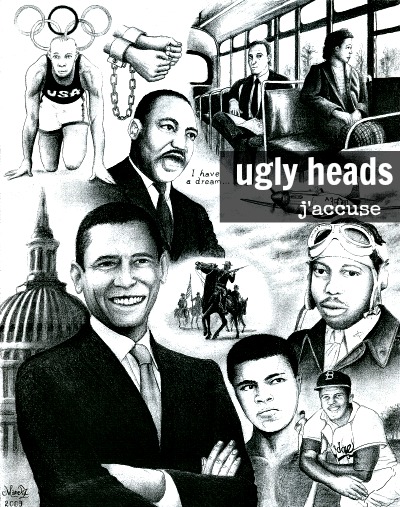
It is ignorance that is at the root of intolerance. It is intolerance that is at the root of racism. In these times when democracy and democratic rights are being savagely banalised by the onslaught of relativism and populism the ugly heads of racism and intolerance are easily raised. We read in Malta about immigrants having to ask Maltese to “hail buses” because otherwise the driver would not stop for them. Ignorance. At its ugliest and worst. Rosa Parks would have a hard time in Malta, trust me. She’d probably still be stuck in some village police station on her 200th hour of “police questioning”. “What do you mean you refused to sit in the black section? There is a law you know.”

There are warning signs everywhere. Intolerance does not stop at racism on the basis of colour. In the Russian-majority areas of the Ukraine we had calls for a register of Jews. Even if we ignored the maladroit comments by Berlusconi about the Germans and concentration camp we would still have to admit that the current European Parliament campaign is unfortunately infused with not so subtle reasoning based on mistrust of the foreigner – a revived intolerance that the Europe of the universal declaration of rights was supposed to have buried long ago. (see also the recent outrage in the UK following a UKIP candidate’s comments).

Recently I learnt that the story that Adolf Hitler snubbed Jesse Owens during the Berlin Olympics was a myth. Owens himself explained that Hitler had actually taken an “official” decision not to congratulate any of the medal winners after he was told on the first day that he could not simply congratulate German medal winners. Hitler did not snub Owens. It turns out that he actually shook hands with Owens on the day before leaving the stadium.

Owens said he was treated better in Germany than in America where blacks faced segregation. Sometimes, the sources of intolerance and racism are to be found where we least expect it.

Facebook Comments Box

the edge of politics

LA FEMME NUE DANS LE DESERT-1 There was a time when this blog would devour any news political coming out of the island in a voracious manner. Analyse, chew, criticise and expect viral reaction. Or so went the music and momentum. It’s hard to put your finger on the moment when you stop caring so deeply – for want of a better description. The irony is that what goes by the name of politics in the republic has followed the most predictable path foreseen by this blog from the very earliest of musings. The phrases “race to the bottom” and “battleground of mediocrity” had become a cliche in these columns long before the realisation dawned in other observatories.

There is little or no comfort in having been right though. With clockwork regularity every stroke and news item from the political milieu seems to confirm even the wildest of suspicions that we may have had as to the heartless direction that political representation could have taken. The blatant cynicism of one party combined with the clueless misdirection of the other can only be fuelled by an electorate that not only hangs on dearly to a partisan vocation but also throws in a level of short-sighted calculation that baffles even the most prophetic among us.

There is a moment of realisation that the business of government still owes much to the governed. J’accuse was much enamoured with the phrase “you reap what you sow” and playing the blame game with an electorate that is often reluctant to shift the goalposts remains a sordid temptation. It’s all there to see though – as much as the “paese di coglioni” formula that remains just as apt as when it was first conjured up mid-blog. What to make of a governing party that has rewritten all the rules of the game and manages to make transparent the dirtiest truth of the political game : everybody has a price? Somewhere in the Labour unconscious lies a stock market of sorts where every shaping factor in Maltese society has a price and a trade to work upon. Morbid calculations mean that everything goes so long as the final judge and jury can remain sufficiently opiated with new age doses of newspeak.

On the other hand the party in opposition remains at sea grappling for an old fashioned tidal wave of a rallying factor that would bring it back to drier and safer ground. It’s internal conflicts and failures are evident even in what should be mini-triumphs while it has still found itself unable to redefine itself and give itself a purpose. The opposition runs the risk of being stuck in opposition mode (and it is not even there yet) for a long while to come. It finds the new playing ground a very uneven place to work and is still unaccustomed to the shifted goalposts. This is not about shifting to trendier liberal stances but about being a more congruent, consistent whole once again. Without that newfound centre of gravity it is destined to play second fiddle to the puppet master’s shenanigans.

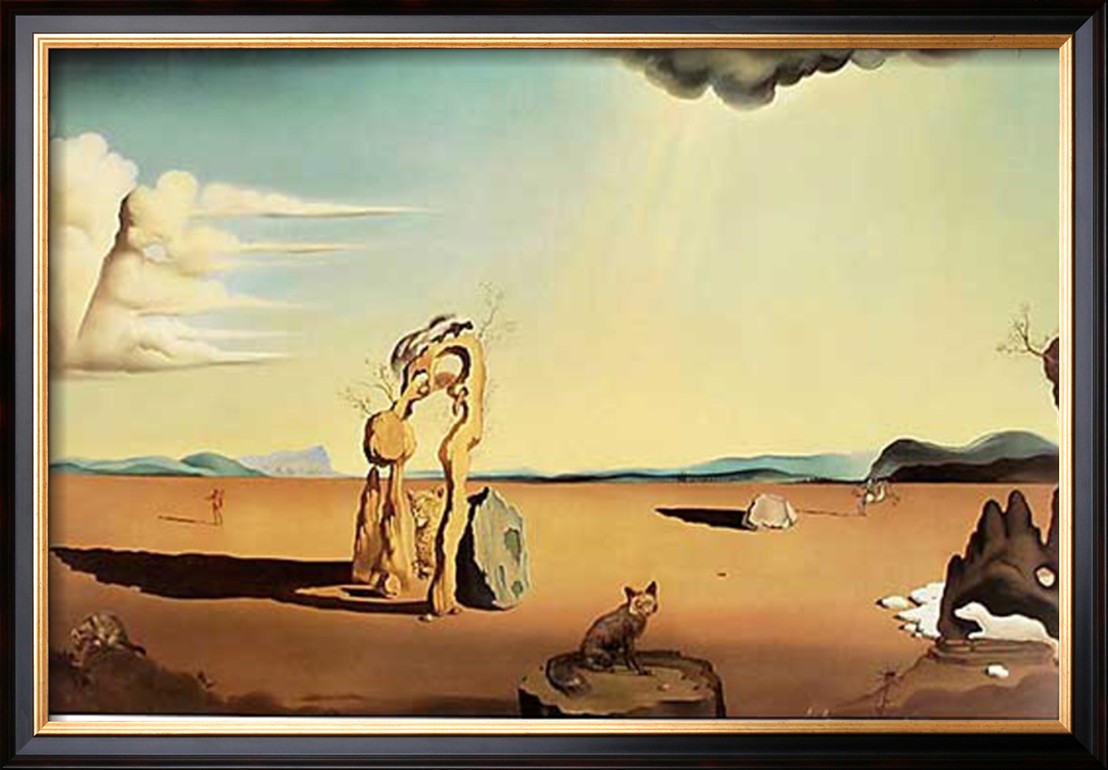
Right now, in what should be an important maturing point for the young republic, non-partisan observers have been pushed to the edge of politics. I like to think of this as our moment out in the desert in the manner of the prophets of the old book. The current order is a disaster in the waiting. Policies of appeasement and populism are destined to fail in the long run and there is only so many hacks at its breast that the golden goose can take.

In the meantime we observe the events unfold. At the edge of politics.

Facebook Comments Box

United Civics

From the moment you step off the plane and go through the average two and a half hours of immigrant screening attrition at whatever “port of call” you have reached you begin to realise that the United States of America is a rather peculiar entity that will be hard to emulate for any newborn federation in the future. Admittedly the chances of a similar structure finding its roots in the Old Continent are currently wallowing at their lowest and the surge of nationalism and mistrust of supranational entities goes no small way to creating such an infertile ground.

Looking at the US from the inside though you begin to notice that there is a clear distinction between what would be described as nationalist sentiment and culture in Europe on the one hand, and the allegiance to the national democratic system and structure on the other. You see it on a daily basis. There was no better way to experience this than an early evening stroll through (the safer part of) Williamsburg in Brooklyn. Passing by a pharmacy with a distinctly Italian name I overheard a conversation between a couple of young brats which was more of a verbal sparring match as to the veracity of their Italianite ethnicity.

“You’re not a Caprese, you’re married into the Capreses” sounded like a minor stain on the curriculum vitae of the recipient of this tirade. “I’m as Italian as you guys, no doubt” was the feeble reply. A few blocks down the local parish had an Easter ceremony in full swing. I recognised the rite from my days as an altar boy, only there now seemed to be quite a few altar girls too all dressed up for the occasion. “Ca existe encore? Les enfants de choeur?” quizzed my Belgian travel mates. Apparently these traditions and cultural stamps survived longer in Brooklyn than in Liege and Bruxelles.

Whenever you interact in New York you inevitably end up talking ethnicity and origin. A bona fide New Yorker will sell you the tickets to Woodbury Common but he’ll proudly tell you that he is Ghanaian “et c’est pour ca qu’il parle francais“. Equally bona fide (read that bonafied if you want to sound American) is the security guy posted at Times Square. Equally proud of being of West african descent. How many times did I hear “sei Italiano?” on my trip – in an attempt to find a common cultural ground from which to embark on social niceties.

Walk through Chinatown and you get to understand how you can live in the US as a fully grafted export of any world culture. You live, eat, enjoy and speak your own nationality, food, traditions and language. Don’t even get me started on the Latino. It’s all over the place.

And yet there is a beautiful symbiotic conviviality going on. You cannot miss the multiple expressions of allegiance – to the civic structure that surrounds. The Americans have turned the law into a fine art to the point of being finicky. Everything is calculated by entitlement in this nation that was founded on a Bill of Rights. The formula is weird but works fantastically. So when you do stand up at the Yankee Stadium (Ladies and Gentlemen please rise and take off your hats for the national anthem) you understand how the glue that keeps together so many differences is all in the patriotic pride enshrined in a democratic system of rule of law.

It’s how the slightly irritating habits of the multiple ethnicities become a reality. It’s how they can forget about still being Italian, Puerto Rican, German, Ghanaian, Kenyan, Spanish the moment the first notes are played. It’s how they forged an error-riddled system that works.

It’s how this becomes the land of the free and the home of the brave.


Facebook Comments Box