The War on Hunting in Liliput

hunting_akkuzaIt might seem to be hotting up. What is it about this nation that turns any democratic decision making exercise into an internecine battle? As the referendum approaches we get to watch the two sides and their different approach to convincing people to cast the vote in their favour. At some point the “No” camp, the one against hunting, stated that it prefers debate to battle. That was a reaction to the earlier affirmation by the hunting fraternity that this referendum meant “War”. Debate? What debate? This Liliput nation is fast proving to have shed all semblance of analytical consideration and prefers the heads-on instinctive approach. Facts and data or principles and values are discarded – we much prefer “taking sides” either instinctively through some visceral attraction to some form of roots or out of spite.

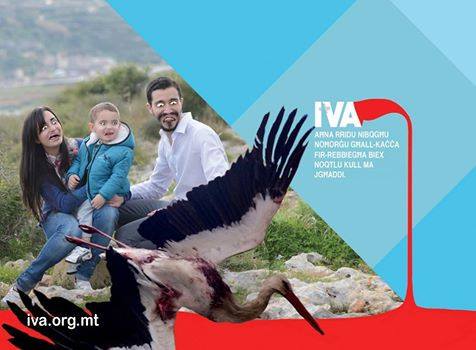
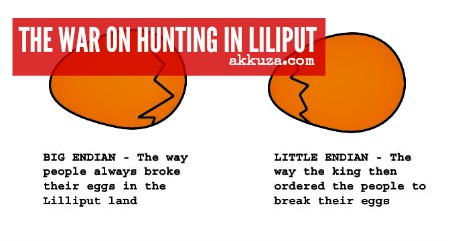
In the end a referendum that (as we have stated elsewhere) constitutes at most a political message to our supposed representatives is becoming yet another Lilliputian outcry as to how eggs are best broken open. The comedic elements have also made their appearance – prime among which is Saviour “Hogan” Balzan – foaming at the mouth and doing his damned best to ruin the appeal of a vote that should be in favour of the reasonable enjoyment of the countryside and above all in favour of the birds.

Ah those wingèd beings have little or no knowledge of what is going on in the island of milk and honey. Would they be able to fathom the deceptive campaign of the Yes Camp, with all its mystical happy families, multi-dogged hunters sans-senter and verbose lawyerisms they would gather in one massive flock above the next meeting of the hunter confraternity and take one massive dump covering all the bullshitters in avian faeces.

Incidentally Liliput insists on subsidising airfares for those of its electors and decision-takers (read voters) who reside abroad. March 2015 and polling booths in Embassy are still a Utopic mirage for those of us who would have hoped to be able to cast out vote comfortably.

The referendum risks becoming a non-event very fast. Sure we will have a result. Either way there will be a sector of Maltese society kicking up a fuss. Politically it is fast becoming obvious that the two main parties that sit in the decision making positions of this country will be able to wash their hands of the main set of consequences – having found someone else to blame for the immediate aftermath. Whether the Birds Directive, derogations and all, will be properly implemented in Malta for the years to follow is another chapter, another story.

10997375_1001375046558072_8265459475622731081_o

11053686_10204488801594993_5338501285898200951_n


Facebook Comments Box

The Money of Politics

money_politics_Akkuza

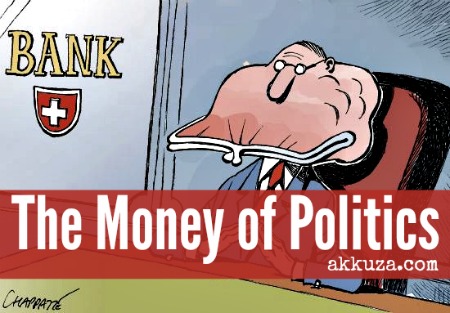
In the current whirlwind that is the Swissleaks scandal we risk missing the wood for the trees. Public opinion is easily distracted by petty insinuations and suppositions that run on the lines of taste and “intuition”. Assumptions are always preferable to sound facts and are the refuge of the lazy or the manipulating. As news broke of the names of ex-PN ministers Ninu Zammit and Michael Falzon appearing on the list of people who had funds stashed away in Switzerland we were confronted with the inevitable tsunami of disdain. This was tax avoidance of the highest order, aggravated to boot by the failed declaration of funds when performing duties as a minister of government. We were also told that both had benefited from an “amnesty” having repatriated the funds to Malta. What that really means is that they paid much less tax than they originally owed and it does nothing to clear their false declarations earlier.

In many ways an amnesty in this sense is a legal form of money laundering. Monies that had been “disapparated” into a vault at the Gringot’s Bank far from the scrutiny of the taxman are allowed back into circulation once the payment of a percentage fine is made. The real question is: how was that money made? Why was it hidden away for so long? Was tax avoidance really the only reason? That the money was legitimately acquired and not through, for example, trading in influence, is something for which we have to take the word of the honourable gentlemen who had given sworn statements of assets before parliament before and in which statements they failed to mention the existence of such funds. Forgive me if I remain skeptical.

It gets worse. The current Premier (that’s his new nick – all 4.2 million euro of it) could in all probability have been the one to have accorded the amnesty to the gentlemen in question. When questioned on the matter he took refuge in his usual “tu quoque” rubbish – coming up with a reference to Austin Gatt’s forgotten funds at UPS. The problem is that by focusing on the Where? – i.e. Swiss funds, we miss the more important questions of  Why? and What? Why do ministers underdeclare their assets? What dangers lie hidden when they do so? Muscat’s cabinet and MP’s include a minister for Gozo who declared practically a minimum wage in earnings and an ex-Minister who still cannot explain having half a million euros running around the house (to mention but two).

The Cafe Premier saga only goes to worsen the situation (and not just the perception) when it comes to seeing how closely knit are the activities of our representatives to the business community. While we were all aghast at Michael Falzon’s 460k in Switzerland we could read about a 210k commission over a government deal to buy back its own property (rather than simply kicking out a tenant who was not paying). The PM was in on the deal – there are emails to prove it. Not too far away from the Premier, in the law courts, the Enemalta Scandal was still unfolding. Yet again more wheels and cogs being oiled and still no one uses the magic word in Maltese : “Tixħim” (bungs/backhanders).

In the end there is a money trail to be followed. It serves to emphasise why this government cannot keep hiding behind chinese walls when it comes to important deals such as the Transport system and the new power stations and contracts given to consultants. Transparency is only the first step to combat corruption and until now the murkiness within which our politicians function is not helping in any way. We could potentially be very close to a situation that was current in Italy in 1992 – and the danger is that, just as happened in Italy – the big fish survive the cull to the detriment of a few scapegoats.

Which is why we need real non-partisan investigative reporting and a stronger arm of the law. otherwise the wheels will just keep turning and the oil will keep flowing. The only suckers will be the people. For a change.

Facebook Comments Box

The Blame Game & Simon

blame_akkuzaOpposition leader Busuttil was lambasted from some quarters for having dared suggest that the whole Enemalta procurement scandal was actually abused of as electoral fodder by Muscat and his men. What Busuttil suggested was really not too hard to understand – if the information was available long before the election loomed ominously, why was it withheld until a time when it would pay Labour in opposition as an extra baton to imply government corruption?

Busuttil was not implying that the information should have been kept quiet until after the election (who would think such a thing anyway?) but rather that it should have surfaced when it was discovered and not much later. While the PAC continues on its fishing expedition trying to pin the whole scandal onto Lawrence Gonzi Busuttil’s kind of assertion will fall on deaf ears or attract the playground type of response that the Labour machine has been honed to give.

The HSBC Swissleaks now adds to the intrigue of the Farrugia Brothers discoveries in that it provides an easier target with the cliches straight out of conspiracy theory books – which is not to say that there is nothing underhand going on in the world of procurement, government permits and the like. The problem lies elsewhere. In Malta there is no such thing as investigation beyond politically motivated with-hunts. The politically motivated is also limited in its extent since oftentimes the investigators have a huge interest in making sure that they do not in turn become investigated.

We just have to look at what happened in Italy in the early nineties to understand what I am getting at. Our political parties have developed a system of self-preservation that became ever more evident during the last election. Rules and laws of the overall system have gradually been adapted to ensure the survival of the two political parties – not just politically but also financially. Hidden behind these rules is a system of favoritisms and expectations that link the political aspect to the economy in general on the one hand (from employment to contracts to tenders to permits) and to the social on the other (medical rights, entertainment “elites” and circles).

It would not just be limited to the parties. Institutional flaws would also surface – authorities controlling pieces of the market suddenly hold strong cards for bargaining: which is where I suspect the whole Enemalta picture fits in. From the most expensive multi-million euro tender to the smallest warden with fine giving powers there is an alternate currency of favoritism and favour. Of course if you are the party in government you and your men have a stronger bargaining power. Everybody gets their unjust desserts.

Mani pulite in Italy uncovered a clear system where bungs were paid to the pentapartito (five main parties from DC to PC) whenever anybody anywhere wanted to merely conduct business. No bung (tangente), no party (tender). Does this happen in Malta? The evidence seems to be pointing to it having happened on a regular basis – not necessarily with the blessing of politicians – and that it can still be occurring to this day.

Labour seems hell-bent on institutionalizing the system further. There is no longer a need to hide the “debts” owed to supporting lobbies. It is translated immediately to enabling laws or worse still – as the forthcoming threat of an amnesty for all MEPA violations shows – an actual conspiracy to render the illegal legal. Illegal constructions will enjoy a bonifico of huge proportions and consequences – all so as to appease the debts that got Labour into power. The network between social and business interests intertwining with government is becoming more and more dangerous. We do not have a pool of inquiring magistrates as the Italians did and in some way we can consider that a blessing of sorts given how some people here tend to interpret the laws.

Simon Busuttil was right though in turning up the heat on Muscat. The whole Enemalta investigation is misguided if it turns into a fishing expedition on Lawrence Gonzi. If, rather than speculating in the style of our tabloids, proper questions were asked as to how our whole system is beginning to stink of favoritism, cronyism and party-instigated corruption then, maybe, we could be getting somewhere.


Facebook Comments Box

I.M. Jack – the pauline edition

imjack

Gone fishing or the Public Accounts Committee

I caught a glimpse of the proceedings at the Public Accounts Committee sessions. Inelegant and clumsy are the first words that come to mind. It was never meant to be a fashion statement or synchronised swimming, sure, but the overall impression before getting down to the nitty gritty is that of yet another debasement of institutional tradition.

Sitting in the metaphorical witness dock former PM Lawrence Gonzi had his patience tried by repeat questioning that seemed to be going nowhere. There was a moment of dramatic irony when Gonzi accused the Committee of not following the procedure it should (that of the COCP) when the Committee was actually chaired by (and therefore under the responsibility of) Jason Azzopardi of team PN.

Still, the line of questioning taken up by Justice Minister seems to be one of spurious fabrication very much in line with the journalistic style at MaltaToday (which revels in the idea of having kicked off this fracas in the first place) rather than the quest for some truth or other (in a land of multiple truths the first to the media machine is King). What exactly is the PAC after? What is this Enemalta business proving in the end?

In all probability this business, like surely many others to come, will prove that businesses, businessmen and corrupt persons in power (and by this I mean persons appointed to manage/run/sit on parastatal entities) will constantly try to find a convergence point in the shadows and suck from the public funds so long as they are not caught.

Amnesties and amnesia

It was also very interesting to watch the Justice Minister justify the line of questioning by claiming that the amnesty (proklama really) requires constant checking since one of the conditions it contains is that it can be withdrawn if the person enjoying its benefits is found to have hidden the truth.

So we have a “businessman” who is benefiting from an amnesty in order to assist the authorities in uncovering illicit activity by other “businessmen”. The current government’s line seems to be to question this amnesty (with the concurrent risk that many other people might end up not being brought to justice).

While all this is happening we have another sector (construction and development) in which the government seems to be adamant to offer a blanket amnesty to all those who have abused of the law (broken it) and partaken in the rape of the nation (metaphorically speaking). The Taghna Lkoll government has made no effort to hide its tight links to the Malta Developer’s Association and it’s erstwhile Chairman (or is he President?) Sandro Chetcuti.

There is no whistleblowing reason for an amnesty here. The feeble excuse that Taghna Lkoll philosophy can throw up (yes, like vomit) is that those paying for the amnesty will generate lots of money for the coffers. A blanket amnesty that allows people to buy scars on the face of the nation. Brilliant. So long as Sandro tells us that everything is just fine for the developers we must all be grateful.

Kulcha and Karnival

It may seem too facile an argument but the priorities of Taghna Lkoll in the field of culture are so obviously linked to core voting interests that you cannot but argue on the lines that sound both snobbish and classist. As the effort to denigrate the City Gate project continues to gather momentum we are told of the Great Carnival and Music set of stalls that will offset the great vacuum that exists. Minister Bonnici (him again) told the gathered press that we cannot continue with this “silo mentality” – I must confess I had to look it up since I am not a FEMA graduate and find marketing catchphrases particularly undigestible.

It turns out that fighting the “silo mentality” means copying the design of garages and stalls that some Taghna Lkoll-ing carnival float enthusiast (and ONE employee) had visited on a trip abroad and spending some 6 million euros to build a sort of samba-drone that doubles up as a garage band gig place much to the chagrin of William Mangion.

Is it facile to argue that the ditched plans for the ditch/moat are crying for re-instatement and could well have done with some of those millions? Is it too easy to argue that while we appreciate that the carnival custom in Malta does deserve an investment of sorts (inclusive of a papier-mache’ museum) this should not come as an easy-fix solution that is obviously lacking in global planning?

Personally I love the idea of a regenerated part of Marsa hosting a carnival drove complete with museums and apprentice schools. It is the way these ideas suddenly pop up and are so very evidently the result of “lapazzar” planning simply to shut the mouths of another cohort of voters that is absolutely obnoxious. Stilll. It’s better than those bastard nationalists who never listened eh?

They’re drowning again

Far from the offices of wake up and smell the coffee. Far from the populistic approaches and ISIS scaremongering. There, in the deep blue tempest toss’d seas, more and more of them are dying. On the eve of the day when Malta celebrates the feast of Saint Paul’s Shipwreck, tens of immigrants who had left Tripoli in the hope of a better future lost their lives to the sea and the cold. What value those lives to the thousands who will throng the streets of the city of gentlemen adulating the Magnus who like the immigrants had been toss’d by the same sea?

Lawyers and Lawyers

Two issues. First the hunting then the constitutional case where the PN seems to have regained two seats. We had a parade of practising and retired lawyers stating the obvious (and then even complicating matters in interviews by not getting it quite right) when it came to referenda and their consequences. Did we need that charade? It reminded me of that farce re-enacted by Alfred Sant pre-1996 when he sat down with the an accommodating notary to sign a “contract with the people” – blissfully ignorant that the whole business of election, swearing-in and governing already covered the job.

As for the constitutional case. There is a glaring silence on the PN side when it comes to arguing which seats should be compensated and why. I watched a lawyer called Adrian Delia perform logical summersaults on an interview with newsbook.com.mt. He was clearly confused by the question as to whether or not Labour should have lost two seats in the process. Let us set aside the absolute hypocrisy of a PN representative talking about proportional representation in parliament – the proportionality has nothing to do with it.

The two candidates Buttigieg and Azzopardi were deprived of their seats because of an error by the Electoral Commission when the original set of parliamentary seats was being distributed. Thus Azzopardi lost out to Justyne Caruana for the fifth seat in the 13th district. If the error is admitted and the proper count repristinated then it should automatically follow that Caruana would lose her seat and Azzopardi would take it up (ths giving a 3-2 result for PN in Gozo). Same applies for the Edward Scicluna – Claudette Buttigieg situation.

The compensation of seats for proportional purposes takes place AFTER the original election of 5 candidates from each district. It has nothing to do with the error that took place BEFORE the proportional attribution. The PN request before the Civil Court should technically have included the request to have the Labour candidates erroneously elected replaced with the nationalist candidates who had been “cheated” by the error.

Happy Saint Paul’s feast to all J’accuse readers. We are one month away from our 10th anniversary of this blog. Thank you for your custom.

Facebook Comments Box

The barbarians and the gates

gates_akkuza

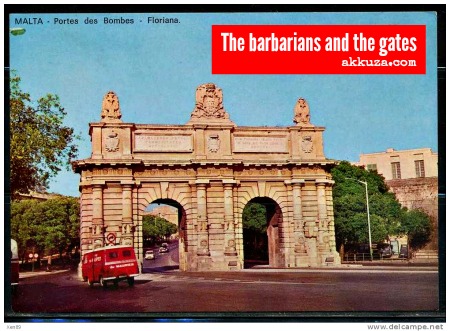
If you ever stopped to read the writing on Floriana’s Porte des Bombes (Heaven forbid that you did stop, it is after all in the middle of a main road) you would have read the inscription “Ad maiorem popoli comoditatem” which is latin for “For the greater comfort of the people”. The events of the past few weeks have led me to reflect whether our national efforts at public building is in fact heavily conditioned by what the people want. Most times we are busy adorning roundabouts with random decorations from phallic symbols to kitsch statuettes and cacti and luzzi. Those who had a taste of what passes for power on the island seem hell bent in dedicating memorials to themselves which explains a proliferation of busts and statues – which would be ok if we had a sense of proportion.

Gates though. That’s a tricky one. The history of City Gate also includes anecdotes as to how the main consideration in one of its reincarnations was that Carnival Floats should be able to pass through the entrance. One of the city of gentlemen’s entrances had to bow to the needs of the burlesque community. When a supposed architect was at the helm of the nation we could do no better than boxing in the main entrance with a series of shoddy arches, an arcade of libyan-arab shops and travel agencies and of course a housing estate. Ad maiorem popoli comoditatem indeed.

This time round the people are still trying to get their heads around the presence of a major architectural installation and plans. Most of the people fail to think with their own heads and come to their own conclusions. Instead, the Piano Plans have to bear with the fact that their genesis and development coincided with the first part of the Taghna Lkoll plan that involved the creation of a general sentiment of unhappiness and discontent. Let’s call it the Tort ta’ Gonzi phase. It was a phase in which anything remotely connectable to the government of the time was somehow deemed as wrong and almost as a punishment of the people. A couple of billboard personalities (ye old two dimensional figures) lent their faces to this quest and hey presto … the “Cheese Grater” and “Roofless Theater” were born.

Add to that pre-electoral schemings and promises to the hawkers of Valletta and the stage was set for the barbarians to take over the latest version of the gate. Have we improved much from the time when the prime consideration for a new gate was whether a carnival float could get through it? Not really. Our Prime Minister is adamant that there is nothing wrong with the location for the monti. This time he has reserved the populist decision to the look  of the stalls but not to the location.

The sad thing is that this should never have been a decision of the people. Not in the case of the aesthetics and urban planning it isn’t. But this is Malta where the size of statues of saints and carnival floats will determine the width of the street, the height of the lampposts and the shape of a gate.

You would be worried if the barbarians had got to the gates. The thing is you look around you and you notice that they have been everywhere all along. It will only take a bit getting used to won’t it? After all under Taghna Lkoll, everything goes. You just have to be a little more optimist and a little less negative.

Facebook Comments Box

Urban

urban_akkuza

Walking around Valletta during my last visit to Malta I opted to pass through “is-Suq”, the closed food market that is still crying out to be converted for proper use. I would not use the word dilapidated but the state of what should be a vibrant part of the City of Gentlemen leaves much to be desired. Travel to any city in Europe and you will find different versions of these closed markets that have gone through a recent transformation and revitalisation. The quest for organic and health food has contributed quite a little to this phenomenon – allowing for a return to grassroots shopping. It does not necessarily have to be that though – the space occupied by these historic buildings can be regenerated for new use too.

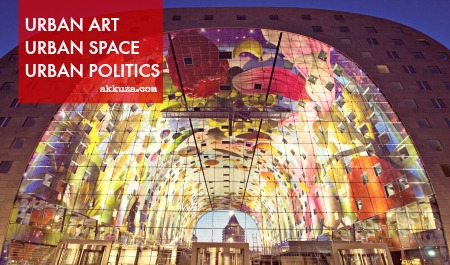
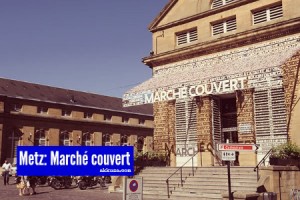
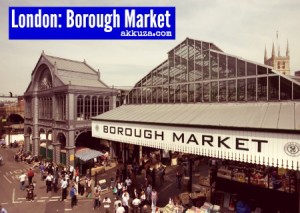
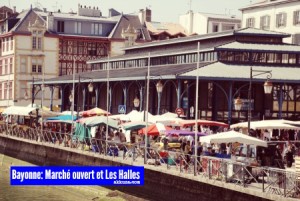
The market featured in the main illustration to this article is Rotterdam’s recently built Markthal (Market Hall). It is a splendid example of a modern version of the market. London, Barcelona, Paris, Canterbury, Metz, Bayonne… all sport their covered markets that bustle with activity.

This month we got the news that Valletta’s market was earmarked for development and refurbishment. “Finally” is the first reaction. Then your heart is filled with fear and apprehension. Yes, that is the second reaction, because when it comes to planning, designing an using urban spaces we are unfortunately subject to the whims and tasteless fancies of the politicien de tour. In a way it is only just right that we get our just desserts in the sense that when we elect these know-it-alls to the seats of power we sort of imply a handover for the general running and administration of the country. In purely hypothetical terms the theory of democracy includes that assumption that these beings are instilled with a strong civic sense – they are Aristotle’s spoudaios. Whatever project they will embark upon, they will do so with the highest sense of civic standard.

Never was an assumption so wrongly made. Sure there have always been different schools of thought as to the use of urban space. Michelangelo’s David (also due to the size) was the subject of much speculation in the “Where shall we put it?” department in fifteenth century Florence. The problem is that our supposèd spoudaios or civic minded rulers are often too bothered with the management of power in the crude sense to worry about anything else such as bothersome concepts of aesthetics, civic appropriateness and urban practicality.

Thus what should be a wholistic use of urban space ad maiorem popoli comoditatem becomes a pawn in the cashing of electoral cheques, in the spiting of opposition plans and before you know it – magnificent plans for an open space at the Valletta entrance will be soiled by a hawker’s paradise and the setting up of a permanent monti (and yes, it is Monti by now… an acquired nomenclature unless you are stuck in some corner of the island – hell, it’s even monti in Gozo which is miles away from the Monte di Pietà).

With the current government it is all about demagogic decisions and statements combined with the fulfilment of hidden pacts and promises. So do not hold your breath for Valletta’s suq. When the time comes you can expect the latest buzillis coming up to the ministers of government to cash his pre-electoral promises. I’m guessing restaurants and cafes will take the place of butchers and grocers (they are a dying breed anyway). We can only hope that we will be spared a flourishing of eight pointed crosses or cacti, luzzi, and whatsnot.

From where I am sitting government policy on urban development is a carte blanche that is available to the highest bidder, no matter how tacky, no matter how unpractical, no matter how ridiculously unfit his plans may be. Whether it is votes or money that is being bid is irrelevant. The Taghna Lkoll trademark is bound to leave its mark on the new Suq too.

Facebook Comments Box