The Passport Judgment Aftermath (1)

Facts and Explainers

Here´s an exercise for all the whataboutists active on social media defending Malta´s passport scheme. One of the arguments being bandied around is in fact that other countries still have such schemes. I knew this was not true and that Malta´s was the last one standing till today; but do not take it from me. I asked ChatGPT instead and here is the result….

How many countries in the EU currently have a citizenship by investment scheme?

As of April 2025, no European Union (EU) member state offers a citizenship by investment (CBI) scheme—that is, a program granting immediate citizenship in exchange for a financial investment without substantial residency requirements.​

Malta was the last EU country to operate such a scheme. However, on April 29, 2025, the European Court of Justice ruled that Malta’s “golden passport” program violated EU law by commodifying citizenship and undermining the principles of solidarity and mutual trust among member states. The Court emphasized that granting EU citizenship in exchange for payment undermines the integrity of citizenship, national bonds, and mutual trust among EU member states. Prior to this, Cyprus and Bulgaria had already terminated their CBI schemes following pressure from the European Commission over similar concerns.​

While direct citizenship by investment programs have been discontinued, several EU countries continue to offer residence by investment (RBI) schemes, commonly known as “golden visas.” These programs grant residency rights to investors, which may eventually lead to citizenship through naturalization, subject to residency duration, language proficiency, and integration requirements. Countries such as Portugal, Greece, Spain, and Hungary maintain such RBI programs, though they are under increasing scrutiny and regulatory tightening.

Facebook Comments Box

What do Trump and Peppi Azzopardi have in common? (Nikkonfermaw li Norfolk Tezisti)

In another life – pre-Trump, pre-Covid, pre-two daughters – in the early days of J’accuse this blog, I had posted a little piece called “Nikkonfermaw li Norfolk Tezisti”. Snowed in, in my comfy flat in Merl I had chanced upon an episode of Xarabank that for that day had turned into a Maltese version of Would I lie to You? Now this was no David Mitchell or Lee Mack but a bunch of people unkown to me being compered by the dinosaur of Maltese TV at the time – Peppi Azzopardi.

This was 2008, and one of the storytellers on the show mentioned Norfolk en passant and this prompted good old Peppi to ask one of his assitants to…. confirm that Norfolk exists. Which they did. And they ended the show with the cringeworthy statement “Nikkonfermaw li Norfolk Tezisti” (we confirm that Norfolk exists). Any East Anglians watching the show that day must have felt relieved.

Fast forward to the day the Orange Clown residing in the White House announced his tarriffs on the world with much pomp and little circumstance. Within the absurdity of the measures that shoot the global economy back a century and a half lay a lovely easter egg waiting for exploitation by critics and comedians alike. For the Carrot Faced Buffoon had actually slapped tarriffs on uninhabited or sparsely inhabited places such as the Heard and MacDonald Islands and… wait for it… Norfolk Island.

While economists and analysts the world over were busy picking up the pieces of their jaws that had collectively clattered to the ground during the shit show that was the announcement of tarriffs, some others were trying to decipher the reason Putin’s Puppet would choose to punish islands whose main inhabitants are penguins.

Well it turns out that the reason behind this is an administrative error of sorts. A very lax person or persons somewhere in the US administration who was responsible for collecting trade data seems to have mislabelled certain transactions involving places such as Norfolk, VA (Virginia) – attributing them instead to an island 1,500 km east of Australia in the middle of the Pacific Ocean. You see. It’s not that Norfolk does not exist. In this case, it’s simply the wrong Norfolk.

That, ladies and gentlemen, says it all. In 2008, I thought that if a TV talk show host needs to ask his crew to confirm that Norfolk really exists and was not a figment of the imagination of a participant then we had hit the bottom. I was wrong. In 2025 the Leader of the Free World (not sure this still applies) created a global tarriff list based on data provided by minions who couldn’t tell their Pacific Islands from US states.

That’s all (Nor)folks! (sorry)

According to an analysis of US import data and shipping records, multiple shipments of goods were classified as having originated from Norfolk Island or Heard and McDonald islands when neither the company address, nor the port of departure for the shipment, nor the destination port were located in those territories. In some cases involving Norfolk Island, which is 1,600km north-east of Sydney and has a population of 2,188, the confusion appears to have resulted from the fact that the company’s address or port of departure is Norfolk, UK, or the destination is Norfolk, Virginia in the US, or a company’s registered address in New Hampshire (NH) has been listed instead as Norfolk Island (NI).

(the Guardian)

Facebook Comments Box

Is Bill 125 challengeable under EU Law?

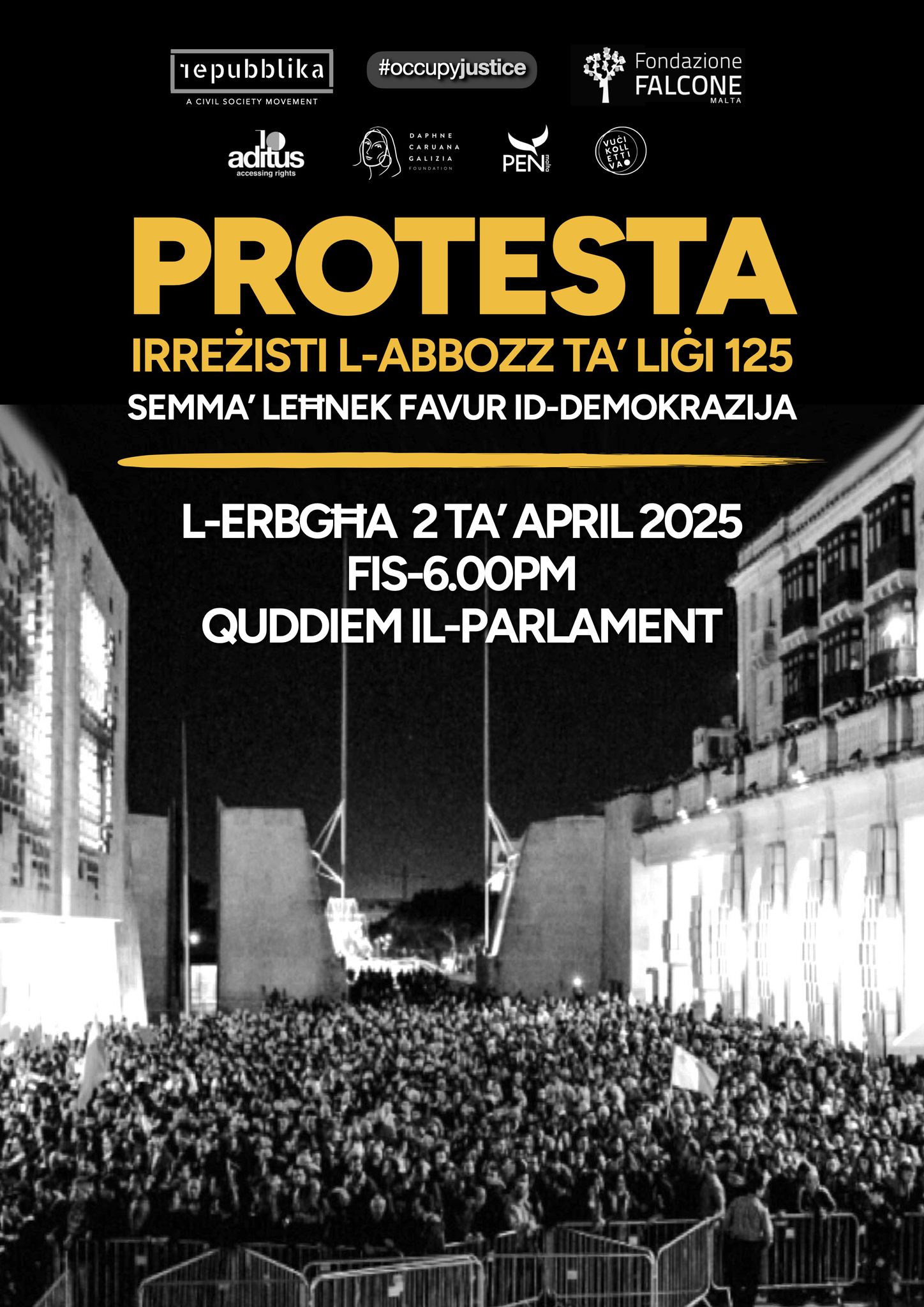
Wednesday’s protest outside parliament is all about challenging Bill 125. Repubblika has already registered a court protest against the bill, showing a clear intention to use all legal avenues to stop it from coming into effect. One of the main criticisms of the Bill is that it signifies a step back, and not forward, in the protection and safeguard of citizen rights by weakening what has proven to be an effective tool in the control and supervision of executive power.

It has been argued in some circles that one possible avenue of challenging the Bill (or the law once it comes into effect) is by arguing its incompatibility with Malta’s EU obligations. In other words, the law would constitute a breach of EU law. More specifically, the nature of the law would be such that it would constitute a violation of the Principle of Non-Regression. Government exponents have been quick to shoot down this potential avenue of redress, claiming that the aforementioned principle is only applicable to judicial reforms. Bill 125, limited to reforming in genere inquiries, would not fall under that principle – at least that is what they claim.

Since its explicit acknowledgment in the Repubblika judgment (Case C-896/19), the Principle of Non-Regression has emerged as a significant instrument employed by the Court of Justice of the European Union (CJEU) to safeguard the rule of law within the EU. In Repubblika, the Court articulated a clear prohibition on national reforms that diminish judicial independence, reinforcing the idea that once an EU Member State attains certain standards of protection for judicial independence, regressive measures are not allowed.

Following Repubblika, the CJEU has consistently reiterated that maintaining attained levels of judicial independence and rule of law standards is not optional but obligatory for Member States. For instance, this principle was underscored in subsequent rulings, where judicial reforms proposed in various Member States were scrutinized for potentially weakening pre-existing standards.

However, an essential question remains: does this Principle of Non-Regression apply solely to judicial independence, or can it extend to other fields of EU law?

The broader interpretation, emerging from doctrinal debates and scholarly analysis, suggests potential applicability beyond the judicial sphere. Although initially associated explicitly with rule of law contexts, non-regression could logically extend to other fundamental areas safeguarded by EU law, including environmental standards, social rights, and consumer protection. In fact, the broader application aligns with EU objectives to ensure continual progress toward enhanced standards, reflecting an underlying EU constitutional ethos aimed at safeguarding and progressively developing established protections.

Nonetheless, while the theoretical scope for such broader application exists, concrete affirmation by the CJEU outside judicial contexts is yet to materialize definitively. While Repubblika has solidly anchored non-regression within judicial reforms, its extension into broader domains remains a dynamic, evolving area of EU jurisprudence, awaiting further clarification from future case law.

In any case it is not at all a given fact that a potential challenge of the Bill 125 made law based on incompatibility with EU law would be thrown out by the EU court. The principle of non-regression, enshrined in another Malta-related case is clearly ripe for the use against laws such as Bill 125.

This would be even more the case should it be proven that by enacting Bill 125 Malta is failing its obligation under article 19 of the TFUE: “Member States shall provide remedies sufficient to ensure effective legal protection in the fields covered by Union law.” It could be argued that this article 19 obligation encapsulates the citizen’s right to access inquiries that is being curtailed by Bill 125. “The fields covered by Union law” would incidentally include issues such as corruption related to EU funds that may be the subject of such inquiries.

In short, the odds are strongly in favour of any such challenge. I harbour little doubts on the admissibility of such an action and less on its success.

Facebook Comments Box

Peace for our time – the 20 year post

Today marks the twentieth anniversary for J’accuse the blog. Twenty years ago I clicked on the Post button for the first time (after 12 failed attempts) and the blog was up and running. That’s a lot of time that’s gone by and in the meantime writing does not feel the same. For years blogging came as a second nature as J’accuse elbowed its space in the national media. Writing daily was second nature, as normal as having breakfast.

What changed recently was the motivation. That feeling of overwhelming helplessness of an uphill battle against misinformation. There was a sudden void of real interlocutors as the public space became monopolized by the loud, the bullies and the manipulators. This was the time of the rapid increase in the rate of backsliding in the rule of law.

We had been the ones to issue the first warnings. I had yelled until I could yell no more that the politics of this nation was fated to recede in a downward spiral. Daphne Caruana Galizia’s assassination precipitated this state of affairs. Seven years ago I switched to writing for The Shift more often and less on this blog. However even that became frustrating. I felt like a broken record, a Cassandra on repeat doomed not to be believed and not to be heard.

And now the New World Order beckons. The world of Trumpian non-sequiturs were a spade is not a spade because Trump says it should not be. The quest for the truth has just become ever so complicated.

Which brings me to the subject of this anniversary post: Peace for our time.

Over the last few days we have heard the Trumpian pitch for “peace” in the what he calls the War in Ukraine. The mantra from the MAGA administration is now that (Ukraine President) Zelensky is only interested in prolonging the war. They say he is too arrogant to accept the terms of peace that Donald Trump has so graciously negotiated. Having humiliated Zelensky in the Oval Office Trump has turned the screw further and seems to be forcing Zelensky to the table to underwrite the “peace” only Trump can guarantee.

Some politicians, among which Malta’s Prime Minister, have no gone on record saying that “Ukraine cannot win this war”. It forms part of a wider assessment made by the PM in the context of the EU debate on rearmament following the evident signs of MAGA’s relinquishing of its defence obligations with its decades old allies. This new spin is framed in terms of peace-loving, peace-seeking propaganda with the idea being that Zelensky’s Ukraine must accept whatever deal is available so long as the guns cease to fire.

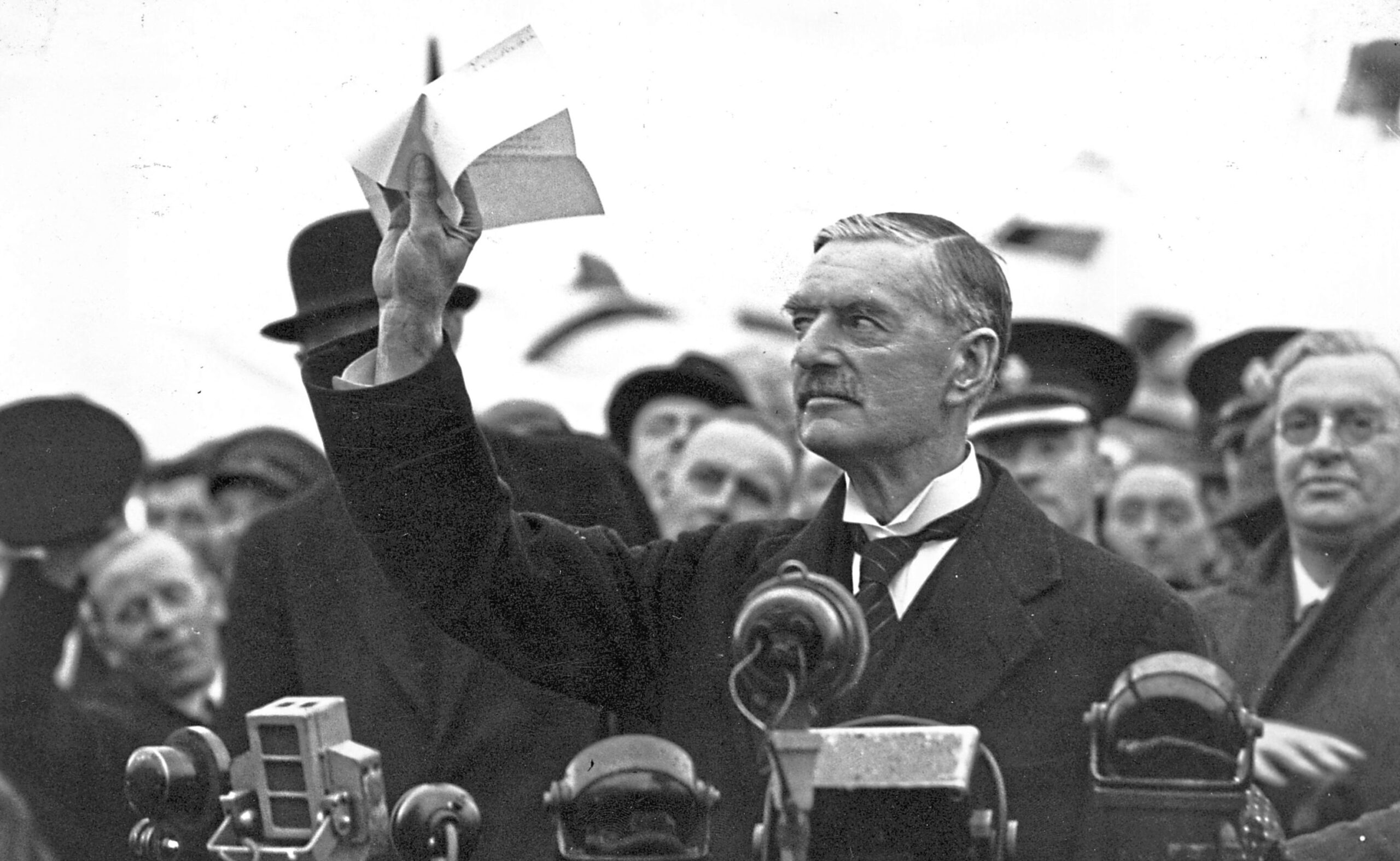
Robert Abela, Donald Trump, Viktor Orban are the modern day Neville Chamberlains desperate to sell us the idea of “Peace for our time”. Abela is keen to highglight Malta’s outdated neutrality (a Cold War concept) and his firm determination not to fork out one cent that will be spent on arming a new Europe even if that would mean that Europe is finally no longer dependent on any other force for its own security. Aside from the fact that Abela is very evidently trying to position himself against the warmonger figure of Roberta Metsola that his party has manufactured meticulously there are other issues that are being ignored.

Here are a few facts that the “Ukraine will not win this war” rabble do not want you to understand:

  1. Ukraine is not interested in “winning the war“. This is not a war in the sense that Ukraine did not choose to go to war and never intended to be struggling for survival. This was an Act of Aggression by Russia on Ukrainian soil. Worse, it is a violation of the 1994 agreement when Ukraine agreed to relenquish its share of the Soviet nuclear arsenal in return for guarantees that Russia would respect its borders – guarantees underwritten by… wait for it… the United States and the United Kingdom. The goal of Ukraine and of any self-respecting liberal democracy supporting Ukraine would not be simply to put down the guns but rather a return of the Ukraine to its borders. An unconditional return with the appropriate guarantees.
  2. Peace is not defined by Donald Trump and JD Vance. Especially the “peace” that involves arm-wrestling the victim of aggression into giving up resources to the transaction hungry wolf of a president. That is not peace. It is appeasment. Appeasment of Russia and Russia’s greed. Remember this aggression began with Russia claiming its right to safeguard its citizens who still lived in parts of the Ukraine. Could there be a more stark reminder of the situation of the Sudeten Germans at the time of Chamberlain’s peace for our time?
  3. EU security independence is no longer an option but a must. Putin’s Russia and now Trump’s America have shown that they do not care for the rules of the world order. There is no respect for the sovereignty of other nations and even less for the maintaining of alliances that have hitherto ensured security in the European region. The EU opting for rearmament is an EU that is painfully aware of Trump’s disconnection and is preparing itself to go it alone. Until Trump’s arrival Europe had lived under the safety of a shield that relied on mutual US-EU cooperation. With that shield down there is no option but to prepare for the worst. The sooner Robert Abela’s government realises that our fate is deeply intertwined with the rest of the European community the quicker will they shed the illusion that neutrality will pose a problem for the likes of Trump and Putin.

We need less Neville Chamberlains in this world. Sadly, the world of post-truth also means that there are many who are prepared to believe in “Peace for our time” promises that lead to nowhere.

That’s the truth, if I lie.

Facebook Comments Box

The seven year wait

Joseph Muscat’s government had been in power for 1682 days on the day Daphne Caruana Galizia was assassinated. That’s 4 years, 7 months and 7 days.

On the last of those 4 years, 7 months and 7 days Daphne Caruana Galizia would write those fatal words that are now part of the history of this nation. “The crooks are everywhere you look now. The situation is desperate.”

It took just 1682 days, probably even less, for the crooks to spread themselves “everywhere you look”. It took just nigh 5 years under the watch of Joseph Muscat’s government for the situation to become desperate.

The 16th October 2017 was a dark day in Malta’s history. It was the day a journalist was brutally silenced for doing her work. Daphne Caruana Galizia was shedding light on an intricate web of corruption within the political elite. That corruption, that democratic backsliding, did not stop on the 16th October. That day only served to ignite a flame and a quest for justice – as that banner crafted by Daphne’s father loudly proclaims in the fields of Bidnija.

Seven years have gone by since that fateful day. Seven years without Daphne. Seven years in which the battle for the truth has not abated. Yet seven years in which the backsliding, the corruption, the lack of meritocracy also seem to hold strong.

Time. It still surprises me. That figure of 4 years 7 months and one week is impressive when you think of it. It is a brief amount of time in which a huge number of corrupt decisions and appointments were made. the seeds of scandals must have been sown early on during the Muscat legislature but they grew fast enough to fester and draw the attention of Malta’s sharpest investigative journalist.

4 years, 7 months and one week were enough to turn the Running Commentary into an encyclopedic chronicle of the realm of crooked dealings. Seven years after the attempt to silence the chronicler’s message we still do not realise the enormity of Muscat’s government’s achievements. Hospitals, power stations, health agreements, public contracts, the public service itself – all of these twisted to the service of a self-serving, self-entitled cadre of trough hogging pigs.

In the course of one legislature the systemic breakdown of a nation was plotted and put into action. Daphne Caruana Galizia’s attention to detail was too uncomfortable for the record breaking concocters of corruption. They had managed to neutralise the constitutional checks and balances but Caruana Galizia was too loud, too distracting, too dangerously close to the truth to be allowed the luxury of working.

They tried to cripple her through her resources. They tried to bully her into submission. They tried sent little men to stalk her and follow her every move. When that did not work they moved in for the kill.

Then it happened. 4 years, 7 months and one week after Joseph Muscat was elected to power a bomb went off in Bidnija that would send shock waves to the system.

Seven years later we take stock of the battle for justice for Daphne. It is a battle for transparency that goes beyond the freedom of expression and safety of journalists. Like it or not, it has become a battle for the Republic and whatever values remain.

The long, hard struggle remains essentially a frustrating effort. The damage wrought on the constitutional balances in the first five years of Labour in power runs deep. Initiatives at national and international level following the assassination are still not bearing the desired fruits and resistance to proper change remains palpable.

As the conversation on Malta’s political future continues, it is clear that the spirit of Daphne Caruana Galizia’s work lives on in those who continue to seek truth and justice. The path ahead is one of reflection, reform, and resilience, as we grapple with our past to shape a more just and open society.

Facebook Comments Box

Now there’s no Daphne to blame – guest post

The author of this guest post is known to me. Opinions expressed in this post are the author’s and I do not necessarily subscribe to all of them.

The Labour Party has just secured its third term after garnering 55.1% of the popular vote against the Nationalist Party that only managed to secure 41.74%. After the Electoral Commission published its data on Monday, it was then time to look at the numbers and how both parties fared during the election.

In 2017, then disgraced prime minister Joseph Muscat called for an early election in the wake of the Panama Papers leak which saw his right-hand man Keith Schembri and then minister Konrad Mizzi caught red handed with offshore structures set up to allegedly receive kickbacks and a third mysterious company. That same year, we also had a then economy minister allegedly visiting a brothel while on government business and ‘17 Black’ dropped by investigative journalist Daphne Caruana Galizia.

Following the June snap election, many took to Facebook to “analyse” the PN’s internal situation and demand change from the Nationalist Party, even though they would never bring themselves to vote for the party, despite claims to the contrary. Whilst celebrating Labour’s victory, and at the time “absolving” Mizzi of his sins, many sought to pin the defeat on someone or something.

The easiest target was Daphne Caruana Galizia – she had been targeted by trolls and the Labour party machine for years. Journalists only discovered solidarity after her assassination otherwise the country is made up of people too busy polishing their egos, and her stories had not yet been “proven”. As the country’s institutions were dismantled, especially the police force, there was no one out there willing to investigate her stories. Thereby remaining largely just what they were – articles on a blog. While some took up those stories and started questioning, others stopped at who wrote them. Incapable of formulating an opinion of their own, then it was reduced to “hatred” towards the Labour Party and its then-leader or even worse the journalist was some PN stooge.

(Fast forward to a few years later and people realised that there was truth to those stories, however, some of the country’s institutions continue to drag their feet). It was in this context that Caruana Galizia was blamed for the PN’s loss and subsequently isolated when Adrian Delia and his baggage was taken to the party. It is obvious that after such a defeat, in a country that treats politics like a derby match, people within the party wanted heads to roll and a new start.

Specifically for this post, I went to look up reports carried by the Labour propaganda machine in the aftermath of the election and the time Delia was elected.

The seeds of the second colossal loss by PN were sown in 2013 Martin Scicluna had told us in an article on the 2017 election where he argued that the PN had ignored its post-mortem report following the previous election. Scicluna had argued that the PN should have formally disassociated itself from Caruana Galizia.

2022 was the first election without Daphne Caruana Galizia, the first one without her commentary, sharp wit and everything in between. And here we are again, with the PN losing to the PL with over 39,000. However, there is no Daphne to blame this time around, as people seek to blame by proxy, and “independent” newspapers push the Labour line whether consciously or not, by bashing those who have stood with activists in the anti-corruption fight.

In this election, the winner is the mafia who wanted to ensure that everything was closed off as soon as the “people spoke” in free but not so fair elections.

What led to this?

Labour insiders have said the election was called when its polls were showing that there would be no “maġġoranza assoluta” over PN. The election had to be held after the Pope’s visit, not the week before. What we have observed in the weeks that followed was Labour out in full force trying to reach out to those who were thinking of abstaining from voting for one reason or another. Then the party took the power of incumbency to a whole new level – TVs, laptops, one-year internet subscriptions, jobs, hampers, berthing spots were among the freebies given out in the last two weeks of the campaign. Not to mention the cheques and other “bonuses” given by the government. The PN in this context was reduced to a third party. It could have never outdone the PL in its freebies.

Then we also got the PL’s feel-good concerts which ultimately saw artists (instead of sending the party in government to hell for the Covid double standards employed between partisan events and other art events) performing on a stage that was indirectly funded by the taxpayer. This time around, we had several people in receipt of gifts during the campaign posting freely to Facebook, without the police taking any action against treating – an offence during the electoral campaign.

The PN could never compete with this. It was a free election but not necessarily a fair one. This does not only apply to PN but also applies to the smaller parties.

If one had to analyse the PL’s campaign, apart from harping about its major pledges, the PL dedicated equal time to addressing the undecided voters and those who mulled on abstaining. Each speech always referred to “grievances” and then we got Abela telling us that we could go directly to him or Lydia Abela with our “grievances” as he promised solutions.

The Nationalist Party then side-lined corruption as one of its major issues despite being rife. By doing so, it also side-lined the MPs who had been most vocal about it. Instead of opting for the so-called bread and butter issues without addressing the elephant in the room – the Ukraine war and its impact, the ruling party’s short-sighted vision of spending in the short term without any regard to the future, and sending mixed messages.

Those who are still angry at PN’s previous administrations and its track record on the environment find it difficult to trust a party who tries to please both the environment lobby and the construction industry in the same breath.

Then there are the PN’s two souls that constantly find themselves pitted against each other – the conservative and the liberal one. Labour is not liberal, Labour uses liberal issues to achieve its goals and this is done by what the polls are saying. If Labour was liberal it would have never drafted and tabled the cyberbullying bill – which will serve to introduce criminal libel by another name. As an example we can take recreational cannabis: We can win 100s of votes with cannabis, then we give them recreational cannabis. We’re losing votes due to the cannabis legislation, so we do not mention it anymore – that was the reasoning employed.

Many have taken to Facebook to tell PN what to do. No one bothered telling PL what to do, despite the stories on Abela’s ODZ villa or Abela’s connections to the criminal underground, or seeking to absolve Rosianne Cutajar through an election. What we got was Joseph Muscat, Emmanuel Cuscheri and others who are angry at the PN for removing Adrian Delia speaking about cliques and elitism ad nauseam following the party’s loss.

No-one turned to the PL to tell it what to do next. No one demanded answers over things that came to light over the past months. No one demanded that the people in power, now with a nine-seat majority, behave better. No one took to task the Labour leader for refusing to sit down with independent media. While the Labour Party was busy complaining to editors about different journalists who asked thorny questions to their beloved leader.

Instead, we have an opposition party quickly but surely hitting the destruct button as it seeks to blame someone for the loss, without understanding the context in which this loss happened, and possibly heeding unsolicited advice from various quarters, who are not so many words are asking the PN to abandon the anti-corruption fight.

Repubblika did the right thing to sit out this election. It cannot be blamed for it.

There’s no party out there to save us. If the PN wants to work towards an electoral victory it should convince the people out there why it is a better option and decide on the issues which it wants to take up and take them up. If the majority is happy with the freebies, then that is what they want. What it can do is convince them why this is wrong and decide to fight back or leave.

Now, back to what led to this long-ish guest post. In this election, we saw those who within the Labour Party opposed Muscat being voted out bar two – Chris Fearne and Clifton Grima. As with Fearne, he enjoys a lot of popularity, however, the plan was always for him to be kicked upstairs.

Then two Opposition MPs did not make it to Parliament – Jason Azzopardi and Karol Aquilina – whose faces ended up on a PL billboard, and whom PN has hidden throughout the whole campaign, even though if you had to take a good look at the previous opposition parliamentary group – bar Aquilina, Azzopardi, Therese Comodini Cachia – you’d be lucky to squeeze out 500g of grey matter. The three of them also enjoy respect from the anti-corruption activists – something which the likes of Delia and others do not.

However, in the aftermath of the election when Aquilina and Azzopardi were not elected both through the PN’s own doing and with a little help from Labour, now we get all the experts urging them to bow out of politics. And one should look at the messengers this time round. What interests do the messengers have? Anyone who has done a campaign at least once in their life can see the coordinated and concentrated efforts all around us.

These concentrated efforts are not only aimed at the two candidates seeking election through casual elections which after all is their right – in our system the seat belongs to the candidate and not the party – but is also aimed at a cohort of anti-corruption activists whose strings cannot be pulled by either of the two parties, who are self-sufficient enough not to require government jobs, who have nothing to lose because they have made it in their lives, and who were wise enough to not touch the election with a barge pole.

What we have here is the mafia back at work – the mafia works in a climate where it is perceived not to exist. Eliminating the two most vocal voices in parliament on the anti-corruption fight and pleasing the Labour narrative is isolating them, and the activists. Funnily enough, some media were quickly picking up Facebook posts that would garner website hits and perpetuate the narrative. Others are busy throwing Facebook posts and going on about “elites, negativity or the establishment” and other stupid propaganda we have been fed throughout the last ten years. On one hand, you’ve got trolls pushing the narrative, on the other hand, you have those who genuinely believe it because it also suits them for whatever reason. One thing we must surely do is we must fight to ensure that Daphne Caruana Galizia’s work and sacrifice is not buried under a so-called fresh start for the Labour Party with the complacency of the Nationalist Party that is aspiring to win the next election as though it was some football match where you get a bunch of new players, while remaining the same party that fails to convince.

Facebook Comments Box