Majority Rule or Rule of Law? Neutrality, Constitutional Supremacy and the Perils of Majoritarian Logic

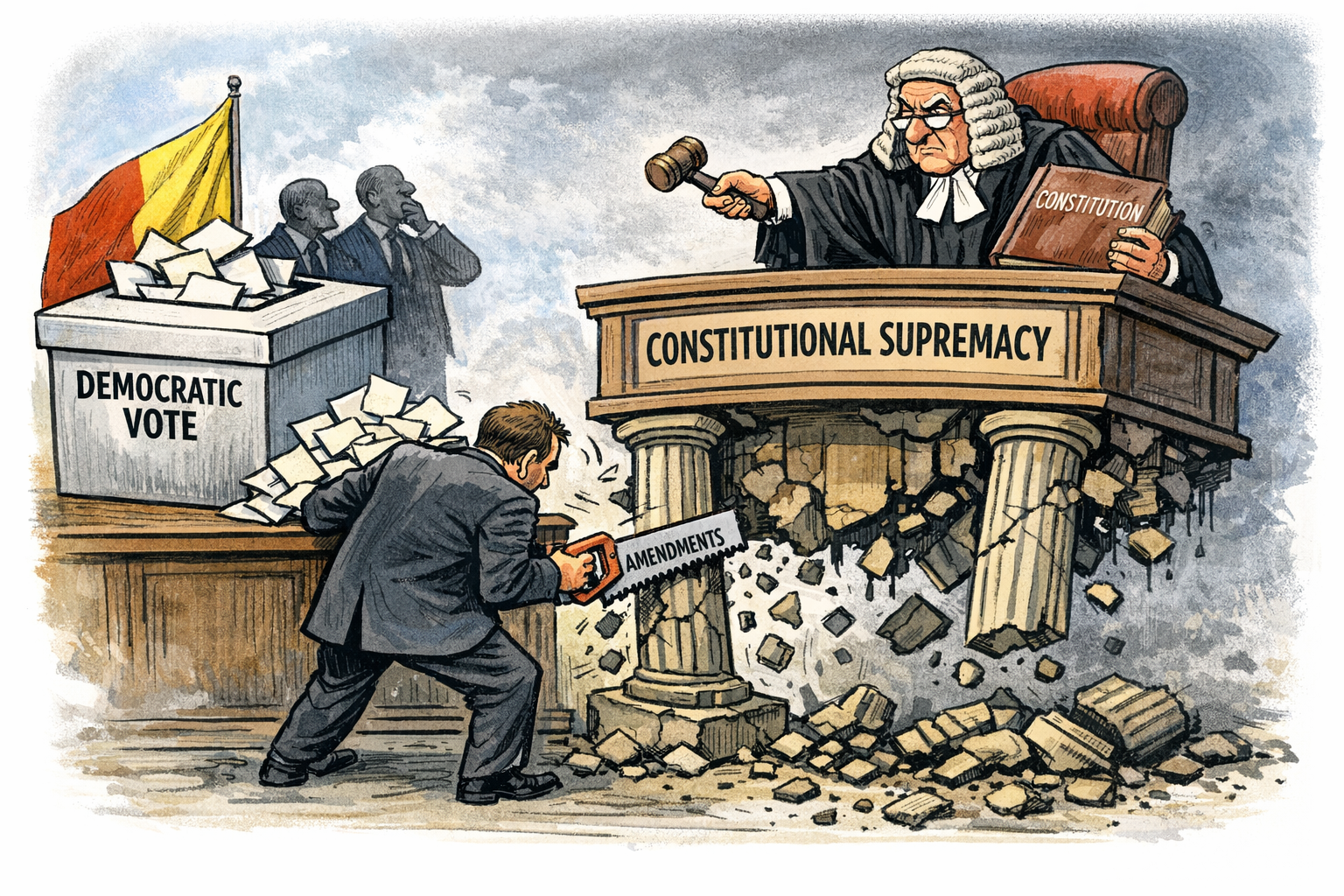
Robert Musumeci returns with another “constitutional article” (Malta’s Constitutional Neutrality, TOM 02.03.2026). In this analysis I challenge his treatment of constitutional neutrality and governance, exposing a recurring majoritarian logic in his writing. By conflating democratic outcomes with legal validity, his analysis risks subordinating constitutional supremacy to political arithmetic, reducing entrenched legal commitments to contingent expressions of parliamentary will.

The piece “Malta’s constitutional neutrality” asserts that Malta’s constitutional commitment to neutrality, enshrined in the 1987 amendment to the Constitution, now finds itself strained by the European Union’s evolving foreign and security policy architecture, particularly in the context of the Common Foreign and Security Policy (CFSP). Musumeci’s core claim is that while the veto in CFSP remains a bulwark preserving Malta’s constitutional neutrality, this legal safeguard is increasingly vulnerable to shifting political dynamics, particularly if habitual veto players (such as Orban’s Hungary) cease to exercise their blocking rights.

Implicit in his argument is the view that neutrality is protected less by enduring legal normativity and more by the strategic utility of unanimity in EU decision-making. This framing reflects a broader pattern in the author’s writings wherein democratic outcomes are conflated with legality, an approach most evident in his other Times of Malta article arguing that Malta’s constitutional fate is essentially entrusted to democratic procedure rather than entrenched legal restraint.

At the outset, the description of neutrality as a “domestic constitutional choice” significant in EU foreign policy politics obscures an important legal distinction. The neutrality clause is not merely a political accommodation embedded in constitutional text; it is a normative legal commitment that binds state organs and informs the interpretation of constitutional and international obligations. Article 1(3) of the Constitution explicitly states that “Malta is a neutral state actively pursuing peace…by adhering to a policy of non-alignment and refusing to participate in any military alliance,” a formulation that carries concrete legal implications, such as the prohibition of foreign military bases and the contextual limits on use of Maltese military facilities. Treating this provision as primarily a political artifact weakens its normative legal stature and reduces constitutional law to political expediency.

The focus on the CFSP veto as the principal legal safeguard of neutrality also compresses the constitutional issue into EU political mechanics. Unanimity in CFSP, as Musumeci acknowledges, means that a member state is not bound by an EU foreign policy decision unless it consents to it. However, the existence of a veto or passerelle procedures in EU law is not the same as a guarantee of compatibility with domestic constitutional commitments.

Again, Musumeci’s emphasis on the quantity of Hungarian vetoes and the potential diminution of their political cover conflates political patterns with legal safeguards. A veto is not a constitutional right conferred by domestic law, but an EU treaty mechanism whose application is inherently political rather than juridically determinate. The legal protection for neutrality rests primarily in the text of the Constitution itself and how courts interpret it, not in whether other EU states deploy their vetoes in politically convenient ways.

More fundamentally, the argument assumes that Malta’s capacity to block deeper integration in CFSP automatically protects its constitutional neutrality. This is an over-simplification. EU primary law evolves and CFSP mechanisms may increasingly interface with defence cooperation, even while excluding formal military decisions. Moreover, neutrality in constitutional doctrine is not a static concept; it is subject to legal interpretation that must account for shifting historical context.

Recent scholarly work shows that neutrality, especially in an EU member state, is often interpreted flexibly, acknowledging that neutrality does not preclude all forms of participation in collective security frameworks so long as core commitments like non-alignment in military alliances are preserved. By treating neutrality as a static artefact of Cold War language and as preserved only insofar as other states rein in EU integration, the article fails to engage with the interpretive dimension of constitutional law that recognizes the need to adapt concepts to evolving legal frameworks.

Musumeci’s previous article on constitutional governance (Honesty in constitutional governance,  (TOM, 19.01.26)) deepens this weakness by explicitly asserting that the Maltese Constitution entrusts its own fate to democratic procedure and not to “judicial virtue.” It argues that because Maltese constitutional provisions can be amended – even Article 6, the supremacy clause – the constitution does not shelter fundamental values from political winds.

This raises the spectre of majoritarian logic as a substitute for constitutional constraint, a position that undermines the very foundation of constitutional supremacy and the rule of law. It is true that the Maltese Constitution lacks unamendable “eternity clauses,” and that amendments require parliamentary supermajorities. Yet to suggest that constitutional law is subordinate to democratic choice misconstrues the nature of constitutional supremacy and legal constraint.

Constitutions worldwide entrust amendment procedures to democratic processes precisely because the constitution itself is the legal framework that governs how those democratic choices are made and limited. Democratic procedure and legal obligation are not antithetical; they operate in tandem. The notion that constitutional law can be dismissed as merely political choice obscures the fact that constitutional amendment procedures are themselves legal norms that structure democratic action.

This conflation of democratic outcomes with legal validity recurs in the latest article’s suggestion that the political cost of exercising Malta’s veto or recalibrating neutrality may prove decisive. By foregrounding the political cost of legal choice, the argument implicit in both pieces is that political feasibility is the arbiter of constitutional legality. Yet constitutional legality must be discerned through textual interpretation, doctrinal consistency, and legal reasoning independent of transient political calculus.

At a time when the international legal order itself is under strain, and when global politics increasingly rewards power over principle, it is precisely constitutional systems that must resist the reduction of law to arithmetic. If small states internalise the idea that legality bends to political convenience, they mirror a wider erosion in which might supplants right and rules become secondary to strategic leverage. If constitutional commitments are subject primarily to the vicissitudes of political costs, the concept of enforceable legal obligation is hollowed out.If constitutional commitments are subject primarily to the vicissitudes of political costs, the concept of enforceable legal obligation is hollowed out.

Yet again, Musumeci peddles majoritarian logic as a constitutional construct. His legal reasoning suffers from several interrelated weaknesses. It privileges EU political mechanics over constitutional text, collapses legal safeguards into political contingencies, and once again “sells” a constitutional theory that elevates democratic outcomes over normative constraints.

A more robust analysis would ground the discussion of neutrality in constitutional doctrine and interpretive principles, delineating the legal contours of Malta’s neutrality clause and its interaction with EU law, rather than reducing constitutional protection to the presence or absence of political shields like veto patterns. This would align the argument with core principles of constitutionalism and the rule of law, rather than subordinating constitutional rights to political calculation.

related post: Democracy is not a legal alibi

Facebook Comments Box

Judicial independence in the EU: structural pressures beyond formal Rule of Law monitoring

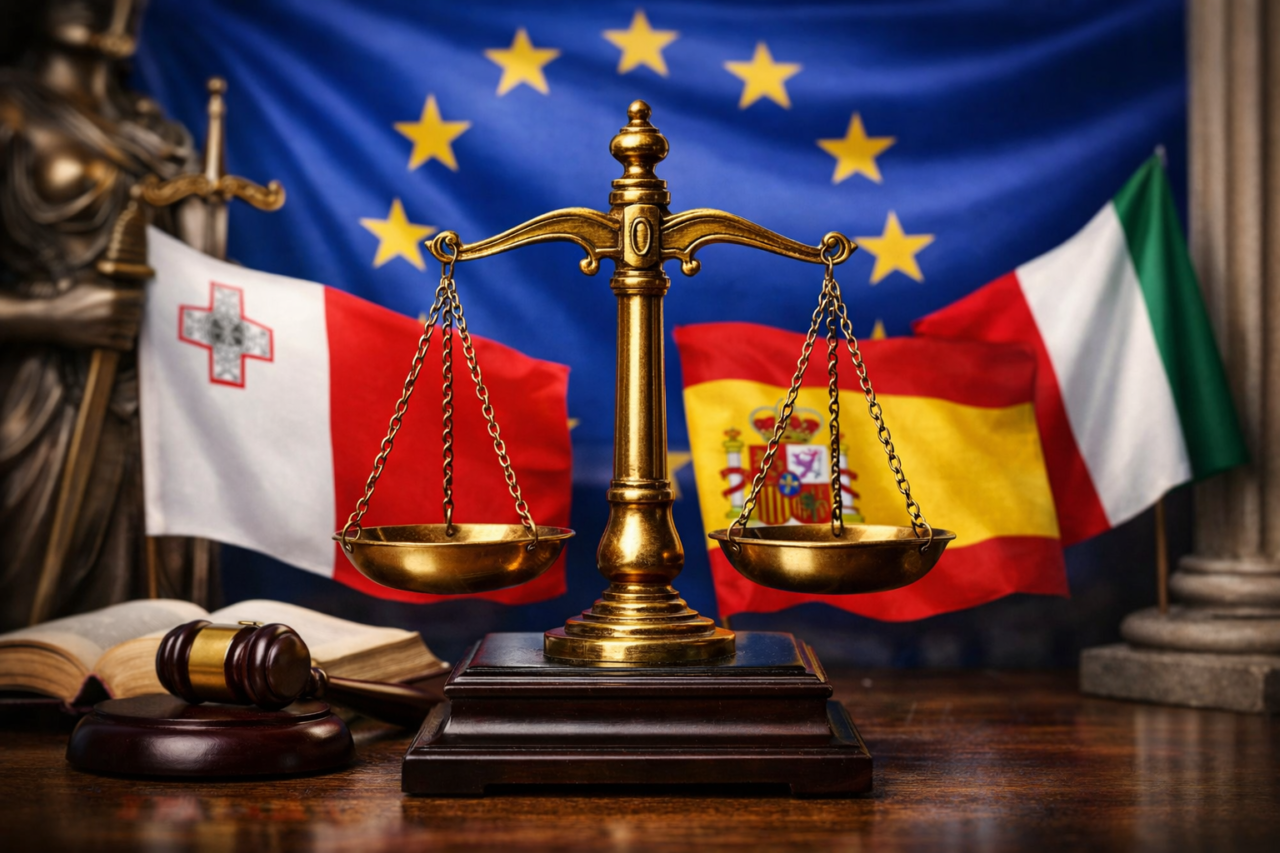
Questions about judicial independence within the EU are rising, with Malta, Spain, and Italy exemplifying systemic pressures affecting national judiciaries. Incremental reforms and political contestation challenge autonomy despite formal structures. The EU’s legal responses may lag behind emerging risks, highlighting the need for robust institutional practices and public trust to ensure effective judicial independence.

Across the European Union, questions concerning the organisation, functioning and perceived independence of national judiciaries increasingly arise not only in infringement proceedings or preliminary references, but also in domestic constitutional debates and legislative reform processes. While the Union’s annual rule-of-law reporting mechanism provides a structured overview of institutional safeguards, recent developments in several Member States suggest that the principal challenges to judicial independence now manifest less through abrupt institutional rupture and more through sustained political contestation surrounding appointments, governance structures and prosecutorial organisation. The emerging pattern is therefore one of systemic pressure exercised within formally lawful constitutional frameworks, rather than overt breaches capable of immediate judicial sanction at Union level.

In Malta, successive controversies concerning judicial appointments, disciplinary oversight and the broader relationship between the judiciary and executive authorities illustrate the vulnerability of small legal systems to concentrated institutional influence. Even where constitutional reforms have introduced formal checks or enhanced procedural transparency, public debate continues to focus on whether appointment mechanisms and political signalling risk undermining public confidence in the effective separation of powers. The Maltese situation demonstrates that, from the perspective of Union law, compliance with formal structural guarantees does not automatically resolve concerns regarding functional independence, particularly where institutional culture, administrative resources or political polarisation affect the practical perception of judicial autonomy.

Spain presents a distinct but related institutional dynamic. The prolonged inability of political actors to renew the governing council of the judiciary has generated a structural backlog in senior judicial appointments and contributed to operational constraints within the court system. From a constitutional standpoint, this situation illustrates that judicial independence may be weakened not only by executive intervention but also by sustained political deadlock which effectively immobilises self-governing judicial bodies. Such paralysis does not necessarily constitute a clear infringement of Union law; however, it may indirectly affect the effective judicial protection required under Article 19 TEU and the principle of the rule of law as interpreted in the Court’s case-law.

In Italy, the forthcoming referendum on restructuring the judiciary, including proposals affecting the institutional separation between judges and prosecutors and the composition of governing bodies, highlights a further dimension of the European debate. Judicial organisation is primarily a matter of national constitutional competence; nevertheless, where structural reforms alter disciplinary regimes, appointment procedures or institutional accountability mechanisms, they may fall within the scope of Union scrutiny insofar as they bear upon the guarantees of independence required for courts applying Union law. The Italian process therefore illustrates how large-scale constitutional redesign of judicial systems can occur through democratic procedures while simultaneously raising questions concerning long-term institutional balance and prosecutorial autonomy.

Taken together, these national situations suggest that contemporary risks to judicial independence within the Union increasingly arise through incremental institutional adjustments, political bargaining over appointments, or structural reforms justified by administrative efficiency or accountability objectives. Such developments typically unfold gradually and within the bounds of constitutional legality, thereby limiting the capacity of Union enforcement tools—which are primarily reactive and litigation-driven—to intervene at an early stage.

The Union acquis on judicial independence, developed extensively in the Court’s jurisprudence concerning effective judicial protection, remains a powerful corrective instrument where concrete measures demonstrably undermine independence. However, its operational logic presupposes identifiable legal acts producing measurable effects, whereas systemic political pressure or institutional stagnation may evolve without generating a single reviewable measure capable of immediate judicial assessment.

From the perspective of Union constitutional architecture, this creates a structural asymmetry. The legal framework is highly effective in addressing explicit disciplinary regimes, forced retirements, or direct governmental control over courts, but comparatively slower in responding to cumulative institutional developments that alter the practical equilibrium between judicial and political authorities over time. The central issue for the future of the European rule of law system is therefore less the absence of legal standards than the temporal gap between emerging structural risks and the moment at which those risks crystallise into legally actionable violations.

In that sense, current debates in Malta, Spain and Italy may be understood not as isolated national controversies but as indicators of a broader European transition in which the safeguarding of judicial independence increasingly depends not only on formal constitutional guarantees, but also on the resilience of institutional practice, political restraint and public trust in the judiciary as an autonomous constitutional actor.

Facebook Comments Box

Judicial Appointments: The System is Broken

This is not only a clash between a judge and a Prime Minister. It is a warning that Malta’s system for appointing its Chief Justice is structurally broken.

We like to believe the two-thirds parliamentary rule protects the courts from political capture. In theory it forces consensus. In reality it often just forces negotiation. Instead of one party imposing its choice, both sides bargain for a candidate they can “live with”. The language of constitutional independence quietly turns into the language of political acceptability.

But a Chief Justice should not be someone the parties tolerate. A Chief Justice should be someone the Republic trusts. When the public starts hearing that candidates are being weighed according to party reaction, electoral optics, or internal loyalty, the problem is not simply who said what. The problem is that the system itself invites political filtering before merit ever reaches the surface.

And that means this crisis is bigger than any individual.

The two-thirds rule was meant to be a brake on executive power. But a brake is not a steering wheel. If government and opposition both treat judicial appointments as political decisions requiring mutual comfort, the outcome is still political. The process simply shifts from domination to deal-making. Independence cannot mean “approved by both parties”. Independence must mean selected outside their partisan interest altogether.

What Malta still lacks is the crucial missing piece: a truly insulated, professionally driven, super partes appointment system that identifies the best candidate in the public interest before politics ever enters the conversation. Without that safeguard, every appointment risks becoming a test of political balance instead of judicial excellence. Every delay risks becoming a tactical calculation. Every controversy risks eroding trust not just in a person, but in the courts themselves. The Constitution may require numbers in Parliament. But legitimacy is built long before the vote.

This is why the present controversy matters so much.

When the Prime Minister becomes personally entangled in allegations of political bias in a judicial appointment, the credibility of the process collapses immediately. But even if tomorrow another politician ran the same process flawlessly, the deeper structural flaw would remain.

A judiciary chosen through partisan comfort will always struggle to look fully independent to the citizen standing before it.

Courts do not derive authority from government. They do not derive authority from opposition. They derive authority from public confidence that they stand above both.

Until Malta builds an appointment system that visibly serves the people rather than the parties, these crises will repeat themselves — with different names, the same arguments, and the same damage to trust.

Because the real reform Malta needs is not a different candidate. It is a different system.

What destroys institutions is not one bad appointment. It is the slow public realisation that the system was never designed to keep politics out in the first place. Once citizens begin to suspect that judges rise not only by merit but by political tolerability, every judgment starts carrying an invisible question mark. And a court that must constantly prove it is independent has already lost part of its authority. Malta does not need a better political compromise. It needs a system where political compromise is irrelevant.

If justice must first be acceptable to politicians before it can be acceptable to the people, it is no longer justice – it is permission.

Facebook Comments Box

Democracy Is Not a Legal Alibi: Why Constitutional Supremacy Cannot Be Voted Away

Critical analysis of “Honesty in constitutional governance” by Robert Musumeci

In his Times article (TOM, 19.01.26) Robert Musumeci advances a central claim: that Malta’s Constitution “entrusts its own fate to democratic procedure, not to judicial virtue”, because every constitutional provision is amendable if the correct parliamentary procedure is followed.

In this brief I intend to accept the descriptive premise that Malta lacks an express eternity clause while challenging the normative and legal conclusions drawn from it. I submit that Musumeci’s assertion risks collapsing the distinction between democratic legitimacy and legal validity, and it understates how constitutional supremacy, the rule of law, and judicial independence operate as substantive constraints within a constitutional democracy even where formal amendment is possible.

Constitutional supremacy is not a slogan, but a legal architecture

Constitutional supremacy means that the Constitution is the highest norm within the domestic legal order. It is not merely a statement that courts may strike down ordinary laws. It is the structural principle that public power exists only within constitutional authorisation, and that all institutions, including Parliament, are constituted and limited by the Constitution.

Musumeci is correct to say that Article 6 renders inconsistent ordinary law void, and that courts are required to disapply unconstitutional legislation. But he then treats the existence of an amendment procedure as a “qualification” that almost empties supremacy of its protective force.

This assertion is conceptually flawed. Supremacy and the possibility of amendment are not opposites. They are complementary parts of constitutional design. Supremacy answers the question “what prevails today”. The possibility of amendment answers the question “how may tomorrow’s higher law be made”. The second does not cancel the first; it presupposes it. Indeed, the amendment procedure itself is an expression of supremacy, because it prevents constitutional change through ordinary politics and requires a legally prescribed route.

In constitutional terms, supremacy is not “eternal” in the sense of metaphysical permanence. But it remains juridically supreme at any given time. A constitution that can be amended is still supreme; it is simply not immutable.

Musumeci’s central error: democratic outcomes are not automatically “legal” in the constitutional sense

A democratic outcome is a political fact. Legality is a juridical status. The two can overlap, but they are not the same. Musumeci repeatedly implies that once an amendment procedure is followed, courts face “a constitutional fact, not an interpretative opportunity”, and that judges cannot “invent additional limits” based on “unwritten moral principles”.

This framing is misleading in two ways.

First, it assumes that constitutional adjudication becomes mechanical the moment the word “amendment” appears. That is not how constitutional law works. Courts must still determine whether the purported amendment is in truth a valid constitutional amendment, whether the correct procedure was followed, whether the amendment is coherent with the constitutional order, and whether it is a disguised attempt to do indirectly what the constitution does not permit directly. These are not “moral” questions; they are classic rule of law questions about competence, form, and constitutional identity.

Second, it insinuates that judicial review of constitutional change is necessarily illegitimate “judicial moralism”. That is an overstatement. In many constitutional systems, courts have recognised limits on amendment not because judges prefer a moral outcome, but because an amendment that destroys the constitution’s essential character is no longer an amendment. It is a constitutional replacement or rupture, requiring a different democratic mandate.

Even in the absence of an explicit eternity clause, a constitution can contain implied structural principles, such as separation of powers, judicial independence, legality, and effective protection of fundamental rights. These principles are not optional ornaments. They are constitutive of what makes a legal order a constitutional democracy rather than a majoritarian state.

Entrenchment is not merely “political cost”: it is a legal safeguard for constitutional stability

Musumeci describes entrenchment as a mechanism that raises political cost but does not create legal impossibility. That is true as far as it goes, but incomplete.

Entrenchment serves at least three legal functions that Musumeci underplays.

Firstly, it protects minorities against transient majorities by requiring cross-party agreement for foundational changes. Secondly, it protects institutional independence by making it harder for a government to rewrite the rules of accountability during a crisis or scandal. Finally, it protects constitutional continuity by reducing the risk of “constitutional capture”, meaning the use of legal forms to consolidate power and immunise the executive from scrutiny.

If entrenchment is reduced to “political accountability”, the constitution becomes little more than an instruction manual for how a parliamentary majority may legally entrench itself. That is precisely the danger constitutional supremacy is meant to prevent.

“Responsibility lies with Parliament and the electorate”: politically true, legally insufficient

Robert Musumeci argues that responsibility for “morally consequential constitutional change” cannot be displaced onto courts and lies with Parliament and the electorate. As a matter of political ethics, this is unobjectionable. But as a constitutional proposition, it is dangerously incomplete.

Courts are not only moral commentators. They are guardians of legality. Their constitutional function is not to “redeem” the political community, but to ensure that power is exercised within legal bounds, including bounds that protect the democratic process itself.

A citizen can vote out a government only if elections remain meaningfully free and fair. An electorate can judge wrongdoing only if there is access to information, investigative capacity, and independent adjudication. Parliament can be held accountable only if constitutional rights such as expression, association, and due process remain enforceable.

Therefore, the idea that “constitutional law cannot save it from itself” is rhetorically powerful but legally misleading. Constitutional law does not guarantee political virtue, but it does secure the conditions under which political responsibility can be exercised. When those conditions are undermined, “leave it to the electorate” becomes circular, because the electorate’s capacity to correct abuse is what is being damaged.

Executive interference with judicial determination: the modern route to constitutional degradation

Finally, I must address what seems to be Musumeci’s implicit comfort with the proposition that courts should not resist “politically chosen” constitutional outcomes. The core problem in contemporary constitutional breakdown is rarely an open coup. It is legalistic executive interference that preserves democratic rituals while hollowing out judicial control.

One of the most common mechanisms is court capture through appointments.

In constitutional democracies, judicial appointment is not inherently illegitimate. It becomes unconstitutional in substance when appointment power is used to predetermine outcomes, neutralise accountability, or intimidate judges into deference. The citizen may still see courts operating, judgments being issued, and constitutional language being cited, yet the adjudicative function becomes subordinated to political loyalty.

This is not hypothetical. The pattern is recognisable across jurisdictions. A government expands the size of the constitutional court or changes quorum rules so that newly appointed judges dominate panels. A government lowers retirement ages or changes tenure rules to remove existing judges and create vacancies. A government redesigns the judicial appointments process to concentrate control in the executive, replacing professional evaluation with political selection.

A government disciplines judges through administrative sanctions, budgetary pressure, or politically controlled “judicial councils”. Each step can be dressed as lawful reform. Each step can be passed by a majority. Yet the effect is executive interference with judicial determination, because the judiciary becomes unable to act as an effective constraint.

If courts then refuse to accept such changes as constitutionally destructive, Musumeci would label this “judicial moralism”. But the better legal description is that courts are defending the separation of powers and the minimum content of judicial independence without which constitutional supremacy becomes performative.

Constitutional supremacy includes supremacy over the executive, not only over ordinary legislation

Musumeci correctly emphasises that courts enforce the constitution against ordinary laws and executive action. But he understates that supremacy is most tested precisely when the executive seeks to evade adjudication.

Executive interference can take softer forms than court capture. Refusing to implement judgments or delaying implementation until the political moment passes. Issuing administrative measures designed to frustrate litigation, such as denying standing, withholding documents, or manipulating procedural timelines. Using state resources to litigate citizens into exhaustion, turning access to justice into a privilege rather than a right.

Publicly attacking judges and portraying adverse judgments as “anti-democratic”, thereby delegitimising judicial review as such. These are not questions of morality. They are questions of legality and constitutional structure. The constitution’s supremacy is hollow if the executive can systematically prevent courts from delivering effective remedies.

The EU dimension: correctly noted, but understated in legal consequence

Musumeci acknowledges that domestically valid amendments may still attract “external consequences” including political pressure and financial conditionality at EU level. This is accurate, but the framing again risks minimising legality.

For an EU Member State, rule of law commitments are not only reputational. They are embedded in binding obligations. When constitutional amendments undermine judicial independence, the issue is not merely “cost”. It is potential incompatibility with the Member State’s duties within the European legal order.

From the citizen’s perspective, this matters because EU membership creates an additional layer of constitutional constraint: national constitutional change cannot be treated as purely internal when it affects effective judicial protection, the independence of courts, and the enforcement of EU rights. Even where a domestic amendment is procedurally correct, it can generate legal consequences in EU law that materially affect the state’s position and citizens’ rights.

Conclusion: Musumeci’s theory is rhetorically honest, but constitutionally incomplete

Musumeci’s call for “honesty in constitutional governance” usefully reminds citizens that constitutional decline can be politically chosen. That is an important civic warning.

However, he commits a fundamental constitutional error by implying that democratic procedure is a sufficient condition for constitutional legality. It is not. A constitutional democracy is not defined only by who wins elections, but by the legal constraints that make elections meaningful, government accountable, and rights enforceable.

Constitutional supremacy is not a myth that evaporates because amendment exists. It is the legal hierarchy that binds all power, including power exercised through majorities. Entrenchment is not merely a political speed bump; it is a safeguard against capture. Judicial review of constitutional change is not necessarily “moralism”; it can be a rule of law necessity when the amendment is used as a vehicle to dismantle the constitution’s core structure, especially through executive interference with judicial determination via court appointments and institutional redesign.

Musumeci’s text should be read with one crucial correction in mind. Democracy matters. But legality is not whatever a majority can be made to vote for.

Legality is what the constitution, interpreted in good faith and protected by independent courts, permits the state to do without destroying the conditions of constitutional government itself.

Facebook Comments Box

From the Cold War to the ICE Age: The US Abdication from the Free World

From Iraq to Kabul and from foreign battlefields to American streets the United States has drifted from law to force. This post traces how post Cold War hubris 9/11 trauma and Trump era doctrines have hollowed out the rule based order leaving the free world leaderless and at risk.

Three and a half decades after the end of the Cold War the United States has undergone a profound and troubling transformation in its posture toward international law the world order and even the trust of its own citizens. What was once a superpower championing a “rules based order” has shifted toward a posture that increasingly looks like raw authority cloaked in legal pretexts and bolstered by domestic political narratives. To understand where the United States finds itself in 2026 we must trace the arc from the 1990s to the present and confront the unsettling reality that the nation’s commitment to the law both abroad and at home has been steadily eroding.

In the 1990s the US intervened militarily in Iraq in ways that foreshadowed the long twilight struggle that would define the early years of the twenty first century. The 1991 Gulf War had broad international support under United Nations auspices yet even then the US demonstrated it would act unilaterally when it chose to maintain no fly zones over Iraqi airspace without a fresh Security Council mandate. That decision planted seeds of resentment in the Middle East and exposed the limits of a legalistic framework when convenient interpretations replaced clear legal legitimacy. These policies contributed in part to the environment that produced the attacks on September 11 2001.

9/11 was a national trauma of unparalleled intensity and the Bush Administration’s response was swift and total. The decision to invade Afghanistan was easily reconcilable with international law in its initial hunt for those responsible for the attacks. Yet as the campaign in Afghanistan expanded and then as the 2003 invasion of Iraq unfolded with no new charge of direct responsibility for 9/11 the US drifted from self-defence into a broader assertion of pre-emptive authority. The legal basis for that second war was thin at best and the human cost profound.

Once in Iraq and later in Afghanistan the US found itself on the defensive not only against militant groups but against its own strategic overreach. Two decades of war showed that technological superiority could not substitute for political legitimacy or for a coherent vision of peace and security. International law was invoked when convenient and ignored when inconvenient. The result was the paradox of spending trillions of dollars in theatre while undermining the very principles the US claimed to defend.

The tenure of the Trump Administration marked a distinct turn. By the second term of Donald Trump the foreign policy ethos had moved away from even a pretense of multilateral engagement toward doctrines that can only be described as transactional and cynical. The “Donroe Doctrine” and its associated FAFO (“Fuck Around Find Out”) mentality captured an approach that privileged unpredictability and raw force over diplomacy and restraint. These are not academic labels but real strategic departures from established norms. They represent a United States that sees international law as optional and views force projection as a tool of domestic political signaling as much as strategic necessity.

Domestically this trend has metastasised. The fatal shooting of Renee Nicole Good by an Immigration and Customs Enforcement (ICE) agent in Minneapolis in early January 2026 is a stark symbol of how far the national discourse and practice of force have shifted. Good a 37-year-old American citizen was shot and killed during a federal immigration operation an incident that has ignited protests and intensified scrutiny of federal law enforcement. Video released from multiple angles shows conflicting narratives about whether she posed an imminent danger when she was shot as she attempted to drive her vehicle away from the scene. Federal authorities including the President and the Secretary of Homeland Security have labelled her actions as “domestic terrorism” a claim sharply contested by local officials and protesters. The FBI has assumed exclusive control of the investigation limiting access by state investigators and deepening distrust of federal motives. Thousands have taken to the streets not only in Minneapolis but in other cities nationwide demanding accountability and transparency.

This episode is striking not merely because a federal agent killed an American citizen but because of the public rhetoric deployed to defend and justify it. The swift adoption of a narrative that frames a civilian as a terrorist without presenting clear evidence reflects a broader shift in official newspeak. It mirrors the way the government rationalizes actions abroad without transparent legal justification. It reflects a political culture where force is valorized and skepticism of official lines is labelled subversive. In this context the law becomes a malleable instrument rather than a constraint on power.

Critics argue that what we are witnessing is not merely a backsliding but a descent into an authoritarian mindset. When federal power is deployed against citizens with scant accountability and when official narratives dismiss contrary evidence the line between law enforcement and political performance blurs. The Minnesota shooting is not an isolated incident it is the culmination of a trend in which the United States increasingly subordinates the rule of law to the imperatives of political survival and dominance. The consequences extend beyond American borders because when the self proclaimed leader of the free world abandons its legal moorings it signals to other powers that might makes right and that international commitments are disposable.

The upcoming midterm elections thus represent more than a routine contest for seats in Congress. They are a referendum on whether the United States will reclaim its commitment to the rule of law or continue down a path where law is trumped by might and messaging. The choices voters make will not only shape domestic policy but inform global perceptions of American leadership. The world is watching as once again the United States stands at a crossroads between its ideals and its instincts for unilateral action.

The Cold War ended with the promise that the rule of law would anchor the international order. Yet what has emerged in the decades since is a United States that increasingly treats legal norms as flexible depending on the audience and the agenda. From no fly zones to 9/11 interventions from the battlefields of Iraq and Afghanistan to the streets of Minneapolis the arc of American power reveals a profound ambivalence toward the law that once defined its leadership. The question now is whether the next chapter will be a renewal of those principles or further surrender to the ICE age of force devoid of the legal and moral framework that once justified them.

Facebook Comments Box

Alarm Bells in Caracas – a wake up call for the EU

Trump’s reckless invasion of Venezuela shatters illusions about a self-sustaining rules-based order. The EU now faces a decisive choice: drift into irrelevance or unite, wielding both muscle and diplomacy, to defend postwar values of human rights, justice and law. History demands leadership; hesitation means surrender by instalments for Europe itself.

There are moments when history does not knock but barges in uninvited, kicks over the furniture and dares you to respond. The reckless invasion of Venezuela by President Trump has done exactly that. The shockwaves are not only felt in Caracas or Washington. They reverberate through Brussels, Luxembourg, Berlin and every capital that has grown accustomed to the comfortable illusion that the post-war order, once built, maintains itself. It does not. It survives only if someone is willing to defend it.

What we are witnessing is not a passing aberration. It is the naked assertion that force trumps law, that personal bravado outranks multilateral process, that sovereignty and human dignity are props in a televised spectacle. The United Nations looks on, its mechanisms sidelined. International courts issue words while tanks supply facts on the ground. The question therefore returns, unavoidable and urgent: who, if anyone, will step up for the rule of law?

Europe was born out of the smoking ruins of precisely this kind of arbitrariness. It is no coincidence that the vocabulary of the Union is studded with words like dignity, rights, justice, peace. These are not rhetorical ornaments; they are its genetic code. Yet over the past years the EU has preferred the language of caution, incrementalism, lowest common denominators. Strategic ambiguity has become strategic paralysis. All the while, the world has ceased to wait for Europe to make up its mind.

Trump’s Venezuela adventure makes the choice starker than ever. Either the European project dissolves into a genteel talking shop, destined for gradual dismantlement into insignificance, or it accepts adulthood. Adulthood means power. It means speaking with one voice, building the capacity to deter aggression, backing diplomacy with credibility and muscle, and refusing the comforting refuge of “not our problem.” It means understanding that defending human rights, international law and multilateralism today is not an academic exercise but a question of geopolitical survival.

There is no shortage of hypocrisy to overcome at home. An EU that wants to lead must first confront internal backsliding on the rule of law, the temptation to placate strongmen for short-term gains, and the ever-present fear of domestic populists who rail against imaginary Brussels overlords while depending on the stability Europe provides. Leadership will not be improvised; it must be claimed, and it will be contested.

But the alternative is worse. A world of transactional invasions and punitive raids dressed up as destiny will not leave Europe untouched. It will reach our borders, our currencies, our energy, our democracies. Retreat is not neutrality; it is surrender by instalments.

So the time for pussy-footing is over. Europe must decide whether it is merely a market with an anthem or a political community prepared to defend a civilisation of law. That means coordinated foreign policy, credible defence integration, principled diplomacy, and the moral clarity to say that invasions without legal mandate are unacceptable regardless of who orders them. The post-war values that once seemed self-evident require guardians again.

History has pushed the European Union to the front of the stage. Either it bows and exits quietly, or it stands its ground and leads. The choice will define not only the future of the Union but the fate of the rules-based order itself.

Facebook Comments Box