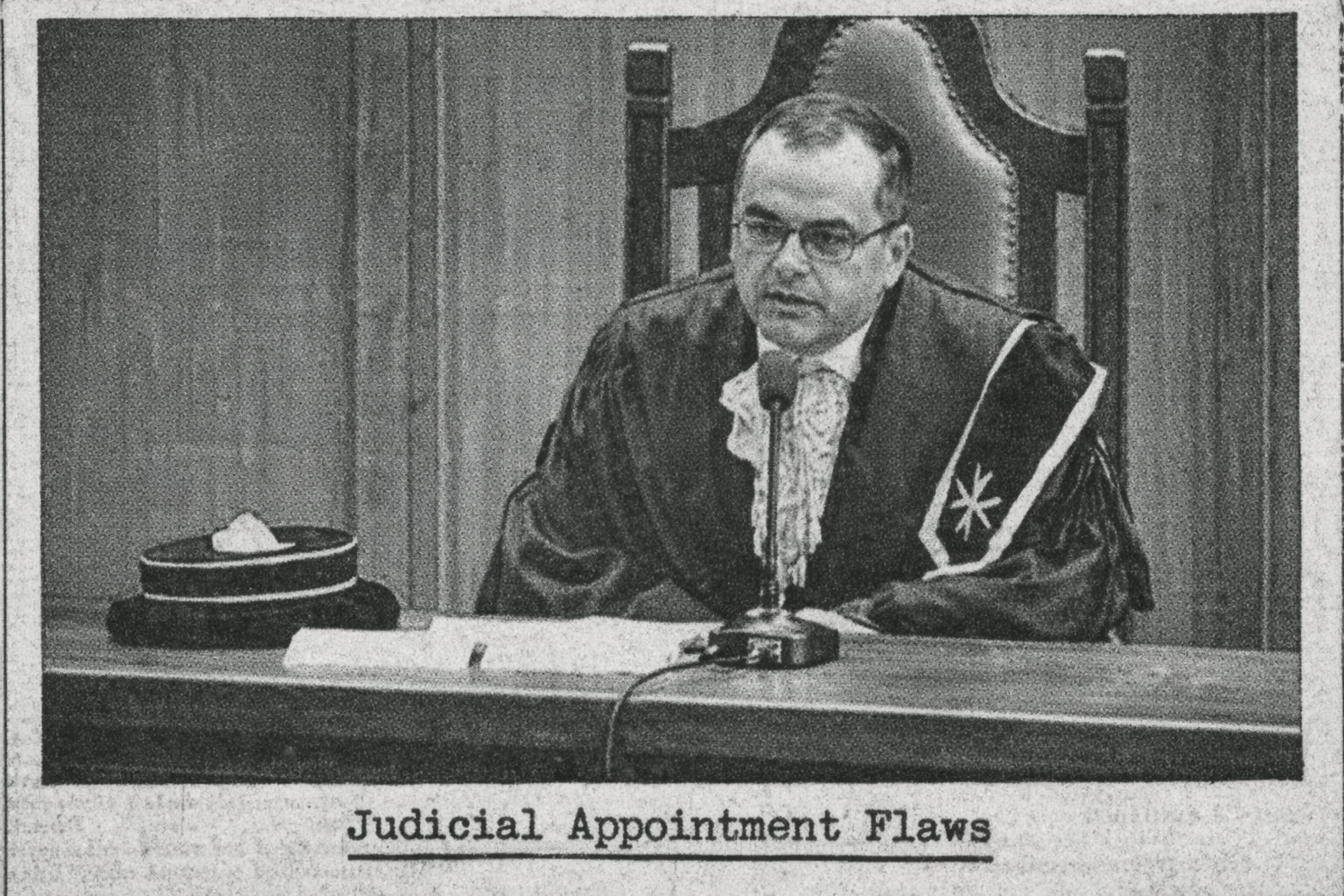
This is not only a clash between a judge and a Prime Minister. It is a warning that Malta’s system for appointing its Chief Justice is structurally broken.
We like to believe the two-thirds parliamentary rule protects the courts from political capture. In theory it forces consensus. In reality it often just forces negotiation. Instead of one party imposing its choice, both sides bargain for a candidate they can “live with”. The language of constitutional independence quietly turns into the language of political acceptability.
But a Chief Justice should not be someone the parties tolerate. A Chief Justice should be someone the Republic trusts. When the public starts hearing that candidates are being weighed according to party reaction, electoral optics, or internal loyalty, the problem is not simply who said what. The problem is that the system itself invites political filtering before merit ever reaches the surface.
And that means this crisis is bigger than any individual.
The two-thirds rule was meant to be a brake on executive power. But a brake is not a steering wheel. If government and opposition both treat judicial appointments as political decisions requiring mutual comfort, the outcome is still political. The process simply shifts from domination to deal-making. Independence cannot mean “approved by both parties”. Independence must mean selected outside their partisan interest altogether.
What Malta still lacks is the crucial missing piece: a truly insulated, professionally driven, super partes appointment system that identifies the best candidate in the public interest before politics ever enters the conversation. Without that safeguard, every appointment risks becoming a test of political balance instead of judicial excellence. Every delay risks becoming a tactical calculation. Every controversy risks eroding trust not just in a person, but in the courts themselves. The Constitution may require numbers in Parliament. But legitimacy is built long before the vote.
This is why the present controversy matters so much.
When the Prime Minister becomes personally entangled in allegations of political bias in a judicial appointment, the credibility of the process collapses immediately. But even if tomorrow another politician ran the same process flawlessly, the deeper structural flaw would remain.
A judiciary chosen through partisan comfort will always struggle to look fully independent to the citizen standing before it.
Courts do not derive authority from government. They do not derive authority from opposition. They derive authority from public confidence that they stand above both.
Until Malta builds an appointment system that visibly serves the people rather than the parties, these crises will repeat themselves — with different names, the same arguments, and the same damage to trust.
Because the real reform Malta needs is not a different candidate. It is a different system.
What destroys institutions is not one bad appointment. It is the slow public realisation that the system was never designed to keep politics out in the first place. Once citizens begin to suspect that judges rise not only by merit but by political tolerability, every judgment starts carrying an invisible question mark. And a court that must constantly prove it is independent has already lost part of its authority. Malta does not need a better political compromise. It needs a system where political compromise is irrelevant.
If justice must first be acceptable to politicians before it can be acceptable to the people, it is no longer justice – it is permission.

Political parties should not have a say in the election of teh Chief Justice. The person to hold this position should be chosen by the judiciary itself. Judges and possibly even magistrates should make the decision.