Donor Issues

David Cameron is in trouble. He has admitted to hosting dinners for major Tory donors at his private flat at Downing Street  – against payment. Tory Chief fundraiser Peter Cruddas has had to resign in the wake of a scandal after he was filmed by undercover Sunday Times reporters “claiming that he could secure them an audience with the Prime Minister or Chancellor”. Access on offer depended on the size of the donations and he implied that the wish lists by donors could end up being considered in the “policy committee at No 10”.

This morning’s Tory position is that the party will refuse to name any donors who have already taken advantage of this “scheme”. The excuse being put out is that if there were any such dinners they were hosted within the private area of the PM’s flat in Downing Street and therefore the details pertaining to such events would also be private. Which is a load of bollocks. Put simply, if a donor paid anything up to £250,000 it was not to ogle at David and Samantha’s dinner set or sample their culinary intrepidity but rather because of the more appetizing possibilities of influencing public policy. Also David and Samantha do not live in Downing Street because one day they found a good bargain on the property market. They live in Downing Street because the British Prime Minister lives in a flat next door to his office. A flat funded by taxpayer’s money. Private my backside.

The problem here lies not with the idea of parties going round begging for money to keep their circus alive but obviously with the manner with which such monetary collection is performed. Back home Labour politicians have gone all misty eyed at the generosity apparently demonstrated by the man in the street as the PL managed to get its supporters to cough up a little less than the price of a “private dinner” at Downing Street in the course of a one day fund raising event. Evarist Bartolo went on that most public of records (facebook) to declaim that “one euro from a family is better than a million euros obtained from a contractor found on the Yellow Pages”.

Franco Debono has brought the issue of party fundraising to the forefront of Maltese politics, much to the chagrin of both behemoths in parliament who had opiated the population into a reluctant acceptance of the modus operandi. How though will we ever regulate party donations? Will not some rulebook thrown at the very custodians of our political framework fail spectacularly as the PLPN will proceed with their regular charades of “fund raising” where the anonymous benefactor (and purchaser of influence) mingles with the happy one euro families?

So what solution? Should we look across the Atlantic where dinners are openly thrown on a regular basis in order to support candidates? It’s not tombola parties or seven church visits with your local MP – that not so  subtle excuse to justify electoral expenses. It’s more like gala dinners with €1,000 tickets per guest where the creme de la creme of societies lobbyists mingle with politicians and openly flirt with their affiliation. Yes, capitalist money has votes as much as your emancipated self. It either operates in the back corridors as your latest Cruddas auctions off the nation’s public policy to the highest bidder or operates in the open – where you can see who backs who and eventually might even choose to vote for the polticians who are clear about the allegiances who have curried their favour.

The fine link between the lobbyist’s influence and the politician’s decision will never be broken. What could be done is lift the veil of anonymity thus making the pacts clear and the giving the voter a clearer picture of the wider frame of the political horse-trading going on.

Will it work? Hang on to your money. I’m not taking any bets. Or donations.


The Julian Galea Electors

Julian Galea is the only PN candidate in Sliema to have survived the mess from the previous council. On any other day he would have been hailed as a resilient survivor instead, like an ugly wart, he has become the latest manifestation of the obsessive symptoms of Maltese electoral practices. Galea’s infamy began when he was unlucky enough to be entrapped into a recording of vile pronouncements expounding quite succinctly his base intolerance for anything Labour (Apparently, if you believe Galea this happened two years ago in a meeting between PN candidates – bravu Cirillu). It was too late to withdraw him from the electoral lists (even death is not strong enough to nullify a candidate’s listing once the nominations are closed).

We all know where it went from there. It’s not like no one had heard about Julian Galea’s insipid pronouncements – Labour made it quite a point to have them broadcast all over the place. Armed with the knowledge of Galea’s behaviour any voter in his right mind would have desisted from even mistakenly marking the little square on the ballot beside the candidate’s disgraced name if only to spare him the ignominy of having to remaining in the public eye for an extended period of time.

Julian Galea was – how shall I put it kindly – not just not presentable but also supposedly unelectable. The only persons you’d expect would put their mark near his name in the hope of his getting elected to the Sliema council would be scheming Labourites hoping to capitalise on his glaring presence. Yet….

Julian Galea got 233 votes. Two centuries and a third. He “only” lost 60 votes from his previous tally in 2009. True he got elected on the 17th count when he had still not reached the quota of 517 having obtained 376 votes in all (inheriting 143 from other candidates). What would have been a miserable performance must be seen from another perspective though.  Who were those 233 souls who still rallied for Julian and his phobias?

Forget the noise from the pundits trying to desperately fit the Local Council shoe onto the twin ugly sisters’ General Election feet. This has nothing to do with labour/nationalist swings. It has nothing to do with the supposed “changing of Malta’s political demography”. Here you had the plain and simple reality of what makes up the bulk of Maltese politics.

On the eve of the elections we tried to warn you in “The Ugly Dress Rehearsal“. J’accuse described what the voter should be looking at in the candidates:

It should be obvious to anyone who stops to think for a moment that the ultimate consideration therefore when casting one’s vote is the competence and potential of the candidate. To summarise it more succinctly: It is not WHO is behind the candidate but rather WHO HE IS and WHAT HE STANDS FOR. 

Did the voters do any of that? Do the results of the Local Council Elections show us a discerning voter who is involved in large scale swings and confidence issues and is busy sending “messages” to this or that party? Not really no. You might enjoy the charade of conflicting interpretations that the PLPN circus is likely to feed you over the next coming weeks. You might love the myriad interpretations: “PN must listen. Labour has gained inroads in the North. Time for change.” Lahdidah.

In reality what happened is much simpler. Occam’s razor again. It rained. Heavily. Most people had had enough of the circus (except maybe Silvio Zammit). They just could not be bothered. Who bothered to go out to vote? The die-hards. They are the people who wouldn’t miss a trip to the ballot if they were dying. It’s ingrained. Their vote is tattooed on their brain. And then in Local Councils there are what we can assume to be the core of voters for each candidate. Families, neighbours, close friends who feel obliged to get their man in.

That is how Julian Galea, no matter what he says or does will keep getting at least around 250 votes every time he contests the Local Council elections. It is anything but an assessment of his capacity to convince voters to vote for him. If you want a litmus test for that just look at AD’s darling Mike Briguglio. In 2009 Mike got 457 votes and was not elected (Edward Cuschieri – PN – got elected on the 10th count in that election even though his first preference votes numbered 222). This time round his tally was 485 votes. Not much of a shift was there? That 28 vote increase transformed AD’s failure into success. Or at least we would like to think so.

Another way of reading the results – and by this I mean most of the results is that they are about as prophetic and indicative as tea leaves at the bottom of a teacup. Voters have neither swung nor used their votes to express any particular concern. Even less should we be worrying about those who did not bother to turn up.  Protest vote my foot. At this rate the only conclusion that I am willing to draw about these absentees is that they saw nothing available to make the trip to the ballot box worth it. More than a protest vote it is a lazily calculated snub at what  is on offer on the menu. I’m guessing there will be much less of these when the General Elections come along.

So there you have it. What have the LC Elections in 2012 taught us about your average voter? That he still remains that – average. The intelligent voter stayed at home this time round. He is still out there however.


Will the parties take note?


The Ugly Dress Rehearsal

They’re electing representatives of the people in a number of councils tomorrow. From Zebbug (Gozo) to Sliema (Malta) the voters who will bother to take a stroll to the polling booth will be electing a group of people who are supposedly best placed to manage the needs of their locality. That is the principle behind the process of administrative devolution that began in 1993 with the setting up of the local council system.  It’s almost twenty years now and the Kunsilli are ingrained in our political system of representation – for good or for bad – and ever since Labour’s rethink about participation in local politics they have also been a microcosm of our wider political field.

Ever since the times of Cicero, electoral campaigns for the municipium  were a hotly contested affair. As the wikipedia article will tell you the ultimate right for a citizen is the right to vote (civitas optimo iure) – something to be treasured above all. Ugly electoral campaigns are also not something new and notions of slander, corruption and dirty politics on the eve of elections were not exactly invented by the PLPN crowd. Nothing new under the sun there. So what to expect from tomorrow’s vote?

Well, the result per se, should technically not have a meaning beyond enabling us to understand whether our cives have become more intelligent with the use of their ultimate power. At the end of the day the municipal council that is elected in each locality will have an effect on the lives of its citizens via the decisions it takes. It should be obvious to anyone who stops to think for a moment that the ultimate consideration therefore when casting one’s vote is the competence and potential of the candidate. To summarise it more succinctly: It is not WHO is behind the candidate but rather WHO HE IS and WHAT HE STANDS FOR. 

And that is where we start to get complicated. Down on the ground, where it counts, I have no reason to suspect that every candidate contesting the elections and committing his or her time for a few years of civic duty has plans and ideas for the running of his locality. Even better I am sure that in the absolute majority of cases the interest is borne by a love of the locality and a desire to improve it or bring out the best in it. That is after all what the council election is about. All this happens behind the elaborate facade that is the involvement of the major political parties and it is not helped by the fact that this set of elections is the last official public scrutiny before the next general elections.

So we get the ugly dress rehearsal. Once again signs will be read where there are none. For the umpteenth time Labour will make a song and dance about winning local elections when in opposition. It’s not like we have not already been there. It is an exercise in collective dis-education.  Why? Because your criteria when voting for local representatives should be the competence of the candidates and not whether you are exercising your vote to send a message to the Prime Minister. If you are stupid enough to waste the great prerogative that you have to choose the best local representatives because you’d rather be sending some message to the PN government then your idea of how democracy works is seriously flawed.

Labour could not help itself though. Thanks to Franco Debono’s antics it was duped into campaign mode at what turns out to be a very early stage and is now desperately trying to keep the election mode going as much as possible. That is why although we are speaking about local councils and performance the national media is full of arrows and stabs aimed at the heart of “GonziPN”. And then there was the whole RecordingsGate. First Joanna Gonzi then Julian Galea then Gonzi again were caught on tape – unsurprisingly all the candidates were from Cyrus Engerer’s Sliema council. The public heard PN candidates utter the obvious – our inbred tribal hatred was suddenly there for all to see. The PN countered with a few clips of its own – giving the usual suspects pride of place in its counter-information exercise.

The relevance this had for Local Council politics was that it reinforced the idea that PLPN still do not bother to screen candidates to check their suitability for public office. Did we need the recordings to find that out? There is a paucity of political potential already as it is and the recordings only threw the truth into everybody’s face. From Mosta to Sliema the signs of an illness in our system were already evident. As for dress rehearsals for an election we saw the two behemoths unashamedly re-engage in slander and mud-slinging politics where content is relegated to the footnotes of a manifesto. There it was – a race to uncover the sleaziest candidate, long-forgotten criminal records unveiled and more. What should have been a legitimate exercise of democratic checks-and-balances became a witch-hunt.

Then came Muscat’s Iron Lady performance. As others have pointed out it was obvious were Muscat got his Assisian inspiration from. The Labour leader would have fared much better had he memorised another great line from the movie: It used to be about trying to do something, now it’s all about trying to be someone. And that really hits the nail on the head. With the politics of taste that were inaugurated early this century substance makes way for charades, for strutting and for many words that cannot be backed by thoughts and ideas. Values have been thrown out of the window and marketing and imagery is all the vogue.

With our politicians busy playing along the weary scripts and jumping from one pleasant bandwagon to the next in the hope of boosting their already bloated caricatures on this stage we have only a huge dramatic performance to look forward to come next national elections. For now we have been regaled with some very ugly scenes that made for a horrible dress rehearsal. 

But let us not forget that there cannot be a play or a charade without an audience. It brings me back to the intelligent use of the vote. It’s not, as many may think, simply an appeal to vote for alternattiva demokratika. It’s a much wider appeal for the citizen to finally live up to this immense responsibility and make the right choices. Look through the candidates. Look at them beyond the colours they represent and seriously ask yourself what you can see them doing six months down the line that can improve the state of your community. Accept any other criterion beyond that and you are making a fool of yourself. 

And as a fool, you might as well join the other pagliacci on stage….

Vesti la giubba,
e la faccia infarina.
La gente paga, e rider vuole qua.
E se Arlecchin t’invola Colombina,
ridi, Pagliaccio, e ognun applaudirà!
Tramuta in lazzi lo spasmo ed il pianto
in una smorfia il singhiozzo e ‘l dolor, Ah!

Ridi, Pagliaccio,
sul tuo amore infranto!
Ridi del duol, che t’avvelena il cor!


Hate crimes, Nationalist Candidates and PLPN Emos

The latest smart cookie from the constellation of Local Council Candidates has hit the news. This time it is Julian Galea – nationalist candidate for the Sliema Council – who has been lucky enough to have been caught on “secret tape” declaiming among other things his “phobia of Labourites” and boasting how his Labour-leaning employees earn less than Nationalist employees. This exposé could not come at a better time in order to expose the ridiculous idea behind “hate crimes”. You had Maltastar.com headlining this bit of news with a large sign saying “Stop Hating”.

It’s the DNA business all over again. One candidate or politician is caught expressing the thoughts that go through the heads of most fanatics of one of the two tribes any given day and suddenly we are all Padre Pios and discover our inner emos that are silently indignated by this offensive behaviour. How bloody typical.

Which is not in any way justifying what Julian Galea said. Julian Galea is your typical “anything goes” candidate like the Alexis Callouses (sic) of this world. He is a symptom of the abject inability of a party to shed its temptation to field as many candidates as possible without a proper screening. His “phobia” bullshit does not merit to be classified as a crime although we have a draft law that potentially will make it so. Incidentally with regards to the possibility of different pay for different political creeds we ALREADY have a law against that so no need for another one (and EU law enthusiasts will remember Defrenne vs Sabena). I vaguely suspect that he meant that Labourites are not high achievers and therefore end up on the lower end of the pay scale not that he pays on the basis of political allegiance – still, this does not make his talk any better or more palatable.

I too have a phobia. I have a phobia for stupid. It is a low threshold of tolerance and people like Julian Galea make my blood boil. So do the media manipulators who are now desperately trying to link his employment policy to GonziPN. Because it’s obvious isn’t it… if Julian Galea (I hadn’t heard of this geezer till today) thinks so then the PN must be endorsing this policy. But that is our politics. It has been for the past fifteen years now. Candidates not worth the poster their face is printed on, media frenzies of shit-stirring emptiness and a misguided appeal to values of convenience.

We are all emos now. It’s in our DNA.


Franco Bonaparte?

Last time that I hinted at a link between Franco Debono and a historical figure I was told off in private by one of the blog’s more finicky readers. Well, mea culpa if Franco does not quite fit the “Generalissimo” label but the Rebel MP has now taken to quoting another general for his purposes. The Times asked for Debono’s comments in the light of this mornings Leadership Debate being hosted by that same paper and Franco was happy to oblige. The crucial statement is as apocryphal as modern day PLPN politicians can get – leaving as much leeway for interpretation as Saint John’s Apocalyptic scriptures:

The crisis will only be over when the oligarchy is dismantled, the elitist rule of ‘planet clique’ comes down to earth and democracy is strengthened. Even certain quarters of the business community have been complaining for some time about this clique mentality.

Whatever happened to the four riders of the apocalypse and how exactly will “planet clique” come down to earth? Is this a new religion? More specifically has Franco been reduced to speaking in riddles in order to be able to keep us hanging on to his every word? Joseph’s Labour still pin their hopes on stability but in truth they don’t care whether Franco goes this way or that. Joseph’s reading is clear: there is stability whatever the PM says (or does). Muscat has bought himself a joker by claiming that if Franco turns back to the fold of government (what Labour are calling a U-turn even though he never actually voted against government) he will have been “bought” so his opinion does not count.

The nationalist party is in denial too. It doesn’t care whichever way about this minor hiccup in Malta’s political history. It is buying its time till the leadership “election” to fill the vacancy that does not exist. That way we get to ignore Franco at least till the resounding “Gonzi, Gonzi, Gonzi” echoes in the halls of Dar Centrali once the result is out. Then Franco will be given the choice to either follow or get the fuck out. Simples. Next we will have the Local Council elections dragging on to Sliema’s 10th March date which will give us the opportunity to mentally masturbate about figures that have absolutely no bearing on a future national election result. As a a people we are amused and easily distracted by these controversies.

Back to Franco. He makes an interesting assertion in his Times interview.

Dr Debono, a prominent criminal lawyer who has been campaigning for Constitutional reforms, said that after the French revolution one of Napoleon’s greatest conquests was not military in nature. It was the establishment of meritocracy where careers were open to talent. It was the call to dismantle privileges enjoyed by the nobility and the oligarchy. Meritocracy was even more important in a small country like Malta, he said. These are the foundation of our European culture and identity.

I wish the Times would cut the crap of the “prominent criminal lawyer” bit. Franco has been practising criminal law as long as I have been practising European Law – and I’ve spent seven of those years at the European Court of Justice. Should that make me a prominent European lawyer? The only prominence Franco gets – irrespective of his qualities as a lawyer – is the limelight currently afforded to him by circumstance, failing that he’s about as prominent a criminal lawyer as any other recent graduate from the law course (yes… barely 12 years is recent).

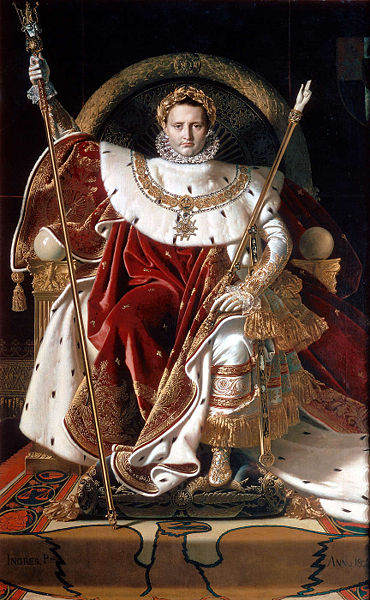
Emperor Napoleon the Meritocratic

As for the reference to Napoleon’s meritocratic destruction of the nobility… really Franco? Your knowledge of history borders on the criminal. It took Napoleon Bonaparte a few years to decide that the Republic was not such a good idea after all and to Crown himself Emperor  (in May 1804 before a hapless Pope Pius VII). Oh he did get the senate to vote a law to that effect… it stated in a very PLPN style:

“The government of the Republic is vested in an Emperor, who takes the title of Emperor of the French.”

There you go. Napoleon then proceed to meritocratically install his family all across Europe in the main royal households. Here’s a wikipedia refresher point about the House of Napoleon:

Throughout its history, the dynasty, as well as being Emperors of the French, held various other titles and territories including; their ancestral nation theKingdom of ItalyKingdom of SpainKingdom of WestphaliaKingdom of Holland and the Kingdom of Naples. The dynasty was in a position of power for around a decade until the Napoleonic Wars began to take their toll. Making very powerful enemies such as Austria, United Kingdom, Russia andPrussia, as well as royalist (particularly Bourbon) restorational movements in France, Spain, the Two Sicilies and Sardinia, the dynasty eventually collapsed under its own weight.

Not looking so anti-clique now are they Franco? What can we say…

THE CLIQUE SHOULD DIE, LONG LIVE THE CLIQUE


Malta Post-Franco (II) – Franco

There could be no other place to begin than with the main protagonist. Franco Debono kept the whole nation waiting with bated breath for the unfolding of whatever his plan might be. Notwithstanding his declared agenda it was hard to second guess where he may be going with it – especially since the timing of most of his decisions seemed to be misjudged and more importantly because whatever plans he had were constantly outshone by his ego.

It could be that in order to fight the establishment you do need balls the size of Mosta dome and it is also a fact that in Malta short of renting an applaud-me crowd of hacks and elves you end up having to blow your own trumpet. It could be all that and more but there seemed to be more than one point where Franco Debono seemed to have lost the plot.

To be fair most of the contents of Franco Debono’s list of grievances survive the test of political sanity. They are far from being a Norman Lowell style list of anachronistic or loony policies. Taken individually some of the minor points (cassette tapes in court) tend to remove  the shine from a plan that includes wholistic institutional reform and a strong direct challenge to the PLPN lifeline of unregulated party financing. Franco Debono has done more for the cause of highlighting the problems of our duopolistic rush to mediocrity than anyone else in the last twenty years. So what  went wrong?

Well beyond the egomaniacal self-aggrandisement and the scattered presentation of the grievances, Franco Debono’s biggest problem was one: timing. It is always a pertinent question to ask when analysing the news: Why Now? Why indeed did Franco rock the boat when he did? Franco’s edginess became pronounced following the divorce vote in parliament – Dr Gonzi’s vote against the popular vote seems to have done the trick. The problem is that judging by what Franco has to say nowadays there is no real correlation between the divorce vote and the problems he highlights.

From day one, this government has always been at risk of being at the mercy of a one-seat renegade. As I pointed out early after last election, GonziPN might have snatched victory from the jaws of defeat but this was done at a the expense of stability. It was not just the one seat-majority but also the pick’n’mix of candidates that were virtually an undeclared coalition of disparate ideas and agendas patched together simply to garner votes.

So why does Franco wait till the dying moments of this legislature before dropping the big bomb? The urgency of institutional reform and of electoral reform did not occur overnight. The question of “cliques” running our political parties – a direct consequence of their internal systems adapting to the parallel mechanisms of power on a national scale – were also there from Day 1. So why now?

The outcome of last Thursday’s vote might point to a compromise having been reached. Did Franco get a promise that the legislation he wants will be passed through parliament? That’s highly unlikely. You do not prepare a “wholistic change” to constitutional structures in six months. Even the much taunted Party Financing bill risks running into a 3/4 majority parliament wall should it attempt to introduce crimes for violations of electoral law.

So if that was not the compromise what was? The hunch we have is that Franco is attempting to change the power hierarchies of the nationalist party by threatening the stability of government. The hints are there – his calls for PM Gonzi’s resignation are qualified with additional calls that he should change his ring of advisors and that a number of ministers’ heads should roll. Ironically Debono sees the strongest justification for filling the party hierarchies (and Ministries) as being popular support : universal suffrage.

So Debono’s timing for the party financing and reform laws blew the wind out of his sails as to whether or not he is the great champion of reform. Instead the timing of his abstention and all that surrounds it points to the real battle he seems to be engaging: an internal one within the PN hierarchy. Either Don Quixote has chosen the wrong windmill to battle or he has identified the wrong priority.

Again Debono stands as living proof of the wrong perception that PLPN politics has of our nation’s constitutional construct. Oftentimes we use the word “arrogant” to describe politicians. Well the arrogance of PLPN political thought lies in the fact that to them the constitutional institutions and the rules governing them are there to serve the party and its need to fit in a duopolistic system of alternation.

Which is what leads a backbencher who is suddenly thrust into a chair of dizzying slim-majority power in parliament to take on the whole system with the simple aim of improving his stance within the Nationalist party hierarchy.

To get at Austin Gatt, Joe Saliba, Carm Mifsud Bonnici, Richard Cachia Caruana and others Franco Debono decided that the best option was to threaten to topple government. He had had enough waiting in the sidelines for his opinions and ideas to be heard and for a place in the decision making clique that counts. So he refused to play.

The honourable aims of reforming and improving our constitutional and institutional framework, of changing our electoral laws and rules of party financing became a club to be wielded clumsily in the hands of a very angry backbencher who believed that he had been overlooked one time too many.

What next for Debono? It remains to be seen whether the nationalist party will play out their part of the deal that won them a temporary respite from the Debono tsunami. His role within the party is imperiled if he fails to obtain the right to present himself as a candidate for the next election. Technically his career should be over: “sacrificed” as he likes to put it, for the greater good. Ironically he might be a magnet for the kind of voter that liked his shit-stirring antics and who would rather vote a maverick than vote labour. That kind of voter believed Franco’s promises of reform and is the kind who would have loved Franco’s swan song in parliament.

Debono’s fate is intrinsically tied to the decisions that the party that he claims he loves will take in the near future. If the PN once again will be in the business of assembling a rag-tag group of disparate candidates then he might be in on the off-chance that his Champion of the Disgruntled image wins him a few number 1s. It will be a hard struggle though and until the next elections Debono might still have the last word in precipitating a Nationalist party decision to go to the polls.

The Age of the Generalissimo is, in all probability, almost over.