Is the President right to refuse the Binance pledge?

An analysis of the legislative and regulatory scenario concludes that given the current record and supervisory posture, the legal and governance case for refusal is robust.

Malta’s Community Chest Fund (MCCF) has declined a long-pending Binance crypto pledge – originally around € 200k in 2018 BNB and now quoted around € 39m – citing reputational and governance concerns about the provenance and disbursement method. Reporting indicates Binance wanted funds sent directly to individual patients’ wallets, bypassing MCCF’s ordinary controls; the President publicly called it a “bogus donation,” while the Prime Minister urged reconsideration. Court filings between MCCF and Binance over related disputes have recently been settled out of court, but the charity has now walked away from the offer.

The legal risk in accepting the donation turns on Malta’s Anti-Money Laundering (AML)/ Countering the Finance of Terrorism (CFT) framework and the charity’s fiduciary and data-protection duties. Under the Prevention of Money Laundering Act and subsidiary regulations, Malta’s Financial Intelligence Analysis Unit (FIAU) sets and enforces AML obligations and can receive suspicious transaction reports; while a state charity may not itself be a “subject person” like a bank or Virtual Asset Service Provider (VASP), it must not facilitate laundering and would typically rely on obliged intermediaries (banks/payment providers) to conduct KYC/KYB, source-of-funds checks and ongoing monitoring. If red flags arise, accepting the funds could expose the charity to regulatory and reputational harm and, in extreme cases, criminal risk tied to receiving proceeds of crime.

Verification of the legality of sources in this context is feasible in principle but not straightforward. Binance itself has faced repeated statements from Malta’s financial regulator that it is not authorised in Malta under the Virtual Financial Assets (VFA) regime; today the MFSA is also the competent authority for crypto-asset supervision under the Markets in Crypto-Assets Regulation (EU). Because Binance is not licensed in Malta, Maltese authorities cannot rely on local prudential/AML supervision of the donor, making enhanced independent verification prudent. Technically, blockchain analytics can trace wallet histories, but “clean” on-chain flow is not a legal guarantee of legitimacy; only obliged entities’ due diligence, sanctions screening and, where necessary, law-enforcement intelligence can comfortably de-risk the funds.

Practically, the authorities with roles here are:

  • the FIAU (national AML/CFT authority) for guidance, intelligence and potential directions;
  • the MFSA (supervision of VFA/MiCA service providers, public warnings on unlicensed activity) given the donor’s status;
  • the Sanctions Monitoring Board for EU sanctions compliance if any listed persons, chains or jurisdictions are implicated;
  • the Police/Asset Recovery Bureau and Attorney General for proceeds-of-crime issues; and,
  • at sector level, the Office of the Commissioner for Voluntary Organisations where charities’ governance intersects with financial integrity.

If MCCF were to reconsider the pledge, it would need a bank or regulated payment channel willing to complete full Customer Due Diligence (CDD)/ Enhanced Due Diligence (EDD) and source-of-funds/wealth checks on the donor wallets, structured in a way that respects GDPR (particularly the prohibition on disclosing special-category health data without a proper legal basis), rather than direct-to-patient transfers demanded by the donor.

Given the current record and supervisory posture, the legal and governance case for refusal is robust.

The Political Reaction

The Prime Minister and the Leader of the Opposition seem to have a common point in their reaction to the news of the President’s refusal of the ‘bogus donation’. The Prime Minister stated in a direct way that the current regulatory framework should be sufficient to clear the funds for use. He was unable to hide his evident anger at what he (almost) called “being purer than the pope” (he changed tack last minute, probably realising it was not the best pitch to make. He did argue however that other countries who criticise Malta would probably welcome Binance themselves, admittedly without giving one clear example of where this is the case – relegating this statement to spin and speculation rather than concrete fact-based evidence.

Alex Borg on the other hand was more evasive, preferring to throw responsibility on regulatory authorities. He seemed to imply (just like the PM) that 39 million was too big an amount to risk losing. He stressed that the work of regulatory authorities is crucial in this sense and should the Binance donation pass scrutiny with a clean bill of health then much use could be made of that amount. Not exactly agreeing with the president then and more in line with Abela’s take though with less determined tones.

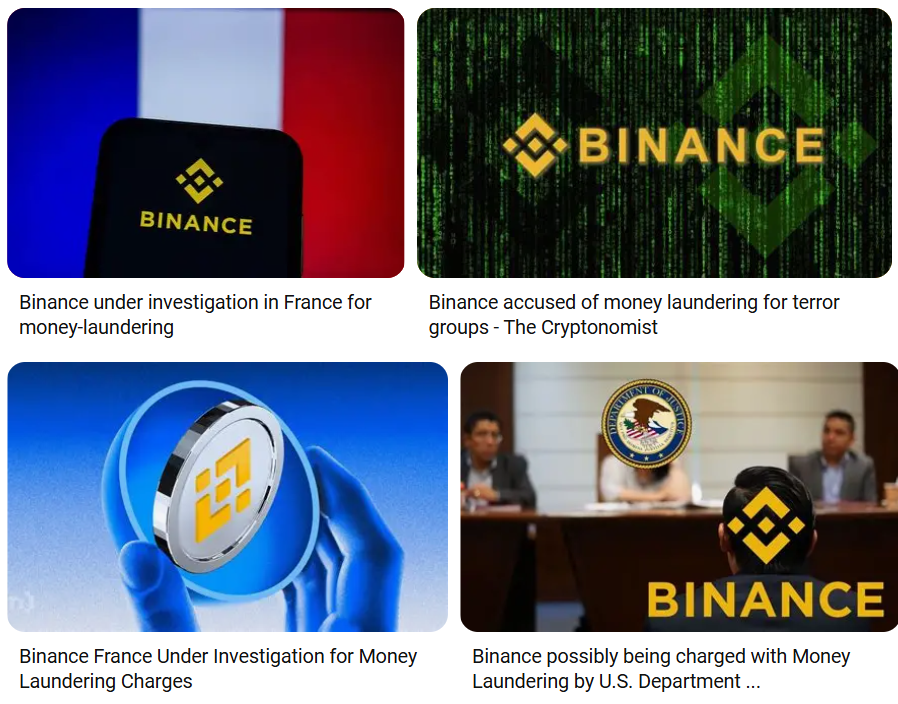
What to make of it then? I would say that the optics count for a lot. Binance’s history is tainted with a number of cases in France and the US concerning money-laundering and money laundering for terrorist groups. Their legal issues related to money laundering have resulted in significant financial penalties and ongoing scrutiny, reflecting broader regulatory challenges in the cryptocurrency sector. This kind of history means that an analysis as that conducted above would end in a strong legal and governance case for refusal. It is indeed worrying that the two leaders are so quick to dismiss this history in a “Malta qatt ma irrifjutat qamħ” sort of way.

Alex Borg’s PN: The Party as an End in Itself? 

The first days of Alex Borg’s leadership of the Partit Nazzjonalista leave me with more questions than answers. He has stepped into a role that carries the weight of history—but also of failure, stagnation, and disillusionment. The PN isn’t just in opposition; it’s in crisis. And yet, if you listened only to Borg’s early speeches, you’d think the most pressing challenge facing Malta was rebuilding the “glory” of the party itself. 

This is where the problem begins. 

Borg has so far focused heavily on “the party.” Its structure. Its morale. Its past. His language is full of admiration for the PN’s historical victories, its “heroes,” its contributions to the country. That may be comforting to some within the party. But it’s not what the country needs. Malta doesn’t need a nostalgic PN. It needs a credible alternative to the current government. Borg seems more interested in reviving a brand than offering a vision. 

It’s not wrong for a new leader to stabilise the party he inherits. That’s normal. A fractured, demoralised party is no platform for national leadership. But the problem with Borg’s early leadership is that it stops there. He’s not using the party to build a project for Malta—he’s rebuilding the party as the project itself. In that sense, it’s not clear whether he sees the PN as a vehicle or a destination. If it’s the latter, he’s missed the point of political leadership entirely. 

A party is not an end in itself. Its purpose is to offer the public a better way forward—to translate values into policy, and policy into real change. That’s especially true for a party in opposition. If the PN is to be more than a relic, it needs to be in a permanent state of readiness to govern. Not just to oppose. Not just to commemorate itself. Borg’s early rhetoric avoids hard policy choices, complex realities, or clear ideological direction. There’s no talk of climate resilience, housing, tax justice, digital infrastructure, public health reform, or how to break Malta’s addiction to corrupt planning deals. There’s no signal of how he plans to regain the public trust—especially from younger generations, many of whom have no memory of the PN’s “glory days,” only its long decay. 

That silence is loud. 

“Un programma politico non si inventa, si vive.” – Luigi Sturzo 

Is it too much to expect vision this early on? No, it isn’t. The PN has been out of power for more than a decade. Anyone taking over now should arrive prepared—not just to lead a party, but to lead a country. Vision isn’t a five-year plan or a document you publish at election time. It’s a direction, a set of priorities, a set of truths you’re willing to stand by even when they’re unpopular. Borg hasn’t even hinted at one yet. And the vacuum is glaring. 

Instead, we’ve heard what amounts to internal messaging—calls for unity, loyalty, revival. That might resonate with the grassroots, but it does little for the rest of the country. Borg may be consolidating control, but to what end? If the goal is to win power, then he’ll need more than loyalty and internal discipline. He’ll need trust, and trust is built on credibility. The PN won’t get there unless it starts talking to people outside its own echo chamber. 

Even more worrying is Borg’s silence on the rule of law. Under Labour, Malta has seen deep institutional erosion—from the collapse of regulatory oversight to the stalling of investigations into political corruption. These are not abstract issues. They affect everything from business confidence to environmental degradation to our democratic dignity. The PN under previous leadership has found it hard to keep this issue alive. Worse still, it has chosen to either engage in petty squabbles with NGOs fighting the Rule of Law battles or worse still it chose to blame its woes on the fact that such battles were ‘distracting’ or ‘unpopular’. 

Borg so far seems uninterested—or unwilling—to confront it head-on. Has he already calculated that this battle is unwinnable? Or is he too afraid of alienating potential swing voters who see such talk as polarising or elitist? 

If he drops the rule of law agenda entirely, it will be more than a tactical retreat—it will be a moral failure. Malta needs political leaders willing to do more than win elections. It needs leaders who will fight for the future of the state itself. 

It’s not enough to invoke the past. The PN was once a party that brought Malta into the EU, strengthened the economy, and helped build modern infrastructure. But that was then. A new generation wants to know what comes next. How will Malta shift away from short-term profiteering and towards long-term sustainability? How will we build a fairer economy, a less polluted environment, and a digital system that works for citizens, not just government departments? These are not romantic questions. They’re real and they demand answers. 

So far, Borg has offered none. 

If this continues, the PN under his leadership will become a sort of political heritage NGO—committed to preserving its memory, but incapable of shaping the present. And in a country that desperately needs serious alternatives, that would be a tragedy. 

Borg still has time to prove otherwise. But the clock is ticking. If he wants to lead Malta, not just the PN, he’ll need to step outside the party walls, take a stance, and speak not just to his members, but to the country. 

Otherwise, he’s not building a future. He’s curating a museum. 

CAVEAT LECTOR: Let me be clear. My critique is that of a citizen who has no direct, vested interest in the PN. My interest is in having a credible opposition that is a valid alternative for government. Beyond that I also harbour a faint hope that the next government will champion the reforms needed to revert to a state of rule of law.