That Intergovernmental Feeling


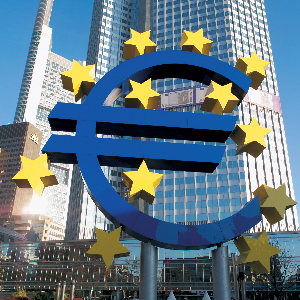
So we have the first results out from the latest round of talks to “save the Euro” and “tackle the crisis”. You have probably read about the UK’s latest “opt-out”, about how this means that there will be further “deepening” between the euro-zone 17 + (probably) 8 others while the UK, Sweden and (some have mentioned) Hungary sit on the fence. You might have quizzed the use of the words “golden rule” and wondered whether Malta’s PM and Opposition leader actually can do anything about the direction Euro politics is taking – was their adamant stance against a common fiscal system just a bit of brinkmanship or did they really mean it? Has Europe just skipped a gluttonous opportunity/excuse to go federal? Will the UK’s “splendid isolationsim” be justified?

Those questions and much more will be tackled (or left unanswered) in the next full post on J’accuse. Yes.

P.S. The current layout is temporary and we sincerely apologise for the sporadic posts on your facebook newsfeeds.

AAA

Luxembourg is hanging onto its triple-A rating by the skin of its teeth. A string of the “well-to-do” nations in Europe wake up every Monday nowadays dreading the much-feared Standard & Poors downgrade from AAA to AA. Many still live in the land of make believe where they think that a downgrade is nigh impossible – even if the once mighty United States has already taken the punch. The national press here in the Duchy reported Ministerial songs of austerity and budget restrictions a week or so ago but there still seems to be an air of “this will never happen to us”. North of the border Elio di Rupo becomes Brussels first francophone Prime Minister since 1974 and has a government of 12 Ministers and 6 Secretaries formed just in time for the upcoming Treaty negotiations.

What Treaty negotiations I hear you ask? Well it seems that the Merkozy duumvirate is pressing for a revised Treaty by March next year. March. That’s “only” three months away. I say only because it’s a treaty rewriting we are talking about – one that usually requires months and months of horse-trading and negotiations. Merkozy will not have that. They need a Treaty Change and they need it now. “Change is…” that’s Barack Obama’s new battle-cry. In this case “Change” is an attempt at avoiding what Radek Sikorski called “disintegration” in his now famous speech in Berlin on the 28th November.

“the entire practice of lending money presupposed at least the honest intention to repay”

Sikorski’s speech made waves and it did so because it called a spade a spade. Here he is exposing the problems of the Euro zone’s failings:

We have a Europe with a dominant currency but no single Treasury to enforce it. We have joint borders without a common migration policy. We are supposed to have a common foreign policy, but it is divorced from real instruments of power and often weakened by member states cutting their own deals. I could go on. Most of our institutions and procedures depend on the goodwill and sense of propriety of member states. It works tolerably well when the going is good. But then a wave of migrants shows up on the EU’s border, or a civil war blows up in our neighborhood, or markets panic. And then, what do we habitually do? We run for cover in the familiar framework of the nation state.

The nation state. That’s what we were saying a while back about new republics. Not Joseph Muscat’s sudden flirt with ideas about “Second Republics” – verbal contracts, not worth the paper that they are written on. The nation state in its revised form takes note of the realities within which it operates and accounts for them. Sikorski refers to the early hiccups in the US federation and in the Swiss federation. I recall ten to fifteen years ago during our European Studies when the “deepening vs widening” question was very much the vogue. Our biggest question then was when we asked what it would take for the big step towards federative structures to take place. Sikorski gave us the answer.

It’s the economy, stupid.


Rush on the Central Bank

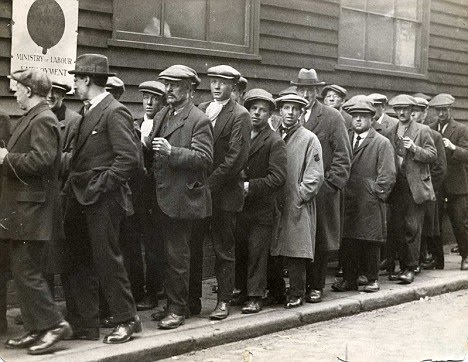
The Times reports that there is nothing to worry about the queues forming outside the Central Bank. The picture taken by the Times shows a snaking queue outside the Valletta office of the Central Bank. Obviously the Times’ calming headline must be read in the context of the current economic scenario. Belgium for example is on tenterhooks as the Flemish and Walloon factions iron out their 2012 budgets with clear warnings that there will be spending cuts (as if the obligation of balancing a cabinet with 7 + 7 ministers sought from the linguistic divide was not enough). Standard & Poors has already delivered a sucker punch to the little Kingdom as the King tries to piece his Humpty Dumpty government together. Belgian radio news reported that there was still enough public confidence in government bonds but even this will not remain a given. Niall Ferguson penned an interesting futuristic article in the Times (UK) news review this Sunday speculating on the political break up of the EU and the formation of a United States of Europe (with a nod or two to the Hapsburgian influence on the process). The international specialist press is focusing on one thing and one thing only… will the euro survive and if not how long till armageddon.

Meanwhile in Malta there is a rush on the central bank.

To buy commemorative coins.


51 proposals from another planet

The challenge has been launched. The gloves are up and the million dollar question has been put on the table (and is now a guest at the myriad “talk shows” on our TV’s and radios). Joseph “Inħobbkom” Muscat has put an end to his party’s reticent “cards-to-the-chest” policy and finally announced the 51 proposals that are described as “positive and concrete”. It’s all down to a game of numbers – Gonzi asks 10 questions – he gets 51 answers. Beat that Gonz.

Woe betide he who decides to actually read through the 51 “proposals” and tries to make out how this can be the blueprint for an accountable plan for managing Malta’s future. This is a list that lies long and thin.

Lies – because the sum total is proof that it is marketing above substance, a clumsy attempt by “think tank” apparatchiks to sound sophisticated and clue-full.

Long – because in the mistaken belief that the long numbered list will be enough to con even the intelligent observer, it is evident that whoever sat around the table to pow-wow this thing went through great lengths to add as many “proposals” as possible.

Thin – because the depth of thinking required to come up with this kind of pie-in-the sky ideas belongs somewhere down the evolutionary scale between the amoeba and the sponge.

If you find me insulting then you have not read the proposals yet. Why 51? Easy because 50 would be too obvious… they probably think that 51 sounds like a number casually reached. A while back I got think-tank man Aaron Farrugia in a twist because I criticised the tautological vision of Joseph Muscat about university’s role in society (something about how a university should be a centre of learning). I spoofed it with “Sajjieda ghandhom jaqbdu hut frisk u bdiewa ihawwlu frott tajjeb“. Aaron “unfriended” me for my efforts. No big loss. Then came “Proposal 45” – “Importanza mistħoqqa lill-biedja u sajd“.

Declaring your belief in Airmalta (35) is not a proposal. respecting Maltese and Gozitan “investors” (30) is not a proposal. Youth before bureaucracy (26) is a bumper sticker gone wrong but not a proposal. Promising not to give out government contracts that do not respect worker’s rights (16)  is not a proposal – (a) it should be implied in any government, and (b) there are laws and directives that prevent this happening anyway. “Gvern li jkun safe ghal businesses u negozji” (5) is not a proposal, it’s sounds like an advert for companies to store their cash in some government vault. Citizens getting a good and timely service from the courts is not a proposal if you don’t say HOW and WHY you will bring this about (47). Idem Better security in entertainment areas (49).

It doesn’t end does it? These are not proposals for a government in waiting. They’re proposals from another planet. Planet 51.

And if for one minute you thought that the 51 proposals make sense and are a credible plan for electing Labour. Then you deserve a Labour government.

That’s the beauty of democracy – you get the government that YOU deserve.


Planet 51 (Trailer) from Roberto HG on Vimeo.


The Value-Mouth Relationship

Much is being made in the Labour-friendly press and media about the supposed strategic “U-turn” that is in progress in the spanking new halls at PN HQ. I will look into the fallacy of the “u-turn” argument in one of my next posts and will attempt to explain how rather than a “u-turn”, the current within PN thinking might actually be a correct interpretation of christian-democrat politics for the 21st century – always admitting that there is one version of correct in politics (let’s call it “more correct”).

What is more important at this junction is that the nationalist party wants to be seen as being seriously committed to a set of updated values – a commitment underlined by the fact that Lawrence Gonzi spoke in terms of a “pacta sunt servanda” (patti chiari, amicizia lunga) approach. That’s right. If this exercise is not going to turn out to be an exercise in shiny marketing rewrapping of the kind that was slowly proving to be the undoing of the nationalist party’s values then it should not be limited to fine talk but should be transformed into concrete action.

The fourth point in the new PN document presented at the General Council is a direct reference to “taking decisions responsibly”. With the commitment to take decisions responsibly comes the onus to take responsibility for one’s actions. A tautology if ever there was one but a clear one for that. Accountability can no longer remain a buzzword in the propaganda circles when you are committing yourself to strengthening the value-driven approach to politics.

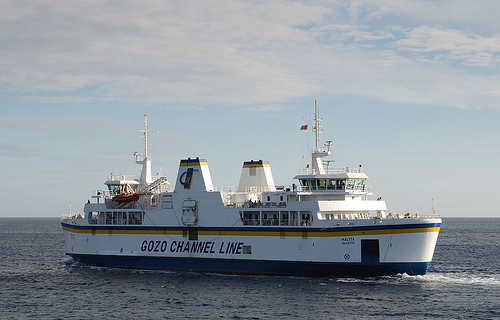
Which is why Joseph Grech of the Gozo Channel Co. should no longer hold the position of Chairman today. A ministerial reprimand does not suffice in the eyes of those who are supposed to be learning the new lessons and approach of “patti chiari, amicizia lunga”. I don’t know if it was the young turk Carol Aquilina who stated that the PN rightly choses people it can trust  to manage important positions in government or state-related companies. Sure Carol, but the corollary to that reasoning is that the PN trusts such persons to carry out the job because it believes that they are the right vehicles to bring into effect the policies that are inspired by the PN’s basic principles. The circle of trust is double – the PN government trusts them with putting policy into action but it does so as the custodian of the trust “lent” (and I emphasise the lending part) to it by the people.

Joseph Grech’s move to call back a Gozo Ferry was not a gaffe. It was an administrative no-no of the highest order – described as an “abuse of office” in most law books. A serious government wanting to impress with the value of responsibility cannot factor the idea of “resignation” out of the equation… otherwise the message is not of responsibility but of “friends of friends” come what may.

The meter of updated values has to begin to apply as of yesterday. Even when selecting its round of candidates for next elections the PN must bear this in mind. You cannot whitewash over past errors simply by wearing a new dress. Pardon the cliche but actions are worth a thousand words… and the PN needs to start acting fast.