The Legal Dope

Saturday’s protest called “Cannabis Reform Demonstration” has sparked off a few interesting discussions on the ether. The Times finds itself at the end of many an accusing finger for what seems to be a deliberate attempt to put cannabis in a bad light through “slanted” reporting and not so hidden innuendos. It’s not that reports on the harmful effects of drugs suddenly surface as the demo-day draws closer – it’s the deliberate attempt at confusion, putting cannabis on the same scale as the real killer drugs. I am not here though to go into the scientific evidence of the effects of drugs or to discuss the salutary effects of a good high or, for that matter, the negative consequences of control-freak prohibition.

Another interesting aspect has surfaced in this sudden revival of the Dope Discussion. MaltaToday carried a feature about the fact that “lurking behind next Saturday’s planned march in Valletta is a far wider-reaching challenge, which aims to end the absolute discretion enjoyed by the office of the Attorney General on decisions which would radically affect the possible sentences for certain crimes – drug-related offences being but one example.” Now I may be physically cut off from the Maltese scene but I have still to find a reference elsewhere to this aspect of the demo.

Is the demo or is it not a challenge to “the absolute discretion enjoyed by the AG’s office”? MT has quotes from two lawyers specialising in criminal defence – Joseph Giglio and Franco Debono. We do find a frank “admission” if you like halfway through the article that:

Independently of Saturday’s protest, lawyers like Giglio and Debono openly question the sheer breadth of the Attorney General’s discretion to choose between different courts (with all the serious implications for sentencing), in the light of a number of anomalous and often inconsistent decisions: including, but not limited to, the case of Daniel Holmes, whose 11-year sentence exceeded the very maximum he would otherwise have faced, had his case been heard before the Magistrates’ Court.

Well yes. The thing is that the aim of such a demo is probably best served if the demonstrators were to concentrate on the punishment – the severity of punishments determined by law for the crime of possession of cannabis and similar crimes. Even if it is not all out legalisation the problem here is more that a Welshman is in prison for 10 years for possessing what many would agree to be a harmless drug (though not the experts consulted by the Times). That is where the focus should be.

Whether politicians who in their spare time act as criminal lawyers (or should it be vice-versa) should be diverting the focus of the protest in connivance with a newspaper is questionable. I have no doubt that there could be an occasion to discuss the merits and demerits of the set-up for criminal prosecution and the very specific powers of the Attorney General but this is definitely not the time to be confusing issues. Taking advantage of public sentiment (even if a minority) with regards to the issue of penalties for cannabis-related crimes in order to rough through an amendment to an important part of our criminal procedure is just not done.

And one last note, one that we have often repeated from this blog. It is hard enough to be living in a country where human resources are not that easy to come by and therefore where specialisation in a field means you stand there with a few other good men or women. What we do not need is the two-hat politician who reforms the laws with one hand and benefits from them in his professional capacity with another. Good intentions or not is beside the point.

Like justice, law making must also be performed in a transparent manner.


The Hard Drive

While shopping for goods to fill the Christmas stockings you might have gone to some IT product store and had a good look at the prices for hardware goods. If you were shocked at the sudden hike in price for external drives for your PC/Mac or in the price for certain laptops you might be glad to know there is a reason for that. As L’Essentiel reports, we are witnessing the butterfly effect from the floods in Thailand. Companies producing hard drives and laptops have had their production practically halted and the slowdown has caused a lower supply: enter the magic of market forces.

This kind of news is an eye opener for those among us who tend to think that prices of goods and the operation of the market is entirely dependent on some paper-pushing Ministers’ decision. The same applies for those among us who believe that markets and even national economies can ever operate again in isolation.

And if a series of floods in Thailand can effect the purchasing habits in a medium-sized French town I am baffled at how some commentators can still shout hurray at David Cameron’s choice of isolating Britain from the decisions that will be taken from now on to consolidate the European Union’s (and it’s Single Market) position economically and on the world stage.

Cameron thinks he drove a hard deal. A hard drive? Sure, but with expensive consequences.

Parliamentary Salaries

Italy’s parliament has rejected a first project to reduce the perks and salaries of Italian MPs. The cut was another link in the chain of actions being taken by Monti’s technocrat government and although the collective salary of a bunch of MPs will never ever solve the national deficit – whatever the national parliament we are talking about – this kind of move tends to be an important symbolic move if nothing else. According to the Italian MPs the reason they are rejecting this law is because the terms in which it was phrased were unconstitutional. House leader Gianfranco Fini confirmed that the salary cut will happen – sooner rather than later. The MP salary deal in Malta will remain a sour deal and a tough cookie to wave aside in the pre-election tam-tam. Government friendly observers might point out that the move served to put ministers and opposition MPs on the same standing and that it will benefit ALL parliamentarians but the fact remains that the Maltese raise was made as surreptitiously as they could manage. It might be good to bear in mind though that the issue at hand when the anti-government complaints come through is not whether the salary suffices but whether the politicians are acting in solidarity with the people.

And yes, the people will always put themselves before their politicians. How else could it be?

We are like dictatorate state

The abysmal levels to which we have descended insofar as the language of Shakespeare is concerned provide much food for thought about our nation. It’s not just pronunciation in the manner of a Maltese Arsenal fan during an impromptu interview outside the Emirates Stadium. It’s not a flustered Miss Malta doing her best to sound like a woman of the world who juggles between sushi lessons and saving the Japanese nation from the tsunami aftermath. It’s a general “alazobbizmu” that has taken over when it comes to stringing a few words in English. The cult of “u ijja fhimtni” (bah… so long as you understood) has long overtaken the “chip on the shoulder” reply of “I’m Maltese and not born in London” which is also an enigmatic reply.

The UK might have started the slow and painful separation process from the EU project. English as it is spake in the outlying lands of Europa is in for a jolly funny ride. Here is Mario J Spiteri commenting on Bocca’s column and providing us with more than one candidate for funny t-shirt slogans.

 Mario J Spiteri

Today, 15:31
Oh Dr. ABC, like PN had done last week at their HQ. Shame on you dear with all respect, you should be sorry for insult the intelligence with your contribution. YES if you want to hide that now we are the same when PN was, one cannot show that he/she is Labourite. We are not a totalitary state. Well you’re showing properly that we are like dictatorate state with the peaceful angels (devils dressed in angels vest)

Bumper sticker 1: SHAME ON YOU DEAR WITH ALL RESPECT

Bumper sticker 2: SORRY FOR INSULT THE INTELLIGENCE

Bumper sticker 3: WE ARE THE SAME WHEN PN WAS

Bumper sticker 4: WE ARE NOT A TOTALITARY STATE

Bumper sticker 5: YOU’RE SHOWING PROPERLY

Bumper sticker 6: WE ARE LIKE DICTATORATE STATE WITH THE PEACEFUL ANGELS


That Intergovernmental Feeling


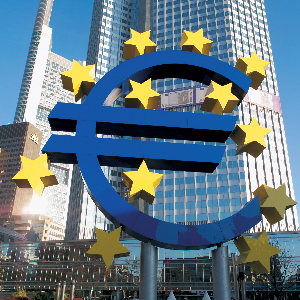
So we have the first results out from the latest round of talks to “save the Euro” and “tackle the crisis”. You have probably read about the UK’s latest “opt-out”, about how this means that there will be further “deepening” between the euro-zone 17 + (probably) 8 others while the UK, Sweden and (some have mentioned) Hungary sit on the fence. You might have quizzed the use of the words “golden rule” and wondered whether Malta’s PM and Opposition leader actually can do anything about the direction Euro politics is taking – was their adamant stance against a common fiscal system just a bit of brinkmanship or did they really mean it? Has Europe just skipped a gluttonous opportunity/excuse to go federal? Will the UK’s “splendid isolationsim” be justified?

Those questions and much more will be tackled (or left unanswered) in the next full post on J’accuse. Yes.

P.S. The current layout is temporary and we sincerely apologise for the sporadic posts on your facebook newsfeeds.

AAA

Luxembourg is hanging onto its triple-A rating by the skin of its teeth. A string of the “well-to-do” nations in Europe wake up every Monday nowadays dreading the much-feared Standard & Poors downgrade from AAA to AA. Many still live in the land of make believe where they think that a downgrade is nigh impossible – even if the once mighty United States has already taken the punch. The national press here in the Duchy reported Ministerial songs of austerity and budget restrictions a week or so ago but there still seems to be an air of “this will never happen to us”. North of the border Elio di Rupo becomes Brussels first francophone Prime Minister since 1974 and has a government of 12 Ministers and 6 Secretaries formed just in time for the upcoming Treaty negotiations.

What Treaty negotiations I hear you ask? Well it seems that the Merkozy duumvirate is pressing for a revised Treaty by March next year. March. That’s “only” three months away. I say only because it’s a treaty rewriting we are talking about – one that usually requires months and months of horse-trading and negotiations. Merkozy will not have that. They need a Treaty Change and they need it now. “Change is…” that’s Barack Obama’s new battle-cry. In this case “Change” is an attempt at avoiding what Radek Sikorski called “disintegration” in his now famous speech in Berlin on the 28th November.

“the entire practice of lending money presupposed at least the honest intention to repay”

Sikorski’s speech made waves and it did so because it called a spade a spade. Here he is exposing the problems of the Euro zone’s failings:

We have a Europe with a dominant currency but no single Treasury to enforce it. We have joint borders without a common migration policy. We are supposed to have a common foreign policy, but it is divorced from real instruments of power and often weakened by member states cutting their own deals. I could go on. Most of our institutions and procedures depend on the goodwill and sense of propriety of member states. It works tolerably well when the going is good. But then a wave of migrants shows up on the EU’s border, or a civil war blows up in our neighborhood, or markets panic. And then, what do we habitually do? We run for cover in the familiar framework of the nation state.

The nation state. That’s what we were saying a while back about new republics. Not Joseph Muscat’s sudden flirt with ideas about “Second Republics” – verbal contracts, not worth the paper that they are written on. The nation state in its revised form takes note of the realities within which it operates and accounts for them. Sikorski refers to the early hiccups in the US federation and in the Swiss federation. I recall ten to fifteen years ago during our European Studies when the “deepening vs widening” question was very much the vogue. Our biggest question then was when we asked what it would take for the big step towards federative structures to take place. Sikorski gave us the answer.

It’s the economy, stupid.