And now the Runs

There she goes again. The Runs seems to have another bout of j’accuse-itis. Apparently this blog that is either “boring” or “unnoticed” also operates on the basis of envy and is suddenly object of another spat of diarrhoea on the site that never stops the pink tirades. I still do not get the “envy” bit though… I don’t exactly see what there is to envy exactly. God knows…. although I’m sure even He would have some difficulty fathoming the character assessments on The Runs.

Anyways, it turns out that some bloke who (surprise, surprise) posts anonymously on the Runs under the name of Delacroixet had also come across Nikita’s not so hidden ouvre d’art. The Run Fan put up two links to compare and contrast – one to Nikita’s blog and another to a CNBC copy of the FT article. Somehow I am supposed to have “filched” the incredible and news that Nikita’s blog was plagiarised and “not attributed” this fact to the Runs and its followers (by the way, the Runs author is still moping about the “nerd attack” a while back when she was told off by most that her practice of not attributing sources is just not done). Funny, I never came across the CNBC site – it was easier to find the article directly on the Financial Times.

The Nikita business has put quite a few people in a fix. On the one hand these people would like to think that this blog does not exist and that nobody ready it while on the other hand they were itching to report the Nikita business. On the one hand they’d love to say that anyone with a head on their necks could tell that Nikita’s job was outsourced but on the other hand they find it hard to see that one did not necessarily have to dredge through the muck on the Runs to discover the latest example of plagiarism.

If we did not have a track record of noting plagiarism in the papers we’d be worried. Only we know better than the fanatics and bitching fools on a site ridden with grudges. You begin to understand the envy bit when you see the uncontrolled reaction complete with sorry innuendos and banale double-entendres that you only find on www.tasteyourownmedicine.com or www.daphnecaruanagalizia.com. In the nineties we had Manuel Cuschieri, now we have the hammalli peddling their crazed theories from Bidnija to London. Plus ca change…

And in case you thought the Bidniija Blog was serious about the attribution business just look two posts back. While the Runs was still blogging about our discovery (probably eating her heart out based on whatever standards of “I’m first” count as honour in that sad corner of the blogging world) there was no link to this site.

The Runs is right. It’s not about attribution is it. It’s about envy. I still don’t know who the Maltese prick drinking the coffee in the pic she filched from my blog is though. He probably reads the Runs and finds base innuendos extremely funny.

Sorry to disappoint the Runs and the tarzanelli fans but it did not take much to discover Nikita’s filching. Like it had not taken much to find others before. The fact that someone who posts regularly on Runs also notice the plagiarizing only goes to show how ANYBODY could have found it.

BTW Re my supposed obsession with the runs… I’ve said it all before… seems like it’s time for a healthy reminder: Sleeping Bitches & Galliano

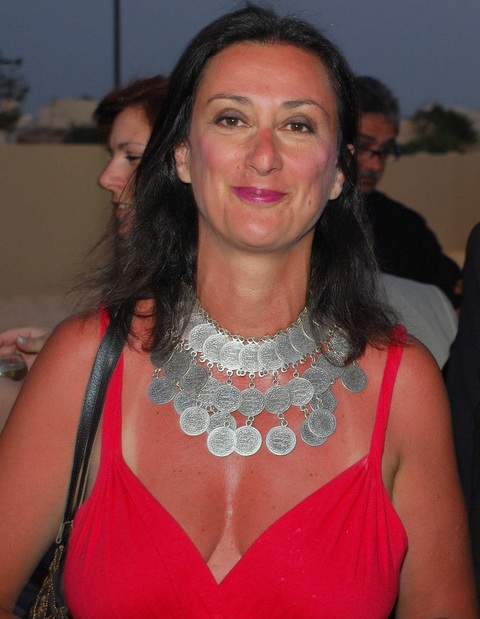
Photo: Some people go green with envy. This one prefers shades of red (taken from www.tasteyourownmedicine.com).

Time(s) to Vanish

Our latest Scissorhands post has had its effects. In less than four hours Labour’s rising star lost her place among the team of bloggers on the timesofmalta.com site. Nikita Alamango’s blog is no more.  For posterity’s sake here are the before and after pics from the Times site. Thanks again to the Times for their predictable reaction. Don’t hold your breath for a scoop in the Times itself about Nikita’s exploits.

We’d like to apologise for any inconvenience caused. But hell, we ain’t sorry. These darn wankellectuals… they’re all over the place. Peace, love and happiness.


.


Now you see me…

timesofmalta.com (around midday)

J’accuse butts in (what a pain in the arse)…

Oops. We've done it again.

J'accuse (a short while after midday)

Now you don’t…

timesofmalta.com (teatime)

Nikita (another Scissorhand)

At the start of this week I spoke of Joseph Muscat’s apparent cluelessness when it comes to dealing with the spin-offs of the Euro-economic crisis. Populist talk about “the EU needing to take decisive action” does not a government policy make. I have met people on this holiday who speak about the euro crisis as though it is happening to other people – or worse who seem to get some satisfaction out of the idea that the whole euro business might collapse. But this is Malta, whera new issue of BOV bonds or whatever they were is oversubscribed, where party policies are not questioned and where come what may health services and education will remain free.

Thank God for Nikita Alamango and her brilliant blog in the Times. With youth like this : ” a student, a member of the National Executive of PL, International Secretary of FZL and Deputy Secretary General of the National Youth Council” our nation can have a brighter future. Why am I so enamoured with this bright rising star of the labourite firmament? Because she’s done her research and has given whoever wishes to read her carefully edited blog due warning about the signs of the impending economic doom (Joseph, do take note). Prosit tal-programm to the Times for catching this gem and publishing such great material.

The blog post in question (Global markets – a ‘toxic cocktail) is being reproduced hereunder since the Times have a nasty habit of brushing embarrassing moments under the carpet (when they notice that is). What is really, really interesting for us gobsmacked enthusiasts of Labour’s enfant prodige is how her article uploaded on the Times on the 10th August (Saint Lawrence, not that the irony escapes us) seems to be uncannily similar to an article in the Financial Times by Gillian Tett (Eurozone crisis resembles US turmoil in 2008). Here’s a sample two paragraphs… the first is from Gillian’s in the FT and the second is from Nikita’s :

Gillian first…

When Greece first started to wobble, many policymakers – and some investors – tried to downplay it because Greece is so small relative to global markets – with less than €200bn of foreign-held central government debt. Similarly, Lehman Brothers and Bear Stearns, with assets of $600bn and $400bn, were also small compared with the US financial sector. (from this article in the FT)

And now Nikita…

When Greece started to quiver, many tried to downplay its importance arguing that Greece is relatively small compared to global markets. In the same way which Lehman Brothers were ‘small’ when compared with the US financial sector. (from the Times of Malta)

You think it is a coincidence? nah. The whole story on the FT is a series of bullets and all NIkita does is paraphrase the whole shebang, thesaurus in hand to replace words like “wobble” with “quiver”… here’s another example, if you are too lazy to compare the whole business (besides you might need to register (free) to read the FT article).

Again, here’s Gillian:

This has now forced some eurozone leaders to move to a new phase and admit something they long denied: namely that Greek debt will need to be restructured and not everybody will always be bailed out. On one level this is sensible; reality is finally starting to bite. But on another, it takes the crisis to a new level – again, following the 2008 playbook. For what eurozone governments have done is push investors across a crucial psychological Rubicon – and make them realise that assets that used to seem risk-free now carry credit risk. As shocks go, this is perhaps comparable with the US government’s decision to put Fannie and Freddie into conservatorship in the summer of 2008. A sacrosanct assumption is being overturned; investors no longer know what to trust. (from this article in the FT)

And here’s the member of the Labour Party National Executive:

As a result, this has forced leaders within the Euro zone to move to a new era and admit what they have denied all along – that the Greek debt will have to be restructured and, unfortunately, not everybody will always be bailed out. This was a sensible acknowledgement;: reality is starting to bite. On the other hand, it pushes the crisis up to a new level reminding us of 2008. Governments across the Euro zone have pushed investors towards a crucial point, the realisation that all assets now carry a credit risk; (from the Times of Malta)

What do you say? Gillian Tett must be one hell of a lazy writer – plagiarising stuff from one of Malta’s up and coming politicians. Surely she should have known better. Hold on. Gillian’s article appeared on the FT on the 4th of August. That’s a good 6 days before Nikita’s Saint Lawrence day post. Lovely jubbly. It’s surely manpower like this that will help Joseph’s Labour create the new economic policy that will get us out of the current mess.


The Par Condicio Moment: A simple note to pre-empt labour diehards. J’accuse reseves equal treatment to ALL plagiarisers. Especially those who purport to be the leaders of our nation. If you doubt us just search “Scissorhands” in our search box … you will see how we are true to our word.

* Incidentally when copying  and pasting parts of the FT article you get this message (Nikita must have surely had a hard time removing it):

Please respect FT.com’s ts&cs and copyright policy which allow you to: share links; copy content for personal use; & redistribute limited extracts. Email ftsales.support@ft.com to buy additional rights or use this link to reference the article – http://www.ft.com/cms/s/0/6691437a-beb3-11e0-a36b-00144feabdc0.html#ixzz1Uo76exV4


Nikita’s oeuvre in full…

Global markets – a ‘toxic’ cocktail

As the markets on Thursday and Friday reached a new low, I decided to browse some news websites to get the gist of the recent trends.

In particular, I think that the CNN piece titled Global markets destabilized by ‘toxic’ cocktail offers some food for thought.

The reporter goes on to explain how both investor and trader lacked confidence as share prices fell due to the ambiguity which dominated the global financial markets at the end of the week.

Thus, continues the CNN reporter, today’s global equity sell-off and the subsequent stock market drop was a result of a “toxic” cocktail of global economic factors and, of course, a lack of crisp and determined political leadership.

Many columnists and experts warned both investors and politicians against taking a long summer holiday this year. Sounds like an August plague, like the one back in 2007/2008, where senior leaders are away and the markets are thin and is, some how, bullying to unleash a new wave of unpredictability.

As temperatures in summer soar, the way in which today’s Euro zone story is taking shape feels unnervingly like the pattern behind the American financial disaster in the late 2008. Let’s ponder the following:

1. When Greece started to quiver, many tried to downplay its importance arguing that Greece is relatively small compared to global markets. In the same way which Lehman Brothers were ‘small’ when compared with the US financial sector;

2. Likewise, when the financial crisis broke out, policymakers in the Euro zone at first assumed that the problem was liquidity, not financial competence, and blamed it all on speculation and speculators. They repeatedly tried to postpone tough decisions that needed to be taken, just like the US authorities did in late 2007. However, it seems no more successful in the Euro zone than it was in the US;

3. As a result, this has forced leaders within the Euro zone to move to a new era and admit what they have denied all along – that the Greek debt will have to be restructured and, unfortunately, not everybody will always be bailed out. This was a sensible acknowledgement;: reality is starting to bite. On the other hand, it pushes the crisis up to a new level reminding us of 2008. Governments across the Euro zone have pushed investors towards a crucial point, the realisation that all assets now carry a credit risk;

4. Like the saying goes, every action has a reaction: a spreading sense of fear. With those investing in Euro zone bonds having low experience in calculating credit risk, they found it hard to assess which countries are safer than others. To make matters worse, very few have understood the complexity of interconnections between the Euro zone bands. It’s all about real-time data, apparently, and, of course, getting this picture of a country is quite a tough challenge since banks had stopped measuring their risks in the past decades;

5. Consequently, as fear grows, another ghost of the past returns: short-term funding risks. The structure of the Euro zone system has encouraged its financial institutions to rely heavily on short-term funding. Therefore, this results in an increasing risk of accelerating capital flight. This short-term funding could still dry up as it did twice in the case of Bear Stearns and Lehman Brothers in 2008 due to the unforeseeable actions of credit rating agencies which are sustaining market fears.

It’s interesting to note that while some analysts, as we have seen above, have compared this crisis to the 2008 recession, others like David Buick, are adamant that the current collapse cannot be compared with the 2008 crash. Buick also hints at the possibility of a new round of quantitative easing, whereby central banks print money to help boost economic growth.

On Monday, the ECB announced its intentions to purchase euro zone bonds in both Italy and Spain after both these countries declared new reforms and austerity measures with hope of boosting their economies respectively to demonstrate how serious they are to get on top of things.

Other than that – what’s next ?

After a temporary recovery illusion, we have to wait and see how this second phase of a double dip recession will develop. Will it truly follow 2008 into a full-scale financial meltdown? Will the state of the US economy improve soon to do dispel people’s fear that the US might go back into recession? And can the single currency, which is in dire straights, actually survive? (Obviously, the fragmentation of the Euro zone would make it much worse). Will major stock markets around the world (S&P500 and NASDAQ) continue to experience a downward trend while the Dollar (due to the news from Bank of Japan to “print” an extra 10 Trillion Yen) and gold continue to appreciate?

In all seriousness, I hope that a sultry summer will not result in an agitated autumn.

Let’s keep our fingers crossed.

Nikita Alamango is a student, a member of the National Executive of PL, International Secretary of FZL and Deputy Secretary General of the National Youth Council.

I ain't Gillian Tett.

Thinking in 2D in the 21st Century

It’s been a week on the island and as you can see from the lack of blogging it has been a busy one. Any time I may have away from planning is dedicated to the sun and sea (or the sun and swell during the last two days). The most “politics” I get during this time is a chance to hear people out away from the comments boxes in the various blogs and online papers and so I get to compare the ethereal with the reaHave I got some (non) news for you…

There’s a lament doing the rounds out there that is worthy of Pietro Caxaro’s darned best. It is sung by each and every person who you meet and who you da provoke into talking about current affairs. There may be variants but the highlights of the lament go something like this:

1. An extreme displeasure and disgust at anything PN. Apparently the monsters of “widespread corruption”, “nepotism” and “hofor” are back with a vengeance. The general idea among nationalist card carriers is that the PN might as well vanish in a cloud of smoke – as they have become a corrupt bunch of spendthrift nincompoops who are also hell bent on installing a police state. As one ex-nationalist (yes, they are back) gently put “it: “We do not need another five years of democratic dictatorship. Conclusion: PN does not get their vote. (Inzabbu)

2. So you try to get something out of these disgruntled nationalists about o they intend to vote for. The answer is obvious. They will vote for Inhobbkom Joseph and his merry band. Fair enough I say. After all fairness is oft invoked by the intelligent (that’s sarcasm by the way) voter to justify the need of alternation in government. But do you know what kind of policies PL has? Do you know how they will be applied to, for example, shield us from the dark clouds of the economic crisis? I am not a tough client. I ask for one (that’s 1) policy that promises to improve things from the lament-inducing state of affairs. Just one. Apparently though Joseph has promised an electoral manifesto three months before the election. And anyway that is not the point it seems. It seems that the point is that the vote is not really for PL but against PN. You see? Intelligent voting is back. Apparently the new think is “better the incompetent devil you have no clue about than the thieving, host-swallowing, conniving, power-nibbling devil you’ve had enough of”. Or summat like that. Conclusion: Viva l-lejber! (Who? boqq… basta mhux PN u hi).

3. And then you plug the innocent question. So if you are telling me that the nationalists have fooled you for too long and that you do have an inkling of a suspicion that PL running on the same polluted petrol why won’t you consider for an instance using your sacrosant right to vote positively and elect a party that deserves giving its damned best shot at having its policies represented in parliament? In other words : why not vote AD? (after reading their political proposals and seeing what they have to offer). Well we know what the answer to that on is don’t we? It’s Daphne and Patrick’s Wasted Vote… the one that makes you irresponsible for risking getting one of the other devils elected. Of course if Daphne convinced you not to waste your vote last election you probably voted for the government of one-seat majority in which Ad is not a king-maker. Hold on…. but what does that make JPO? What does it make obstinate Franco Debono? An unruly Austin Gatt? Let me guess… that is the most responsible vote of the highest order. Conclusion: Vote AD? Don’t be ridiculous. (Biex jitilghu xi PN bi zball… mhux hekk)

So three and a half years after the battles of 2008 when we tried desperately on the net and in the papers to convince people that the time had come to break the stronghold of the alternating valueless devils in this country by voting in a third party nothng much has changed. This is a country that still thinks in stupid terms. Yes, stupid. Becuase if you know that voting PN again would only encourage more of the same, and if you know that voting PL would only bring about the same, same but different and you are only voting PL because you want to spite PN then you can only be damn stupid. Very damn stupid if you ask me.

a J’accuse article in The Times of Malta from February 2008:

Win or lose we go shopping after the election

So there’s this campaign going on. It pits two candidates head to head against each other. The other contestants are sort of morphed away into the background as the two personalities fight the battle in each and every quarter. They pitch the battle from their home ground where they feel most confident attacking their opponent to the shrills and cries of banner waving supporters. Occasionally they will consent to a battle of wits before a general audience. It is such battles that bring out their fortes and their weaknesses. On the one hand the man who has already surprised everyone once by getting as far as he could get and on the other the smart confident lawyer with the plan to save the nation. They battle through the stereotypical labels, they justify past records and voting trends and they are both convinced that it is with them that the nation will start its new beginning.

It’s going to be a long, drawn out campaign as early polls had already indicated. No horse is a sure bet and every little battle waged is important for the achievement of the final result. They are determined to put on a good face to the crowd. They want to be the answer to the needs of the people. “Each candidate behaved well in the hope of being judged worthy of election”. It doesn’t take Machiavelli to notice that politicians will willingly change shape in order to best suit the image that the people want to elect. A recent article in The Boston Globe asked the question whether we should really be so angry that hypocrisy is a common trait among politicians. After all does it not mean that they are trying to be more pleasing for the electorate, the author asks.

On the other hand, in this campaign, the votes against are almost as important as the votes in favour. Often the old political adage, that men and women vote chiefly against somebody rather than for somebody, is proven right. More and more campaigns are run on why not to vote for the other candidate than why to vote for your own. It is a sorry state of affairs wherever this happens and reflects a dearth of positive ideas and policies. The same applies to the mud-slinging scenarios that have become habitual. This campaign has not been spared.

One candidate accuses the other of having supported a wrong policy in the past – the immediate repartee will be on how a policy backed by the accuser had been so ineffective and hopeless. And so on it goes. Was it not once said that during a campaign the air is full of speeches … and vice versa?

The media machinery focuses as much on the glamour aspect of the politician as it will on the substance being offered. Personal background, musical preferences and how the candidate spends his spare time all form part of the wider media circus of this campaign. Meanwhile, while one side will accuse the other of being incompetent, dishonest and incapable of fulfilling its promises, the other side will retort with the same arguments. To cap it all up the independents or third parties will agree with both – giving you quite an idea of how varied and contradicting opinions can weirdly fall in the same basket.

In the middle of it all lie the voters. They are awed by the language of the demagogues, by the special effects of the presentations and by the charisma of this or that candidate. They will watch in a drunken stupor as the more arguments are piled up the more they are mollified into one or another candidates’ camp. As the song and dance goes on they are led to believe that the choice is the only one before them that counts. Everything else is yesterday and the past. Tomorrow is another story where a new beginning and a new world exists… with your candidate of choice of course. Privately the voters’ main reflection remains that democracy is being able to vote for the candidate who you dislike the least.

But Barak Obama vs Hillary Clinton will be just another chapter in the history of viciously fought campaigns. I’ve just finished reading the book Imperium by Robert Harris which chronicles the life and times of Marcus Cicero. It chronicles events close to the end of the Republican era in Rome. Elections were order of the day between circus games and foreign campaigns. Bribery, corruption, calumnious accusation and all forms of no-holds-barred campaigning seem to have been normality in that age. Thankfully it is probably no longer possible to buy more than half the representation of the senate and the tribunes as attempted by Crassus and his co-conspirators.

Bribery and politicians who sell their soul to the highest bidder are a thing of the past even though many a Michael Moore will say otherwise. Politics are made for the good of the people. Wars are waged to export democracy and not to retain control on the oil lines, building permits are given in the light of regulations and not twisted in accordance to the needs of party backers and so on and so forth. Whatever the case the US seems set to have a woman or a black man in the White House (should the Democrats make it) over 200 years after the birth of a nation. The election will be over and we will return to our daily lives. As Imelda Marcos once famously said, win or lose, we go shopping after the election.

Clueless in Opposition

Joseph Muscat is gracing the headlines of the timesofmalta online pages. A Sunday headline is a great “catch” in marketing terms since it keeps the potential voters up to date with Muscat’s policies and positions. We have learnt recently that what Muscat thinks and believes does not necessarily reflect his party’s position but we also learnt that this has little effect on his popularity ratings with “the people”.

The Times post stresses two issues mentioned by Inhobbkom on One Radio this morning. Here is the J’accuse précis on what Muscat thinks:

1. Decisive action needs to be taken by the European Union on the unprecedented economic and financial situation the world is facing, Labour leader Joseph Muscat said this morning

2. Dr Muscat expressed shock at the release from prison of Charles Muscat, known as il-pips, after serving 15 of 25 years. Mr Muscat had been jailed for  double murder. (…) he could not understand how this could be allowed by Malta’s judiciary system (sic). It was worrying to him as a father, as a politician and as a citizen. It was also a matter of national security, he said.

Now, given that this was not a Sunday coffee morning with an open subject and that this is Malta’ Opposition Leader going about his daily work that involves reminding people that this government is bad (very bad) and that as a direct corollary his party is the best solution since sliced bread we have to look at these two statements in that very light. EU policy and Criminal Policy it is then.

1. EU Policy

And here comes the first bomb. Before even seeing what Muscat (Inhobbkom not il-pips) is proposing, we have to actually look at what the problem is that Muscat is highlighting. Well, thankfully, Muscat seems to have been alerted to the ginormous economic disaster that is threatening the Western world. He gives a nod to the US downgrading of the credit rating. Then he informs the world that the EU needs to take decisive action. Here are the thoughts that rushed through my mind in between the ringing of alarum bells and flashing of lights:

(a) Our PM-to-be still speaks of “the EU” as though it is an extraneous entity when it comes to economic affairs and budgetary management. It’s the old Daily Mail and Daily Express business of blaming “the Europeans” for the fictitious regulations on the length of sausages. Does our PM-to-be know that the problem in this case lies with the 27 nations and with their management of National Budget in defiance of the strict rules that the EU imposed?

(b) Here’s some news for Muscat. President Sarkozy is pressing for a G7, G8 and G20 meeting in order for them to discuss the economic crisis ahead of a G8 meeting. “The EU” is merely part of a huge chain of decision makers that can suggest concrete action…and here comes the biggest surprise for Muscat…

(c) Decisive action will and has to begin at home. Austerity measures – the kind of which  the Greeks and Spaniards have already got the bitter taste – will need to be taken by national governments. What we have seen Labour’s FreeVote proponents do is generally criticise government intervention to reduce public debt and spending. We have seen for example Marie Louise Coleiro (or was it Justyne) declare that only a Labour Government can guarantee free health care. So to put it blandly, Muscat’s posturing on radio about abstract entities taking “decisive action” is only a populist statement designed to tell the people that he has absolutely no intention or plan to take such measures himself. Neither does he seem to be able to acknowledge that the current government should be taking those measures already – and that he should be backing them to the hilt.

2. The Judiciary System (sic)

“The people” are angry. They are angry that the pederast priests got punished with so little time in prison. They are angry at dog killers getting off leniently. You do not expect the man in the street to understand the reasons behind “we are servants of the law that we may be free”. The idea behind the rule of law is that it provides certainty – for the accused, for the victim and for the condemned. It does so by providing clear rules as to what elements should exist to find someone guilty and what the metre of punishment is.

Our PM to be is so eager to ride the wave of current public discontent with regards to crime and punishment that he rushes to blame the “judiciary system” (yes, the Times in all its infinite wisdom and eagerness to publicise Muscat’s latest banter translated “sistema gudizzjarja” literally). Muscat fails to note that this kind of problem emanates from parliament – if the crime is not well defined, if the punishment does not fit the crime and if the calculations for early release are too lenient then the source of the problem are the lawmakers – the gaggle of freevoters in Valletta.  The laws have been there for quite some time … some of them even survived the period of the Great Leader whose Birthday Everybody Celebrated on Facebook yesterday.

Conclusion

Muscat continues to show signs of populism at its worst. The greatest exposure is his inability to identify  the source of a problem and proceed to identify the solution. He is blinded by the need to resort to simple PLPN Grammar and Rhetoric. It’s the kind of rhetoric that resorts to simplistic reasoning aimed at reaching one conclusion: PN are hopeless managers in this day and age. The sad thing is that the people did not need reminding that the PN has taken more than a few twists for the worse in recent times.

What Muscat does manage to do is to also remind us that the alternative to the current unpopular government is absolutely devoid of concrete policies and ideas. That’s what happens when you are too concerned about riding popular discontent and throw any available mud in random directions in the hope that some of it will stick.

Sadly for us and as we all know… stick it will and how… here’s to a future headless government – all for the greater good of alternation.

Enhanced by Zemanta

A nation of stone-throwers

The judgement in the case of the two paedophiles Godwin Scerri and Charles Pulis has justifiably leapt to the top of the most talked about news stories on the ether. There is no doubt that any normal human (anybody who does not have a Breivik streak anyway) will have passed through a mixture of emotions when hearing about how these two beings (they do not deserve to be called men) abused of the position of trust and responsibility with which society had entrusted them. Indignation, disgust, anger, sadness (for the victims) and the strong primitive desire to punish that hides the even more primitive need for revenge and retribution surely played a part in all of this.

While there is no doubt that Godwin and Charles deserve society’s strongest of reprimands and punishments that should be meted out in proportion to their heinous crime, it is also true that society – particularly the “instant liberals” need to put a damper or two on their enthusiastic attempts  to throw everybody and everyone in the same basket. Sure Godwin and Charles operated under the guise of (and abused the name of) priests. Does that justify the sudden lynch mob directed towards priesthood in general? Is the institution so base as to suddenly equate it with “assassins” or “necrophiliacs”?

Let me state this differently. Our criminal law contains an aggravation (a factor that means that the crime committed will be punished more harshly) in the case of a policeman committing any crime. If a policeman steals something for example, his punishment is aggravated because he is committing a crime that he was duty bound to prevent. The crime is the same (theft) but the penalty is harsher (aggravated) because of the person who committed it. For a very logical and sound reason (that most people can get to without outside assistance) there is nothing written in the Criminal Code about punishing the whole police force whenever a policeman commits a crime.

Now “the Church” (and not only the MSSP) is a vast institution and I never tire of reminding people that it has an important social role to play within the fabric of many societies let alone ours where it has been a mainstay of society for at least a thousand years. We may suddenly have a lynch mob that has emitted the verdict of GUILTY on all priests and all MSSP members in particular but they conveniently tend to forget that the operation of orphanages in this country of ours (not to mention other social support structures) is entirely dependent on the Church. It is a service that goes on every day unnoticed (and mostly untrumpeted) in  much the same way as your postal service works daily away from the limelight.

There can be no doubt that Malta’s Church requires a period of reflection and introspection : it has to ask itself which parts have gone wrong and why. It is not just the rotten apples that need seeing to but much more. From a lay point of view, the Concordat with the Maltese State has done the Church (and Malta) more harm than good and would best be disposed of as soon as possible. But this is not the time to stone the Church to death. The rotten part of the Church must go. For the sake of the Church and for the sake of our society that still depends on many of its valuable services.

Unleashing the lynch mob of “anti-papists”, “anti-clericals” and “liberal extremists” who won’t rest until they have the metaphorical blood of the Church on their hands will lead us to nowhere. Believers and non-believers might find that they have the same duty and social responsibility to help the Church redirect itself and its flock to living in a more tolerant world where abuse of trust does not happen so easily.

Hopefully it will not happen at all.