Keep me hanging on

Or when it’s best to quit. This is the first post in J’accuse’s new initiative for the lazy and the short of concentration – Sunday’s article split into edible sizes. The lengths (or cuts) we go through to please our readers.

Hang on

I had a dream that consisted of a crazed Muammar Gaddafi in exile travelling around “his” Africa filming little snippets with a videocam and commenting, “My people, they love me”. The theatricals of the tyrant in the last violent throes of his deposition have been starkly surreal. In the midst of all the firing and chaos, who does Gaddafi call? The Russian head of the World Chess Player Federation that’s who. He called Mr Ilyumzhinov to tell him that he was alive and well (just in case the Russian was thinking of checking in on his friend) and this call was reported in a manner that made it seem like the most normal conversations. The world, as you know it, is crumbling around you and you find time to call your chess partner? Checkmate.

Oh the irony. We normally attribute the term “checkmate” to Arabic origins. The phrase “Shah mat” is explained as meaning “the King is Dead” in common lore. Apparently, the Persian phrase Shah mat does not actually mean that the king is dead but rather that “the king is helpless”. Which makes more sense because the checkmate position in chess involves the noble realisation that your king is in an indefensible corner and that the next step is the gallant toppling of your own king in humble acceptance of the inevitability of defeat. Gaddafi will wander around “helpless” for a few more days, or maybe months – everybody but Muammar has realised the inevitability of his defeat. Shah mat.

Hold on

Gaddafi’s lessons in chess over a 10-year period do not seem to have included the noble art of accepting the inevitability of defeat. The tyrant hangs on for his dear life and his power, still backed by the die-hard rebels. He has become the latest tyrant on the run, a fugitive spitting away from a corner − just like Adolf and Saddam before him. Even the greatest foot shufflers and fence sitters have finally begun to publicly denounce the Green Leader and throw their lot in with the new leadership. Malta − or the slower part of it − has begun to realise the inevitability of having to rewrite its relationship with its southern neighbour.

While one powerful man gave us a lesson on how not to relinquish power, another man of a completely different cut was in the news this week. Steve Jobs, the famed Apple CEO, resigned from his post as CEO of what is probably one of the world’s most powerful companies. His resignation reverberated around the world of tech-nerds and stock markets. Apple shares shot down for a while − such was the confidence in this guru of marketing who had reinvented two worlds in one lifetime. Jobs, the man who re-branded Apple via snazzy computers and a music world revolution, has chosen to step aside.

Steve Jobs could not just teach us one lesson. He could have his own faculty in a university to teach us lessons in life, from business acumen to surviving illnesses after facing death in the face. If there is one lesson Jobs could teach us right now it is that of knowing when to quit:

I have always said if there ever came a day when I could no longer meet my duties and expectations as Apple’s CEO, I would be the first to let you know. Unfortunately, that day has come.

There you have it. The King is dead. Long live King Jobs.

Smile (More)

Well. We’re here. And that’s a good thing. Being here is rock. Having a blog purged from malicious hacks is rock (and roll). Having friends who spend a whole night with you trying to figure out what the fuck went wrong is rock (and roll encore). Not being Gaddhafi is rock. Not being in a New York metro when Irene hits Manhattan is rock. Not being a Somali kid in the Al Shabbab controlled region is rock. Being on the Dukan diet to lose weight for the wedding is slow. Still being able to consume 12 chicken wings is rock-ish. Chicken for the fourth successive day is slow.

That’s a bit of Celentano style blogging for you. We’re back in action after the horrendous ordeal of almost losing everything – including akkuza.com’s cred with google (that’s Chrome & Firefox treating you like a minor unit of Al Qaeda). Although J’accuse is back, I’m afraid that most thumbnails for archived posts have been losts so you will not find much by illustration if you go further back than eight posts from this one.

While we were de-hacking Gaddhafi’s grasp on Libya and the people of Libya was loosened further. Our politicians have suddenly decided to finally back the new government to the hilt and today’s news that the government will strip Gaddhafi of his medals and honorary mentions (backed by the opposition) has been seen by all and sundry as too little too late. We were particularly amused at how some ardent defenders of the nationalist cause who were calling us immature and stupid a while back have suddenly woken up and smelt the coffee. Here’s the Runs waking up to reality a couple of years later:

When I listened to that tremendous speech which Eddie Fenech Adami gave in parliament in December 1986 (…), I suddenly realised what has gone missing from the Nationalist Party: moral courage, and the ability to distinguish between what is right and just and what is merely convenient. (Jaqaw Qabduh fl-ahhar?)

No worries. I am sure we’ll be told that no matter how immoral, cowardly or unable to distinguish between right and convenient the Nationalists are, we’ll have to either vote Nationalist or swallow the bitter pill of being immature objects of hate again come next election.

J’accuse é rock, gli apologisti sono lenti. Molto lenti.


Hack, Hacker, Hacked

While I was busy posting about hacks yesterday (De Moribus Viator) J’accuse (the blog) was being mightily rogered by some mini-genius hacker. That shot most of the afternoon for me trying to understand why the hell any outside links to J’accuse were being redirected to some weird site with a .ru appendage. I say for me but what I really mean is for me and a number of very friendly co-bloggers and savvy acquaintances who wracked their collective brains to solve this mysterious problem. We could come up with some conspiracy theory and claim that some underground movement of J’accuse haters planned to block access to the site. We could, but we already know what measures are taken by those who find J’accuse’s sting too hard to digest – besides it would be attributing too much net savviness to them for our liking.

Instead we discovered eventually that the hack was in the form of some script that plants itself onto your site (expressly a wordpress run site) following the installation or update of templates that have been purchases. It’s a smart little bit of program that (from what I understand) suddenly plonks itself on the receiving end of your site and redirects traffic to some weird destination registered in Russka. J’accuse would like to thank SL, MB and RV for their kind attention and attempts (finally successful) to solve the frustrating issue.

So if you tried clicking on J’accuse links yesterday (particularly from Facebook) and failed to reach the hallowed ground of this blog you now have the reason why. We would also like to reassure readers that no viruses or other similar devious contraptions could have been caught by clicking on links. At most your click will have taken you on a virtual trip to Russia and who knows were else… and denied you the daily dose of quality blogging.

Merci.

De Moribus Viator

Julia Farrugia’s “rapping” at the hands of the Press Ethics Commission (PEC) has brought the question of journalistic ethics back to the discussion arena. J’accuse has long taken the subject of journalistic ethics to heart – particularly within the context of the growth of the role of blogs and blog content in the public sphere. For some time now we have been mourning the death of investigative journalism in Malta and it has little to do with who is carrying the scythe.

In true fishpond fashion, the post-mortem analysis of the Julia Farrugia/Joseph Mizzi has been absorbed into the mainstream manner of journalism: where beyond the news item lies an opportunity to snipe at people and milk the possibility to sling mud as far as possible. This analysis of ours has nothing to do with our being faint-hearted or timid about the need to call a spade a spade. J’accuse has no claims to purity or perfection (though we do get damn close).

What we would like to see discussed is whether Julia Farrugia failed on the count of exercising journalistic discretion when faced with a possible story. In the case of that kind of examination we find that our judgement falls closer to that found on Lou Bondi’s or Daphne Caruana Galizia’s blogs than on the explanation afforded by MaltaToday journalist Matthew Vella. At the moment of receiving the information and video, Farrugia was duty bound to apply an ethical brake to the eagerness to publish a juicy video.

Matthew Vella tries to find fault with the PEC’s reasoning. In particular Vella does not agree with what he reads as a shift of moral responsibility: “it was not incumbent upon the journalist to take moral umbrage at the source’s footage. That would have been tantamount to self-censorship, on the basis of the assumed deference towards government appointees.” We may grant that the standard being applied by the PEC may not find universal acceptance (or cause difficulties in future application) – but that would be focusing on a separate problem. The focus here was on a journalist’s judgement and ethical considerations when evaluating “news value”.

Vella asks: “So does this mean from now on, when we encounter some form of embarrassing or unbecoming behaviour by a government minister or high-ranking civil servant, they should not be held to account, simply because they ridicule themselves?” I don’t think anybody would agree that this is the conclusion to be drawn. Let’s put it this way, had Julia Farrugia’s news item limited itself to reporting the fact that Mr Mizzi was filmed in a groggy state we might not be here asking questions. Instead the implications loaded behind the video, its suspect editing and the forcefulness with which it was used to bring about a political statement and result, shift it away from plain reporting and into the hazy domain of journalism driven by preconceived agendas – in which case it stops being journalism. It becomes biased reporting where “facts” are cut and paste to suit a journalist’s agenda.

Which brings me to the Daphnes and the Lous of this world.  Lou Bondi has recntly taken to blogging and no longer considers the blogging world as a world of “peċluqa” (see video below) – either that or he has become one hell of a “peċluq” himself. His last two posts at the time of writing (“Julia, try a red bathing suit this time” and “When Julia went crying to daddy“) are redolent of the style perfected on the Runs (there goes the obsession). Malta’s foremost investigative journalist does not limit himself to discussing the ethical issue at stake but performs his own little foray into the world of character assassinations and guilt by association.

Daphne too chooses to deviate from the real issue and peppers her commentary with references to “il-boton” – the usual snide, taste-based, zokk u fergħa reasoning best left for PLPN bull towards the election. This is a pity really because there is no doubt that Caruana Galizia has accumulated enough expertise and networking to have the right sources and means to fill the gap that exists in investigative journalism in Malta. Instead she participates happily in fishpond peċlieq with gay abandon.

Yes, we know we can expect the tirade on J’accuse from this magnificent duo of Maltese journalistic standards but hey what’s new? Plategate may long be buried in the collective memory and might be down to the final stanzas of what has been a drawn out lament but the lessons to be learnt are still there in full view of anyone who cares to listen. Last time round – back in the heyday of Plategate – we held Lou to task for his apparent inability to assemble a proper program investigating the causes behind Plategate and the conflagration that ensued. Like Julia Farrugia, Daphne had sat on some juicy and important bits of news regarding the behaviour of members of our judiciary and their extended circles. Like Julia she had a decision on whether to go public or not. That was her moment of applying journalistic ethics.

Lou failed to ask Daphne (his dinner friend) the vital question: Why now? (as in Why then?). Julia Farrugia deserves the rapping on the knuckles for her lack of judgement in the Mizzi Affair. Daphne Caruana Galizia would still have us believe that the flush of information regarding the private lives of public individuals was triggered off by a sudden urge of public duty notwithstanding the fact that she had sat on that information (and accumulated it in true peċluqa style) for quite some time. Why did she choose the moment she chose to suddenly publish the information? Lou tried his damn best to depict Daphne as the hero and martyr when making his editorial choices for the infamous Bondiplus programme.

In J’accuse’s book the press should be reporting instances of public individuals who are caught misbehaving while on public duty. It should be uncovering these situations of public officers behaving badly and should continue to press on to ensure the transparency of such information.

What should never be done is to use such information in line with a private agenda of spite, hate, jealousy and retribution. Unfortunately it seems that Malta’s fishpond journalism is more and more prone to pick up the latter style than engage in real investigation and reporting.

So much for ethics then. Take that from Malta’s longest running peċluq.

Bondi’s peċluq

Coffee

End of the two weeks in Malta. The notes from a small island include a register of the pent up frustration that surfaces when discussing and that contrasts incredibly with the image of laid back Med country that is part of the daily tableau. We don’t travel to judge. Us expats I mean but we are inevitably driven to drawing comparisons. So while we may find the heat a little bit more unbearable with every visit, we can also be pleasantly surprised by the little beauties that surface. It’s like that with culinary fantasies like the atmosphere and food at Temptasian (The roof restaurant at The Palace, Sliema). While waiting for 30 mins at Zaventem for the baggage to finally start moving round the conveyor belt we are reminded by a Flemish lady that every country has it’s imperfections: “welcome to Belgium”. Luckily we manage to hop on the last train home and are chauffeured from the arid train station to sleepy Dondelange by the laid back and chilled MV who reminds us of the welcoming and homely nature of the Maltese abroad. We read the book ‘Uncommon’ on the flight and found it to be fantasmagorical. More on that in re-vu when we get down to writing a short review, which is a bit ironic really because I get the feeling that it will be like révù reviewing itself.

Image: from the J’accse physical archives. A snapshot of a poster for an SDM/MUSC party back in the day when budding politicians knew the difference between work and play (and were good at both) and DJs were …. Hell, just DJs.

20110823-092809.jpg

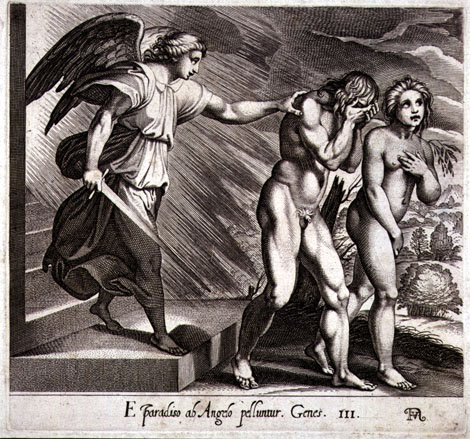
What Paradise?

The immigrants are rioting. The Maltese comment boards are rife with spiteful messages of the “send them back home” kind. Forget blaming the police or the government. It’s the whole damn country that’s in a mess at the worst possible time. I’m not speaking of hysterical bloggers switching attention from the real issues to a slide show of cheap voyeurism. I am speaking of the mentality that is evident on every bus, in every queue, in every department or shop. It’s how people yell at each other. How they judge and sell relative opinions. How the primadonnas of this world panic at every moment that they seem to lose what they perceive to be control of their twisted corner of whatever market they seem to occur and how the masses enjoy their role as supporters in a dog-eat-dog world without realising that the dogs are biting at their hearts.

My errands on this holiday have taken me to the Emigrants Commission and to the Public Registry. I’ve used public transport, I’ve driven and on breaks I’ve had a chance to see the mass at work – through the multiplicity of individuals who squat on this tiny rock. We’ve lost something along the way these past few years. It’s a mixture of values, attitude and outlook to life. We’re on the defensive while thinking in cliches. We’re rashly judgemental and highly egoistic. We’re an ugly mixture of materialistic hedonism and false moralism. We’re oblivious to the world across the sea while we continue to peddle the fable of a whole universe on one small island that could live without anyone and that does not need anyone. And when the world passes to our shores we panic and yell. We shout “Move Up”, “What do you want?” “Stand Back” “Go Home” “Five euros and twenty cents” “Tini dak” “Qabzitli” “That’s mine” “X’buzz mann” in unison and speak in a tongue of anger an remote-controlled frustration without any reference point.

The immigrants may be rioting in Safi. There may be policemen injured doing their job. The rioters might be yelling “Freedom, Freedom”. But in the end you cannot help but wonder whether their riot is misguided. You cannot help but wonder whether they are safer in the confines of their detention. You cannot help but wonder that with the experiences and stories that life has harshly and unfairly thrown at them, it’s the walls of their detention centre in Safi that are keeping them away from the mass of prisoners on an island inhabited by false moralists and hypocrites.

The Safi inmates yelling for Freedom might still be in time to realise that the real prison lies beyond the confines of the Safi Centre.

What detention centre? In an island of hypocrites and false moralists we are all prisoners. This is no paradise to be banished from.

COMMENT IS FREE. STILL. THINK BEFORE YOU TYPE.

‘We are all just prisoners here, of our own device’