Gilad and the 1,000

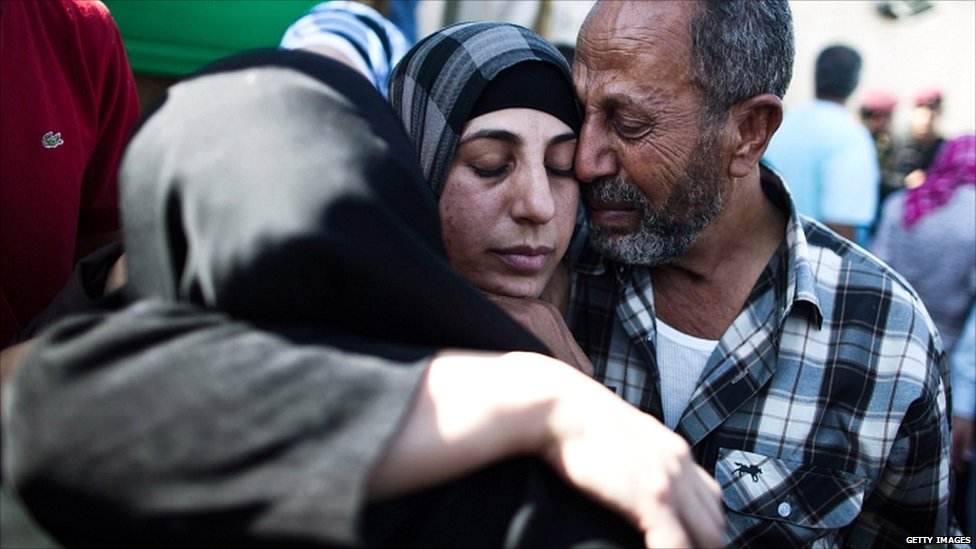
The images of fervent joy that accompanied the exchange of prisoners between Palestine’s Hamas and Netanyahu’s Israel have dominated the front pages of the news these past two days. I wish to bow my head to the Macchiavellian planners (though I doubt they would enjoy comparisons to Florence’s dastardly product) in Netanyahu’s entourage who must have convinced him to OK the exchange.

One man Gilad Shalit – a youth of 25 who has survived 5 years of prison “without seeing a human face” – was released in exchange of a 1,000 Palestinian prisoners. The exchanged occurred in Egypt and was purportedly the last chance Israel and Palestine had to make use of Egyptian mediation before the Muslim Brotherhood takes over the land of the Pharaohs. Netanyahu surprised many by accepting this exchange that seemed – on the face of it – hugely unbalanced in favour of the Palestinians. It was after all one man for one thousand. Wasn’t Israel short changed?

Not really no. Just following the news you will notice that this is a victory of sorts for Israel. Aside from the banale calculation that one French-Israeli is worth a thousand Palestinians there is a much more meaningful mediatic victory to ponder upon. Gilad Shalit. The man has a name. He has a story to tell. His five year ordeal of “not seeing a human face” has won precious airwave time reinforcing the image of a brutal imprisonment in the hands of the Hamas gaolers with faces covered. His emaciated look tells stories about the conditions of his hardship and much like the Chilean miners a few months back his personal, human story will hit home to many. And that story is the story of an Israeli conscript.

Contrast that with the busloads of Palestinian prisoners hanging out of the windows. This was a faceless herd. A rabble almost. Even the welcoming ceremony seemed to be improvised and there were few individual stories to be told.

Will we ever know their name? How many of us will be told that some of them have been hanging around Israeli prisons since 1993 and the Oslo Peace Accords? Yes. That’s 1993. Arafat and Rabin were alive and Bill Clinton was US President. It’s not 5 years ago. It’s more like 18. Sure. Some of them were imprisoned for committing heinous crimes and not abducted in an across the border raid. Not all of them though.

How many of us know that back in 2006 when Gilad Shalit was a fresh kidnapee, Israel refused to exchange all Palestinian women and children in prison for his release? What changed in the last five years?

One man for a thousand faceless prisoners. A bargain. Surely.


Picture source: BBC IMAGE

Press On (a preview)

Here’s a snippet from tomorrow’s J’Accuse column on the Malta Independent on Sunday.

I am a strong believer in the role of the press, of books and of ideas in the functioning of a proper democracy. As John Milton wrote in his Aeropagitica “He who destroys a good book, kills reason itself”.There’s much truth in that. A nation, even a small nation such as ours needs to recognise the value of authors providing different narratives and ideas. Authors provide opportunities for reflection, they may provoke and challenge or they may charm with vignettes and pictures of our society. In any case the worst we could do is censor the truths they tell about ourselves.

The press too needs to recognise the dignified importance of its role. It needs to shed the baggage of politically manipulative impostors who have burdened and sullied its image. Local political talk seems to focus on futile accusations related to partiality and the elusive mantra of absolute impartiality. Journalism does not need eunuchs or hypocritical gurus and coaches posing as the voice of objective impartiality. It needs clear ethics, clear ideas and above all the accountability that allows it to shout “publish and be damned”. Give me a journalist with a declared bias any day rather than the sanitised pantomimes that have neutered our thinking with the extended sagas of Broadcasting Authority illusions of par conditio.

When your surname’s not Bonanno

Here’s the full text of a law report from the Times of Malta. I am not leaving anything out or selecting only parts of it so that you too can read it in its entirety (look no editing).

[box type=”shadow”]
Thursday, October 13, 2011, 14:27
Lawyer wants Arbitration Tribunal decision to be declared null

A lawyer representing a man who was involved in a traffic accident this morning called on a court to declare null a decision on the case taken by the Arbitration Centre.

Dr Jose’ Herrera said he was making his request after the Constitutional Court in September declared that forced arbitration, as was the case here, violated the right to a fair hearing.

Dr Herrera is representing Victor Micallef, who was found to have been 50% responsible for a car accident in 2006 and ordered to pay some €3,000. The decision was taken by the Arbitration Tribunal.[/box]

Can someone explain to me why in this country it is lawyers not plaintiffs who make requests to a court? It’s already bad enough when the report starts off with the anonymous “a lawyer” because technically speaking it’s not “a lawyer” but “the plaintiff” who is requesting the court to annul the Arbitration Tribunal decision. Sure, it’s a lawyer who has gone through the legal motions but it will always be the plaintiff’s request – the plaintiff as represented by a lawyer (taken as read).

Most of you will have read of the Premier League case that was decided by the august institution that I work for. Now, how many of you remember the names of the lawyers for the parties who were involved in the referred case? Name one. Just one. I dare you.

Admit it. You probably don’t even remember the name of the publican who was the “star” of the show. Well, we all know it was a lady and that she owned a pub. Fact is that the headlines in most of the papers the next day were not Lawyer So and So wins case before the Court of Justice of the European Union. Most headlines featured “Pub Lady”.

So back to Malta. Not only do we wrongly highlight the lawyer and not the party. It gets better. “The lawyer” is “outed” (surprise, surprise) as Dr Herrera – a potential justice minister in a future Labour government – and “his” case is actually challenging the constitution of a particular tribunal under our laws because its set up might violate the right to a fair hearing.

Somehow I get the feeling that the hacks at the Times received a convenient summary of the case and threw it straight into their Court section. How they do not feel “manipulated” in a Matt Bonanno sort of way just because the “feed” comes straight from a politician is uncanny. How they participate in this blurring of lines between lawyer-client relationship and political advertising without any qualms is unnerving.

People like Franco Debono would do well to have a word or two with the likes of Dr Herrera when it comes to “advertising” particular cases. This kind of “publication” tends to undermine further the faith we have in all four institutions – government, judiciary, parliament and the fourth estate. It does so much faster than an unaccountable Minister or a biased news programme.

The Coach & Horses

Much is being made about Peppi Azzopardi’s side-career as a “coach” to prominent persons in the political sphere. Such persons tend to be, or have been, of a nationalist persuasion although I have it on good record that Peppi has also given non-nationalists the benefits of whatever expertise he has – admittedly within campaigns that were also dear to the nationalist party’s heart.

To begin with, there is nothing surprising that one of the main horses from the “Where’s Everybody” stable should engage in spinoff marketing designed to get people to get their message through to your average citizen. WE’s monopoly of national airwave prime time has put them in a position to be able – even by trial and error – to discover what sells best with Mr. Francis the People (Cikku l-poplu). In the land of the blind the one-eyed man sometimes develops an acute sense of vision that might surprise even himself.

Labour’s noise about Peppi’s supposed impartiality and that of the other equine from the same stable – the one who tends to bray rather than neigh – is rather misplaced. It has been said elsewhere that impartiality is not the be all and end all of discussion program or investigative journalism. It is the feigning of impartiality that is another matter altogether. To actually convince yourself that you are in the business of balanced reporting or discussion when  it is clear to all and sundry how mechanised a pantomime your programmes are is to persist in a constant lie. J’accuse never had any beef with the lack of impartiality but rather with the obstinate denial thereof.

What jars most in the case of Peppi, Lou and others who have previously backed the line of one Jeffrey Pullicino Orlando is their defence of “I believed him then”. But then what? They saw his face and inverted the musical trend?

You see the Peppi defence of “I helped a persecuted individual” does not hold water in the field of marketing – you are employed to sell ANYTHING and do not question the underlying message. Peppi was either turning up at the nationalist party headquarters to coach a politician on how to appear more convincing – whatever the message – or he was there in his full mental capacity and judging the content too: and it was not THAT difficult to see that JPO was floundering fast even under the duress and stress of the time.

Nor does someone like Daphne convince me with the bull about how JPO was very convincing before the election and how now he is suddenly a liar, a hamallu or whatever else the spin machine chooses to throw at this jack of all trades turned politician. The nationalist party was falling over itself trying to get the man out of the muddle he had brought upon himself. We had pointed out the absurdity of the issuing of a press card to a politician at the time and we were told that we were “immature” and that we were picking the wrong man.

The damascene turnaround has nothing to do with policy or values but with convenience. Peppi and Daphne sound very much like a Joseph Muscat who needed four years of European Parliament action before he saw the EU light shining through the yellow stars on a blue background. And the funny thing is that it does not answer the basic question: whether you believed him or whether you were being paid on a retainer Peppi, you were in PN HQ doing PN work for a PN politician.

Saying that it’s because you believed him then is like saying you put the joint to your mouth… but never inhaled.


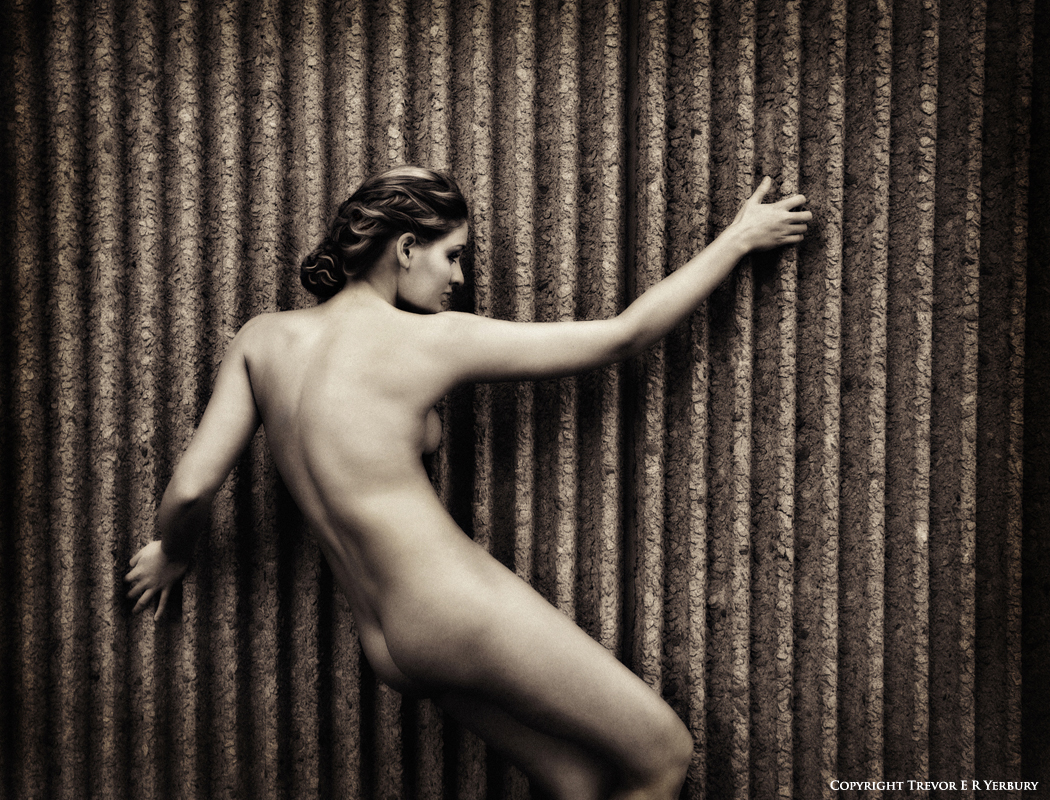
Gallery Pi goes Yerbury

Bertu of Bertoons for J’accuse has sent in a promo blurb for this exhibition that is runnning at Rupert Cefai’s Gallery Pi between the 14th and 24th October. J’accuse dutifully passes on the information to its readers – do go check out Rupert’s little corner of Valletta in Archbishop Street.

“Naked ruins exclusive at Gallery Pi”

Like Madonna, the Yerbury duo constantly reinvent themselves with fresh  approaches to their art – and challenging diversions within the social portraiture genus.

As the 4th generation of this celebrated Scottish photographic dynasty, Trevor spent many years concentrating on fashion and private nude commissions. He returned to social and wedding photography in the mid 90s and immediately created a unique style of photography, which not only earned him the title of “Kodak UK Wedding Photographer of the Year” in 1997 & 1999, but his influential style helped change the course of wedding photography into the relaxed, informal style we have today.

No stranger to the media, Trevor has been interviewed about his individual style of photography on national television by Noel Edmonds for the BBC, Carol Smillie for ITV and Paul Ross for SKY. He is a regular contributor to BBC radio arts programmes.

Trevor was featured on the BBC Arts documentary “The Bigger Picture” where he was filmed making a portrait of Billy Connolly. The resulting image was used as the opening scene for each episode and has since become an iconic image.

Their work in photographing the female nude has been recognised internationally, resulting in overseas exhibitions and seminar tours. In 2003,the Yerburys’ talent was commissioned to supply the entire artwork for the new Glasshouse Hotel in Edinburgh – a brave concept, but one that resulted in the hotel recently being voted Sexiest Hotel in Scotland.

The Yerburys have held several exhibition of their work in galleries around the UK including the Association of Photographers Gallery in London and the Demarco Gallery in Edinburgh. Their work has also been exhibited in America, France and Spain. Their work has been featured in many books and photographic magazines on the Nude Trevor holds a total of 14 Kodak European Gold Awards. His other awards include SWPP UK Glamour Photographer 2006 and UK Fashion Photographer 2006.

Four years ago Trevor Yerbury was voted one of the world’s top ten photographers by a leading Spanish magazine…despite having once declared: “I won’t shoot the wedding if the bride isn’t beautiful”.

Faye joined Trevor full time in 1996 and has earned an enviable reputation for her work. On 3 occasions she has won the title of “Kodak UK Child Photographer of the Year”. She also holds a Kodak Gold Award and SWPP UK Architectural Photographer 2006.

The Yerburys now devote much of their time to their seminar and workshop programme, convinced that education is essential for today’s professional photographer. They are committed to providing a platform and an environment in which all levels of photographers can come together and develop their own individual creative talents.

Trevor and Faye have judged both nationally and internationally. Trevor has just finished judging the annual European Professional Photographer of the Year Awards 2011.

The exhibition will run exclusively at Gallery Pi Archbishop Str., Valletta, from the 14th to the 24th October 2011, The Gallery will be open from Tuesday to Friday from 10am to 2pm and Saturdays from 9:30 to 12:30 or by appointment. For more information please visit www.gallerypi.com