Europe’s representation crisis?

representation_akkuzaThe upcoming French municipal elections have unearthed a huge problem. In many municipalities there is a dearth of candidates, particularly for the post of Mayor. In the Gironde area 45% of the smaller communes are still without a candidate – and it does not stop there. The main reason given for the dearth of candidates is the stricter set of rules being enforced among smaller communes when it comes to conditions for submitting candidatures and lists. There is another parallel reality though and that is related to the fact that potential candidates are shying away from what is perceived as a great responsibility.

In Italy, new PM Matteo Renzi has chosen to merge a swathe of administrative districts in Sicily in order to make them more competitive and promote development. The new “South-East District” encompasses Catania, Siracusa and Ragusa and is intended as an injection to the often static development in the south of Italy. Italy’s Senate and Parliament have had a little bomb explode within thanks to the earthquake that has shaken Grillo’s M5S.

Grillo’s 5 Star Movement has always found it hard to come to terms with an effective working representative system. In its effort to maximise transparent and representative decision making, the Movement ends up having draconian rules and emanates a sense of inflexibility. It could be a case of a far-fetched utopian reality attempting to adapt to the circumstances of old-style politics. Or it could simply be an implosion in the making.

Probably it is a bit of the two. What seems to surface from this kind of turmoil is the fact that a “new politics” without revolution rarely, if ever, happens. The M5S tried to glide into and replace the old system of political workings. This old system is a system that had settled comfortably into a market of power-mongering, influence trading and alternating hegemonies that had little or nothing to do with democratic representation.

Matteo Renzi has been accused of being the new face of the old style politics. He is the epitome of non-representative political methodology – not having been elected to parliament, senate or power. His is but one manifestation of the disenfranchisement of representative power. Another method would be the gradual removal of accountability, transparency and basic rule of law. The latter is a method preferred by the nouveau “representative majorities”, rushed into power by popular mandate which is all too soon discarded and replaced by the service of the power-mongering, influence trading and hegemonic elite.

Finally, the European Union itself, with the elections for its most representative branch just round the corner, would do well to take a long hard look at its long term objectives and if necessary question whether or not there exists a demos to be served and, more importantly, what that demos is calling for.

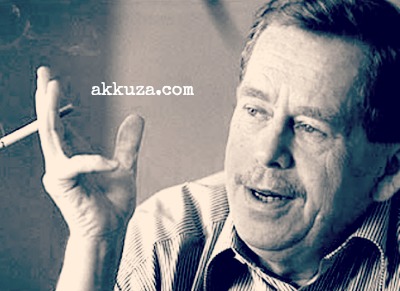


I will, in short, dream for a while

vaclav_akkuzaBack in 1992, Vaclav Havel was the President of a reborn Czechoslovakia. The fall of the Wall and the crumbling of the Iron Curtain was still fresh in recent memory and Havel’s new republic was making its way towards the ideal of “Western Democracy”. Fukuyama might be standing round the corner proclaiming the end of history but for the Czechoslovak playwright and poet President the future was full of hope. In the summer of 1992, Havel wrote a series of essays published in a book called “Summer Meditations”. In “Beyond the Shock of Freedom” he tries to imagine what Czechoslovakia would be like in the future (ten, fifteen, or twenty years). Though he admits that “life is unfathomable” he does try to dream for a while.

It’s not Martin Luther King’s dream. In many ways it is much more down to earth. What we read is a President who hopes to shepherd his newborn Western nation to working the basic tenets of what was understood to be the workings of a western liberal democracy. This was, remember, around the same time as the second mandate of Fenech Adami’s reworking of the Maltese republic – from Work, Justice and Liberty we had segued onto “Solidarity… always… everywhere”. Solidarity was a page lifted straight from the rebirth of another former Iron curtain nation – Walesa’s Poland. It was the call for change that was answered and that began to break away at the shackles of totalitarian hypocrisy.

But back to Havel’s dream. It remains relevant today – and not just for Czechoslovakia (the split into the Czech and Slovak republics occurred a little while after Havel published his thoughts). I find Havel’s hopes for the citizenry particularly telling. What he describes as ‘the shock of freedom’ has impacted the way citizens think and he hopes for an evolution in their attitude. The civic responsibility that he evokes involves confidence and pride – leading citizens to feel comfortable with their own country. Here is an extract from the opening lines of his essay with my emphasis added.

In the first place, I hope the atmosphere of our lives will change. The shock of freedom, expressed through frustration, paralysis and spite, will have gradually dissipated from society. Citizens will be more confident and proud, and will share a feeling of co-responsibility for public affairs.They will believe that it makes sense to live in this country.

Political life will have become more harmonious. We will have two large parties with their own traditions, their own intellectual potential, clear programs, and their own grass-roots support. They will be led by a new generation of young, well-educated politicians whose outlook has not been distorted by the era of totalitarianism. And of course there will be several smaller parties as well.

Our constitutional and political system will have been created and tested. It will have a set of established gentlemanly, unbendable rules. The legislative bodies will work calmly, with deliberation and objectivity. The executive branch of government and the civil service will be inconspicuous and efficient. The judiciary will be independent and will enjoy popular trust, and there will be an ample supply of new judges. […] A well-functioning, courteous police force wioll enjoy the respect of the population, and thanks to it – not only to it – there will no longer be anything like the high crime rate there is now.

At the head of the state will be a grey-haired professor with the charm of a Richard von Weizsacker.

We will, in short, be a stable Central Europen democracy that has found its identity and learned to live with itself.

A history of violence and animals

violence_akkuzaThe works of a psychopath in Mosta (whether direct or through a hired hand) have tickled the curiosity of the Maltese public. It does not take much for anything to get onto the media these days (as I discovered to my chagrin thanks to a what I thought would be an innocuous Eurovisionjoke involving Gary Barlow) but the “Mosta Cat Killer” has qualified for permanent stardom. Let’s face it, the case of dead cats and dogs hanging from crucifixes is destined to be spoken of for many years to come – there will probably be a Xarabank programme about it on the 16th anniversary complete with a live performance from the musical “Cats”.

In a tiny island that still gets its occasional murder or two as well as multiple cases of theft one cannot but wonder whether the sensationalism behind what in many other nations would be a village freak crime is over-hyped – and consequently whether too many resources are being dedicated to the matter. I googled “cat killer” and “serial cat killer” – because that is the thing you do these days – and was surprised to discover several cases reported in the UK and US. Admittedly there is not the Dan Brown addition of gory crucifixes linked to statues of saints but there was a sense of relief to be had in the idea that cat murderers are not confined to the isle of milk and honey.

Having said that the fascination with the whole idea of having Malta’s own serial killer (albeit of the feline and canine victim kind) persists and as the 16th of the month approaches (although I am told by Cat Killer aficionados it won’t be the 16th because it’s February – go figure) the hype is destined to build up again. Is this another case of the obscene voyeurism that the 21st century has thrown in our collective faces? Elsewhere Raphael Vassallo has concluded that the Danish Zoo’s putting down of perfectly healthy giraffe Marius was made public in order to take advantage of the gory fancies the general public might have. This was no “mercy killing”, it was “panem et circenses” all over again.

The moral vagaries of such issues are hard to catch up with. On the one hand there is a huge gap between this society and the one I grew up in – aiding my grandma to skin a rabbit that she had just killed not so mercifully with a deft chop to the neck. The empathy for the dead cats and dogs in the Mosta Killer case must surely be put into perspective. As far as I know nobody has walked up to the police in tears claiming that their pet cat or dog has been killed. These are “wild” cats and dogs. Which does not make killing them any nicer but does point out to some kind of conscientious choice by the perpetrator. Let’s face it, he could be kidnapping and killing your moggies and pooches but he is not. He is just intent on making whatever twisted point he has to make to society in general.

In the UK they often license the culling of squirrels – the overpopulation is harmful to the greater balance in nature. In Malta we now have quotas for hunting – whether they are respected is another story – but wild cats and dogs run freely and dangerously in villages and the countryside. Is this Mosta Killer Malta’s weird and unorthodox way of coping with this overabundance of stray cats and dogs? Of course not. Forgive me for thinking so though, especially since when last I checked the public reaction to the problems with dog shelters and cat shelters was not half as enthusiastic as the ogling and curiosity that surrounds the Mosta Cat Killer.

“Some werewolves are hairy on the inside” – Stephen King.


The unpredictable past

portents_akkuzaThe Russians had an interesting expression while under the communist rule. They would say that even the past is unpredictable – because it kept getting rewritten in order to better fit the needs of whoever was in power at some particular moment. I was reminded of this when I read about the PL Deputy Leader’s surreal “Thank God for Simon” speech at the opening of the Labour Party Conference. Particularly interesting was the section about how Mintoff had transformed Malta into a chicken that lays golden eggs and how the nationalist party in government had managed to turn these eggs into leg. Presumably the chicken was not stolen from someone else – seeing how our potential new residents seem to think that Maltese are “chicken thieves” all.

Elsewhere on the net during my latest period of self-imposed exile, we saw that not too endearing man or woman who frequently gets pride of place on the blog that we still like to call the Runs hit the nail on the head a couple of times. It would seem that certain arguments that would not have been seen as valid under a nationalist administration are now worth entertaining. Ah well, the past – as they say – is so unpredictable. The gist of what the Scooter persona said was very much a summary of what was oft repeated on this blog and hence very acceptable to our ears. It had much to do with with why the nationalist party in power lost the plot – particularly with regards to the (un)conscious re-prioritisation of certain values.

Prominent among these values is that of wealth, translated unfortunately by our political aficionados into an idolisation of “money”. In a letter to the press that I had co-authored and co-signed a couple of elections ago we (the co-authors) had pointed out how the Nationalist Party only functions as an efficient vehicle of popular sentiment and representation whenever it manages to put its thumb on a “proper and just cause”. Thus 1987 with all its promises of change from the socialist block, 1992 with the continuation of the change and the beginning of the mission of European Membership … all the way to 2004 and actual membership. Having dragged an overall skeptical nation into the EU, the PN failed to regalvanise its sense of purpose with new blood. The downfall from then on was all too easy to predict. No purpose, no party.

A pragmatic and cycnical Labour has stuck to one purpose – transparently clear through all the marketing stunts – hanging on to power. Labour is the perfect machine of the PLPN era. It sells an idea of representative majoritarian democracy (with hugely familiar consonances with Gaddhafi’s Green Book of Instructions for Popular Democracy) while actually dealing solely in power-trading politics. The ultimate unit is not values but greed in a wider sense. You get what you want if you are willing to play along with the tune. Lobbies are transformed into piglets running around the teat of a mother pig that is itself busy swilling at the trough. Rights are not really so much a matter of discussion as much as a form of barter in the power game. Which explains the roughshod manner in which even those rights that could be described as universally desirable are suddenly introduced.

With the PN currently in “renewal” mode and the PL preparing for its first reshuffle, the present is not half as clear as it could be. The first headlines to trickle out of the PN reform conference seemed to me to be heavily reliant on cosmetics and the cliché point winners (more women, more participation). I may be missing something but I did not really see much that was related to the PN soul-searching for that new basic sense of purpose that builds upon past ones (notably upon EU membership). Ironically much of the way that the Labour government played the EU side with regards to the citizenship issue was not too different from how the PN itself had “used” EU structures for other sensitive issues – and I have hunting particularly in mind.

The PN would do well to examine the possibility of becoming stronger on Europe. More Europeanist. Yes, it is possible. For until this moment what with all the “good” it may have done by forming the bulk of the movement for EU membership, the heritage that the PN left behind points to anything but a Europeanist wave. Our knights in shining armour (as they portray themselves) might have galloped all the way to the door of Europe but their horses are still tied outside. Europeanism might be a solution that the PN could explore and embrace. It will not be easy because for too long has the PN kidded itself that it carries a 100% Europeanist movement behind it. It does not. A battle would still have to take place for such Europeanism to assert itself. And there is no guarantee that such a philosophy and politics could be a “winner” on the Maltese stage.

A murky past, an even murkier future. Things are definitely going to get interesting.

Getting selfies right

DogSelfie_akkuzaIn an article entitled “Sharing explicit selfies without consent may be made illegal“, the Times reports that Social Dialogue Minister Helena Dalli has reacted to the current furore on selfies. Minister Dalli is quoted as saying that “the sharing of explicit material without a person’s consent is a clear breach of data protection”.

It is important to be clear about two aspects here. First of all “selfie” has snapped its way into the dictionary and has a very specific meaning. A “selfie” as the name implies (btw… it’s a “stessu” in Maltese – and that’s semi-official) is a snapshot taken of oneself by oneself. The crucial element in all this is the “self” – it is not a selfie if the person pressing the button of the camera is not the same as the person depicted in the picture. Why is that important? Well, simple really, it stops being a selfie if someone other than the person who took it (and is depicted in it) publishes it. It may sound like pedantic playing with words but in actual fact the point is that you don’t need consent to publish a selfie because technically the only person who publishes a selfie is the same person who took it.

When someone other than the selfie-taker publishes what was originally a selfie then what they are doing is publishing a photo – this falls under a wider category and not necessarily a selfie – of someone else. Who cares? The law might. You see if you are in possession of lewd photos of another person and publish them without his or her consent then chances are high (let’s say close to 100%) that what you are doing is illegal on a number of counts. It is ALREADY illegal.

Which brings me to the second point. I am sure that Minister Dalli’s intention is legitimate and I am also convinced that there might be lacunae that may need to be filled insofar as the Data Protection Commissioner is concerned. There is definitely a need for an educational campaign with regards to the use of private date and publishing thereof. Magistrate Depasquale was reported in the Independent to have referred to the fact that anyone uploading images of oneself that will be available publicly is exposing himself to “fair comment”.

“Magistrate Francesco Depasquale said in his judgement, the accusations were with regard to posts and photos which were openly accessible online. While it is a person’s right to make photos and material public, they should be conscious that this can be subject to people’s comments and ridicule.”

That is a positive development in the sense that our jurisprudence goes on record to remind the citizen the dos and donts at law. Back to selfies though. What the law does not need is complication. It must also be kept simple – Occam’s razor and all. There is already sufficient protection against other people uploading pictures of yourself without consent. It would be crazy to include/add a trend-driven definition such as “selfie” into the equation: it just does not add any value.

Private Liaisons, Public Affairs

trianghollande_akkuza

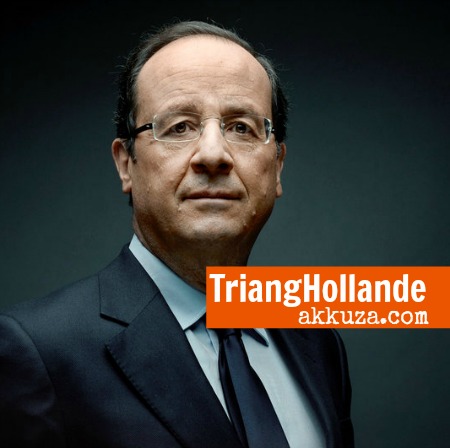
Valérie Trierweiler has been hospitalised following revelations in the press that her companion – French President François Hollande – had been having an affair with actress Julie Gayet. This latest sex scandal in France involves an actress who had taken part in a promo video for Hollande during his 2012 campaign. A bit reminiscent of the “billboard favourites” in Malta, only this time, the video promoter found herself on the lap of the French President – incidentally another son of the famous ’68 ‘student rebel’ generation.

The French media is split controversially in two factions between those who see these revelations as a violation of privacy and others who went ahead and published the videos and pics that seem to confirm this liaison. What can or cannot be said in public about such affairs will remain a moot point for years to come – even certain corners of our own blogosphere seem to put much reserve in the “pinker” points of information that might please their readers.

It’s the moment when you drawn the line between what is merely ‘pink’ info worthy of your Paris Match and, on the other hand information about the private activity of a leader that might impinge on his public performance. To take the grotesque example, Italy’s Berlusconi met his downfall precisely due to his not too private activity that was deemed to have jeopardised his way of thinking. Closer to home we are beginning to be less shocked whenever that elephant in the room is mentioned – liaisons, trysts, betrayals. For some time you’d be forgiven to believe that much of what goes on in Maltese politics is the result of jealousies, rivalries and revenge processes worthy of cheap paperback novels.

Wives, lovers and boyfriends seem to hit the headlines more and more and have become part of the intricately woven web of power politics. Learning to deal with such reporting in the press is a delicate but important process. The word “nepotism” implies a familial link with the favoured and Malta’s current government will soon be able to display family trees in lieu of organisational charts. Reporting such appointments is paramount. Extra-marital affairs however? Well, the principle of “Caesar’s wife” can always be quoted as a measure. Voters might rightfully want to know whether fidelity forms part of the repertoire of their favoured candidate.

Given voter’s trends and shifts don’t blame them when the unfaithful politician becomes even more popular. Sic transit gloria politici.