Words of Abduction

abduction_akkuzaWhat is predicted to be Malta’s hottest August for years has begun under the sign of Martin Galea and the images of his post-abduction and freedom interview. The story of the abduction itself  should have turned out to be quite a straightforward one of abduction and rescue yet Muscat’s government have managed to turn this into another web of fishy explanations, hidden motives and bungled communications – to say the least.

Context

Context, a lot of it, is required. This is Libya following the rekindling of  what Western media describe as tribal rivalries. Not too long before the conflagration the government of Malta was busy signing Memoranda of Understanding with whoever was sitting in the shaky seat of power in Tripoli at the time. Any suggestion to the government of Malta that the Libyan situation was not at all safe and that it was about to explode once again into the warring factions we had seen in the post-Colonel scenario would be shot down with the usual arrogant panache that has become such a trademark Labour method in the domain of communications.

In mid-July Malta’s foreign Minister insisted that the situation in Libya was “not very serious” and that there was no need to evacuate Maltese citizens. It would soon become evident that notwithstanding our proximity to the Libyan realities and all the talk of our common history and heritage and friendship (all is well when you are signing an agreement for cheaper fuel) we apparently had no bloody clue what was going on. While other states withdrew their embassies (by July 27 even the US evacuated its Tripoli embassy) we were busy playing musical chairs with out politically appointed ambassador (aren’t they all) to-ing and fro-ing like a headless chicken on crack.

It is important to follow the trail of government speak in this story – especially when weighing who its real interlocutor is. When the government does seem to want to address the media (not only the selected media as on the China trip), it seems to have a second interlocutor in mind – one to whom it is intent on delivering a pleasant message.

Step back again to the days prior to the return to battle on Libyan territory. A few other incidents stick out like a sore thumb. First we had the mysterious Libyan being provided Malta state security in a Saint Paul’s Bay flat. Following some probing prompted by early questions raised on Caruana Galizia’s blog, the government was forced to comment on whether or not a Libyan national was being provided with state-funded security. It turned out that Libya’s former Deputy PM Sadiq Abdulkarim had fled to Malta. No confirmation was forthcoming from the government as to whether or not this was the same person being provided security. They had this to say:

Libya’s Deputy Prime Minister Sadiq Abdulkarim is living in Malta, this newspaper has learnt.A government spokesman would not confirm or deny it, simply saying it “would not comment on matters of national security”.Mr Abdulkarim, who was also Libya’s deputy PM while Ali Zeidan was prime minister, is living under heavily armed guard on the island. […]

Over the weekend, the government was quick to deny media speculation that Mr Zeidan was living in Malta. Government spokesman Carmelo Abela reiterated during a press conference on Tuesday that the man seen under heavy escort in St Paul’s Bay was not the former Libyan premier but said he could not give further details because of national security.

Eight days after the above quoted report, the Times of Malta reported that Zeidan and Abdulkarim had returned to Libya (June 20th). Mr Zeidan returned to the city of Beida where he “made an attempt to reclaim his premiership”. It was Garibaldi all over again. A short rest in Malta before returning to retake the country – or so they thought. As for the Maltese government it stood by its “national security” dictate.

A second interesting development before the fighting began again in Libya was the accusation that Malta or some Maltese were involved in the smuggling of fuel from Libya.Tellingly this allegation surfaced on June 18th in the Maltese press – following its first appearance in a Reuters report. Here’s the Times:

Meetings are being held between senior security personnel in Malta and Libya to verify allegations of fuel smuggling from Libya to Malta and take all decisions necessary to curb such activities, the Foreign Ministry said.

It said the latest developments would also be discussed between Minister George Vella and his Libyan counterpart later today.

The ministry was reacting to a Reuters report that large amounts of fuel were being smuggled from Libya to Malta – even as angry motorists queued in Tripoli and the state oil firm struggled to deliver due to a lack of security at petrol stations

“This phenomena is a threat to Libya and affects national security,” the government said in a statement after Prime Minister Abdullah al-Thinni met Malta’s ambassador.

This time it was Libya’s government ranting away about “national security”. Curiously these events take place on June 18th, two days before Zeidan and Abdulkarim leave Malta to “reclaim the premiership”. On June 20th we have Libyan PM Abdullah Al-Thinni meeting the Maltese ambassador to voice his concerns while Foreign Minister George Vella met his counterpart in Al-Thinni’s government. There is something very confusing about the Maltese government’s dealing with Libya as a whole. On the one hand it is presumably (strong evidence backs this presumption) providing safe harbour to the deputy of the claimant to the “throne” in Tripoli but on the other hand it is also negotiating with (and therefore clearly recognising) the man occupying the coveted “throne”. 

Of course you are entitled to think that in this way the Maltese government is on “friendly terms” with all sides in the fractious break up of Libya. There is a high probability that the Maltese government is hedging its bets and hoping that whichever side is victorious then it can quickly cosy up and resume its agreements regarding oil procurement and immigration problem solving. Aside from the moral implications of this kind of foreign policy, one question remains to be answered? What weight does the Maltese government carry when push comes to shove in Libyan matters?

There’s one final piece of the context puzzle before moving on. This time we go back to May 2014 – a month before the events began to precipitate. Consul Maria Farrugia is called back to Malta on allegations of VISA fraud. Another piece of the network of foreign representatives being replaced by Taghna Lkoll Government appointees crumbles. This time, rather than simply recalling the diplomat we have charges of VISA fraud. Whether such allegations turn out to be substantiated or not is another story – what is important here is that our man in Tripoli is another political appointee who, as it turns out, becomes useless in the moment of need. Farrugia would be recalled at the time of Galea’s abduction and – if you were to take the abductees word for it – would be fundamental for his release.

This is not an abduction

So there you have it. This is the context in which we can better see the news behind the abduction of Martin Galea. Galea was abducted on Thursday July 17th while working for private company NAGECO as a health and Safety advisor. The government of Malta had to wait for his release, his return to Malta, his medical examination and finally for the incontrovertible truth explained in a TMI video interview before it finally conceded that this was an abduction. From the 17th of July till the end of the month, the governments’ handling of the issue begs more questions than it provides answers. With the above context in mind the questions that can and should be asked are the following:

Once the government was apprised of the fact that Martin Galea was missing and possibly abducted how was this information processed and prioritised? We are told that the government was informed of the abduction on Sunday 20th (Joseph Muscat statement in Parliament) and that it started working with the police and diplomatic service to contact the abductors. As late as July 30th statements by Civil Service head Martin Cutajar still insisted that the government never used the word “abduction” – adding that “it was the media who called it an abduction.

It was not just Cutajar, OPM Communications Head Kurt Farrugia also added that “the exact sequence of events was never clear, and the government never had direct contact with whoever was holding Mr Galea”.  In an interview with MaltaToday, a Libyan militia leader (Ayman Al Madani) also denied that Mr Galea was ever abducted. Saying that he played a role in securing Galea’s release he insisted that the Maltese national was not abducted, but taken in by a Warshafana militia when fighting broke out on the road he was travelling on.

Al Maydani has a Libyan contact in Malta – Khaled Ebrahim Ben Nasan who had asked him to enquire about Galea’s disappearance. Ben Nasan seems to have been brought into the picture by Malta’s ambassador to Libya Mannie Galea who, according to the MT interview ” asked him to intervene in the rescue of Galea on midnight of Saturday 26 July, the day after news broke that Galea had disappeared.” This last statement is interesting because it shows a lapse of 6 days between when the government knew of the abduction (20th July) and when Ambassador Mannie Galea contacted possible intermediaries. Did Ambassador Mannie Galea only get to know on the 26th July? It does not sound reasonable.

Also, what is all this concern about toning down the “abduction” and describing it as a case of being secluded for his own security? Which counterparts in Libya are being accomodated by this version of events? Does this in any way have anything to do with the hedging of bets with the internal situation in Libya? If a militia had indeed abducted Martin Galea was somebody making sure that no toes were stepped upon and no feathers were ruffled in case this militia transforms into a “government counterpart”? Whose security was being given priority?

Much has also been made of Ambassador Galea’s absence from the scene – he was nowhere to be seen at the victorious set-up at Luqa Airport upon Martin Galea’s return to Malta. Instead we heard Martin Galea say that he owed his life to Marisa Farrugia, the supposedly disgraced consul who had been whipped back in action by the government to bring back the person who had (according to the official line) not been abducted by one of the militias vying for power in civil war torn Libya. Complicated?

There are other questions of course. The government, through its spokesman Cutajar, insisted as late as the 30th of July that “‘competent authorities’ are still putting together the circumstances of what happened to oil worker Martin Galea who was held by Libyan militias for 12 days and brought back to Malta on Monday evening.” Cutajar also stated that Martin Galea “was given different versions of who the group who took him were”. Meanwhile Kurt Farrugia confirmed Cutajar’s statement adding:

“the government never said it was an abduction. “We chose our words carefully to protect Galea’s life especially when we didn’t have the full picture of the situation. We were still evaluating the situation, and the word ‘abduction’ was used by the media. We always made it clear that the government never had direct contact with whoever took him”. (MaltaToday, 30 July)

As I mentioned earlier it would take Martin Galea’s Independent interviews to get the government to ‘admit’ that it was an abduction. There are more telling points in Farrugia’s statements. There is the admission that the government was rarely on top of the situation. Notwithstanding that this was a country with whom an MOU had been signed earlier that month and that this was country where there was ‘no reason to worry’, the government proved to be rather inept at reacting properly on the ground.

Why not use the term abduction? For whose safety exactly? How exactly does an abduction get worse by calling it an abduction? One possible explanation is that the government wanted to ‘legitimise’ the abductors. A line similar to that sold by militia leader Al Madani would explain this. Theirs was not an abduction but Galea was simply kept aside for his own security. Of course none of this makes sense once you hear about Galea’s ordeal but for a government that puts much weight in the power of persuasion through words, not calling an abduction an abduction must have made a lot of sense.

Also, on the 30th July, the OPM Communications Chief confirms that “the government never made contact with whoever took him (Galea)”. Interesting. So essentially we have clear evidence that notwithstanding all the fanfare with Muscat and Manuel Mallia at Luqa airport, the government had little or no say in negotiating the release of the abductee Galea. So how and why was he released? How are we to interpret his words that it is to Marisa Farrugia that he owes his life?

Were there parallel efforts by different entities all doing their damned best to liberate a person who for all official intents and purposes had not really been abducted? There is evidently much that we are not being told. Muscat’s government has tried to minimise the escalation of troubles in Libya and it is evident that it has much at stake (as a party as much as a government) in the outcome of the troubles. Galea’s abduction was a major inconvenience for the official line that had hitherto attempted to understate the extent of upheaval happening to the south of our Republic.

A network of interests, dues and counter-dues somehow keeps trying to surface while Muscat’s government seems more and more inept and unprepared to take a clear line vis-a-vis Libya. More importantly it becomes more and more evident that the main interest for Muscat’s government when dealing with Libya is not the much vaunted “national interest” but rather a web of party and individual commitments and investments.

One last evident victim that comes out battered from such an experience (notwithstanding what increasingly seems to be the fortuitous liberation of Galea) is the whole branch of the foreign ministry and network of diplomats. When push comes to shove the real damage of privileging political appointments over meritocratic and technocratic employment of trained personnel is dangerously exposed in such situations.

In such situations, Muscat’s hypnotic hold over popular thought using his “Magritte technique” and calling something what it is not (or denying something is what it is) begins to show huge cracks and signs of breaking.

Ceci n’est pas un enlèvement!

(This is not an abduction).


Institutes of Confusion

confucius_akkuzaChina Today. It’s all about China isn’t it? The latest very superficial Memorandum of Understanding to be signed with what Saviour Balzan in his infinite wisdom terms a “former communist giant” was the subject of discussion in parliament tonight. The opposition raised some valid questions about a number of matters mentioned in the Memorandum – o as the case may be, about a number of matters not mentioned in the memorandum. One matter that both parties seem to be warm about is the benefits of cultural exchange with the global behemoth – in particular the setting up of the Confucius Institutes. Many seem to labour under the impression that this kind of centre of cultural enlightment has the same value as, say, the Alliance Francaise or the Istituto Culturale Italiano. Only it doesn’t does it?

Confucius Institutes have been set up the world over by China in an effort, true, to spread its cultural enlightenment to the world. These institutes though are not totally bereft of controversy and this mainly because of the very nature of their backer. Alas Chinese culture includes a dark void in such subjects as democracy and human rights. Don’t expect the institutes to be a shining example or learning center where these subjects are concerned. Last year a number of Canadian Universities were up in arms and sought to eliminate all ties to their Confucius Institutes precisely because of behaviour that was not fitting for liberal democracies:

Here’s The Times’ educational supplement (no not the Times that accepted the trip to be part of the Potemkin group selected by Muscat – the real Times):

The most recent controversy over the Confucius Institutes has flared up in Canada, where one university is shutting down the programme on its campus because of a human rights complaint and two more have declined to serve as hosts.

McMaster University in Hamilton, near Toronto, will close its Confucius Institute when the current term ends this summer, citing the institute’s requirement that its instructors have no affiliation to organisations that the Chinese government has banned, including the spiritual movement Falun Gong.

In the past few years, too, the University of Manitoba and the University of British Columbia have turned down proposals for Confucius Institutes to open on their campuses.

The Confucius Institutes are under the control of Hanban, a branch of China’s Ministry of Education. They supply money, teachers and Chinese- language instruction to universities.

The network has grown from one campus in Seoul in 2004 to more than 400 today, including 11 in Canada, 70 in the US and 11 in the UK. According to reports in the Chinese media on 11 March, the head of the Confucius Institutes, Xu Lin, has said the institute plans to expand to 500 branches worldwide by 2020. (Link)

There’s more in this article in the New York Times also highlighting all the strings that are attached to setting up a China funded institute within a Western University. In the article the difference between Confucius Institutes and the Alliance Francaise is stressed:

The British Council currently operates in more than 100 countries; the Alliance Française and the Goethe Institute, in Germany, all run on similar lines. And though the United States Information Agency library program has wound down considerably with the end of the Cold War, the State Department still makes an effort to promote American culture overseas.

However, none of these programs are based on university campuses. And according to Mr. Davidson, none adopt the same homogenous approach to their native cultures found in Confucius Institutes. “No one would regard Zadie Smith or Grayson Perry as someone controlled by the British Council,” he said.

“The Chinese are very clear on what they are trying to achieve,” said Mr. Davidson. “They want to change the perception of China — to combat negative propaganda with positive propaganda. And they use the word ‘propaganda’ in Chinese. But I doubt they have to say, ‘We’ll only give you this money if you never criticize China.’ The danger is more of self-censorship — which is a very subtle thing,” Mr. Davidson said.

Wikipedia, the site censored in the People’s Republic, has an article dedicated solely to Criticism of Confucius Institutes – such is the extent of controversy surrounding these units of Chinese propaganda abroad.  Academics find the idea of the institutes abhorrent because they symbolise the stifling of academic freedom – and they insist on being intrinsically linked to university campuses. Their use as a tool of propaganda while censoring controversial parts of the Chinese story (the three T’s are blacked out: Tiananmen, Tibet and Taiwan) makes them stick out like ugly warts within the Western concept of liberal seats of learning that is supposed to underlie the very basis of academic development.

On March 28, 2012, the United States House Foreign Affairs Subcommittee on Oversight and Investigations held a hearing on “The Price of Public Diplomacy with China,” focusing upon Chinese propaganda efforts in the U.S., including Confucius Institutes on university campuses. Representative Dana Rohrabacher said, “The two pillars of America’s status as an open society are freedom of the press and academic freedom. Communist China, which does not believe in or allow the practice of either type of freedom, is exploiting the opportunities offered by America to penetrate both private media and public education to spread its state propaganda.”Steven W. Mosher testified, “there have been allegations of Confucius Institutes undermining academic freedom at host universities, engaging in industrial and military espionage, monitoring the activities of Chinese students abroad, and attempting to advance the Chinese Party-State’s political agenda on such issues as the Dalai Lama and Tibet, Taiwan independence, the pro-democracy movement abroad, and dissent within China itself.”Responding to Mosher’s testimony, Rohrabacher argued, “It appears as though Beijing is able to expand its campaign against academic freedom from China to America when U.S. universities value Chinese favors and money more than truth and integrity.

That’s it really. It’s not just the US universities. Dealing with China means that sacrifices have to be made and reaching ugly value conclusions. Dealing with China brings in Chinese favors and money but the ultimate result is that what suffers are truth and integrity.

The object of the superior man is the truth. – Confucius

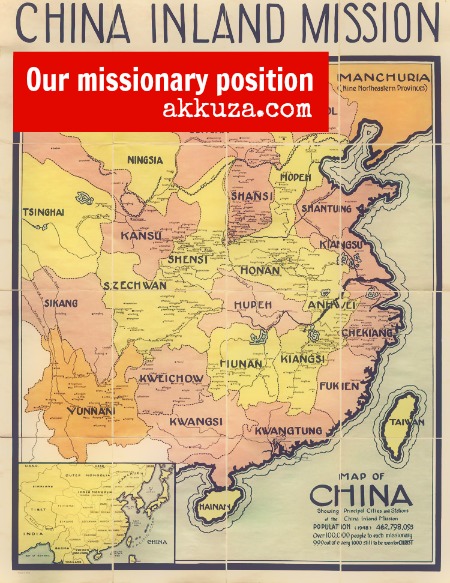
Our missionary position

missionary_akkuzaThis is a guest post sent in by a J’accuse reader. 

While everyone this side of the Great Wall is falling over themselves to figure out how much of our taxes are being used to remunerate “our” emissary in the Far East, one simple fact from the horse’s mouth seems to have been missed.

I, for one, could not care less if the salary Hon. Mizzi’s wife is supposedly on is €3,000, €13,000 or €130,000 per month if it means the overall economic boost to our nation’s coffers results in a net gain from this promotional mission. However, what is most striking, is that for all the hard work she is meant to have done in the past year, all she has to show for it is interest from a ‘top digital company’ to come to Malta and set up a ‘free trade zone centre’.

Sai Mizzi’s quote to Times of Malta reporter Ariadne Massa:

“This company is looking to set up a showcase for all Chinese products in Malta so that European countries will not need to travel to China to see their goods but they can just go to Malta, which is on their doorstep”

That sounds like top work to me, but only if your remit was to bring China and Chinese products to the EU. Does Ms Mizzi not know which side of her bread is being buttered? Apart from saving a little airfare for our EU brethren I fail to identify any benefit that this may bring to our economy. Even the trade zone centre is “free”!

A Nonny Moose

(All that) Bull in a China shop

allbull_akkuzaThis must be the year of the bull. I know it isn’t (it’s the year of the horse and there’s no bull in the Chinese zodiac) but there’s so much bull in the year that it’s hard to miss it. Only the other day Malta’s ex-Commissioner to the EU now turned “I’ll never bend over to the Europeans” repeatedly referred to a Dr BS in one of his apologias to the world. Must be the summer sun.

Anyways. Today’s Times of Malta reports a government spokesman as saying that Malta’s newly signed medium-term cooperation agreement with China has “sparked interest from other European countries seeking to tap similar deals”.

Malta will be the first EU country to sign a medium-term cooperation agreement with China when the Prime Minister flies to Beijing on Tuesday. According to the government, the five-year memorandum of understanding announced on Thursday has already sparked interest from other European countries seeking to tap similar deals. “We have been approached by four other European countries asking what this deal will entail to see how they can follow suit,” a government spokesman said when contacted. (Times of Malta)

The ambiguity of the phrase regarding interest is such as to raise a couple of questions. First of all, the minor detail, I believe that it is safe to assume that for once the government’s spokesman remembered we are part of Europe and therefore the “other” in that phrase means “other than Malta” (the alternative interpretation would be a sad condemnation on government spokesman’s geographical proficiency).

The second bit of ambiguity concerns the deal that is being asked about. Are other European countries interested in the same kind of agreement with Malta? Or are they genuinely asking Konrad Mizzi and co. for advice on how to deal with China? Both alternatives stink of stercus taurinum. The first alternative (European countries inquiring about a possible cooperation agreement with Malta) tends to ignore the fact that we are currently very strongly partnered with 27 member states of the European Union. Are these extra-EU European states? All four of them? Highly unlikely.

So chances are that the government spokesman was actually referring to the second option, namely that Malta’s government was being asked for advice on how to clinch great deals with the Chinese. Which is interesting and also stinks of bovine excrement. The statement implies that the poor European states (all four of them) are living in a sort of Martian isolation from the rest of the world and had hitherto never made contact with the Chinese empire beyond the cave. In this day and age when the Republic of Ghana has the remnimbi in circulation alongside the national currency it is hard to believe that there are European countries (presumably members of the European Union) that need the Labour government’s assistance in establishing ties with China.

Or maybe (just maybe, as Louis CK would say) they need to find out how Labour pulled off a very particular kind of relationship with the Chinese. The kind of agreement that makes use of the public good in order to pay off an inordinate amount of IOUs and commitments that were made BEFORE it was even a government. THAT kind of understanding where the contents of agreements are rarely public but where you can smell certain beneficiaries from a mile away. Who knows there may be Energy Ministers in European countries who have woken up and smelled the coffee and are planning a posting for their companions in far off Shanghai (remunerated by the public purse).

In the end it’s not the deals with China that are a problem. Sure, the whole world is currently rushing to benefit from China’s huge reserves that are waiting to be spent and invested in every corner of the planet. What remains a problem are the clouds hanging on the not too fine line of distinction between Labour as a party (and its favourites) on the one hand and the public assets that are entrusted in the hands of the executive for a good administration in the best interests of us all.

In that department at least I strongly doubt whether Labour has any good lessons to impart to any other nation, let alone European partners.

The ghosts of politics past

ghosts_akkuzaThe French news world was rocked this morning with the news that former President Nicolas Sarkozy was placed under “garde a vue” pending investigations into possible “trading in influence” that he might have engaged in during his presidency. Those more familiar with Italian political jargon would call a garde a vue an avviso di garanzia (indictment). What it means is that the person receiving the order is deprived of his freedom pending investigation by a judiciary authority.

European politicians (at least European politicans) would do well to look closely at the events leading to this state of affairs. Investigations had originally concentrated on Sarkozy’s 2007 electoral campaign – yes, the original Flimkien kollox possibbli or as the French would have it Ensemble tout est possible.  Sarkozy and his electoral team were suspected to have received funding from – of all people – Colonel Muammar Gaddhafi in return for future favours and considerations from and for Libya’s government. While listening in into conversations related to this investigation, the investigators noticed that Sarkozy kept a secret phone registered under a false name.

It later transpired that this second phone was being used to “trade influence” with judicial authorities in order to favour Sarkozy’s situation in another hot affair – known in France as the Bettencourt Affair (another case of trading in influence and corruption). Sarkozy would allegedly use his network to get important information about investigations into the Bettencourt Affair – particularly any information that would draw him into the case. This network involved high-end magistrates and police officers, or as Le Monde puts it: “ les enquêteurs pensent avoir mis au jour un « réseau » d’informateurs, au sein de la police et de la justice, susceptible de renseigner les proches de l’ancien président de la République dans les procédures judiciaires pouvant le menacer.” (the investigators have uncovered a network of informers at the heart of the police and the justice system that might have informed persons close to the former president with regards to judicial procedures that could be threatening to him). 

Quite a network there. From electoral funds and favours linking Sarkozy to a dictatorial regime to meddling in the judicial and police system in order to protect ones own interests. This is a strong warning signal to politicians – given a functioning system of checks and balances there will always come a time when past mistakes and abuses will come back to haunt you. Such events also highlight the importance of the rule of law and of institutions of review that allow for independent monitoring of the political elite.

Simon Busuttil at the helm of the PN’s storm tossed ship is surely aware of the dangers of the errors of the past committed by others coming back to haunt him. It makes his task of changing the direction of the ship and shedding that image all the more difficult. Sadly the people’s habit of thinking in terms of guilt by association – so often milked by past PN administrations and its sympathisers will not help this particular ghost vanish too quickly.

Joseph Muscat on the other hand is currently running the show of government without making too much of an effort to hide not so tenuous links with authoritarian governments. His main political moves during the first year of his legislature were obviously dictated by and dependent upon agreements with such governments or their people; three obvious cases spring to mind: (1) the Chinese influence on the power station; (2) the huge question marks hanging around the process of attribution of Malta’s passport scheme and those who would ultimately benefit from it; (3) the hopelessly short-sighted dealings with transient Libyan governments over the provision of petrol (and subsequent use of Maltese resources to provide “security” to unknown persons).

Add to all that the bumbling interventions in the army, the sorry state of affairs of the police, the current spats with the Ombudsman, the hideous conniving to postpone a judge’s impeachment – and you begin to see a ghost in the making for Muscat’s band of politicians.

En garde à vous!

Triton’s Sons

triton_akkuzaYet another tragedy has occurred in the Mediterranean. The Italian Marina Militare have found a fishing boat with around 600 people on board. 30 of these persons were dead in the hold – dead of asphyxia. As the mayor of Pozzallo decried the lack of space where to put the corpses, it is rumoured that (Commission Head Designate) Jean-Claude Juncker is mulling the idea of an ad hoc Commissioner for immigration.

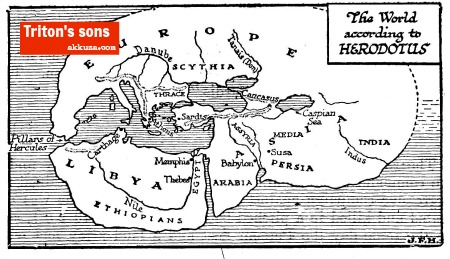
Greek mythology has it that when Jason and the Argonauts were stranded on a Libyan lake (what could now be Xatt el Djerid near Carthage), Triton promised to assist them out of their predicament in exchange of a tripod that was in Jason’s possession. As Herodotus explains, Triton helped Jason and his Argonauts out of the lake and into the Mediterranean sea. History (and mythology that is an ancient way of “explaining” history) has a weird way of repeating itself.

Weird that Triton would come to the fore by assisting a pilgrim out of the Libyan deserts (Libya for the Greeks stretched from the Nile to the Atlantic) and into the Mediterranean. Weird that the deity inhabiting the Libyan cities would project such immigrants northwards, out of the dryness of the desert. Weirder still that this deity would be Triton who would command the seas with his conch and would be able to multiply into many Tritones – demons (daimones, dimonji) of the sea.

“carried him out of his course to the coast of Libya; where, before he discovered the land, he got among the shallows of Lake Tritonis. As he was turning it in his mind how he should find his way out, Triton (they say) appeared to him, and offered to show him the channel, and secure him a safe retreat, if he would give him the tripod. Jason complying, was shown by Triton the passage through the shallows; after which the god took the tripod, and, carrying it to his own temple, seated himself upon it, and, filled with prophetic fury, delivered to Jason and his companions a long prediction. “When a descendant,” he said, “of one of the Argo’s crew should seize and carry off the brazen tripod, then by inevitable fate would a hundred Grecian cities be built around Lake Tritonis.” The Libyans of that region, when they heard the words of this prophecy, took away the tripod and hid it. ” – Herodotus, Histories