An analysis of the legislative and regulatory scenario concludes that given the current record and supervisory posture, the legal and governance case for refusal is robust.
Malta’s Community Chest Fund (MCCF) has declined a long-pending Binance crypto pledge – originally around € 200k in 2018 BNB and now quoted around € 39m – citing reputational and governance concerns about the provenance and disbursement method. Reporting indicates Binance wanted funds sent directly to individual patients’ wallets, bypassing MCCF’s ordinary controls; the President publicly called it a “bogus donation,” while the Prime Minister urged reconsideration. Court filings between MCCF and Binance over related disputes have recently been settled out of court, but the charity has now walked away from the offer.
The legal risk in accepting the donation turns on Malta’s Anti-Money Laundering (AML)/ Countering the Finance of Terrorism (CFT) framework and the charity’s fiduciary and data-protection duties. Under the Prevention of Money Laundering Act and subsidiary regulations, Malta’s Financial Intelligence Analysis Unit (FIAU) sets and enforces AML obligations and can receive suspicious transaction reports; while a state charity may not itself be a “subject person” like a bank or Virtual Asset Service Provider (VASP), it must not facilitate laundering and would typically rely on obliged intermediaries (banks/payment providers) to conduct KYC/KYB, source-of-funds checks and ongoing monitoring. If red flags arise, accepting the funds could expose the charity to regulatory and reputational harm and, in extreme cases, criminal risk tied to receiving proceeds of crime.
Verification of the legality of sources in this context is feasible in principle but not straightforward. Binance itself has faced repeated statements from Malta’s financial regulator that it is not authorised in Malta under the Virtual Financial Assets (VFA) regime; today the MFSA is also the competent authority for crypto-asset supervision under the Markets in Crypto-Assets Regulation (EU). Because Binance is not licensed in Malta, Maltese authorities cannot rely on local prudential/AML supervision of the donor, making enhanced independent verification prudent. Technically, blockchain analytics can trace wallet histories, but “clean” on-chain flow is not a legal guarantee of legitimacy; only obliged entities’ due diligence, sanctions screening and, where necessary, law-enforcement intelligence can comfortably de-risk the funds.
Practically, the authorities with roles here are:
- the FIAU (national AML/CFT authority) for guidance, intelligence and potential directions;
- the MFSA (supervision of VFA/MiCA service providers, public warnings on unlicensed activity) given the donor’s status;
- the Sanctions Monitoring Board for EU sanctions compliance if any listed persons, chains or jurisdictions are implicated;
- the Police/Asset Recovery Bureau and Attorney General for proceeds-of-crime issues; and,
- at sector level, the Office of the Commissioner for Voluntary Organisations where charities’ governance intersects with financial integrity.
If MCCF were to reconsider the pledge, it would need a bank or regulated payment channel willing to complete full Customer Due Diligence (CDD)/ Enhanced Due Diligence (EDD) and source-of-funds/wealth checks on the donor wallets, structured in a way that respects GDPR (particularly the prohibition on disclosing special-category health data without a proper legal basis), rather than direct-to-patient transfers demanded by the donor.
Given the current record and supervisory posture, the legal and governance case for refusal is robust.
The Political Reaction
The Prime Minister and the Leader of the Opposition seem to have a common point in their reaction to the news of the President’s refusal of the ‘bogus donation’. The Prime Minister stated in a direct way that the current regulatory framework should be sufficient to clear the funds for use. He was unable to hide his evident anger at what he (almost) called “being purer than the pope” (he changed tack last minute, probably realising it was not the best pitch to make. He did argue however that other countries who criticise Malta would probably welcome Binance themselves, admittedly without giving one clear example of where this is the case – relegating this statement to spin and speculation rather than concrete fact-based evidence.
Alex Borg on the other hand was more evasive, preferring to throw responsibility on regulatory authorities. He seemed to imply (just like the PM) that 39 million was too big an amount to risk losing. He stressed that the work of regulatory authorities is crucial in this sense and should the Binance donation pass scrutiny with a clean bill of health then much use could be made of that amount. Not exactly agreeing with the president then and more in line with Abela’s take though with less determined tones.
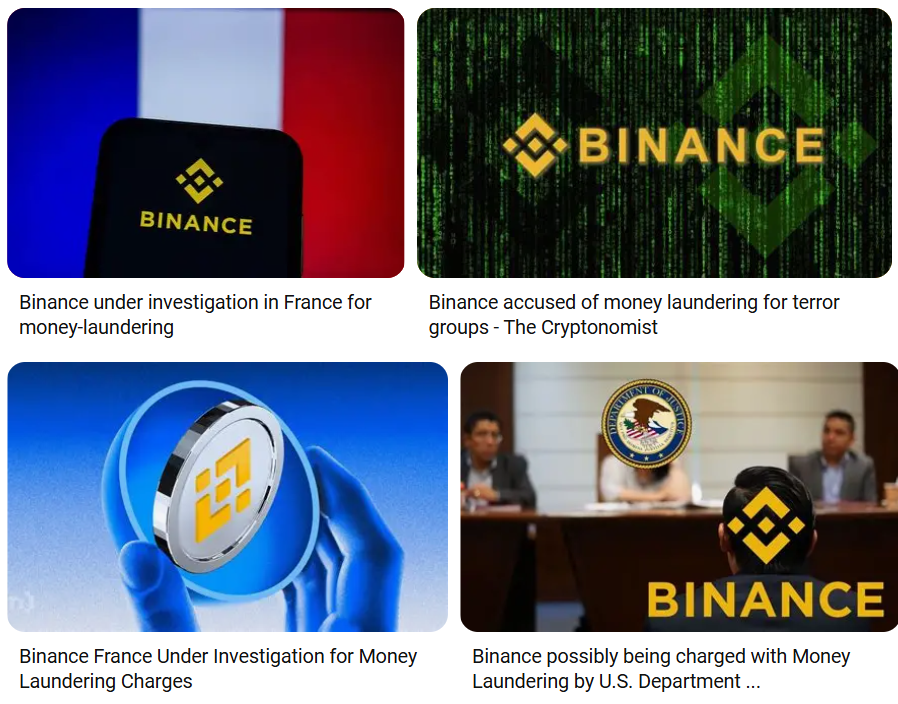
What to make of it then? I would say that the optics count for a lot. Binance’s history is tainted with a number of cases in France and the US concerning money-laundering and money laundering for terrorist groups. Their legal issues related to money laundering have resulted in significant financial penalties and ongoing scrutiny, reflecting broader regulatory challenges in the cryptocurrency sector. This kind of history means that an analysis as that conducted above would end in a strong legal and governance case for refusal. It is indeed worrying that the two leaders are so quick to dismiss this history in a “Malta qatt ma irrifjutat qamħ” sort of way.