50 minutes with Žižek

We’re hooked (thanks David). This guy is interesting if not anything else. While we are busy booking his tomes from play.com we will continue our vlogging trend with a 50 minute clip with Slavoj Zizek from a Dutch programme called backlight. Find a 50 minute break (lunch?) sit back, listen and react.

Facebook Comments Box

Scatology & Ideology

Slovenian philosopher Slavoj Zizek in Liverpool.

Image via Wikipedia

So here it is. Flagged originally by DF on facebook I couldn’t resist posting this short lecture by Slavoj Zizek. His scatological examination of different ideologies is already impressive in its absurd simplicity but just wait for the pubic hair analysis to be absolutely convinced. You will never again flush the toilet in the same way.

Enhanced by Zemanta
Facebook Comments Box

The Calm & The Storm

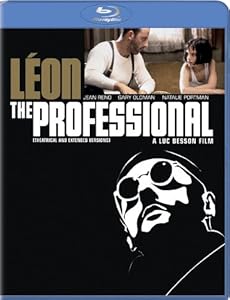
Cover of "Léon: The Professional (Theatri...

Cover via Amazon

It’s a blog. Not a professional newspaper. We “opinionate”, we rarely (if ever) “report”. We blogcomb and we recycle with an input of opinions. That is why when summer comes – the silly season – the blog tends to aestivate in its own way. Travels and trips and holidays mean that notwithstanding advanced technology that could allow us to blog from anywhere we prefer to lay back and recharge the mental battery. It’s not like the summer season helps much anyway. Not with the kind of news it tends to throw at us. Were it not for DimechGate this summer would have gone by without much of a squeak.

The becalmed waters of somniferous summer have now been whipped up into a veritable storm. We enjoyed the magnetic calm last week as we could feel the storm coming. From the rekindled divorce discourse, to the faith vs reason, to fireworks and local councils we are now once again pressed for blogging time. As the first rains of the wet season began to fall on the Grand Duchy this morning we thought of that calm moment before the storm – and Gary Oldman‘s “Stansfield” in the ’94 movie “Léon” came to mind:

Stansfield: I like these calm little moments before the storm. It reminds me of Beethoven. Can you hear it? It’s like when you put your head to the grass and you can hear the growin’ and you can hear the insects. Do you like Beethoven?
Malky: I couldn’t really say.

Enhanced by Zemanta
Facebook Comments Box

Gunpowder, Reason and Plot

Fireworks were invented in China and their original purpose was to scare off evil spirits. The next step up from the manufacture of fireworks would be the creation of gunpowder – the deadly explosive concotion with the power to take life away. The basic chemistry behind fireworks is the same chemistry behind fireworks. While one form of the concotion is used to illuminate the night sky with maravillious colours of Gandalfian beauty the other is a minister of death and disaster and to fuel the dangerous power at the end of barrels from the blunderpuss all the way to the magnum and colt. There you have it.. power harnessed and power uncontrolled.

on the history of the firework

A Chinese monk named Li Tian, who lived near the city of Liu Yang in Hunan Province, is credited with the invention of firecrackers about 1,000 years ago. The Chinese people celebrate the invention of the firecracker every April 18 by offering sacrifices to Li Tian. During the Song Dynasty, the local people established a temple to worship Li Tian. The firecrackers, both then and now, are thought to have the power to fend off evil spirits and ghosts that are frightened by the loud bangs of the firecrackers. Firecrackers are used for such purposes today at most events such as births, deaths and birthdays. Chinese New Year is a particularly popular event that is celebrated with firecrackers to usher in the new year free of the evil spirits. (history of fireworks)

on europe and the firework

Generally Marco Polo is credited with bringing the Chinese gunpowder back to Europe in the 13th century, although some accounts credit the Crusaders with bringing the black powder to Europe as they returned from their journeys. Once in Europe, the black powder was used for military purposes, first in rockets, then in canons and guns. Italians were the first Europeans who used the black powder to manufacture fireworks. Germany was the other European country to emerge as a fireworks leader along with Italy in the 18th century. It is interesting to note that many of the leading American display companies are operated by families of Italian descent such as the Grucci family, Rozzi family, and Zambelli family. (history of firework continued)

on firework factory explosions

Too many words have been spent. Futile speech and hypocritical mourning for “heros” whose lives suffer the ugliest of clichés – going up in smoke. In a country that is buried in ignorance, that champions populism and that is run by proxy there is not much to hope for. Only last week we celebrated our brethren winning some concours in Spain for firework production. Only last week the Mosta blast was buried beneath the rubble of short-term memory and swept under the convenient carpet of forgetfulness.  And now the country mourns again. A family. A whole branch of a family tree is buried under yet another nonsensical blast. From grandfather to unborn child – they have all vanished in one big bang that shook the West. The nearby chapel of Saint Dimitri brought little solace. The balkan Saint did not ride to bring the Farrugia’s to safety as he had done for Zgugina’s son many moons ago. And the Xaghra feast will go on as usual.

on spin, (t)reason and slash and burn

Legislation is lacking. Defective chemicals or no defective chemicals the regulatory lacuna is as huge as the new hole in GHarb’s grounds. Over twenty years of nationalist government and we will still be crossing our fingers come next festa season. There are no balls to tackle the problem and the worst part of it is that the spinmasters come a-scrambling over the dead bodies of the latest fallen as soon as they see a new opportunity to shoot at the opposition. It appears that Joseph Muscat’s father is one of the importers of the chemicals used to make fireworks. We are now one step short of blaming Joseph Muscat for the explosion. it is clear as crystal now – the PN government has not taken firm action to regulate (or eliminate?) the firework industry because it would (obviously) find no support from labour since Joe’s daddy imports the goods (obviously).  Excuse the sarcastic brackets but even if that were true I’d expect PN to be strong enough and take the decision with or without Labour’s go-ahead. But they cannot can they? Because it’s not just Joseph’s daddy. It’s many many a money pushing peasant who cannot live without the smell of burnt fireworks during festa season. And what would PN coffers be without the firework lobby? Most PN MPs would not be in parliament would they? Are we sure it’s just Joseph’s daddy that is stopping spineless politicians from taking a firm stand? Bah.

on the light fantasticke

In Strasbourg last month I witnessed a beautiful, breathtaking lightshow that went on every night illuminating the monumental cathedral. The son et lumière (that’s light and sound) show had everybody lost for words as fifteen minutes of lights playing on the facade and from within the church while classical music filled the square proved that not much is lost when fireworks are foregone. The biggest risk with a light show in the village piazza is the non-collaboratorial cock-up by Enemalta and the power suppliers. It’s time to think lateral. The firework industry needs to start paying for the damage. Already the residents of Gharb are looking for compensation for the damage wrought by the latest explosion.

How long before houses are shook to the ground and the firework war takes its first “civilian” victim? Will that be enough for the government to take firmer action? Will it be enough to stop the spinmongers jumping on the let’s blame Joseph for everything wagon? Frankly I do not give two hoots about what Joseph thinks or what his interests may be. If he were to stoop so low as to back the firework lobby for the sake of private interests then that would only reaffirm many suspicions on the politics of opportunism that seems to be rampant in the PL – but let us not lose the main focus. We have a government that governs with a majority thanks to the rules of the game. If that government really has the goodwill of the people at heart then it should not be relying on its spin machine to deviate attention but it should be taking concrete action. Now.

Enhanced by Zemanta
Facebook Comments Box

J'accuse: Dying Myths

Dr Rowan Williams PC, DPhil, DD, FBA the 104th...

Image via Wikipedia

Number One: God

It’s been one hell of a myth-busting week, one of the groundbreaking variety. It all began with the revelation (this time not in Patmos) that Stephen Hawking’s new book includes the following bold assertion: “Because there is a law such as gravity, the universe can and will create itself from nothing. Spontaneous creation is the reason there is something rather than nothing, why the universe exists, why we exist. It is not necessary to invoke God to light the blue touch paper and set the universe going.” (For a dramatic touch read to this last paragraph while playing Mendelssohn’s And Then Shall Your Light Break Forth).

Hawking has not managed to completely dispense with the figure in the sky completely as many a Dawkins would undoubtedly prefer, but he has got quite damningly (in a Dantesque sense) close by asserting that the figure in the sky was not a determining element in what many religions term “the moment of creation”. “God the Innocent Bystander as the universe sparked into life” is definitely not going to go down well with many a deist on this earth – let alone the Monsignor Gouders of this island who are still putting forward the complex and highly relevant (and Dantesque) notion of classification of sins applicable to politicians performing their civic duty.

It was refreshing to read the reaction of senior members of the religious community in the UK. From Rowan Williams (Archbishop of Canterbury) to Lord Sacks (Chief Rabbi), the argument ran on familiar and (from my point of view) very comforting lines. Sacks summarised it beautifully in the simple but eloquent phrase: “Science is about explanation. Religion is about interpretation.” There you go – quod erat demonstrandum and all that. It threw me back to the days of yore when I was quizzed by Brother Mifsud (a brother of the learnéd Jesuit variety) as to whether or not I believed in the sun and that it would rise the next day. My unequivocal “yes” would earn me a harsh slap on the head and a (confusing at the time) explanation that you cannot believe in something that can be proved – such as the very sun shining through the window.

Belief, by definition, requires an act of faith. Whatever has been proved no longer requires belief. And that is where Hawking, Dawkins and all the rest will find that the new brick wall is to be raised. As the Archbishop of Canterbury put it, “Belief in God is not about plugging a gap in explaining how one thing relates to another within the Universe. It is the belief that there is an intelligent agent on whose activity everything ultimately depends for its existence.” Hawking may spend valuable time and energy telling believers that nobody really threw the switch (it was automatic) only to be dismissed with the phrase: “Yes, but who put the switch there?” He just has to thank God (or his lucky stars) that we live in the time of Benedict XVI not Urban VIII and there is little chance of his being summoned to the Ratzing-court for a forced recanting of his ideas.

Deep down, most religions do not even care or need to care about proof that there is a god. Religion works with or without such proof – like Schrödinger’s cat opening the box is not the whole point of the experiment. It’s not that hard to reconcile oneself with this new reality of mutual exclusion. Science is built on proofs and has no place for leaps of faith, or as French mathematician LaPlace best put it in answer to Napoleon’s question on why he made no mention of God in his works of astronomy “I have no need for that hypothesis”. The inverse is true in the case of faith as the Tourist from Tarsus once defined it: “Faith is the substance of things hoped for, the evidence of things unseen.” See? Everybody’s happy. Except maybe Schrödinger’s cat.

Number Two: Those infallible Americans (and Brits)

On 31 August the number of US troops in Iraq was down to 50,000, as promised by newly elected President Obama 20 months before. Obama might still be in time to save the face of the world giant by stage-managing a strategic withdrawal (though it will definitely not be called that) from the zone of combat/stable democracy. Tune into any documentary on the US time in Iraq and you will be convinced that the stay has been anything but a success. The US joins a long list of world powers that have understood that the Middle East is nobody’s playground. Next Afghanistan.

George Bush’s partner in crime for Iraq has been busy publishing his memoirs, and although he might have expressed a tad bit of regret for whatever pushed him to invade Saddam’s jolly land in conjunction with his bumbling cousin across the ocean, he has less regrets closer to home. Blair has joined the list of clairvoyants who were apparently very confident that Brown’s term in power would be quite a cock-up of an affair. Insofar as myth spinning is concerned, the business of memoirs seems to be quite the ticket. Follow Jesus Blair (you’d be excused to thinking he’s the new Messiah) on his peripatetic attempts to save the world, the UK or the nearest local council, and you will be left with little doubt as to why the man abandoned the Protestant fold and marched straight into the comforting arms of Catholicism in a much publicised move towards the end of his tenure.

Meanwhile, in Westminster, a senior minister of the Tory-Dem coalition is rather angry at the gossip and spin culture perpetrated by the media and blogging world over the past few weeks. William Hague is in a bit of a fix because of persistent and undying rumours of his being gay (and of consequently having favoured gay partners) that have persecuted him since his entry into the world of politics. The great Tory orator is not new to PR slips but this time the story seems to be a conjecture of the whisper corridors that plague politicians and public figures. Apparently, Hague had opted to share a twin hotel room with an aide of his on one of his travels. That, and the close relationship he seems to have enjoyed with this young man, seems to have attracted the paparazzi moths to the limelight.

The aide had to resign from an advisory post earlier this week and only on Thursday, Hague’s wife had to break the silence on a very private aspect of the life of the couple in order to clear any niggling doubts as to the sexuality of the politician. It is always despicable when spin-monsters cut and slash into the private lives of politicians just for the sake of it and without any concrete proof. Hague has become disillusioned with political life, but then again he might come out of this saga in a stronger position.
bert4j_100905
Number Three: Those Magnificent Men in the PLPN

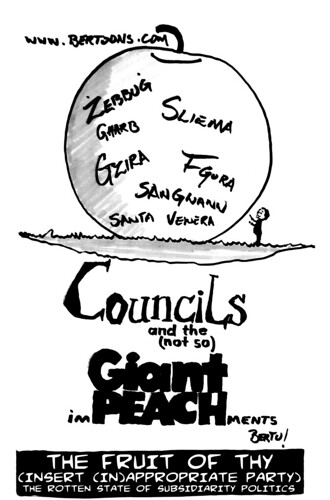
Michael Briguglio penned a good article this week (Sliema: Reaping what was sown) and it appears in J’accuse (www.akkuza.com) with his kind permission. Mike begins his article by stating that “the last local council elections were a clear example of how, at times, factors that have little to do with political vision influence electoral results”, and ends with a clear exhortation to the voter “if you want change, vote for it”. It would be stupid of me, or of anyone, not to read Mike’s invitation as a class bit of promotion for the party he chairs, but there is much more to this line of reasoning than simple a third litigant enjoying the ills afflicting the two behemoths.

Whether it is PL, PN or AD (or any other “political party” as defined under the Local Councils Act) presenting lists of candidates for your perusal and selection in local council elections, we have long laboured under the impression that such candidates have been selected by way of their being the best people to put into effect their party’s programmes and policies at local level. I am not one of those trigger-happy people who feel that the current spate of scandals vindicates Alfred Sant’s idea that political parties should keep out of local politics – far from it. I strongly believe (in a scientific and not in a religious manner) that a well thought out structure in a political party system that backs candidates in different localities can only enhance participative democracy and not degrade it.

That however is the ideal standard (why does that phrase remind me of toilets?). Ideally, party politics pervades the local level by bringing the administrative competence, the structural continuity and the value based commitment. Factually, as Mike has been ready to point out, party politics seems to be importing the rotten mentality that has been nurtured through years of practice of stagnant bi-partisanism. Power for the sake of power and not of service, cutthroat and inbred competition within the corridors of the same party and unregulated financing and sponsorship can only carry on for so long before exploding in the perpetrators face.

DimechGate and its cousins have shown the voting public the ugly side of voting through blind faith. Interviews carried out by internet papers among the Sliema population brought up two ugly truths (caveat lector: the interviews do not constitute a scientific survey): First it became clear that Nikki Dimech was elected mainly on the strength of the guarantees of a hidden saint or sponsor, which, combined with the PN nihil obstat assured the voters of a winning horse. Secondly, and more astonishingly, few, if none, of the interviewed had any idea of the mayor-elect Joanna Gonzi. It is a surprise mainly because someone, somewhere must have voted her in too – and with a number of votes inferior only to Nikki Dimech among those obtained on the Nationalist list.

Sliema is only one example of many voting through faith and not reason, as is the norm. It may no longer be only faith in the parties themselves but also in the complex system of saints and sponsors that is a throwback to the times of Cicero’s Rome. DimechGate will not provoke the kind of cleansing that a tangentopoli could have. PLPN have found a quick exit door via the washing of hands and responsibility. In a way they could do not other than ostracise the erring members of their wide net of candidates – true. On the other hand, we could ask questions of the structure backing the elected candidates once in place. Could a hypothetical council member who has been approached with a bung/suggestion for corruption resort to a party structure for support?

Are lawyers at hand to deal with such situations? Simple training and advice could create a sense of responsibility and awareness among elected councillors. This is where the role of party structures is desirable. A party could provide trained councillors – trained to face different situations at council level. Have our parties abdicated this side of their responsibility? Worse still, are parties too well entwined with potential providers of bungs (sponsors and donors in politically correct parlance) to be able to prevent their corrupting the local levels of our politics? In other words, does the infamous JS list extend to the local level or are other similar lists being refined at a lower level?

Number Four: ‘La Vecchia Signora’

I promised myself that should Juventus purchase Marco Borriello towards the end of the summer window, I would put my faith in the bianconeri in abeyance for a year at least. Although the transfer fell through I still have to be convinced that Juve are worth following this year – the insistence on the Italian label and on no brain to give the team some form of tempo is a formula for tears.

www.akkuza.com has resumed the discussion on impeachment and local politics. It’s never been a matter of faith.

Enhanced by Zemanta
Facebook Comments Box

Sliema: Reaping what was sown

AD Chairman and Michael Briguglio has given J’accuse permission to reproduce this article in the Zolabytes section. We consider it a further contribution on the current debate on Local Councils and an insiders insight on the mechanisms operating behind LC politics. Mike blogs regularly at Mike’s Beat (see j’accuse blogroll – we’re kicking that off again slowly slowly).

Sliema is really getting what it deserves. I am sorry to say this but the last local council elections were a clear example of how, at times, factors that have little to do with political vision influence electoral results. In a few words, Sliema is now reaping what was sown. I might be biased in saying this, given that I was not elected in 2009, having been elected in 2003 and 2006. But I invite others to contradict my statements below.

Beyond the battle between the official Nationalist Party position, the Nikki Dimech faction and the strange alliances of certain Labour councillors, one has to view the whole “Sliema” issue holistically.

Given the lack of proper legislation on financing of electoral campaigns, it is no surprise that political clientelism and business interests play a key role in Maltese politics even at a local level. Indeed, if one looks at the last local election in Sliema it would be very difficult to believe that all candidates’ electoral expenses were within the allowed limits. Many residents to this day tell me it is more than obvious that local elections are not based on a democratic and just level playing field.

In the last council election, one could witness social events such as receptions, the systematic provision of transport for elderly voters, electoral promises to various constituents that have nothing to do with political vision, telephone campaigns of the “Big Brother is watching you” type and so forth. There surely was no level playing field among all candidates.

This was even evident in the character-assassination-whispering-campaigns, at times between candidates belonging to the same party.

Given that Malta has practically no legislation regarding the financing of political parties, this necessarily leads to pressure from business interests for political favours. Hence, it is imperative that contracts awarded by local councils are properly scrutinised.

It is precisely for this reason that when I was councillor I consistently proposed having a contracts manager. I was supported by PN councillor Julian Galea on this… yet a decision by the council was consistently postponed.

Having professional administrative staff is imperative for efficient local councils. Yet, the present council apparently thought otherwise as one of its first decisions was to oust executive secretary Josef Grech.

The work of Mr Grech, his staff and of certain councillors, who, in previous years, did their best to ensure that Sliema’s voice was heard and who worked as a team, was basically discarded.

As for myself, in my six years as councillor I worked as hard as possible to help improve the quality of life in Sliema. I gave priority to issues such as public consultation, sustainable development, the impact of construction on the community, waste management, pollution, public transport, swimming and animal welfare. I worked well with coun­cillors irrespective of their political affiliation and I often managed to convince both Nationalist and Labour council members on various issues.

Well, actually, in my eyes, there were “four” political parties in the council, namely, Green, Labour, the PN “Pullicino faction” and the PN “Arrigo faction”. Perhaps the most surreal experience of all was when certain PN councillors objected that the council should praise the government for the reclaiming and embellishment of St Anne Square!

I thought I would get my best result ever in 2009 but the opposite happened. I was obviously disappointed and I was about to quit politics, feeling a sense of freedom in the process… But, as philosopher Louis Althusser tells us, “the future lasts a long time” … Indeed, I changed my mind after a few weeks and ended being elected AD chairman.

Whenever I am stopped by Sliema residents who complain about all sorts of issues, I remind them of a powerful tool they still possess – the vote.

If you want change, vote for it…

*****
Zolabytes is a rubrique on J’accuse – the name is a nod to the original J’accuser (Emile Zola) and a building block of the digital age (byte). Zolabytes is intended to be a collection of guest contributions in the spirit of discussion that has been promoted by J’accuse on the online Maltese political scene for 5 years.

Opinions expressed in zolabyte contributions are those of the author in question. Opinions appearing on zolabytes do not necessarily reflect the editorial line of J’accuse the blog.
****

Facebook Comments Box