They Don't Really Care About Us

We may fret and worry about joint Libyan and BP plans to sink an oil well off our coast (and Libya‘s) but when it comes to public acclaim about a potential disaster little or no mention is made of Malta. Surprised? Here is Andrew Johnson writing in the Independent on Sunday (IOS, UK): BP Well Threatens Ancient Libyan Sites:

Plans by the energy giant BP to sink an oil well off the Libyan coast could have disastrous consequences for the region’s rich heritage of coastal ancient city sites and shipwrecks – already under threat from oil tankers, coastal erosion and tourist developments – archaeologists from around the world have warned. […]

BP has, however, announced that it intends to go ahead with plans to sink a well – which would be 200m deeper than the one in the Gulf of Mexico – around 125 miles off the coast of Libya. Work is due to begin before the end of the year. Archaeologists fear that an oil spill in the region could destroy the area’s numerous ancient coastal and underwater sites and that thousands of historic shipwrecks could be at additional risk from drilling activity.

These include the ancient harbour town of Apollonia, in Cyrenaica – which dates from the 7th century BC and is five metres below sea level – along with two ancient cities in the region of Tripolitania, both of which are World Heritage Sites. Claude Sintes, the director of the Museum of Ancient Arles in the south of France and director of the sub-aquatic team of the French archaeological mission to Libya, said that the sites are either on the beaches or underwater close to the shore. Washed-up oil would soak the porous stone and be impossible to clean, he added.

Quick. Someone tell them about Ghar Dalam, Hal Saflieni and NET TV.

Enhanced by Zemanta
Facebook Comments Box

J'accuse : The Beat Goes On (That's Rich)

Drums keep pounding a rhythm to the brain

We don’t miss a beat do we? (Bang) The firework ‘factory’ explosion shook the island of Calypso to its foundations and in the end six people lost their lives. (Oompa-oompa) In a display of insensitivity that not only beggars belief but shoots it in the head from close range with a high-calibre pistol, the festivities in the village of Xaghra celebrating Our Lady of Victories went ahead as planned. (Ka-ching) One of the reasons we were given for this victory (triumph) of insanity was that the firework factory was a private one and only a supplier of processed chemicals to the feast – besides, why fritter away more money than had already gone up in smoke?

You’d be forgiven for thinking that Xaghra is to Gharb as Selawik (Alaska, USA) is to Mararikulam (Kerala, India). (Kaboom). The beat went on nevertheless and as the week rolled by the nation heard that a whole branch of a family tree had been summarily dismembered thanks to yet another supply of jeux de feu (gioco di fuoco – the archaic Italian and French terms for firework translated to Maltese as gig-gi-fogu) going wrong.

The beat went on all right, as the mediatic revelry of reporting broke new ground with the scramble for the best amateur video of the moment of the explosion. The drama was brought home as emphatically as possible, and the bombastic seriousness with which village festas were hitherto treated suffered a momentary lapse of favour with the general public. (Incidentally, like last week, this weeks’ article comes with suggested listening – Charles Camilleri’s Malta Suite – Village Festa). That temporary moment of anger at the futile loss of lives and the toying with public safety that is so evidently part of everyday life on the island is always intriguing to follow – if only for the volatility it displays until the next earth-quaking, window-shattering, child-frightening mother of all explosions reminds us that on this rock even a “remote factory” means your backyard. (Boom)

Charleston was once the rage, uh huh

Our representatives and legislators have not missed a beat either. Messages of condolence are now as much of a part of Normality Inc. as young men playing with dangerous explosives in tank tops (known in jargon as “wife-beaters”) and flip-flops. I am quite sure that these messages of condolence now come in a pre-drafted variety complete with blanks to fill. (Ta-ta-ra-ta-ta). It sounds cynical, I know, but it looks like we have begun to think of fireworks, firework factories and the like in the same manner as the US intervention in Afghanistan. There is collateral damage, there are civilian casualties and we keep sending our young troops to the front-line – some of them never come back and die the death of “heroes” for a greater cause.

What bollocks. What bullshit. What a load of absolute crap. I’m sorry, but if the idea of young men (and women) toying with their lives (ghan-namur, boom boom) does not make your blood boil with anger then you are about as sensitive and sensible as a Xaghra Feast Committee member. (Oompa-oompa). If you fail, for just one minute, to notice that it is not just the lives of these volunteers of doom that are endangered but also those of the community in the immediate surroundings, then you must be as intellectually blind as a brainless ocelot (damp squib). I know it’s as cliché as “l-innu marc” but it’s a fact that seems to fail to penetrate the mind of even the most upright politicians.

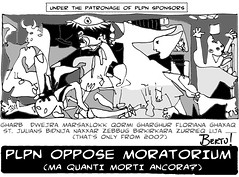
Enter Michael Falzon (Labour MP) with his comments on a moratorium on production. Such a moratorium, the learned member tells us, would be “stupid” and “irresponsible”. The legal representative of the Malta Pyrotechnics Association (Boom, Bang, Du-dum) reasons that (a) it would only drive such production underground (one would assume that he means that this time the firework producers would be working underground instead of lying horizontally post-blast) and (b) once the moratorium is over, production would only occur more frenetically than ever thus endangering more people. (Drumroll followed by explosion of petards).

In the words of the crazed tennis player, we can only reply: “You cannot be serious!” Since when does the threat of illegal behaviour prove that strict legal measures are useless? Are we not to assume that the moratorium would be used to tighten regulations, to finally realise that the proliferation of firework factories on a tiny speck in the sea is not exactly kosher, to (hopefully) restrict it to one very tightly regulated affair manned by experts? Does Michael Falzon (and the Nationalist counterparts who probably thanked the God of explosives that he is taking the flak) realise that a moratorium is not simply a pause for breath?
bert4j_1009612

History has turned the page, u-huh

It just won’t work will it? Not the moratorium. The general idea of persuading the island of “Saints and Fireworks” that the time might have come to switch from pyrotechnics to some other, safer variety that bears in mind the constraints in terms of space and safety. I am a huge fan of son et lumière and am prepared to bet that the first village that switches to an eco-friendly, human-friendly experience of a display of lighting timed to music will provide the best example to the rest of the community. Sure – an elaborate light system to light up the jewels that are our many churches and piazzas will cost money and will develop over time, but even Our Lady would tell you of its many positive advantages if she could. To begin with, the system does not go up in smoke every year and can be built upon rather than starting from scratch.

I know, I know – this is as utopian an idea as the regulation of political party financing. That too is another area where the grim reality of the network of trading in influences is only acknowledged every now and then by the regular voter before he or she switches off and back to the partisan mentality. We saw a glimpse of recognition with the firework factory problem itself. Party MPs’ hands were tied and it was obvious to many that their reluctance to take action was directly linked to the fact that the very people engaging in the “namur” (hobby) of fireworks and explosives are the same people who fund the individual campaigns for election to Parliament. They are the same campaigns that either go undeclared or end with false oaths that they have not overstepped the spending limit.

Alternattiva Demokratika has not failed to gain political mileage from the issue by accusing the two parties of insensitivity and of forming an “alliance of death”. There goes the bombastic wartime lingo all over again (you must forgive AD for engaging in superlatives in most of their attempts to attract the unwilling attention of the blinkered populace). It may be hard to picture Lawrence and Joseph as some latter day Ahmadinejad and Kim Jong Il but there is a point to be made here.

The grocery store’s the supermart, uh huh

Over at J’accuse we have been pressing the alarm bells for almost six years now. Recently we have enjoyed the eminent company of Franco Debono (PN MP) and Leo Brincat (PL MP) in the call for transparency of party funding. It is a core, basic element in the functioning of a democracy – that parties are transparent about their ties and dependencies. In a damascene conversion, fellow columnist Caruana Galizia seems to have finally realised this most basic of democratic realities and penned an interesting article last Thursday about the negative side of party financing. Confoundingly, Caruana Galizia ended her article with an accusation directed primarily towards Joseph Muscat – as though he is ultimately responsible for the introduction of new legislation on funding.

Funny, I thought that the business of government was to govern and that right now the government was composed of PN MPs. Funny, when last election I urged people to vote for the third choice as a direct message to the two parties that continue to ignore basic democratic precepts of representation, I was subjected to a barrage of attacks branding me (and other J’accuse readers) as “irresponsible” for even risking the possibility of Alfred Sant governing the country. Funny, the reason for that barrage seemed to be that we can only count on PN legislators for responsible legislation. Funny, but the AD argument on the need for more transparency at the time seems to come back and haunt the very “pragmatic” naysayers of the past. The AD tune does not sound so dissonant does it? A plague on both your houses, indeed.

In actual fact, we don’t need Joseph Muscat’s Labour to implement new transparency rules. Lawrence Gonzi’s PN, elected so responsibly in order to avoid the dangers and pitfalls of that monster Sant and Labour (wasn’t that the description?) has the majority he needs to get the law into place. It’s that government born out of the partisan rules that were writ to exclude third voices as much as possible and provide the relative majority with the power to enact laws for the good of the nation. They shouldn’t miss a beat. They should simply look at valid voices like that of Franco Debono, who has been yelling loudly for the dignity of Parliament, the transparency of funding and proper democratic representation.

Boys keep chasing girls to get a kiss

But they will miss that beat. There will always be an excuse not to introduce much needed legislation that affects the representation and government of the people. The intricate power web and dealing in interests is too well spun to be dismantled so easily. This is not some big conspiracy theory about powerful men sitting in a room. It is an idea that has spread through usage and custom. An idea that patronage, sponsorship and monetary support exchanged for political favours is the way to advance in the corridors of power. An idea that favours and obligations trump democratic representation and loyalty. An idea that the bipartisan machine is fed with the money of the favoured and it feeds them back with the regulations they require.

Ideas spread faster than actions and before you know it the notion of favours, backhanders and trading in influences has pervaded our political culture at all levels and is considered as normal. That is the sad truth about this country. Firework factories too close to “civilian” buildings for comfort but we barely blink and the beat will go on as it always has. The idea settles in our minds and we think that men in flip-flops handling dangerous explosives is normal. We will barely flinch four months from now when sweet nothing happens again. And who do we have to blame? Mike Briguglio was subtle last week when he said: “You have your vote. Use it.” I prefer the words by V (in “V for Vendetta” by the Wachowski Brothers): “Well, certainly there are those more responsible than others, and they will be held accountable, but again truth be told, if you’re looking for the guilty, you need only look in a mirror.”

And the beat goes on, yes, the beat goes on

I type this article on the 11th of September – 9/11 for Americans. The world news is stuck on the US commemoration of events nine years ago. A bigot pastor somewhere in the US has hit the headlines for his ridiculous idea of burning a book that is holy to millions of people across the world. This has sparked reactions as far off Afghanistan and Pakistan and condemnations from the civilised world. It’s not as simple as good versus evil and there are many factors to consider (media coverage is one of them), but sometimes you do have to wonder how much more damage can be done in the name of God and his Saints.

My deepest condolences to the President and Prime Minister for their loss. It’s been a week of unhappy coincidences for fathers of politicians (David Cameron). I would also like to take this opportunity to wish a good and peaceful Eid el-Fitr to all Muslim readers.

www.akkuza.com’s beat goes on. It wasn’t Buddy Rich originally but Sonny and Cher — yes the headings were from that song… will you manage to get it out of your head?

Enhanced by Zemanta
Facebook Comments Box

Party financing agreement a must

Two days ago we had a Zolabyte by PN MP Franco Debono who continues his quest for the regulation of party financing. Today we bring you a voice from the other side of the house. Labour MP Leo Brincat has been involved in the issue since the Galdes Report on party financing. Here he exposes the pitfalls of the process of regulation and points out what must be solved in order to move on. Is Labour’s Leo right in lamenting that “we are already too late”? (article reproduced with the kind permission of the author).

The article by Nationalist MP Franco Debono on party financing (September 8th) made interesting reading.

The core issue and problem is that, although he seems to believe that this is an urgent matter that needs to be dealt with without any further undue delay, I was never ever convinced of his own party’s commitment to plugging the gap of this democratic deficit.

I write through experience, having had the honour to serve as the Labour Party’s nominee on the ad hoc committee chaired by the late Anthony Galdes, a former civil servant and private sector senior executive of impeccable qualities and standards, that eventually led to the so-called Galdes Report.

There are various aspects that have continued to worry me and haunt me since.

Fifteen years have passed and the Nationalist government that has been at the helm of the country for more than 13 of these years never ever made any serious effort to conclude matters on this issue or legislate on the matter. Hardly ever did it, as a party, make any formal commitment to spell out its intentions on the subject and show it is prepared to go the whole hog to ensure that agreement will be finally reached on this important issue.

On the contrary, the perception the Nationalist Party would prefer to perpetrate the status quo continues to gain ground not only in political but also in commercial and entrepreneurial circles.

There is hardly any point in my colleague Dr Debono lamenting that no significant developments have taken place since 1995 and that no concrete measures have been implemented when there was never any real agreement on the document’s findings itself… something that left the implementation process as dead as a dodo from the word go.

In the run-up to the last election, the PL had committed itself publicly to implement the recommendations of the Galdes Commission on party financing while the general feeling now seems to be that one should take that report as the basis for moving ahead, given the decade and a half that have passed since then.

If one wants proof of the PN’s lack of real commitment on party financing one should scrutinise the fine details and the differences that actually derailed the Galdes Commission.

That the three established parties agree with the principle of transparency in party financing is not enough. As the adage goes, the devil is in the detail and, if my memory serves me well, the proposals put forward by the PN during the formulation of the Galdes report had made it clear they were only after piecemeal solutions that almost defeated the whole purpose of the exercise by ensuring that the parties in question will not optimise the potential benefit of such an accord.

It is interesting to note that, at the time, the commission had been made up of the PL (through yours truly), the PN, Alternattiva Demokratika and Dolores Cristina, who was an independent member and who, to be fair, gave many positive inputs throughout the various discussions we had.

Ironically, both the AD and the only independent member (Ms Cristina) had agreed at the time with the benchmarks proposed by the PL. It was the PN that had stalled the process.

The time is already overdue for such agreement to be reached on such an issue – regardless of whether there is a functioning parliamentary select committee or not – since, by next April, this government will have been in power for three years in this legislature. With elections then fast approaching it is more likely there will be more foot dragging by the government side to reach any form of agreement.

On the other hand, I feel one should also legislate concurrently on the expenditure limits and funding of political candidates too. This, not only to ensure a proper level playing field during election campaigns but also to ensure that certain candidates who might easily find their way to the House (again or for the first time) will not have any strings attached through contributions they received.

The capping of expenditure by political candidates must also be updated and revised upwards to a more realistic level to ensure that the existing laws will not continue to be flagrantly abused of as happens regularly in every election campaign.

In an interview published in another section of the media, Nationalist MP Jeffrey Pullicino Orlando had been reported to have dropped the biggest hint to date that the government may be reconsidering its earlier opposition to the Galdes conclusions (September 26, 2007). Alas, since then, we have not seen any concrete proof of this, no matter how strongly Dr Pullicino Orlando might genuinely feel on the matter.

Now is the time for the three political parties to get real on the whole issue of political party financing.

The PL has already come forward with a 15-point plan on transparency, which many conveniently chose to either ignore, ridicule or downplay.

On the issue of party financing, people expect that, rather than having these parties disagreeing to agree, if they all believe strongly in transparency they should knock into place an agreement on party financing without further delay.

We are in my opinion already far too late.

Website: www.leobrincat.com

*****
Zolabytes is a rubrique on J’accuse – the name is a nod to the original J’accuser (Emile Zola) and a building block of the digital age (byte). Zolabytes is intended to be a collection of guest contributions in the spirit of discussion that has been promoted by J’accuse on the online Maltese political scene for 5 years.

Opinions expressed in zolabyte contributions are those of the author in question. Opinions appearing on zolabytes do not necessarily reflect the editorial line of J’accuse the blog. Accompanying images selected by J’accuse.
****

Enhanced by Zemanta
Facebook Comments Box

No Comment – ECJ Gambling Ruling

A BBC report on this week’s European Court of Justice ruling in a series of cases involving gambling.

Facebook Comments Box

Feckin' Flights

This one is mainly for the transfrontaliers living outremer. The quest for a “cheap flight” connection to Malta is becoming like a game of “hot & cold”. As Flyunfair and Flimsyjet CEO’s throw darts across the European map selecting airport links to Malta au hazard we can now happily announce that the “cold, cold, cold” has become “tepid”. Flyunfair have a new flight from Eindhoven (Holland). It’s around three hours away from Luxembourg and the flights are Thursdays and Sundays (and yes, the flight back is at 6am so think of it as a Thursday to Saturday trip to Malta for your urgent needs that cannot wait.

Three hours’ drive plus two hours’ leeway before getting on the plane (Flyunfair’s quirky ideas about queueing ppl like animals simply because the flight is “cheap”) and a three hour flight. That’s still eight hours door to airport (MIA). Things, they say, can only get better. Frankfurt airport is the same driving time away (prices slightly more expensive) and a wellplanned flight from Dusseldorf (also around three hours away) could turn out to be cheaper (and more luggage space). The French are still obstinately refusing to make Metz-Nancy airport amenable for international flights (which might just be ok given the penchant of French air traffic controllers to simply sod off and cause absolute chaos for the plane schedule ). Germany has introduced an aviation tax making ALL flights slightly more expensive p.p.

We’re not really after the deal. A well priced (not Luxair style) price from an airport that is a convenient drive away would just be the ticket. Until now the closest airport with relatively normal prices is still Brussels – a good two hours away (not counting possible upsets at the last stage of the car trip on the black hole that is the Ring).  Open market my arse.

Facebook Comments Box

Party Financing and Democracy

There’s one MP in the house who has maintained a constant position with regard party financing. In an article appearing in today’s papers Franco Debono reiterates his call for proper regulation of party financing while drawing on international reports that describe how failed regulation leads to “trading in influence”. We publish the article in its entirety here as another Zolabyte with the kind permission of the author. General Franco strikes again!

Some months ago, while being interviewed on public television (Dissett), I had described the issue of political party financing as extremely urgent and a priority. I strongly argued that the issue should be tackled immediately, considering its direct bearing on our country’s democracy. The interviewer had dismissed my claims to urgency, apparently comforted by the fact that the issue was, at the time, being tackled by a parliamentary committee.

Recent events have, since, brought work in that committee to a standstill. Moreover, about 15 years ago and we were, compared to most countries, already late, a report (the Galdes Report, 1995) had been tabled in the House of Representatives but still, to date, nothing has come out of it. Since then, no significant developments have taken place and no concrete measures have been implemented with regard to the issue under discussion.

The issue of party finance is crucial and central to any democracy in this day and age.

As the Council of Europe’s Third European Conference of Specialised Services in the Fight against Corruption, held between September 28-30, 1998, had declared: “…political parties play an essential role in democratic systems.

“Their operation requires appropriate resources while electoral campaigns have become expensive. Faced with increasing expenses, political parties are unable to live only on their members’ fees and have to solicit and accept donations. Trading in influence has, thus, developed. In order to remedy this situation, which is detrimental to the rule of law and democracy, it is necessary to ensure political parties are financed in a wholly transparent manner.”

Political parties are challenged today with complex tasks, including researching and developing relevant and updated policies as well as communicating their message in the best possible manner in order to garner maximum support and win elections. Such tasks necessitate a sound structural organisation and infrastructure, which cannot be put in place and function without adequate financial resources.

The process of securing the necessary funds could lead to abuse. Parties could potentially end up at the mercy of particular donors who may seek to exert control through undue or unlawful influence. Legislation all over the world has been enacted precisely with the aim of averting such jeopardy and limit the dangers to democracy.

Since political parties are not just voluntary organisations accountable solely to their members, but organs of a constitutional nature and relevance, the necessary legislation tackling the most urgent issue of disclosure and public auditing of parties’ finances should be enacted. Strengthening democracy means ensuring political parties are financed in an accountable and transparent manner.

Thus, the Galdes Report, tackles such issues as whether there should be a ceiling on private donations, whether donations exceeding a certain amount should be prohibited and sums exceeding which amount should import a duty of disclosure.

In the United States, disclosure of small amounts by small donors was held by the Supreme Court to potentially seriously infringe on the rights to privacy and association and belief and, thus, one must always strive to strike a balance.

Tackling the issue of eligibility for state financing, linked primarily to the number of votes obtained by a party in the previous general election, the Galdes Report again establishes the requirement of the compulsory publication of financial statements and accounts, as well as disclosure of particular donations, exceeding certain amounts. It proposes strict penalties in cases of default or non-observance, enforced by a regulatory and supervising authority to be established under the same proposed legislation.

The report had, for instance, also tackled the issue of candidates’ expenses during election campaigns, which amount, just under €1,400, 15 years and four elections ago was deemed too low and unrealistic. It was suggested that it should be increased, in addition to proposing a more realistic definition of the relevant period preceding an election. We are still debating this today and nothing concrete has as yet materialised.

This aspect of transparency is important too.

It is time to rethink the structure and internal organisation and set-up of political parties as constitutional vehicles. It is time to think about the relevance of political party stations today. It is a time of great challenges where we must continue to revise and upgrade the constitutional architecture for the future.

As has always happened under successive Nationalist Administrations, we must continue strengthening democracy and this is the next step.

It is time to pass from reports and committees to action and legislation. And we must continue on the good work being done in public broadcasting , upgrading it too.

Dr Debono wrote his doctoral thesis for the law degree on The Constitutional Implications Of Party Organisation And Party Finance (1999).

Website: www.francodebono.info

*****
Zolabytes is a rubrique on J’accuse – the name is a nod to the original J’accuser (Emile Zola) and a building block of the digital age (byte). Zolabytes is intended to be a collection of guest contributions in the spirit of discussion that has been promoted by J’accuse on the online Maltese political scene for 5 years.

Opinions expressed in zolabyte contributions are those of the author in question. Opinions appearing on zolabytes do not necessarily reflect the editorial line of J’accuse the blog. Accompanying images selected by J’accuse.
****

Enhanced by Zemanta
Facebook Comments Box