End of the two weeks in Malta. The notes from a small island include a register of the pent up frustration that surfaces when discussing and that contrasts incredibly with the image of laid back Med country that is part of the daily tableau. We don’t travel to judge. Us expats I mean but we are inevitably driven to drawing comparisons. So while we may find the heat a little bit more unbearable with every visit, we can also be pleasantly surprised by the little beauties that surface. It’s like that with culinary fantasies like the atmosphere and food at Temptasian (The roof restaurant at The Palace, Sliema). While waiting for 30 mins at Zaventem for the baggage to finally start moving round the conveyor belt we are reminded by a Flemish lady that every country has it’s imperfections: “welcome to Belgium”. Luckily we manage to hop on the last train home and are chauffeured from the arid train station to sleepy Dondelange by the laid back and chilled MV who reminds us of the welcoming and homely nature of the Maltese abroad. We read the book ‘Uncommon’ on the flight and found it to be fantasmagorical. More on that in re-vu when we get down to writing a short review, which is a bit ironic really because I get the feeling that it will be like révù reviewing itself.
Image: from the J’accse physical archives. A snapshot of a poster for an SDM/MUSC party back in the day when budding politicians knew the difference between work and play (and were good at both) and DJs were …. Hell, just DJs.
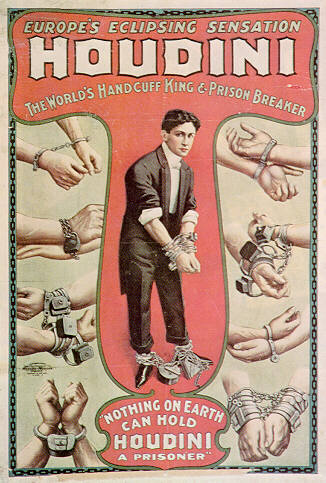
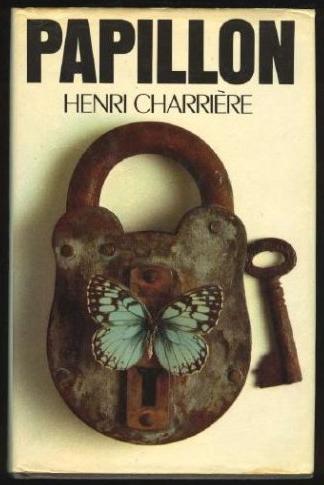
Papillon is the name of a 1969 novel written by Frenchman Henri Charrière. The (allegedly) autobiographical novel tells of Charrière’s extraordinary saga at the hands of the French criminal justice system between 1931 and 1945 after he had been condemned to a period of hard labour on Devil’s Island as a punishment for murder. Charrière’s character in the book is called “Papillon” − the French for butterfly − because of the butterfly tattoo he had on his chest. The papillon is also a symbol of the freedom that this prisoner constantly craved.
Cinema buffs will have surely watched the 1973 movie starring Steve McQueen as Papillon. The book itself was an international sensation and caused a furore in France since Charrière’s story exposed the harsh brutality of the French justice system and the inhumanity of pre-war incarceration policies. Attempts were made to discredit the veracity of Charrière’s adventures, and articles and books were written to kill the more colourful of Charrière’s stories. Papillon, if one were to take his word for it, had suffered the ignominy of inhuman conditions and isolation. His different attempts to escape and obtain the freedom that he believed he deserved involved audacious contraptions and life-threatening situations but his book served at least to unmask the hideous conditions in the French penal system.
This could be heaven, this could be hell
Freedom. It was not the auburn Scot with face daubed in blue that spoke the word but a dark skinned Ivorian speaking to a Times of Malta journalist who was trying to discover the reason for the Safi riots. Freedom. It’s a strong word with a very strong meaning. The Hollywood speech reserved for Mel Gibson in Braveheart is simply about humankind’s love of freedom and its willingness to lay down everything else in order to obtain it. The anonymous Ivorian did not speak from a high horse (metaphorically and physically) when he explained the reasons behind what have been dubbed the “riots” in Safi.
The men and women condemned by our 18-month detention policy are reduced to becoming inhuman wrecks pacing up and down the dirty corridors of Malta’s own Gulag probably wondering what other cruel fate can be thrown at them. It is one thing being a criminal, like Papillon, and still succumbing to the very natural urge to escape and spread your wings. It is another to have escaped the miseries and trials and tribulations of a war-torn country and to find yourself in a Mediterranean concentration camp under the August sun. Freedom. Not 5-star food, not 5-star accomodation, just freedom − and the right to be treated as a human being. Yet, what most people saw was not a genuine cry for freedom. They saw guests misbehaving.
Bring your alibis
Fellow blogger Andrew Azzopardi has taken the cause of the Safi inmates (for inmates they are) to heart. His blog has been constantly updated with photos from inside the camp documenting the hideous conditions. Other recent members of the blogosphere like Norman Vella picked on the ugly response of the dark side of this nation. I blogged about this in the post “What paradise?” in which I wondered whether this nation of ours has so much to be feel indignant about. It had been a truly disgusting week of reactions in the comment boxes.
I picked on a Facebook comment by divorce guru Jeffrey Pullicino Orlando in the What paradise? post. “Illegal immigrants among us have to understand that they are guests in our country and they should behave accordingly,” quoth Mr Divorce. My first reaction was to comment right under his post and wonder whether the immigrants aren’t doing just that − behaving accordingly. You know, when in Rome…
JPO was voicing an ugly popular sentiment that keeps resurfacing. It gets worse when there are calls to “send them back home” or when the comments incite actual violence against the “guests”. The pink corner of the blogosphere also picked up (should I say “filched” because we stumbled on the same post? The law of petty schoolgirl thinking would seem to imply so − hey I saw it first!) on the JPO comment and condemned the crassness of it all.
Pink champagne on ice
I don’t just mention the other blogs to point out the varied nature of the blogosphere’s reaction to the goings on. The blogs, the blogosphere and the mainstream media comment boards are one way of gauging our reactions to the main events in our lives. They also provide another testing ground. They are a microcosmic reflection of the manner in which our society operates: with its little battlegrounds for prima donnas, with the pushing and shoving for cornering tiny markets and perceived centres of power, and with the constant battle in which the loudest, noisiest and most lewdly entertaining tends to win the public’s baying approval. Welcome to the 21st century Colosseum.
It is the world where a refined pen and mastery of English can be used to churn out filth and fabricate character assassinations day in day out. It is a world where − posing through the guise of bluff and plagiarism − budding politicians and faux intellectuals win their fawning corner of the crowd by selling their repackaged gospel to the malleable masses. It is a world that has spawned the quick judgement, the guillotine jury and the fast-track condemnation based on taste. This world has fed on Malta’s particular adaptation of the global ideological vacuum as nurtured by the PLPN mentality. It is not a world of discussion but of antagonism where, in the words of the philosopher Slavoj Zizek “(the people) express an authentic rage which is not able to transform itself into a positive programme of socio-political change”.
We are programmed to receive
The riots in London, the indignados in Spain and the Jasmine Revolution in North Africa. We tried, maybe wrongly, to find a common element (do check out www.re-vu.org for a couple of good articles analysing the riots). Zizek, the philosopher I mentioned earlier, has penned a brilliant article himself called “Shoplifters of the World Unite” in which he notes the ideological political predicament we live in: “A society which celebrates choice but in which the only available alternative to enforced democratic consensus is a blind acting out.” “What is the point of our celebrated freedom of choice,” asks Zizek, “when the only choice is between playing by the rules and (self-) destructive violence?”
In our tiny microcosm we might be looking at the Safi “riots” from the wrong angle. JPO’s concept of “guests” implies that we are somehow better off than the Ivorian who is craving freedom and who can only vent his anger and frustration by lighting a fire in the compound. What that image fails to consider and factor into the context is the fact that the post-ideological vacuum is the predicament of a whole island of cynics. Liberals and conservatives alike seem to be unable to face the fact that there is a value vacuum that is slowly transforming into our cage. Relativism and poverty of values is leading to our becoming prisoners in our own home.
We are all just prisoners here, of our own device
Which is why I asked the question “What paradise?” this week. The rioter in Safi wants freedom from his prison. But is the world beyond the confines of Safi’s walls a free world? Papillon, the prisoner of an outdated penal system ended up wandering from one prison island to another before finally obtaining his freedom in Venezuela. In this day and age it is not just four walls that can constitute a prison but also mental barriers built on a vacuum devoid of reference points and an absence of clear socio-political goals.
The Ivorian and his fellows at Safi might still be in time to realise that beyond their four walls lies a larger prison populated by hypocrites and false moralists. This news might come as slim consolation for the Safi inmates but the least we can do is notice that guests and hosts alike might be in desperate need of a plan to work towards a better life. Otherwise we will end up living the song… where we can check out anytime we like, but we can never leave.
The Duchy beckons
It’s been a hectic two weeks of rushing around (and a bit of idyllic epicurean delight). The heat is really stifling and it’s a wonder that anything gets done. I have a note of sympathy for fellow lawyers who are obliged by the ridiculous rules of convention to trudge to Valletta wearing suits in 35 degrees of heat. How long before we notice that this weather requires its own dress code?
Food-wise, I’ve enjoyed terrific meals from the succulent rib eye served consistently at Sliema’s weather toss’d pitch to the delicious seafood on offer at il-Pulena in Marsalforn (three thumbs up again Godwin). It would be a shame not to mention Qbajjar Restaurant’s great BBQ Wednesday night while a big thank you to the blokes at Badass Burgers for remembering the gluten-challenged among us. I’ve tried Arriva, I’ve caught the ferries and I have only one thing to say: “move bloody back”. What is it with idiots who plonk themselves half way up the bus aisle thus giving the impression of a bus that is full? I leave the island with mixed impressions: it’s definitely a cleaner Malta (the effort on the beaches merits a standing ovation) but there’s an angry, cynical interior that is letting itself be harnessed by the most harmful of forces. It’s that interior that can be jarring and render life unpleasant.
All you need is a thick skin, plenty of sun block and a daily dose of J’accuse. Which is what you will get in the post-vacation weeks to come.
www.akkuza.com has quoted from Slavoj Zizek’s “Shoplifters of the world unite” (google it for the free version). Papillon (the movie) released in 1973 features Steve McQueen and Dustin Hoffmann. Blogs mentioned in this article can be accessed freely on the Internet. Don’t believe all that you read. Remember: Just ask. Subs courtesy of the Eagles’ Hotel California.
The immigrants are rioting. The Maltese comment boards are rife with spiteful messages of the “send them back home” kind. Forget blaming the police or the government. It’s the whole damn country that’s in a mess at the worst possible time. I’m not speaking of hysterical bloggers switching attention from the real issues to a slide show of cheap voyeurism. I am speaking of the mentality that is evident on every bus, in every queue, in every department or shop. It’s how people yell at each other. How they judge and sell relative opinions. How the primadonnas of this world panic at every moment that they seem to lose what they perceive to be control of their twisted corner of whatever market they seem to occur and how the masses enjoy their role as supporters in a dog-eat-dog world without realising that the dogs are biting at their hearts.
My errands on this holiday have taken me to the Emigrants Commission and to the Public Registry. I’ve used public transport, I’ve driven and on breaks I’ve had a chance to see the mass at work – through the multiplicity of individuals who squat on this tiny rock. We’ve lost something along the way these past few years. It’s a mixture of values, attitude and outlook to life. We’re on the defensive while thinking in cliches. We’re rashly judgemental and highly egoistic. We’re an ugly mixture of materialistic hedonism and false moralism. We’re oblivious to the world across the sea while we continue to peddle the fable of a whole universe on one small island that could live without anyone and that does not need anyone. And when the world passes to our shores we panic and yell. We shout “Move Up”, “What do you want?” “Stand Back” “Go Home” “Five euros and twenty cents” “Tini dak” “Qabzitli” “That’s mine” “X’buzz mann” in unison and speak in a tongue of anger an remote-controlled frustration without any reference point.
The immigrants may be rioting in Safi. There may be policemen injured doing their job. The rioters might be yelling “Freedom, Freedom”. But in the end you cannot help but wonder whether their riot is misguided. You cannot help but wonder whether they are safer in the confines of their detention. You cannot help but wonder that with the experiences and stories that life has harshly and unfairly thrown at them, it’s the walls of their detention centre in Safi that are keeping them away from the mass of prisoners on an island inhabited by false moralists and hypocrites.
The Safi inmates yelling for Freedom might still be in time to realise that the real prison lies beyond the confines of the Safi Centre.
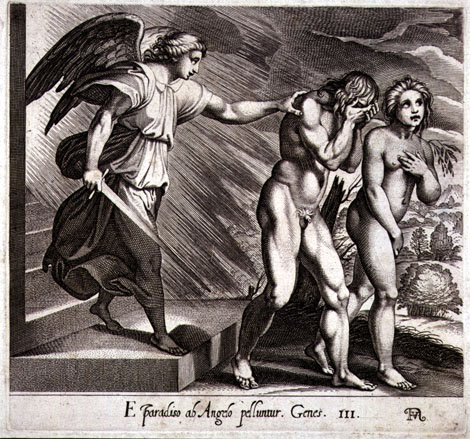
What detention centre? In an island of hypocrites and false moralists we are all prisoners. This is no paradise to be banished from.
COMMENT IS FREE. STILL. THINK BEFORE YOU TYPE.
‘We are all just prisoners here, of our own device’
There she goes again. The Runs seems to have another bout of j’accuse-itis. Apparently this blog that is either “boring” or “unnoticed” also operates on the basis of envy and is suddenly object of another spat of diarrhoea on the site that never stops the pink tirades. I still do not get the “envy” bit though… I don’t exactly see what there is to envy exactly. God knows…. although I’m sure even He would have some difficulty fathoming the character assessments on The Runs.
Anyways, it turns out that some bloke who (surprise, surprise) posts anonymously on the Runs under the name of Delacroixet had also come across Nikita’s not so hidden ouvre d’art. The Run Fan put up two links to compare and contrast – one to Nikita’s blog and another to a CNBC copy of the FT article. Somehow I am supposed to have “filched” the incredible and news that Nikita’s blog was plagiarised and “not attributed” this fact to the Runs and its followers (by the way, the Runs author is still moping about the “nerd attack” a while back when she was told off by most that her practice of not attributing sources is just not done). Funny, I never came across the CNBC site – it was easier to find the article directly on the Financial Times.
The Nikita business has put quite a few people in a fix. On the one hand these people would like to think that this blog does not exist and that nobody ready it while on the other hand they were itching to report the Nikita business. On the one hand they’d love to say that anyone with a head on their necks could tell that Nikita’s job was outsourced but on the other hand they find it hard to see that one did not necessarily have to dredge through the muck on the Runs to discover the latest example of plagiarism.
If we did not have a track record of noting plagiarism in the papers we’d be worried. Only we know better than the fanatics and bitching fools on a site ridden with grudges. You begin to understand the envy bit when you see the uncontrolled reaction complete with sorry innuendos and banale double-entendres that you only find on www.tasteyourownmedicine.com or www.daphnecaruanagalizia.com. In the nineties we had Manuel Cuschieri, now we have the hammalli peddling their crazed theories from Bidnija to London. Plus ca change…
And in case you thought the Bidniija Blog was serious about the attribution business just look two posts back. While the Runs was still blogging about our discovery (probably eating her heart out based on whatever standards of “I’m first” count as honour in that sad corner of the blogging world) there was no link to this site.
The Runs is right. It’s not about attribution is it. It’s about envy. I still don’t know who the Maltese prick drinking the coffee in the pic she filched from my blog is though. He probably reads the Runs and finds base innuendos extremely funny.
Sorry to disappoint the Runs and the tarzanelli fans but it did not take much to discover Nikita’s filching. Like it had not taken much to find others before. The fact that someone who posts regularly on Runs also notice the plagiarizing only goes to show how ANYBODY could have found it.
BTW Re my supposed obsession with the runs… I’ve said it all before… seems like it’s time for a healthy reminder: Sleeping Bitches & Galliano
Photo: Some people go green with envy. This one prefers shades of red (taken from www.tasteyourownmedicine.com).
Our latest Scissorhands post has had its effects. In less than four hours Labour’s rising star lost her place among the team of bloggers on the timesofmalta.com site. Nikita Alamango’s blog is no more. For posterity’s sake here are the before and after pics from the Times site. Thanks again to the Times for their predictable reaction. Don’t hold your breath for a scoop in the Times itself about Nikita’s exploits.
We’d like to apologise for any inconvenience caused. But hell, we ain’t sorry. These darn wankellectuals… they’re all over the place. Peace, love and happiness.
At the start of this week I spoke of Joseph Muscat’s apparent cluelessness when it comes to dealing with the spin-offs of the Euro-economic crisis. Populist talk about “the EU needing to take decisive action” does not a government policy make. I have met people on this holiday who speak about the euro crisis as though it is happening to other people – or worse who seem to get some satisfaction out of the idea that the whole euro business might collapse. But this is Malta, whera new issue of BOV bonds or whatever they were is oversubscribed, where party policies are not questioned and where come what may health services and education will remain free.
Thank God for Nikita Alamango and her brilliant blog in the Times. With youth like this : ” a student, a member of the National Executive of PL, International Secretary of FZL and Deputy Secretary General of the National Youth Council” our nation can have a brighter future. Why am I so enamoured with this bright rising star of the labourite firmament? Because she’s done her research and has given whoever wishes to read her carefully edited blog due warning about the signs of the impending economic doom (Joseph, do take note). Prosit tal-programm to the Times for catching this gem and publishing such great material.
The blog post in question (Global markets – a ‘toxic cocktail) is being reproduced hereunder since the Times have a nasty habit of brushing embarrassing moments under the carpet (when they notice that is). What is really, really interesting for us gobsmacked enthusiasts of Labour’s enfant prodige is how her article uploaded on the Times on the 10th August (Saint Lawrence, not that the irony escapes us) seems to be uncannily similar to an article in the Financial Times by Gillian Tett (Eurozone crisis resembles US turmoil in 2008). Here’s a sample two paragraphs… the first is from Gillian’s in the FT and the second is from Nikita’s :
Gillian first…
When Greece first started to wobble, many policymakers – and some investors – tried to downplay it because Greece is so small relative to global markets – with less than €200bn of foreign-held central government debt. Similarly, Lehman Brothers and Bear Stearns, with assets of $600bn and $400bn, were also small compared with the US financial sector. (from this article in the FT)
And now Nikita…
When Greece started to quiver, many tried to downplay its importance arguing that Greece is relatively small compared to global markets. In the same way which Lehman Brothers were ‘small’ when compared with the US financial sector. (from the Times of Malta)
You think it is a coincidence? nah. The whole story on the FT is a series of bullets and all NIkita does is paraphrase the whole shebang, thesaurus in hand to replace words like “wobble” with “quiver”… here’s another example, if you are too lazy to compare the whole business (besides you might need to register (free) to read the FT article).
Again, here’s Gillian:
This has now forced some eurozone leaders to move to a new phase and admit something they long denied: namely that Greek debt will need to be restructured and not everybody will always be bailed out. On one level this is sensible; reality is finally starting to bite. But on another, it takes the crisis to a new level – again, following the 2008 playbook. For what eurozone governments have done is push investors across a crucial psychological Rubicon – and make them realise that assets that used to seem risk-free now carry credit risk. As shocks go, this is perhaps comparable with the US government’s decision to put Fannie and Freddie into conservatorship in the summer of 2008. A sacrosanct assumption is being overturned; investors no longer know what to trust. (from this article in the FT)
And here’s the member of the Labour Party National Executive:
As a result, this has forced leaders within the Euro zone to move to a new era and admit what they have denied all along – that the Greek debt will have to be restructured and, unfortunately, not everybody will always be bailed out. This was a sensible acknowledgement;: reality is starting to bite. On the other hand, it pushes the crisis up to a new level reminding us of 2008. Governments across the Euro zone have pushed investors towards a crucial point, the realisation that all assets now carry a credit risk; (from the Times of Malta)
What do you say? Gillian Tett must be one hell of a lazy writer – plagiarising stuff from one of Malta’s up and coming politicians. Surely she should have known better. Hold on. Gillian’s article appeared on the FT on the 4th of August. That’s a good 6 days before Nikita’s Saint Lawrence day post. Lovely jubbly. It’s surely manpower like this that will help Joseph’s Labour create the new economic policy that will get us out of the current mess.
The Par Condicio Moment: A simple note to pre-empt labour diehards. J’accuse reseves equal treatment to ALL plagiarisers. Especially those who purport to be the leaders of our nation. If you doubt us just search “Scissorhands” in our search box … you will see how we are true to our word.
* Incidentally when copying and pasting parts of the FT article you get this message (Nikita must have surely had a hard time removing it):
As the markets on Thursday and Friday reached a new low, I decided to browse some news websites to get the gist of the recent trends.
In particular, I think that the CNN piece titled Global markets destabilized by ‘toxic’ cocktail offers some food for thought.
The reporter goes on to explain how both investor and trader lacked confidence as share prices fell due to the ambiguity which dominated the global financial markets at the end of the week.
Thus, continues the CNN reporter, today’s global equity sell-off and the subsequent stock market drop was a result of a “toxic” cocktail of global economic factors and, of course, a lack of crisp and determined political leadership.
Many columnists and experts warned both investors and politicians against taking a long summer holiday this year. Sounds like an August plague, like the one back in 2007/2008, where senior leaders are away and the markets are thin and is, some how, bullying to unleash a new wave of unpredictability.
As temperatures in summer soar, the way in which today’s Euro zone story is taking shape feels unnervingly like the pattern behind the American financial disaster in the late 2008. Let’s ponder the following:
1. When Greece started to quiver, many tried to downplay its importance arguing that Greece is relatively small compared to global markets. In the same way which Lehman Brothers were ‘small’ when compared with the US financial sector;
2. Likewise, when the financial crisis broke out, policymakers in the Euro zone at first assumed that the problem was liquidity, not financial competence, and blamed it all on speculation and speculators. They repeatedly tried to postpone tough decisions that needed to be taken, just like the US authorities did in late 2007. However, it seems no more successful in the Euro zone than it was in the US;
3. As a result, this has forced leaders within the Euro zone to move to a new era and admit what they have denied all along – that the Greek debt will have to be restructured and, unfortunately, not everybody will always be bailed out. This was a sensible acknowledgement;: reality is starting to bite. On the other hand, it pushes the crisis up to a new level reminding us of 2008. Governments across the Euro zone have pushed investors towards a crucial point, the realisation that all assets now carry a credit risk;
4. Like the saying goes, every action has a reaction: a spreading sense of fear. With those investing in Euro zone bonds having low experience in calculating credit risk, they found it hard to assess which countries are safer than others. To make matters worse, very few have understood the complexity of interconnections between the Euro zone bands. It’s all about real-time data, apparently, and, of course, getting this picture of a country is quite a tough challenge since banks had stopped measuring their risks in the past decades;
5. Consequently, as fear grows, another ghost of the past returns: short-term funding risks. The structure of the Euro zone system has encouraged its financial institutions to rely heavily on short-term funding. Therefore, this results in an increasing risk of accelerating capital flight. This short-term funding could still dry up as it did twice in the case of Bear Stearns and Lehman Brothers in 2008 due to the unforeseeable actions of credit rating agencies which are sustaining market fears.
It’s interesting to note that while some analysts, as we have seen above, have compared this crisis to the 2008 recession, others like David Buick, are adamant that the current collapse cannot be compared with the 2008 crash. Buick also hints at the possibility of a new round of quantitative easing, whereby central banks print money to help boost economic growth.
On Monday, the ECB announced its intentions to purchase euro zone bonds in both Italy and Spain after both these countries declared new reforms and austerity measures with hope of boosting their economies respectively to demonstrate how serious they are to get on top of things.
Other than that – what’s next ?
After a temporary recovery illusion, we have to wait and see how this second phase of a double dip recession will develop. Will it truly follow 2008 into a full-scale financial meltdown? Will the state of the US economy improve soon to do dispel people’s fear that the US might go back into recession? And can the single currency, which is in dire straights, actually survive? (Obviously, the fragmentation of the Euro zone would make it much worse). Will major stock markets around the world (S&P500 and NASDAQ) continue to experience a downward trend while the Dollar (due to the news from Bank of Japan to “print” an extra 10 Trillion Yen) and gold continue to appreciate?
In all seriousness, I hope that a sultry summer will not result in an agitated autumn.
Let’s keep our fingers crossed.
Nikita Alamango is a student, a member of the National Executive of PL, International Secretary of FZL and Deputy Secretary General of the National Youth Council.
This website stores cookies on your computer. These cookies are used to provide a more personalized experience and to track your whereabouts around our website in compliance with the European General Data Protection Regulation. If you decide to to opt-out of any future tracking, a cookie will be setup in your browser to remember this choice for one year.



 The men and women condemned by our 18-month detention policy are reduced to becoming inhuman wrecks pacing up and down the dirty corridors of Malta’s own Gulag probably wondering what other cruel fate can be thrown at them. It is one thing being a criminal, like Papillon, and still succumbing to the very natural urge to escape and spread your wings. It is another to have escaped the miseries and trials and tribulations of a war-torn country and to find yourself in a Mediterranean concentration camp under the August sun. Freedom. Not 5-star food, not 5-star accomodation, just freedom − and the right to be treated as a human being. Yet, what most people saw was not a genuine cry for freedom. They saw guests misbehaving.