Where we discuss censorship, corruption and how sensationalism might be a necessary evil to get the attention of the masses. And we also think about Desigual’s ad campaign.
Tetris
Last night I chanced upon a programme called Tetris on La7. It was making quite a mockery of the latest ridiculous regulations afflicting Italian broadcasting in the run-up to the regional elections. The subject of last night’s programme was La censura and the guests on the programme were asked to investigate whether the media are being gagged (imbavagliati). As is usual in these situations, much of the programme centered around Silvio Berlusconi – or as they had to refer to him on the programme in order to circumvent the censorship edicts – il presidente del Milan.
Italy is passing through a hard time democratically speaking. Of course depending on whether you stand behind Berlusconi or behind the ever-hopeful left you will have a different concept of what levels of rot have corrupted democracy. be that as it may, the recent cases indicating the surfacing of a new Tangentopoli have demonstrated that the first waves of Tangentopoli in the early nineties only served to change the face of the political elite but not the substance and modus operandi. Watching the panelists discuss Tangentopoli I that brought about the fall of the historical parties in Italy (Democrazia Cristiana anyone?) I was shocked by the realisation of how much time has been wasted in Malta. We still have not had Tangentopoli I because about the same time a still healthy nationalist party had taken the obvious path out of Cro-Magnon land and led us belatedly into the twentieth century.
One point that was raised in the programme was that even at the height of political scandals that uncover the extreme rot in a democratic system – and the dangerous lack of accountability of institutions – the people are only attracted to the information when it is sensational. Carlo Freccero (Rai4 director) pointed out that the peak of attention during Tangentopoli was reached with the famous telephonic interceptions. Once the Reality Show of the politicians had set in the attention of the masses was (temporarily) won over. Once the main waves of the scandal had passed and the marketing make over of the parties was completed (remember “Scendo in campo” by a young(ish) Berluska?) the masses returned to being numbed by the usual weekly dose of pink scandal and football matches (until even football got its reality show with Calciopoli).
Although there were many more themes to dwell upon in this programme (I’ll be damned but notwithstanding all this technology I still am unable to record something off the TV) including the inevitable blog vs MSM debate (check out generazioneblog for interesting ways of using blogs in politics). What got me thinking most though was this “Reality Show” aspect. Considering the mechanisms of democracy, the demos is an important part of the equation. For any change short of the revolutionary or military coup, the demos must be convinced that something is wrong in the State of X (insert state of choice). Without their attention and their vote nothing can happen. A programme panelist (Barbara Serra) pointed out the advantages of the English system of accountability with politicians directly dependent on the electors (unlike Italy where people choose the list not the candidate).
How to get their attention though? it seems more and more likely that sensationalism will become a much more valuable weapon than rhetoric and argumentation. Scandals and delving into the private lives of the altruistic saints that run our institutions might become the inevitable key to solving the institutional problems of the state and its representatives. This does not only extend to the directly elected politicians but also to administrators, the judiciary and the ties that bind the system to the private interests that oil the machinery of corruption. We might joke that it is inevitable in an Italian talk show but the conclusion was that corruption is universally pervasive and very difficult to eradicate. Corruption takes different levels – from the backhander to the “fettering of discretion” in order to give favours (as explained by Garner in his Administrative Law opus). Once the rot sets in it gets much more difficult to distinguish normal practice from the legitimate practice.
What are the tools to challenge this rot? Has the fourth estate become sufficiently corrupt to be unable to challenge it? Are the new modes of communication a possible solution? Are they enough? More importantly – is the resort to scandal a legitimate weapon in order to catch the attention of the people? Like Father Borg I am asking questions. Unlike him, I’m very interested in what you have to say.
***
Desigual
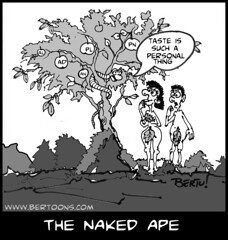
As an aside, I was intrigued by a little rant on the Runs about the plebs lack of fashion knowledge. What intrigued me was the use of Desigual as a demarcation line between the fashionistas and the fashionmanistax (I hope Charles Cauchi gets that one). A few months ago – May 2009 – to be exact in an article called Taste I had used Desigual and their slogan as an example of how politics and fashion appeal to different crowds. Desigual’s wonderful ad campaigns centered on the idea of “it’s not the same” – dare to be different. The PN campaign at the time featured the infamous Taste ad which reminded us that “Taste is such a personal thing” while heavily kneading the “guilt by association” tactic into the mind of sensation-seeking voters. Taste could be personal but would you really dare to be different and vote for Louis Grech and Marlene Mizzi if they are in the same party as Jason Micallef?
Really. Some people should wear what they preach. And Desigual might not be happy with their latest personalised campaign should they find out about it. I’m sure they’d hate to be found guilty by association (of sending contradictory messages of course).


